

Digital printing fabrics for outdoor use: UV resistance vs. wash-fastness trade-offs
For procurement professionals and trade evaluators sourcing digital printing fabrics for outdoor use, balancing UV resistance and wash-fastness remains a critical challenge—especially when integrating smart fabrics or eco-friendly textiles into durable applications. As global demand surges across sectors—from custom metal fabrication to industrial pumps and healthcare technology—material performance under environmental stress directly impacts product lifecycle and compliance. GTIIN’s TradeVantage delivers authoritative, SEO-optimized intelligence on these trade-offs, helping importers and exporters make data-driven decisions amid evolving standards in outdoor textiles, orthopedic implants, tires and rims, and more.
Why UV Resistance and Wash-Fastness Compete at the Molecular Level
Digital printing on outdoor fabrics relies on pigment or dye-based inks that bond differently with fibers—polyester, nylon, acrylic, or blended substrates. UV resistance depends on how well ink molecules absorb or reflect ultraviolet radiation (290–400 nm), while wash-fastness hinges on molecular adhesion strength and cross-linking stability during mechanical agitation, temperature cycling (typically 30°C–60°C), and detergent exposure.
Most high-UV-resistance inks use inorganic pigments (e.g., titanium dioxide–enhanced dispersions) that scatter UV light but lack strong covalent bonding with synthetic fibers. Conversely, reactive or disperse dyes offer superior wash-fastness (ISO 105-C06 Class 4–5) but degrade faster under prolonged UV exposure—losing up to 30% color intensity after 200 hours of QUV-A accelerated testing (ASTM G154 Cycle 1).
This fundamental tension means no single ink-fiber system excels equally in both metrics without process trade-offs: higher curing temperatures (180°C–210°C) improve wash-fastness but may reduce pigment stability; nano-encapsulation boosts UV shielding but increases ink viscosity—limiting print resolution to ≤600 dpi on roll-to-roll systems.
Key Performance Thresholds Across Common Outdoor Applications
These thresholds are not theoretical—they directly influence compliance with regional regulations (e.g., EU REACH Annex XVII restrictions on azo dyes, Oeko-Tex Standard 100 Class II requirements for outdoor apparel). Procurement teams must align ink chemistry, substrate selection, and post-treatment (e.g., silicone or fluoropolymer finishing) to meet minimum thresholds per application tier—not just “general outdoor use.”
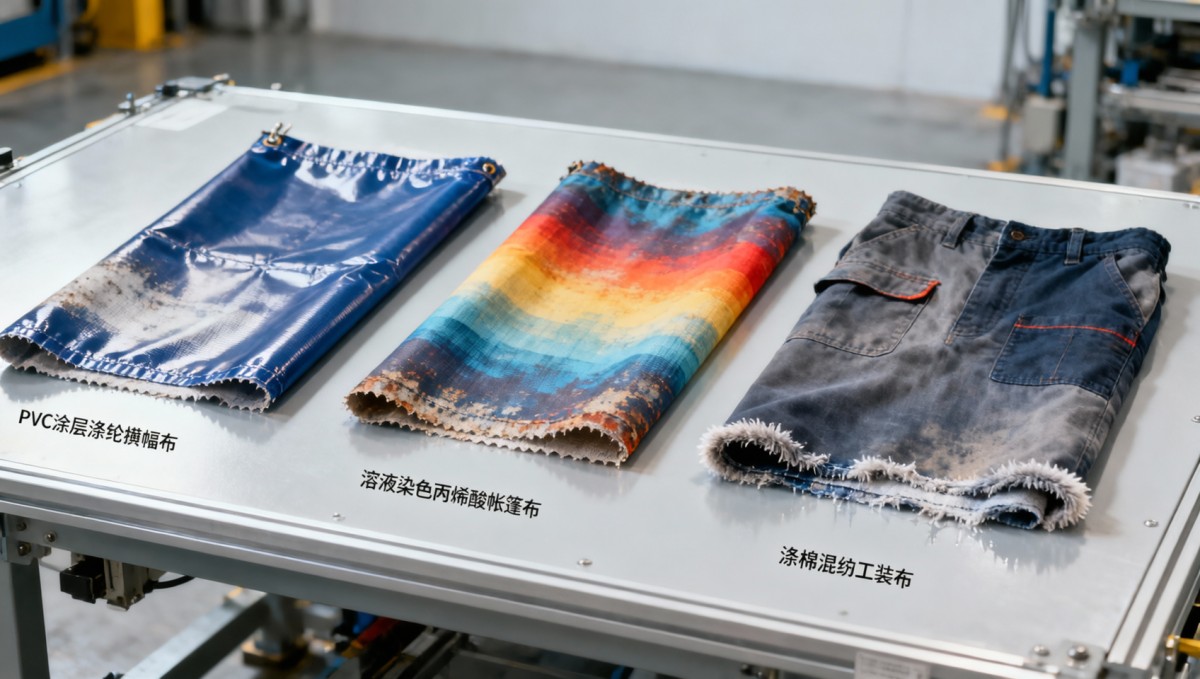
How Procurement Teams Evaluate Trade-Offs: A 5-Dimensional Framework
GTIIN’s TradeVantage analytics reveal that top-performing procurement teams apply five non-negotiable evaluation dimensions—each weighted by application risk profile:
- Environmental Exposure Profile: Duration (e.g., 6+ months continuous sun exposure vs. seasonal use), geography (UV index ≥8 in Middle East vs. ≤4 in Northern Europe), and microclimate (coastal salt spray adds hydrolytic stress).
- Wash Regimen Frequency: Industrial laundering (150+ cycles/year at 60°C) demands different ink-fiber bonding than consumer-grade washing (20–40 cycles/year at 30°C).
- Regulatory Scope: Medical device tents require ISO 13485-compliant printing processes; automotive interior trims need FMVSS 302 flame retardancy compatibility.
- Supply Chain Visibility: Traceability of pigment origin (e.g., TiO₂ from certified mines) is now mandatory for Tier-1 auto suppliers and EU public tenders.
- Post-Print Flexibility: Ability to apply protective coatings (e.g., UV-absorbing polyurethane topcoats) without cracking or delamination after 10,000 flex cycles (ISO 12947-2).
This framework replaces binary “UV vs. wash” thinking with scenario-specific prioritization. For example, a distributor supplying shade sails to Australian construction firms prioritizes UV resistance first—then validates wash-fastness only against spot-cleaning protocols (not full immersion), reducing ink cost by 18–22% versus dual-spec formulations.
Certification Alignment: Where Standards Diverge—and Converge
Global compliance isn’t monolithic. While ASTM D4329 (QUV-A) and ISO 105-C06 (wash-fastness) remain universal benchmarks, regional enforcement varies sharply:
- The U.S. Consumer Product Safety Commission (CPSC) enforces UV degradation limits only for children’s outdoor products (16 CFR Part 1303), not commercial banners.
- The EU’s EcoDesign Directive (EU 2019/2021) mandates recyclability of printed textiles—requiring water-soluble binders that inherently reduce UV stability unless nano-reinforced.
- Japan’s JIS L 0841 standard requires simultaneous testing: UV exposure followed by 5 wash cycles—making it the strictest real-world proxy for durability.
GTIIN’s TradeVantage tracks over 230 active regulatory updates monthly across 52 jurisdictions. For procurement professionals, this means pre-vetted supplier profiles include certification gap analysis—flagging whether a claimed “ISO 105-C06 Class 5” result was tested per domestic (single-cycle) or international (multi-cycle) protocol.
Why Global Importers Rely on GTIIN’s TradeVantage for Digital Printing Fabric Sourcing
Sourcing digital printing fabrics across 50+ industries demands more than spec sheets—it requires contextual intelligence. TradeVantage delivers exactly that: real-time validation of supplier claims against third-party lab reports, production capacity mapping (e.g., which Asian mills run low-VOC pigment dispersion lines), and dynamic lead time tracking (current average: 12–21 days for custom UV-wash-balanced batches).
When you engage with GTIIN, you gain access to:
- Custom parameter matching: Input your UV exposure duration, wash frequency, and compliance targets—we return ranked supplier options with verified test data.
- Sample coordination support: Direct liaison with 17 certified labs across Asia, Europe, and North America for rapid validation (typical turnaround: 7–10 business days).
- Certification translation: Cross-reference of conflicting standards (e.g., ASTM vs. JIS vs. GB/T) into actionable pass/fail criteria for your target market.
Don’t balance UV resistance and wash-fastness on intuition alone. Leverage GTIIN’s TradeVantage platform to align technical performance with procurement reality—backed by live data, not legacy assumptions.
Recommended News
 China Launches First Global Carbon Accounting System for ExportsChina's 'Panoramic Carbon Trace' system revolutionizes global trade with the first comprehensive carbon accounting platform for exports. Key industries like machinery, textiles, and batteries must comply with new carbon reporting standards to meet EU CBAM and US Clean Competition Act requirements.
 Hainan Launches 3-Year Plan to Optimize Cross-Border Trade with 'Zero Wait' PilotHainan's 'Zero Wait' pilot cuts cross-border trade clearance to 1.2 hours under new 3-year plan, boosting RCEP supply chains. Learn how this impacts import/export businesses and logistics.
 Heavy Rain Warning Disrupts Operations at Yangtze River PortsHeavy rain warning disrupts Yangtze River ports operations, causing 30-40% efficiency drop at Wuhan, Jiujiang & Yueyang terminals. Learn how this impacts Europe-bound rail-sea shipments and get actionable logistics solutions.
 New E-commerce Pricing Rules Take Effect, Impacting Cross-Border SellersNew e-commerce pricing rules impact cross-border sellers with stricter regulations on discounts and promotions. Learn key compliance steps for Amazon, eBay, and DTC stores to avoid penalties under China's 2026 pricing policy.
 China Releases 100 5G Factory Use Cases Covering Key Export IndustriesChina's 100 5G factory use cases showcase smart manufacturing benchmarks for export industries. Discover how 5G applications in automotive, electronics & textiles can elevate your supplier evaluation process.
 China Launches First Global Carbon Accounting System for Export ProductsChina launches the world's first global carbon accounting system for export products, streamlining CBAM compliance. Learn how this impacts 32 key industries and reduces trade barrier costs.
 Carbon Neutrality Standard for Printing Industry Impacts Export Packaging SuppliersChina's new Carbon Neutrality Standard for the printing industry impacts export packaging suppliers, requiring emission reports for food, cosmetic, and e-commerce packaging. Learn how this affects your supply chain compliance.
 New China Power Bank Standard GB 4343.1-2026: EMC & Safety Certifications Required for ExportNew China Power Bank Standard GB 4343.1-2026 mandates EMC & safety certifications for exports. Learn key requirements, impacts on manufacturers, and compliance strategies for global markets.
 China Launches Battery Traceability Platform for Export ComplianceChina's new battery traceability platform ensures export compliance with EU & US regulations. Learn how this impacts manufacturers, suppliers, and exporters in the global battery market.
 Red Sea Route Rates Surge 104.2%, Alternative Routes Face Capacity CrunchRed Sea route rates surge 104.2% as geopolitical risks disrupt shipping. Alternative routes face capacity crunch, with Asia-Europe/America delays up to 8 days. Learn cost-saving strategies for exporters & importers.
 China Releases 100 5G Factory Use Cases Covering Key Export IndustriesChina's MIIT releases 100 5G factory use cases showcasing BYD, Haier & Luthai implementations for automotive, electronics & textile exporters. Discover how 5G boosts smart manufacturing competitiveness.
 Hansoh Pharma's Forlai® Included in China's Elderly T2DM GuidelinesHansoh Pharma's Forlai® (pegylated exenatide) achieves milestone as China's first domestically developed GLP-1 drug included in national elderly T2DM guidelines, signaling progress in diabetes innovation and partnership opportunities.
 Starbucks China Launches High-Protein Latte PRO Series with 20g Native Protein per CupStarbucks China launches High-Protein Latte PRO with 20g native protein per cup, signaling growing demand for functional beverages. Explore opportunities for protein ingredients & smart packaging suppliers in this emerging market.
 Printing Industry's First Carbon Neutrality Standard Impacts Packaging Export SuppliersThe printing industry's first carbon neutrality standard impacts packaging export suppliers with mandatory sustainability requirements. Learn how new regulations affect compliance for FMCG brands and manufacturers.
 China's MIIT Promotes IoT Innovation: Focus on Cross-border Equipment Remote Maintenance and Smart Diagnosis ExportsChina's MIIT promotes IoT innovation, focusing on cross-border equipment remote maintenance and smart diagnosis exports. Learn how this policy benefits CNC, robotics, and kitchen equipment manufacturers with SaaS services.
 ESIE 2026: Energy Storage Competition Shifts to Technical BenchmarksESIE 2026 highlights the energy storage industry's shift to technical benchmarks like 15,000-cycle lifespan and UL9540A certification. Discover how this impacts manufacturers and global procurement strategies.
 92nd Shandong Liquor & Food Fair Opens in Tai'an, Focusing on Packaging & Cross-Border ChannelsThe 92nd Shandong Liquor & Food Fair in Tai'an showcases China's packaging innovation & cross-border opportunities, featuring international buyers from RCEP and beyond. Discover emerging trends in green packaging and smart food processing.
 New China Power Bank Standard GB 4343.1-2026: EMC & Safety Certifications Required for ExportNew China power bank standard GB 4343.1-2026 introduces stricter EMC & safety certifications for exports starting April 2026. Learn key compliance requirements and actionable steps for manufacturers and exporters.
 China's Battery Traceability Platform Launches, Export Compliance Now MandatoryChina's new battery traceability platform mandates export compliance for all power batteries. Learn how this impacts manufacturers, exporters & EU regulation compliance. Essential for industry players.
 Red Sea Route Rates Surge 104.2%, South America & SE Asia Capacity TightensRed Sea route rates surge 104.2% amid Houthi attacks, while South America & SE Asia face capacity shortages. Learn how this impacts electronics, fast fashion & medical supply chains, plus actionable strategies for global buyers.
 Bearings manufacturers using outdated heat treatment methods — how to spot themBearings manufacturers using outdated heat treatment risk failures in construction chemicals, healthcare informatics & architectural hardware. Spot red flags fast—get the free benchmark report.





















Popular Tags
Global Trade Insights & Industry
Our mission is to empower global exporters and importers with data-driven insights that foster strategic growth.
Search News
Popular Tags
Industry Overview
The global commercial kitchen equipment market is projected to reach $112 billion by 2027. Driven by urbanization, the rise of e-commerce food delivery, and strict hygiene regulations.