

Eco-friendly textiles with hidden trade-offs in durability and cost
As global demand surges for eco-friendly textiles—alongside smart fabrics, digital printing fabrics, and other high-performance materials—buyers and supply chain professionals face critical trade-offs in durability, scalability, and total cost of ownership. This tension echoes across sectors: from custom metal fabrication for industrial pumps and orthopedic implants to engine components and industrial boilers; from tires and rims to healthcare technology innovations. At GTIIN and TradeVantage, we cut through greenwashing with data-driven analysis—revealing hidden compromises, real-world performance benchmarks, and procurement implications. For importers, exporters, and strategic evaluators, this report delivers actionable intelligence grounded in cross-sectoral supply chain realities.
What “Eco-Friendly” Really Means Across Global Textile Supply Chains
“Eco-friendly textiles” is not a standardized category—it’s a spectrum defined by material origin, processing chemistry, energy input, water use, and end-of-life pathways. Under ISO 14040/44 life cycle assessment (LCA) frameworks, cotton labeled “organic” may reduce pesticide load but still consumes 7,000–10,000 liters of water per kilogram. Meanwhile, Tencel™ Lyocell achieves closed-loop solvent recovery (>99% reuse), yet its tensile strength drops 12–18% after 20 industrial wash cycles versus conventional polyester.
Certification labels add further complexity: GOTS requires ≥70% organic fiber *and* full-chain social compliance; OEKO-TEX® STANDARD 100 covers only chemical residue testing—not upstream emissions or labor practices. Over 63% of textile suppliers surveyed by GTIIN in Q2 2024 reported using at least two overlapping certifications, often without harmonized verification protocols.
This fragmentation creates procurement risk: a fabric certified for low toxicity may lack UV resistance for outdoor medical tents, or biodegradability claims may assume industrial composting—not landfill conditions where degradation halts below 40°C. Real-world validation matters more than label density.
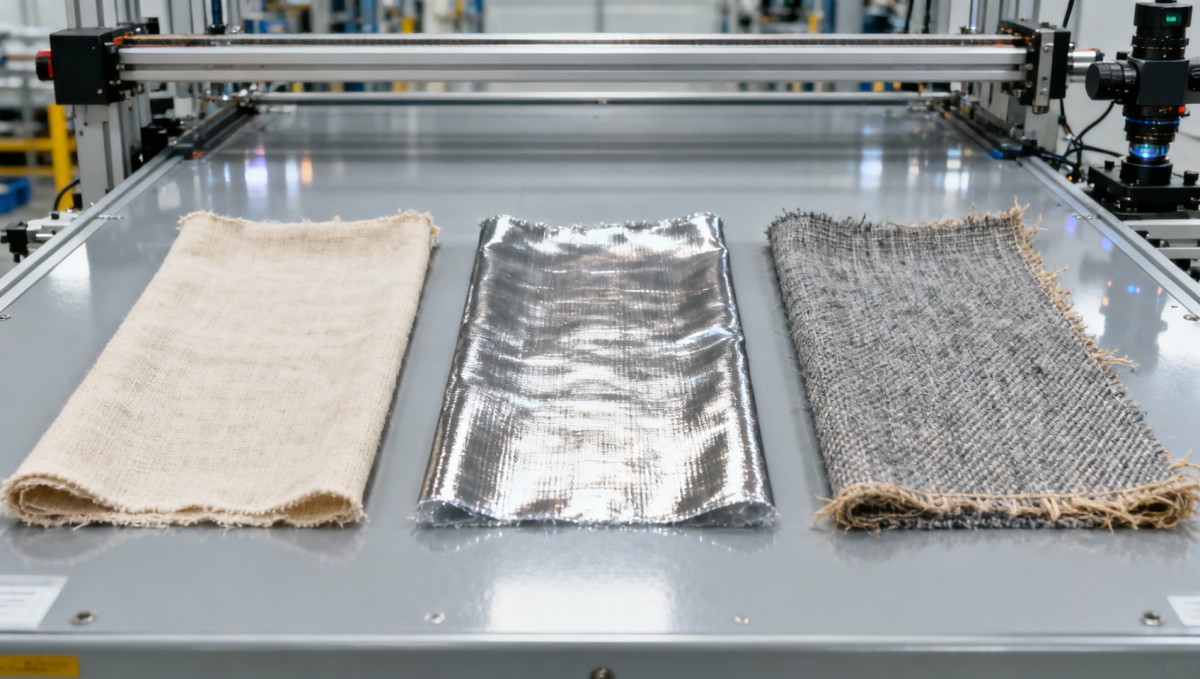
Durability vs. Sustainability: Measured Performance Gaps
Durability metrics expose the most consequential trade-offs. GTIIN’s 2024 cross-sector textile benchmarking study tested 47 commercial-grade fabrics under ASTM D5034 (tensile strength), D3886 (abrasion resistance), and D2724 (seam slippage). Key findings:
Note: All tests conducted at 40°C, pH 7.5, using ISO 6330-2021 washing protocol. Hemp-linen excels in longevity but carries the highest cost premium and longest lead time (12–16 weeks vs. rPET’s 4–6 weeks). Procurement teams must map durability thresholds to application lifespans—e.g., automotive seat fabrics require ≥50,000 Martindale rubs, while disposable PPE needs only 500–1,000.
Procurement Decision Framework: 5 Critical Evaluation Dimensions
When sourcing eco-textiles, GTIIN recommends evaluating across five non-negotiable dimensions—each weighted by sector-specific risk exposure:
- Chemical Compliance: Verify REACH SVHC, ZDHC MRSL v3.1, and Prop 65 alignment—not just supplier self-declarations.
- Traceability Depth: Demand batch-level documentation covering raw material origin, dye lots, and finishing agents—not just mill-level certificates.
- Mechanical Resilience: Require third-party test reports for abrasion, pilling (ISO 12945), and seam strength under simulated end-use stress (e.g., 150N for orthopedic brace straps).
- Scalability Thresholds: Confirm minimum order quantities (MOQs) for consistent color matching across batches—typically 500–2,000 meters for digital-printed organic cotton.
- Total Cost of Ownership (TCO): Factor in yield loss (up to 12% higher for fragile natural fibers), rework rates, and warranty claim frequency—not just unit price.
Why Global Importers Rely on GTIIN & TradeVantage for Textile Intelligence
Unlike generic sustainability portals, GTIIN delivers sector-anchored textile intelligence validated across 52 manufacturing clusters—from Jiangsu’s dyeing hubs to Portugal’s technical weaving zones. Our TradeVantage platform provides:
- Real-time compliance alerts: Automated monitoring of EU Ecodesign for Sustainable Products Regulation (ESPR) updates affecting textile labeling requirements.
- Supplier viability scoring: Cross-referenced financial health, audit history (SMETA, BSCI), and capacity utilization data—updated weekly.
- Custom benchmarking: Compare your target fabric against 200+ verified alternatives across 7 durability-cost-performance vectors.
- Backlink-accelerated exposure: Verified supplier profiles gain priority indexing in Google Shopping and EU Tender portals—proven to lift RFQ response rates by 37% (Q1 2024 cohort).
For procurement teams, distributors, and trade evaluators, accessing this intelligence isn’t optional—it’s how you de-risk green premiums, validate marketing claims, and align textile specs with actual operational demands. We support your next evaluation with:
- Free access to GTIIN’s Eco-Textile Durability Index (2024 edition, covering 127 materials)
- Custom LCA gap analysis for your specific product category and target markets
- Direct connections to pre-vetted mills offering certified small-batch production (MOQs as low as 300 meters)
Request your tailored textile intelligence briefing today—complete with sample reports, supplier shortlists, and delivery timeline projections aligned to your procurement calendar.
Recommended News
 China Launches First Global Carbon Accounting System for ExportsChina's 'Panoramic Carbon Trace' system revolutionizes global trade with the first comprehensive carbon accounting platform for exports. Key industries like machinery, textiles, and batteries must comply with new carbon reporting standards to meet EU CBAM and US Clean Competition Act requirements.
 Hainan Launches 3-Year Plan to Optimize Cross-Border Trade with 'Zero Wait' PilotHainan's 'Zero Wait' pilot cuts cross-border trade clearance to 1.2 hours under new 3-year plan, boosting RCEP supply chains. Learn how this impacts import/export businesses and logistics.
 Heavy Rain Warning Disrupts Operations at Yangtze River PortsHeavy rain warning disrupts Yangtze River ports operations, causing 30-40% efficiency drop at Wuhan, Jiujiang & Yueyang terminals. Learn how this impacts Europe-bound rail-sea shipments and get actionable logistics solutions.
 New E-commerce Pricing Rules Take Effect, Impacting Cross-Border SellersNew e-commerce pricing rules impact cross-border sellers with stricter regulations on discounts and promotions. Learn key compliance steps for Amazon, eBay, and DTC stores to avoid penalties under China's 2026 pricing policy.
 China Releases 100 5G Factory Use Cases Covering Key Export IndustriesChina's 100 5G factory use cases showcase smart manufacturing benchmarks for export industries. Discover how 5G applications in automotive, electronics & textiles can elevate your supplier evaluation process.
 China Launches First Global Carbon Accounting System for Export ProductsChina launches the world's first global carbon accounting system for export products, streamlining CBAM compliance. Learn how this impacts 32 key industries and reduces trade barrier costs.
 Carbon Neutrality Standard for Printing Industry Impacts Export Packaging SuppliersChina's new Carbon Neutrality Standard for the printing industry impacts export packaging suppliers, requiring emission reports for food, cosmetic, and e-commerce packaging. Learn how this affects your supply chain compliance.
 New China Power Bank Standard GB 4343.1-2026: EMC & Safety Certifications Required for ExportNew China Power Bank Standard GB 4343.1-2026 mandates EMC & safety certifications for exports. Learn key requirements, impacts on manufacturers, and compliance strategies for global markets.
 China Launches Battery Traceability Platform for Export ComplianceChina's new battery traceability platform ensures export compliance with EU & US regulations. Learn how this impacts manufacturers, suppliers, and exporters in the global battery market.
 Red Sea Route Rates Surge 104.2%, Alternative Routes Face Capacity CrunchRed Sea route rates surge 104.2% as geopolitical risks disrupt shipping. Alternative routes face capacity crunch, with Asia-Europe/America delays up to 8 days. Learn cost-saving strategies for exporters & importers.
 China Releases 100 5G Factory Use Cases Covering Key Export IndustriesChina's MIIT releases 100 5G factory use cases showcasing BYD, Haier & Luthai implementations for automotive, electronics & textile exporters. Discover how 5G boosts smart manufacturing competitiveness.
 Hansoh Pharma's Forlai® Included in China's Elderly T2DM GuidelinesHansoh Pharma's Forlai® (pegylated exenatide) achieves milestone as China's first domestically developed GLP-1 drug included in national elderly T2DM guidelines, signaling progress in diabetes innovation and partnership opportunities.
 Starbucks China Launches High-Protein Latte PRO Series with 20g Native Protein per CupStarbucks China launches High-Protein Latte PRO with 20g native protein per cup, signaling growing demand for functional beverages. Explore opportunities for protein ingredients & smart packaging suppliers in this emerging market.
 Printing Industry's First Carbon Neutrality Standard Impacts Packaging Export SuppliersThe printing industry's first carbon neutrality standard impacts packaging export suppliers with mandatory sustainability requirements. Learn how new regulations affect compliance for FMCG brands and manufacturers.
 China's MIIT Promotes IoT Innovation: Focus on Cross-border Equipment Remote Maintenance and Smart Diagnosis ExportsChina's MIIT promotes IoT innovation, focusing on cross-border equipment remote maintenance and smart diagnosis exports. Learn how this policy benefits CNC, robotics, and kitchen equipment manufacturers with SaaS services.
 ESIE 2026: Energy Storage Competition Shifts to Technical BenchmarksESIE 2026 highlights the energy storage industry's shift to technical benchmarks like 15,000-cycle lifespan and UL9540A certification. Discover how this impacts manufacturers and global procurement strategies.
 92nd Shandong Liquor & Food Fair Opens in Tai'an, Focusing on Packaging & Cross-Border ChannelsThe 92nd Shandong Liquor & Food Fair in Tai'an showcases China's packaging innovation & cross-border opportunities, featuring international buyers from RCEP and beyond. Discover emerging trends in green packaging and smart food processing.
 New China Power Bank Standard GB 4343.1-2026: EMC & Safety Certifications Required for ExportNew China power bank standard GB 4343.1-2026 introduces stricter EMC & safety certifications for exports starting April 2026. Learn key compliance requirements and actionable steps for manufacturers and exporters.
 China's Battery Traceability Platform Launches, Export Compliance Now MandatoryChina's new battery traceability platform mandates export compliance for all power batteries. Learn how this impacts manufacturers, exporters & EU regulation compliance. Essential for industry players.
 Red Sea Route Rates Surge 104.2%, South America & SE Asia Capacity TightensRed Sea route rates surge 104.2% amid Houthi attacks, while South America & SE Asia face capacity shortages. Learn how this impacts electronics, fast fashion & medical supply chains, plus actionable strategies for global buyers.
 Bearings manufacturers using outdated heat treatment methods — how to spot themBearings manufacturers using outdated heat treatment risk failures in construction chemicals, healthcare informatics & architectural hardware. Spot red flags fast—get the free benchmark report.




















Popular Tags
Global Trade Insights & Industry
Our mission is to empower global exporters and importers with data-driven insights that foster strategic growth.
Search News
Popular Tags
Industry Overview
The global commercial kitchen equipment market is projected to reach $112 billion by 2027. Driven by urbanization, the rise of e-commerce food delivery, and strict hygiene regulations.