

Mexico NOM-019-SCFI-2026 Effective Apr 10, 2026: EMC Certification Required for Automotive Electronics
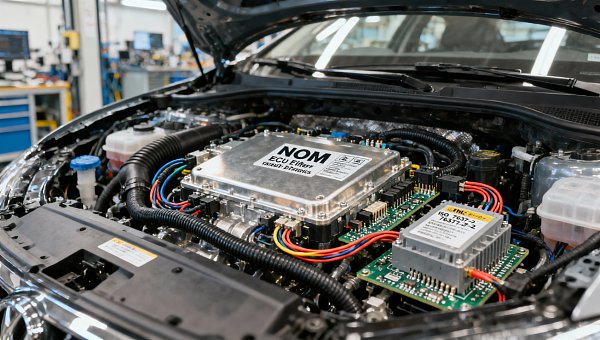
Mexico’s NOM-019-SCFI-2026 — the new mandatory electromagnetic compatibility (EMC) standard for automotive electronics — entered into force on April 10, 2026. This regulation directly affects exporters, manufacturers, and distributors of vehicle-mounted electronic systems targeting the Mexican market, particularly those supplying ADAS camera modules, on-board chargers, and T-Box units. Its enforcement timeline and expanded test requirements signal a material shift in market access conditions.
Event Overview
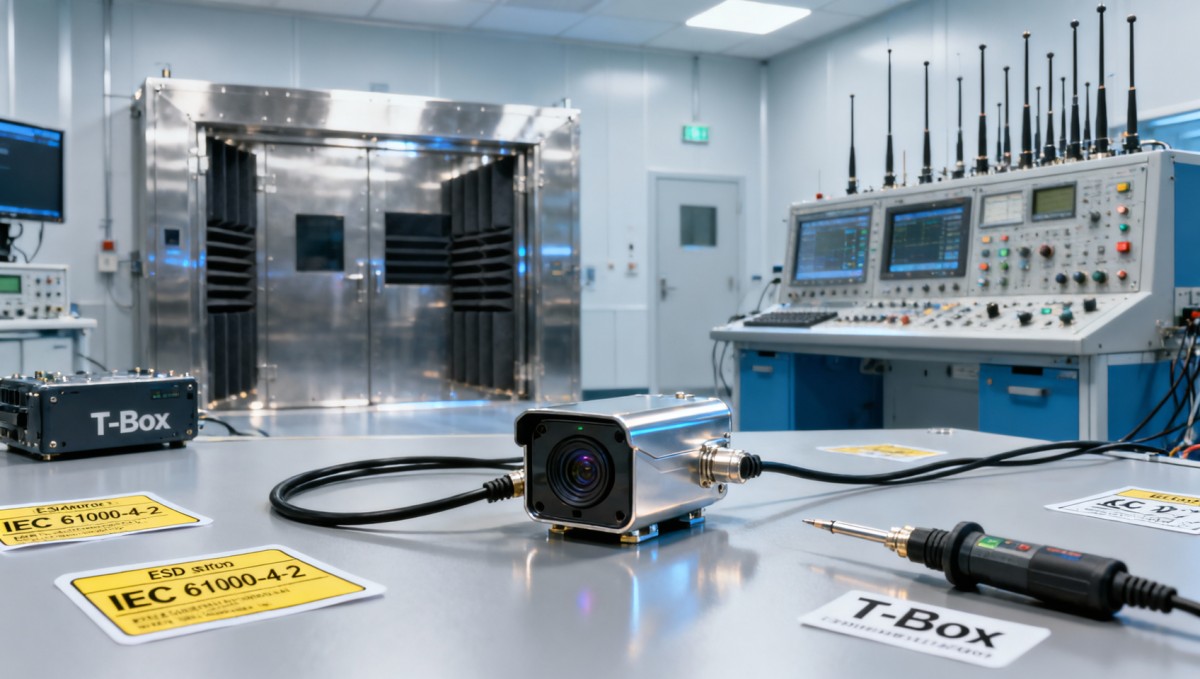
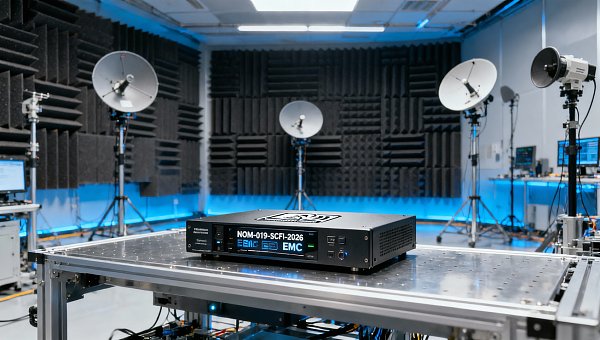
On April 10, 2026, Mexico’s Ministry of Economy officially published NOM-019-SCFI-2026, titled Electromagnetic Compatibility Requirements for Automotive Electronic Equipment. The standard applies to all automotive electronic devices installed in motor vehicles, including but not limited to ADAS camera modules, on-board charging controllers, and telematics control units (T-Box). It introduces two key technical requirements: compliance with IEC 61000-4-2 Ed.3 for electrostatic discharge immunity (±8 kV contact / ±15 kV air discharge), and a newly mandated electrical fast transient/burst (EFT) immunity test. Products without valid NOM-019 certification will be prohibited from customs clearance in Mexico starting July 1, 2026.
Industries Affected
Direct Exporters to Mexico
Companies exporting automotive electronics from China, the U.S., Germany, or other jurisdictions into Mexico must now ensure product-level compliance before shipment. The impact is operational: non-certified units arriving after July 1, 2026, will be detained at port, causing delays, storage fees, and potential re-export or destruction costs.
Original Equipment Manufacturers (OEMs) and Tier-1 Suppliers
OEMs specifying components for vehicles sold in Mexico — and their Tier-1 suppliers delivering ADAS modules, charging controllers, or T-Box units — face revised qualification timelines. Design validation and type testing must now include the full NOM-019 test suite, extending time-to-market for new model launches or regional variants.
Contract Manufacturers and Electronics Assemblers
Firms providing EMS (electronics manufacturing services) for automotive electronics may see increased demand for pre-compliance testing support and design-for-EMC guidance. However, they are also exposed to contractual liability if final products fail certification due to unverified PCB layout, grounding, or shielding practices.
Testing Laboratories and Certification Bodies
Accredited labs authorized to issue NOM-019 reports — especially those with IEC 61000-4-2 Ed.3 and EFT test capabilities — are likely to experience higher inquiry volume. Capacity constraints and lead times for full-scope testing may rise in Q2–Q3 2026, particularly for high-volume ADAS and EV-related components.
What Relevant Enterprises or Practitioners Should Focus On — And How to Respond Now
Confirm certification status and scope of existing NOM-019 approvals
Organizations holding legacy NOM-019-SCFI-2011 or earlier certifications should verify whether those remain valid under the 2026 revision. NOM-019-SCFI-2026 is not a simple update: it replaces prior versions entirely. No grandfathering is indicated in the official notice; re-testing and re-certification are required for all covered products.
Prioritize testing for high-risk categories ahead of the July 2026 clearance ban
ADAS camera modules and T-Box units typically exhibit higher susceptibility to EFT and ESD disturbances due to high-speed data interfaces (e.g., MIPI, Ethernet AVB) and external antenna coupling. These should be prioritized for full-scope testing — especially if previously certified only to older automotive EMC standards such as ISO 11452 or CISPR 25.
Align procurement and documentation with NOM-019’s conformity assessment pathway
NOM-019-SCFI-2026 requires third-party certification by an accredited Mexican conformity assessment body (OCAs). Suppliers must prepare technical files (including schematics, BOMs, PCB layouts, and test reports), maintain traceability for critical components (e.g., ESD protection diodes), and retain records for five years post-certification — all per SCFI’s administrative requirements.
Monitor official updates from Mexico’s Secretariat of Economy and SCFI
The official NOM text, associated test protocols, and lists of authorized OCAs are published via Mexico’s Official Journal of the Federation (DOF) and SCFI’s portal. Minor clarifications — e.g., exemptions for prototype imports or transitional provisions — may appear in subsequent notices. Subscribing to SCFI’s regulatory alerts is advised.
Editorial Perspective / Industry Observation
This regulation is best understood not as an isolated technical update, but as part of Mexico’s broader alignment with international EMC frameworks — particularly IEC-based immunity requirements — and its tightening of post-market surveillance for imported automotive hardware. Analysis来看, NOM-019-SCFI-2026 reflects growing regulatory scrutiny on functional safety-critical electronics, especially as ADAS and EV infrastructure deployment accelerates across Latin America. From industry perspective, it functions less as a one-time compliance hurdle and more as a structural signal: future Mexican automotive regulations are likely to reference IEC/ISO harmonized standards with shorter transition windows. Observation来看, the absence of a phased rollout — coupled with the hard July 2026 customs cutoff — suggests authorities intend rapid enforcement, not gradual adoption.
Conclusion
NOM-019-SCFI-2026 marks a definitive step toward stricter, internationally aligned EMC oversight for automotive electronics entering Mexico. It does not introduce novel technologies or unprecedented limits, but rather enforces rigorously defined, standardized test methods with enforceable deadlines. Current interpretation should treat it as a binding regulatory requirement — not a pending proposal or voluntary guideline. For stakeholders, readiness hinges on verification of current certifications, proactive scheduling of ESD/EFT testing, and close coordination with accredited Mexican OCAs well before mid-2026.
Information Sources
Main source: Official Gazette of the Federation (Diario Oficial de la Federación, DOF), Mexico Ministry of Economy, NOM-019-SCFI-2026 publication dated April 10, 2026.
Points requiring ongoing observation: Updates to the list of authorized Conformity Assessment Bodies (OCAs); any supplementary technical guidance documents issued by SCFI regarding EFT test setup or ADAS-specific application notes.
Recommended News
 EU CBAM Carbon Tariff Starts Oct 2026 for Chinese Battery, Cement, Chemical ExportsEU CBAM carbon tariff hits Chinese battery, cement & chemical exports from Oct 2026 — mandatory emissions reporting starts now. Avoid €98/t default fees.
 Mexico NOM-019-SCFI-2026 Effective: Automotive Electronics Require New EMC CertificationMexico NOM-019-SCFI-2026 takes effect May 1, 2026 — new EMC certification mandatory for automotive electronics, EV accessories & aftermarket parts entering Mexico.
 Vietnam Suspends China Irrigation Equipment SASO Mutual RecognitionVietnam suspends China irrigation equipment SASO mutual recognition—urgent QCVN certification now required for drip tapes, sprinklers & smart controllers.
 Red Sea Diversion Normalized; Asia-Europe Freight Premium at $1,850/TEURed Sea diversion normalized: Asia-Europe freight premium holds at $1,850/TEU — impacting manufacturing, retail & procurement. Act now to optimize costs & resilience.
 FDA Drafts AI Bias Assessment Rule for Imported Medical DevicesFDA's new AI bias assessment rule for imported medical devices demands third-party verified fairness reports—act now to prep your 510(k)/De Novo submissions.
 TÜV Rheinland Updates CE Requirements for Servo DrivesTÜV Rheinland updates CE requirements for servo drives: integrated PLd + EN 61800-3 validation mandatory from July 1, 2026. Act now to avoid EU market delays!
 SABER Phase II Launch: Building Hardware Must Submit Digital Type Test Reports & Unique Product IDsSABER Phase II is live: Building hardware exporters must now submit digital type test reports & secure unique SABER Product IDs—avoid customs delays. Act now!
 IMDG Code 41-24 Enforced: New UN3480 Class 9 Label for Lithium Battery Sea FreightIMDG Code 41-24 enforced: UN3480 Class 9 label now mandatory for lithium battery sea freight — avoid delays in US, EU, UAE & Chile ports.
 RCEP Green Packaging Mutual Recognition Takes EffectRCEP Green Packaging Mutual Recognition takes effect Apr 21, 2026—unlock faster customs clearance for compostable, recycled & bio-based packaging in AU, NZ, JP, KR.
 China’s 10-Dept AI Ethics Review Rule for Exported AI DevicesChina’s 10-dept AI ethics review rule mandates algorithmic bias assessments for exported AI devices—key for EU, ME & SEA markets. Stay compliant ahead of enforcement.
 US CPSC Updates Child Sleep Sack Standard Effective July 2026US CPSC updates child sleep sack standard with new DSST test—mandatory for all U.S.-bound infant sleep sacks from July 2026. Act now to ensure compliance and market access.
 Red Sea Rerouting Pushes Asia-Europe Freight Premium to $1,850/TEURed Sea rerouting pushes Asia-Europe freight premium to $1,850/TEU—impacting importers, manufacturers & logistics providers. Act now to reassess costs, lead times & contracts.
 Mexico NOM-019-SCFI-2026 Effective May 1, 2026: EMC Certification Mandatory for Auto ElectronicsNOM-019-SCFI-2026 EMC certification is now mandatory for auto electronics in Mexico—effective May 1, 2026. Ensure compliance for infotainment, ADAS, OBD-II & more.
") TÜV Rheinland Updates CE Requirements for Servo Drives (PLd + EMC Class 3)TÜV Rheinland updates CE requirements for servo drives: PLd + EMC Class 3 joint validation mandatory from Q3 2026. Act now to avoid delays, rejections, or compliance risks.
TÜV Rheinland Updates CE Requirements for Servo Drives (PLd + EMC Class 3)TÜV Rheinland updates CE requirements for servo drives: PLd + EMC Class 3 joint validation mandatory from Q3 2026. Act now to avoid delays, rejections, or compliance risks. SABER Phase II Launch: Building Hardware Must Submit Digital e-CoC & UPISABER Phase II mandates digital e-CoC & UPI for building hardware imports to Saudi Arabia—act now to ensure customs clearance and market access.
 FDA AI Diagnostic Device Draft Rules: Bias Assessment for ImportsFDA AI diagnostic device draft rules mandate bias assessment for imports — discover how algorithmic fairness impacts 510(k)/De Novo submissions and what to do now.
 RCEP Green Packaging Mutual Recognition Starts June 1, 2026RCEP Green Packaging Mutual Recognition starts June 1, 2026 — unlock faster exports to Australia, NZ, Japan & Korea with GB/T 37572-2025 certification.
 Vietnam Suspends SASO Mutual Recognition for Chinese Irrigation EquipmentVietnam suspends SASO mutual recognition for Chinese irrigation equipment—impacting exporters, testers & suppliers. Act now to avoid 6–8 week delays & 35% cost hikes.
 IMDG Code 41-24 Enforces UN3480 Class 9 Labeling for Li-ion Battery Sea FreightIMDG Code 41-24 enforces UN3480 Class 9 labeling for Li-ion battery sea freight—learn mandatory QR labels, compliance actions & port enforcement risks.
 EU CBAM Enters Enforcement Phase on April 1, 2026EU CBAM enforcement starts April 1, 2026 — critical for Chinese battery materials, construction profiles & industrial coatings exporters. Act now to avoid customs delays.
 Mexico Enforces NOM-019-SCFI-2026 EMC Certification for Auto Electronics from May 2026Mexico enforces NOM-019-SCFI-2026 EMC certification for auto electronics from May 2026 — mandatory local testing, stricter standards, and urgent compliance action required.

















Popular Tags
Global Trade Insights & Industry
Our mission is to empower global exporters and importers with data-driven insights that foster strategic growth.
Search News
Popular Tags
Industry Overview
The global commercial kitchen equipment market is projected to reach $112 billion by 2027. Driven by urbanization, the rise of e-commerce food delivery, and strict hygiene regulations.