

Mexico Enforces NOM-019-SCFI-2026 EMC Certification for Auto Electronics from May 2026
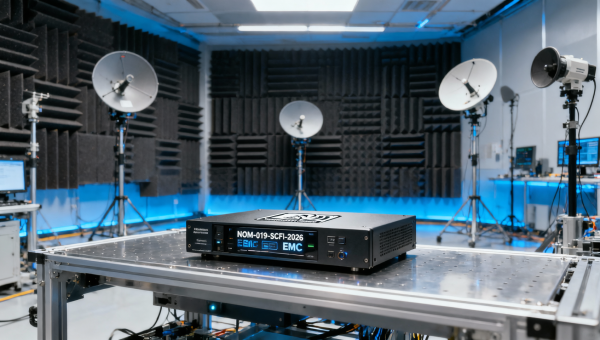
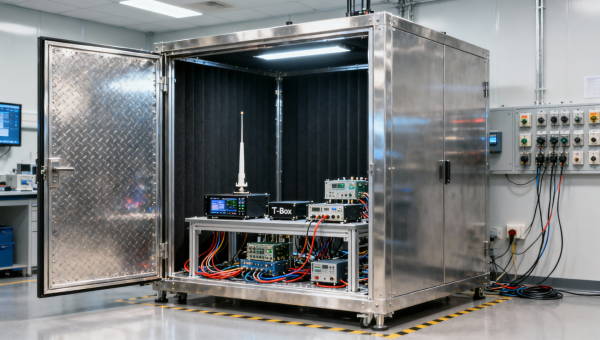
On May 1, 2026, Mexico’s Ministry of Economy (SE) will enforce NOM-019-SCFI-2026 — a new mandatory electromagnetic compatibility (EMC) certification requirement for all imported automotive electronics, including infotainment systems, T-Boxes, and ADAS controllers. This regulation directly affects exporters, OEM suppliers, and testing service providers serving the Mexican auto electronics market, and signals a tightening of technical market access conditions in North America.
Event Overview
Mexico’s Ministry of Economy (SE) published NOM-019-SCFI-2026 on April 18, 2026. The standard mandates full EMC compliance testing — covering radiated emissions, conducted immunity, and electrostatic discharge — for all imported automotive electronics entering Mexico. Enforcement begins May 1, 2026. The regulation replaces NOM-019-SCFI-2018 and increases test stringency by 40%. Only 12 laboratories in China are currently recognized by Mexican authorities to perform the required testing.
Industries Affected
Direct Exporters of Automotive Electronics
Exporters shipping car navigation units, telematics control units (TCUs), or ADAS electronic control units (ECUs) to Mexico must now ensure each model passes local-lab-based EMC testing under the new standard. Unlike the previous version, self-declaration or foreign lab reports are no longer accepted — only tests conducted at SE-recognized labs qualify.
OEM and Tier-1 Suppliers with Mexican Distribution
Suppliers integrating these components into vehicles destined for the Mexican market face extended time-to-market risks. Product homologation timelines will lengthen due to mandatory local testing cycles, potentially delaying vehicle launch schedules or aftermarket part availability.
Testing and Certification Service Providers
Only 12 Chinese laboratories are currently approved to conduct NOM-019-SCFI-2026 testing. This limited capacity may lead to scheduling bottlenecks, especially for high-volume product lines. Non-approved labs — even those accredited to IEC/EN standards — cannot issue valid NOM certificates under this rule.
Import Agents and Customs Brokers
Customs clearance for automotive electronics will require verified NOM certification documentation, including test reports bearing the official NOM mark. Absence of compliant labeling or unverified test reports may result in shipment rejection or detention at Mexican ports.
Key Points for Enterprises and Practitioners
Monitor Official Updates on Lab Recognition Status
As of April 2026, only 12 Chinese labs are listed by SE. Companies should verify current recognition status via SE’s official portal, as additions or delistings may occur before May 2026 — and impact testing lead times.
Identify High-Risk Product Categories Ahead of Enforcement
Products with complex RF interfaces (e.g., 5G T-Boxes, radar-based ADAS modules) are more likely to fail initial EMC rounds under the stricter 2026 criteria. Prioritize pre-compliance screening and design reviews for such items before formal testing.
Distinguish Between Policy Publication and Operational Readiness
The standard was published on April 18, 2026, but enforcement starts May 1, 2026 — leaving minimal transition time. There is no grace period stated. Companies should treat the effective date as absolute for customs purposes, not as a soft deadline.
Prepare Documentation and Labeling Infrastructure Now
NOM-019-SCFI-2026 requires physical application of the NOM conformity mark on products or packaging. Firms must update labeling workflows, quality control checklists, and packaging specifications to ensure visible, durable, and correctly formatted NOM marks accompany every shipment.
Editorial Observation / Industry Perspective
From an industry perspective, NOM-019-SCFI-2026 is best understood not as a technical update alone, but as a deliberate step toward aligning Mexican market access requirements with regional manufacturing standards — particularly those influencing nearshoring supply chains. Analysis来看, the 40% increase in test stringency and restriction to locally performed testing suggest a dual objective: enhancing product safety and strengthening domestic testing infrastructure oversight. Current more relevant interpretation is that this standard functions primarily as a market gatekeeper mechanism — one that favors early-mover suppliers who have already secured lab partnerships and updated product certifications. It is less a signal of future change and more an immediate operational threshold.
Conclusion
This regulation marks a definitive shift in compliance expectations for automotive electronics entering Mexico. Its significance lies not in novelty — EMC requirements existed before — but in its binding scope, localized enforcement, and compressed implementation timeline. For stakeholders, it is more accurately understood as an operational checkpoint than a strategic inflection point: readiness depends on execution discipline, not strategic repositioning.
Source Attribution
Main source: Mexico’s Ministry of Economy (Secretaría de Economía, SE), Official Standard NOM-019-SCFI-2026, published April 18, 2026; effective May 1, 2026.
Noted for ongoing observation: Recognition status of testing laboratories — subject to updates by SE prior to enforcement date.
Recommended News
 US CPSC Updates Child Sleep Sack Standard Effective July 2026US CPSC updates child sleep sack standard with new DSST test—mandatory for all U.S.-bound infant sleep sacks from July 2026. Act now to ensure compliance and market access.
 Red Sea Rerouting Pushes Asia-Europe Freight Premium to $1,850/TEURed Sea rerouting pushes Asia-Europe freight premium to $1,850/TEU—impacting importers, manufacturers & logistics providers. Act now to reassess costs, lead times & contracts.
 Mexico NOM-019-SCFI-2026 Effective May 1, 2026: EMC Certification Mandatory for Auto ElectronicsNOM-019-SCFI-2026 EMC certification is now mandatory for auto electronics in Mexico—effective May 1, 2026. Ensure compliance for infotainment, ADAS, OBD-II & more.
") TÜV Rheinland Updates CE Requirements for Servo Drives (PLd + EMC Class 3)TÜV Rheinland updates CE requirements for servo drives: PLd + EMC Class 3 joint validation mandatory from Q3 2026. Act now to avoid delays, rejections, or compliance risks.
TÜV Rheinland Updates CE Requirements for Servo Drives (PLd + EMC Class 3)TÜV Rheinland updates CE requirements for servo drives: PLd + EMC Class 3 joint validation mandatory from Q3 2026. Act now to avoid delays, rejections, or compliance risks. SABER Phase II Launch: Building Hardware Must Submit Digital e-CoC & UPISABER Phase II mandates digital e-CoC & UPI for building hardware imports to Saudi Arabia—act now to ensure customs clearance and market access.
 FDA AI Diagnostic Device Draft Rules: Bias Assessment for ImportsFDA AI diagnostic device draft rules mandate bias assessment for imports — discover how algorithmic fairness impacts 510(k)/De Novo submissions and what to do now.
 RCEP Green Packaging Mutual Recognition Starts June 1, 2026RCEP Green Packaging Mutual Recognition starts June 1, 2026 — unlock faster exports to Australia, NZ, Japan & Korea with GB/T 37572-2025 certification.
 Vietnam Suspends SASO Mutual Recognition for Chinese Irrigation EquipmentVietnam suspends SASO mutual recognition for Chinese irrigation equipment—impacting exporters, testers & suppliers. Act now to avoid 6–8 week delays & 35% cost hikes.
 IMDG Code 41-24 Enforces UN3480 Class 9 Labeling for Li-ion Battery Sea FreightIMDG Code 41-24 enforces UN3480 Class 9 labeling for Li-ion battery sea freight—learn mandatory QR labels, compliance actions & port enforcement risks.
 EU CBAM Enters Enforcement Phase on April 1, 2026EU CBAM enforcement starts April 1, 2026 — critical for Chinese battery materials, construction profiles & industrial coatings exporters. Act now to avoid customs delays.
 Mexico Enforces NOM-019-SCFI-2026 EMC Certification for Auto Electronics from May 2026Mexico enforces NOM-019-SCFI-2026 EMC certification for auto electronics from May 2026 — mandatory local testing, stricter standards, and urgent compliance action required.
 Global Port Congestion Eases, but Red Sea Rerouting PersistsRed Sea rerouting persists amid easing port congestion—Shanghai–Rotterdam freight rates surge 4.2% to $5,280/TEU. Critical insights for exporters, importers & logistics leaders.
 RCEP Green Packaging Mutual Recognition Starts June 2026RCEP Green Packaging Mutual Recognition starts June 2026 — streamline exports to Australia, NZ, Japan & SK with GB/T 37572-2025 certification. Save time & costs!
 FDA AI Diagnostic Device Rules: ABIA Required from Q3 2026FDA AI diagnostic device rules now require ABIA reports from Q3 2026 — essential for 510(k)/De Novo submissions. Stay compliant, avoid delays & secure U.S. market access.
 Vietnam Suspends SASO Mutual Recognition for Chinese Irrigation EquipmentVietnam suspends SASO mutual recognition for Chinese irrigation equipment—sprinkler systems, drip controllers & irrigation systems now require local QUATEST 3 testing. Act now to avoid 12-week delays & 35% cost hikes.
") TÜV Rheinland Updates CE Certification for Industrial Robot Drives (2026 Q3)TÜV Rheinland’s 2026 Q3 CE certification update for industrial robot drives mandates PLd safety + EN 61800-3 EMC — act now to avoid EU market delays.
TÜV Rheinland Updates CE Certification for Industrial Robot Drives (2026 Q3)TÜV Rheinland’s 2026 Q3 CE certification update for industrial robot drives mandates PLd safety + EN 61800-3 EMC — act now to avoid EU market delays. IMDG Code Amendment 41-24 Takes Effect for Lithium Battery Sea FreightIMDG Code Amendment 41-24 is live: New QR labels, bilingual handling tags & SOC disclosure required for UN3480 lithium battery sea freight—act now to avoid delays.
 SASO SABER Phase II: Digital Type Test Reports Required for Building Hardware from Jun 2026SASO SABER Phase II requires digital type test reports & unique product IDs for building hardware exports to Saudi Arabia — effective June 2026. Act now to ensure compliance and avoid customs delays.
 CPSC Updates 16 CFR Part 1236: New Suffocation Test for Children's Sleep Sacks Effective July 2026CPSC Updates 16 CFR Part 1236: New suffocation test for children's sleep sacks takes effect July 2026 — ensure compliance, avoid delays & protect your U.S. market access.
 EN IEC 62471-2:2026 Effective Oct 2026 for EU LED Lighting ExportsEN IEC 62471-2:2026 mandates full-spectrum photobiological safety testing (200–3000 nm) for all EU-bound LED lighting — effective 1 Oct 2026. Act now to secure CE marking & avoid market access delays.
 AI Patent Tools Security Flaw Triggers Compliance ReviewAI Patent Tools security flaw exposed—triggering urgent compliance reviews for medical device, semiconductor & AI firms. Act now to secure submissions.
















Popular Tags
Global Trade Insights & Industry
Our mission is to empower global exporters and importers with data-driven insights that foster strategic growth.
Search News
Popular Tags
Industry Overview
The global commercial kitchen equipment market is projected to reach $112 billion by 2027. Driven by urbanization, the rise of e-commerce food delivery, and strict hygiene regulations.