

Thermoplastics vs Thermosets: Which One to Source
For buyers comparing thermoplastics and thermosets, the most practical answer is this: source thermoplastics when you need repeatable molding, faster production, recyclability, and easier downstream processing; source thermosets when your application demands higher heat resistance, dimensional stability, chemical resistance, or long-term structural performance under stress. The right choice is rarely about material theory alone. It affects tooling strategy, unit economics, quality risk, regulatory fit, and supplier reliability across your supply chain.
For procurement teams, distributors, and industrial decision-makers, the question is not simply “what is the difference?” but “which material family reduces risk and performs better in the target use case?” In sectors ranging from automotive lighting and charging systems to food processing equipment, water treatment components, and agricultural machinery, that distinction has direct commercial consequences. This guide focuses on how to make the sourcing decision with application fit, cost control, and marketability in mind.
What buyers really need to know before choosing thermoplastics or thermosets
If you are sourcing for industrial use, the key decision points are usually straightforward:
- How much heat, pressure, or chemical exposure will the part face?
- Does the application require flexibility, rigidity, or electrical insulation?
- Will the product be mass-produced, customized, or frequently redesigned?
- How important are recyclability, repairability, and process efficiency?
- What level of supply consistency and quality control can your suppliers guarantee?
In sourcing terms, thermoplastics are often preferred for scalable manufacturing and cost-efficient production. Thermosets are more often chosen where failure is expensive and performance under heat or load matters more than reprocessability. Buyers should therefore evaluate the application first, and the resin family second.
Thermoplastics vs thermosets: the practical difference for sourcing decisions
Thermoplastics soften when heated and can be remolded multiple times. This makes them highly suitable for injection molding, extrusion, thermoforming, and other fast-cycle manufacturing methods. Common examples include polypropylene (PP), polyethylene (PE), polycarbonate (PC), ABS, nylon (PA), and PBT.
Thermosets, by contrast, undergo a curing reaction that creates a permanently cross-linked structure. Once set, they do not melt and remold like thermoplastics. Common examples include epoxy, phenolic, unsaturated polyester, melamine, and polyurethane thermoset systems.
For sourcing teams, that technical distinction translates into business implications:
- Thermoplastics usually offer faster production, easier part redesign, high-volume efficiency, and simpler recycling options.
- Thermosets usually offer better heat resistance, creep resistance, structural integrity, and chemical durability in demanding environments.
This is why thermoplastics are widely used in housings, consumer-facing components, cable insulation, connectors, and lightweight industrial parts, while thermosets remain strong choices for electrical insulation systems, composites, adhesives, high-temperature fixtures, and heavy-duty molded components.
When thermoplastics are the better sourcing choice
Thermoplastics are typically the better option when your project depends on manufacturing speed, cost competitiveness, and design flexibility. For many distributors and OEM buyers, they are the default starting point because they support broad supplier availability and established production ecosystems.
Choose thermoplastics when you need:
- High-volume production at competitive cycle times
- Lightweight parts with good impact resistance
- Complex geometries through injection molding
- Transparency or aesthetic finish for housings, lenses, and covers
- Recyclability or reworkability in production scrap management
- Lower processing energy in some manufacturing setups
Examples where thermoplastics often make sourcing sense include:
- Automotive lighting housings and transparent covers
- Charging cable sheathing and connector components
- Industrial robot casings and cable management parts
- Water treatment valve bodies in selected chemical environments
- Food processing machine guards, bins, and non-load-bearing components
For sourcing professionals, another advantage is market flexibility. Thermoplastics often have wider regional supplier networks, especially in Asia’s molding and compounding base. That can improve lead-time options and increase leverage in price negotiation.
When thermosets are the better sourcing choice
Thermosets become the stronger option when thermal, electrical, chemical, or mechanical performance outweighs the benefits of remolding and fast-cycle production. In many industrial settings, the higher upfront processing complexity is justified by lower failure risk in service.
Choose thermosets when you need:
- High heat resistance with less deformation under load
- Strong dimensional stability across long-term service cycles
- Excellent electrical insulation in critical systems
- Chemical resistance in aggressive operating conditions
- Structural integrity in composite applications or bonded assemblies
Common sourcing scenarios include:
- Electrical switchgear and insulation components
- High-temperature housings and under-hood automotive parts
- Composite structures in industrial and agricultural equipment
- Adhesive and encapsulation systems for electronics
- Corrosion-resistant parts in chemical handling or water treatment systems
If a component must maintain shape and function under repeated thermal cycling or prolonged stress, thermosets often provide a safer sourcing path. For buyers, this is especially important where warranty exposure, regulatory scrutiny, or maintenance costs are high.
Cost comparison: which material family is actually more economical?
Many buyers assume thermoplastics are always cheaper, but the more accurate view is that thermoplastics often reduce manufacturing cost, while thermosets can reduce lifecycle cost in harsh applications.
When comparing total sourcing economics, review these cost layers:
- Raw material cost: varies widely by resin grade, additives, and market conditions
- Tooling and processing cost: thermoplastics often benefit from faster repeat cycles
- Scrap and rework: thermoplastics may offer better recovery options
- Quality failure cost: thermosets may reduce field failure in demanding environments
- Compliance and testing cost: flame retardancy, food contact, and electrical certifications can change economics significantly
- Replacement frequency: longer service life can justify a higher unit price
For procurement teams, the decision should not be based only on ex-works pricing. A lower-cost thermoplastic part that warps, cracks, or degrades early can become more expensive than a higher-cost thermoset part that lasts longer and performs reliably. This is especially relevant in export supply chains where returns and after-sales support are costly.
How to evaluate performance risk before placing an order
The biggest sourcing mistake is choosing a material family based on generic descriptions instead of actual service conditions. Buyers should ask suppliers for application-specific validation rather than relying on brochure claims.
Before approving a source, confirm:
- Operating temperature range
- Chemical exposure profile including oils, cleaning agents, acids, or UV
- Mechanical load and impact requirements
- Electrical insulation or flame-retardant needs
- Food-grade, potable water, RoHS, REACH, UL, or other compliance requirements
- Expected service life and maintenance cycle
Requesting the following from suppliers can improve sourcing confidence:
- Technical data sheets and processing data
- Third-party test reports
- Sample validation or pilot-run parts
- Material traceability documentation
- Reference applications in similar industries
This due diligence matters because material labels alone are not enough. Two compounds within the same family can behave very differently depending on fillers, reinforcement, flame retardants, stabilizers, and formulation quality.
Supply chain factors that should influence your material choice
For global sourcing, performance is only part of the equation. Availability, regional processing capability, and supplier maturity can strongly affect whether thermoplastics or thermosets are the better commercial choice.
Thermoplastics generally offer:
- Broader supplier availability across major manufacturing markets
- Faster production ramp-up for high-volume orders
- More common tooling and molding expertise
- Easier adaptation for product revisions
Thermosets may require more attention to:
- Specialized curing processes and tighter process control
- Longer validation cycles
- Fewer qualified suppliers in some regions
- Greater dependence on formulation expertise
For importers, distributors, and sourcing managers, this means a thermoplastic solution may be easier to dual-source and scale quickly, while a thermoset solution may require deeper supplier audits but deliver stronger long-term reliability in critical applications.
A simple sourcing framework for deciding between thermoplastics and thermosets
If your team needs a fast decision framework, use this approach:
- Define the operating environment. Heat, chemicals, UV, pressure, and electrical requirements come first.
- Rank failure consequences. If part failure creates safety, warranty, or downtime risk, prioritize performance over price.
- Match the manufacturing model. For high-volume, fast-turn production, thermoplastics often win. For specialized high-performance parts, thermosets may be more appropriate.
- Check compliance early. Certification needs can eliminate some options immediately.
- Audit the supplier base. Compare not just quotations, but process control, documentation, and consistency.
- Test before scale-up. Validate with samples or pilot lots under real or simulated service conditions.
In practice, if the part needs flexibility, quick production, visual quality, or mass-market cost efficiency, start with thermoplastics. If it needs thermal endurance, insulation reliability, chemical resistance, or long-term dimensional stability, start with thermosets.
Final verdict: which one should you source?
There is no universal winner in the thermoplastics vs thermosets comparison. The right sourcing choice depends on whether your priority is processing efficiency and scalability or in-service performance and durability.
Source thermoplastics when you want faster production, easier redesign, wider supplier options, and strong cost performance in standard to moderately demanding applications. Source thermosets when your application must withstand heat, load, chemicals, or electrical stress where failure would be costly.
For buyers, procurement teams, and industrial distributors, the smartest approach is to evaluate the real operating environment, quantify failure risk, and compare suppliers on technical credibility as well as price. That is what turns a material choice into a sound sourcing strategy.
Ultimately, the best decision is not the one based on general material categories, but the one aligned with your application, compliance needs, and long-term supply objectives.
Recommended News
 EU CBAM Carbon Tariff Starts Oct 2026 for Chinese Battery, Cement, Chemical ExportsEU CBAM carbon tariff hits Chinese battery, cement & chemical exports from Oct 2026 — mandatory emissions reporting starts now. Avoid €98/t default fees.
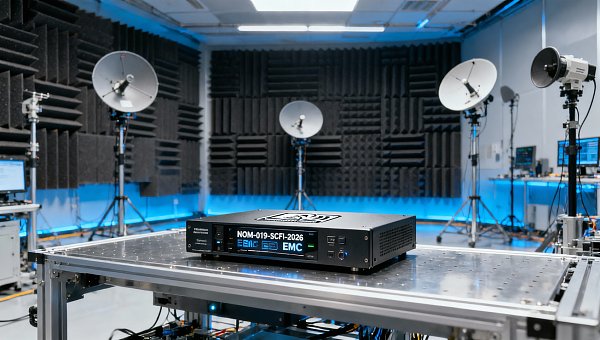
 Mexico NOM-019-SCFI-2026 Effective: Automotive Electronics Require New EMC CertificationMexico NOM-019-SCFI-2026 takes effect May 1, 2026 — new EMC certification mandatory for automotive electronics, EV accessories & aftermarket parts entering Mexico.
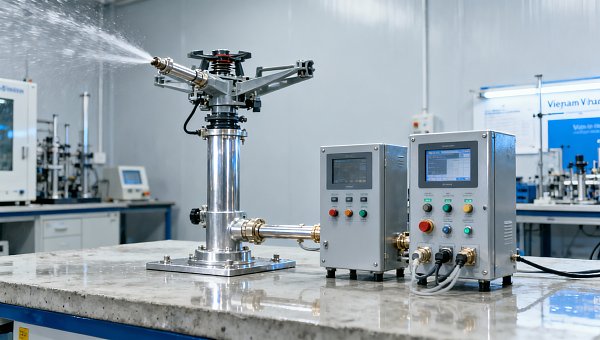
 Vietnam Suspends China Irrigation Equipment SASO Mutual RecognitionVietnam suspends China irrigation equipment SASO mutual recognition—urgent QCVN certification now required for drip tapes, sprinklers & smart controllers.
 Red Sea Diversion Normalized; Asia-Europe Freight Premium at $1,850/TEURed Sea diversion normalized: Asia-Europe freight premium holds at $1,850/TEU — impacting manufacturing, retail & procurement. Act now to optimize costs & resilience.
 FDA Drafts AI Bias Assessment Rule for Imported Medical DevicesFDA's new AI bias assessment rule for imported medical devices demands third-party verified fairness reports—act now to prep your 510(k)/De Novo submissions.
 TÜV Rheinland Updates CE Requirements for Servo DrivesTÜV Rheinland updates CE requirements for servo drives: integrated PLd + EN 61800-3 validation mandatory from July 1, 2026. Act now to avoid EU market delays!
 SABER Phase II Launch: Building Hardware Must Submit Digital Type Test Reports & Unique Product IDsSABER Phase II is live: Building hardware exporters must now submit digital type test reports & secure unique SABER Product IDs—avoid customs delays. Act now!
 IMDG Code 41-24 Enforced: New UN3480 Class 9 Label for Lithium Battery Sea FreightIMDG Code 41-24 enforced: UN3480 Class 9 label now mandatory for lithium battery sea freight — avoid delays in US, EU, UAE & Chile ports.
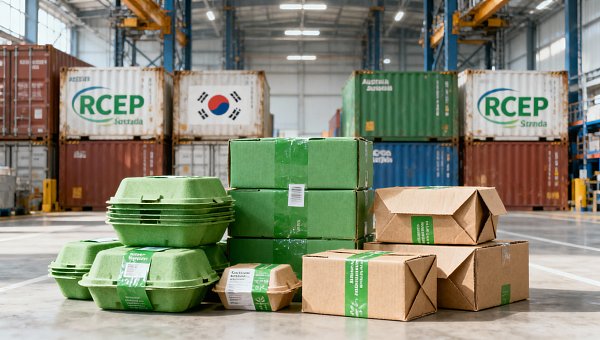
 RCEP Green Packaging Mutual Recognition Takes EffectRCEP Green Packaging Mutual Recognition takes effect Apr 21, 2026—unlock faster customs clearance for compostable, recycled & bio-based packaging in AU, NZ, JP, KR.
 China’s 10-Dept AI Ethics Review Rule for Exported AI DevicesChina’s 10-dept AI ethics review rule mandates algorithmic bias assessments for exported AI devices—key for EU, ME & SEA markets. Stay compliant ahead of enforcement.
 US CPSC Updates Child Sleep Sack Standard Effective July 2026US CPSC updates child sleep sack standard with new DSST test—mandatory for all U.S.-bound infant sleep sacks from July 2026. Act now to ensure compliance and market access.
 Red Sea Rerouting Pushes Asia-Europe Freight Premium to $1,850/TEURed Sea rerouting pushes Asia-Europe freight premium to $1,850/TEU—impacting importers, manufacturers & logistics providers. Act now to reassess costs, lead times & contracts.
 Mexico NOM-019-SCFI-2026 Effective May 1, 2026: EMC Certification Mandatory for Auto ElectronicsNOM-019-SCFI-2026 EMC certification is now mandatory for auto electronics in Mexico—effective May 1, 2026. Ensure compliance for infotainment, ADAS, OBD-II & more.
") TÜV Rheinland Updates CE Requirements for Servo Drives (PLd + EMC Class 3)TÜV Rheinland updates CE requirements for servo drives: PLd + EMC Class 3 joint validation mandatory from Q3 2026. Act now to avoid delays, rejections, or compliance risks.
TÜV Rheinland Updates CE Requirements for Servo Drives (PLd + EMC Class 3)TÜV Rheinland updates CE requirements for servo drives: PLd + EMC Class 3 joint validation mandatory from Q3 2026. Act now to avoid delays, rejections, or compliance risks. SABER Phase II Launch: Building Hardware Must Submit Digital e-CoC & UPISABER Phase II mandates digital e-CoC & UPI for building hardware imports to Saudi Arabia—act now to ensure customs clearance and market access.
 FDA AI Diagnostic Device Draft Rules: Bias Assessment for ImportsFDA AI diagnostic device draft rules mandate bias assessment for imports — discover how algorithmic fairness impacts 510(k)/De Novo submissions and what to do now.
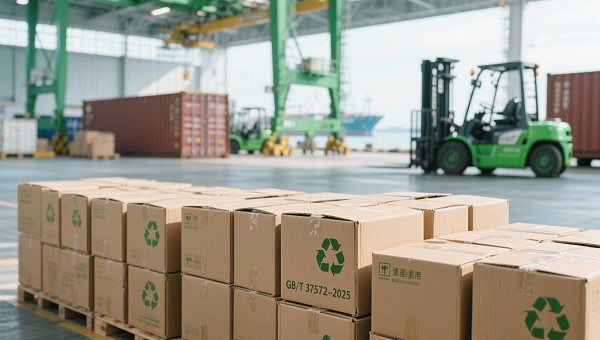
 RCEP Green Packaging Mutual Recognition Starts June 1, 2026RCEP Green Packaging Mutual Recognition starts June 1, 2026 — unlock faster exports to Australia, NZ, Japan & Korea with GB/T 37572-2025 certification.
 Vietnam Suspends SASO Mutual Recognition for Chinese Irrigation EquipmentVietnam suspends SASO mutual recognition for Chinese irrigation equipment—impacting exporters, testers & suppliers. Act now to avoid 6–8 week delays & 35% cost hikes.
 IMDG Code 41-24 Enforces UN3480 Class 9 Labeling for Li-ion Battery Sea FreightIMDG Code 41-24 enforces UN3480 Class 9 labeling for Li-ion battery sea freight—learn mandatory QR labels, compliance actions & port enforcement risks.
 EU CBAM Enters Enforcement Phase on April 1, 2026EU CBAM enforcement starts April 1, 2026 — critical for Chinese battery materials, construction profiles & industrial coatings exporters. Act now to avoid customs delays.
 Mexico Enforces NOM-019-SCFI-2026 EMC Certification for Auto Electronics from May 2026Mexico enforces NOM-019-SCFI-2026 EMC certification for auto electronics from May 2026 — mandatory local testing, stricter standards, and urgent compliance action required.











Popular Tags
Global Trade Insights & Industry
Our mission is to empower global exporters and importers with data-driven insights that foster strategic growth.
Search News
Popular Tags
Industry Overview
The global commercial kitchen equipment market is projected to reach $112 billion by 2027. Driven by urbanization, the rise of e-commerce food delivery, and strict hygiene regulations.