

Catalysts Buying Guide: What Impacts Performance?
Choosing the right catalysts can significantly affect efficiency, product quality, and operating costs across industrial applications. In this buying guide, we explore the key factors that impact catalyst performance—from material composition and reaction conditions to durability, compatibility, and supplier reliability—helping procurement teams, distributors, and market researchers make smarter, data-driven sourcing decisions.
For buyers in global trade and industrial sourcing, catalyst selection is rarely a simple price comparison. A catalyst that performs well in one reactor, feedstock profile, or temperature window may underperform in another. Small differences in pore structure, active metal loading, or contaminant tolerance can change conversion rates, selectivity, and maintenance intervals within weeks.
That is why procurement teams, distributors, and commercial evaluators increasingly assess catalysts through a broader lens: technical fit, lifecycle cost, supply continuity, and supplier responsiveness. In sectors ranging from petrochemicals and refining to environmental treatment and specialty chemicals, the right buying decision supports output stability, lower waste, and faster return on capital.
Understanding What Catalyst Performance Really Means
Catalyst performance is usually measured by four core indicators: activity, selectivity, stability, and regenerability. Activity refers to how quickly the catalyst drives the target reaction. Selectivity shows how much of the desired product is formed versus unwanted byproducts. Stability reflects how long the catalyst maintains performance over 3 months, 6 months, or even multi-year operating cycles. Regenerability matters when plants want to restore performance instead of replacing the material entirely.
In procurement terms, these technical indicators translate into commercial outcomes. A catalyst that raises conversion by even 2% to 5% can materially improve throughput in high-volume operations. Likewise, a drop in selectivity may increase downstream purification costs, energy use, and off-spec production. For buyers, the key question is not only whether a catalyst works, but whether it performs consistently under real plant conditions.
Performance should also be judged against the intended process window. Some catalysts excel at 200°C to 350°C but degrade quickly above that range. Others tolerate sulfur, chlorides, or moisture better, making them more suitable for less controlled feed streams. A technically advanced material is not automatically the best option if it is mismatched with feed composition, pressure profile, or reactor design.
For distributors and market researchers, understanding these distinctions improves product positioning. Buyers often compare catalysts by headline claims alone, yet the practical difference lies in operational compatibility. The most successful sourcing decisions connect catalyst properties to production goals, contamination risks, and replacement economics rather than isolated laboratory figures.
Core indicators buyers should request
- Initial activity data under defined temperature, pressure, and feed conditions.
- Expected selectivity range, such as 85% to 98%, depending on process type.
- Deactivation rate across a stated operating period, often 1,000 to 8,000 hours.
- Mechanical strength data for fixed-bed or fluidized-bed applications.
- Regeneration guidance, including the number of viable cycles and typical recovery percentage.
How Material Composition and Structure Influence Results
Material composition is one of the strongest predictors of catalyst performance. Active metals, metal oxides, zeolites, and support materials each affect reaction behavior differently. For example, the loading percentage of an active component can influence activity, while the support determines thermal resistance, dispersion, and pore accessibility. A 0.5% change in active metal loading may matter less in some reactions and significantly more in highly selective processes.
Surface area and pore structure are equally important. Catalysts with higher surface area often provide more active sites, but pore size distribution determines whether larger molecules can actually reach those sites. In heavy hydrocarbon conversion, pore blockage can quickly reduce efficiency. In gas-phase applications, diffusion limits may be less severe, making other factors such as metal dispersion or resistance to sintering more important.
Shaping and form also affect purchasing decisions. Pellets, extrudates, beads, rings, and powders are not interchangeable. The choice influences pressure drop, reactor loading density, and handling loss. A plant operating at high throughput may prioritize low pressure drop and mechanical crush strength, while a specialty chemical process may prioritize maximum contact efficiency over bulk handling convenience.
Buyers should not evaluate composition in isolation. The right formulation depends on feedstock quality, production target, allowable impurities, and maintenance strategy. A lower-cost catalyst with moderate tolerance may be commercially better than a premium material if the process is stable and turnaround intervals are short. Conversely, unstable feed conditions often justify a more robust composition with longer usable life.
Typical material factors and buying implications
The table below helps procurement teams connect technical characteristics with practical sourcing implications across common industrial catalyst scenarios.
A key takeaway is that material data should be reviewed as a system, not as standalone numbers. Buyers who compare only surface area or only active content often overlook the trade-offs between efficiency, durability, and process tolerance. A more complete specification review reduces the risk of ordering a catalyst optimized for lab testing rather than full-scale operation.
Common sourcing mistake
One frequent error is assuming the highest activity catalyst will always deliver the best economics. In practice, a highly active material that deactivates 30% faster or requires tighter feed purification may increase total operating cost. This is especially relevant for importers and distributors evaluating cross-border offers with limited process documentation.
Reaction Conditions, Contaminants, and Process Compatibility
Even a well-designed catalyst can fail if the operating environment is not aligned with its tolerance limits. Temperature, pressure, gas hourly space velocity, pH, moisture, and contaminant load all shape real-world performance. A catalyst that performs strongly at 250°C may experience rapid sintering at 420°C. Similarly, feed variability of only 3% to 7% in sulfur or chloride content can shorten service life if tolerance margins are low.
Process compatibility matters across sectors. In refining and petrochemicals, feed contaminants can poison active sites. In emission control and environmental treatment, fluctuating gas composition may cause unstable conversion. In fine chemicals, product purity targets can be affected by trace side reactions. Buyers should therefore request operating envelopes rather than generic claims such as “high stability” or “strong compatibility.”
Compatibility also includes physical integration with the plant. Reactor type, bed depth, startup procedure, and regeneration method all influence catalyst behavior. A supplier may provide excellent activity data, but if the catalyst requires a startup sequence of 12 to 24 hours under tightly controlled ramp rates, the plant must confirm it has the operational discipline and instrumentation to meet those conditions.
For business evaluators, the most reliable purchasing approach is to compare catalysts using the actual operating profile, not a generic industry profile. That means reviewing feed composition ranges, upset conditions, historical shutdown patterns, and maintenance capability. In many industrial settings, compatibility reduces risk more effectively than chasing theoretical peak performance.
Operating factors that should appear in a purchase review
- Normal and maximum temperature range, such as 180°C to 320°C with short-term peaks to 350°C.
- Pressure range and flow rate, including expected fluctuations during startup and shutdown.
- Impurity profile, especially sulfur, chlorine, metals, water, or particulate content.
- Required pre-treatment steps before loading, reduction, activation, or conditioning.
- Regeneration feasibility, downtime expectation, and waste handling implications.
Compatibility screening matrix
Before placing large-volume orders, many procurement teams use a screening matrix like the one below to compare operational fit among suppliers.
This type of matrix helps move sourcing conversations beyond unit price. It identifies whether the catalyst can survive realistic process stress, whether the plant can manage the activation protocol, and whether hidden compatibility issues may emerge after installation. For importers, it is also a useful tool when comparing overseas offers that use different testing standards.
Durability, Lifecycle Cost, and Maintenance Planning
A catalyst purchase should be evaluated over its full operating life, not only at the point of order. Two products with similar pricing can produce very different lifecycle economics if one lasts 18 months and the other lasts 30 months under the same service conditions. Replacement frequency, regeneration success rate, shutdown losses, and disposal requirements can all outweigh the initial purchase price.
Durability depends on several mechanisms: thermal sintering, coking, poisoning, fouling, and physical attrition. In fixed-bed systems, pressure drop increase may signal fouling or fragmentation. In moving-bed and fluidized systems, attrition resistance becomes more critical. Buyers should request not only fresh-catalyst data but also aged-performance or cycle-life data whenever available.
Maintenance planning also influences the total cost of ownership. If a catalyst needs frequent sampling, special storage conditions, or a narrow activation protocol, those requirements should be reflected in the commercial evaluation. A lower-cost product may become more expensive if it adds 2 to 3 extra maintenance interventions per quarter or extends turnaround by several days.
For distributors and agents, lifecycle conversations create stronger customer value than simple product promotion. End users increasingly want evidence that a catalyst can support predictable runs, manageable regeneration, and stable output quality. Suppliers able to discuss maintenance intervals, deactivation patterns, and practical service support are often viewed as lower-risk partners.
Lifecycle cost factors that deserve attention
- Replacement cycle length, often measured in months or operating hours.
- Number of successful regeneration cycles before irreversible decline.
- Production losses associated with catalyst changeout or activation downtime.
- Waste handling and environmental compliance costs at end of life.
- Inventory planning, especially when lead time ranges from 4 to 12 weeks.
A practical buying rule
Many industrial buyers use a 3-part cost model: purchase price, operating impact, and downtime effect. This approach is useful because catalysts influence not only chemistry but also uptime. A product that reduces unplanned shutdown risk by even one event per year may justify a higher upfront spend in continuous-process industries.
Supplier Evaluation, Quality Assurance, and Global Sourcing Risk
Supplier reliability is a major performance factor because catalyst outcomes depend on manufacturing consistency, technical documentation, logistics control, and post-sale support. Even where the formulation is nominally the same, batch-to-batch variation in particle size, moisture, active component distribution, or packaging can influence plant results. Buyers should therefore treat supplier evaluation as part of catalyst evaluation, not a separate commercial step.
For international sourcing, supply chain resilience matters as much as chemistry. Lead times of 3 to 8 weeks are common depending on product complexity, order volume, and transport mode. If the catalyst has a limited storage window or sensitivity to moisture and contamination, packaging and warehousing become critical risk points. Procurement teams should confirm shipment conditions, shelf-life guidance, and traceability records before final approval.
Documentation should be detailed enough for technical and commercial review. That usually includes certificate of analysis, recommended operating conditions, handling and safety instructions, quality control parameters, and batch traceability. In B2B trading environments, incomplete documentation often causes delays during approval, customs review, or customer-side qualification.
A strong supplier also supports problem resolution. If performance drifts after commissioning, buyers need timely feedback on likely causes such as feed contamination, reduction errors, loading damage, or process excursions. Technical responsiveness within 24 to 72 hours can be more valuable than a marginal price discount when production continuity is at stake.
Supplier screening checklist
The following table provides a practical framework for evaluating catalyst suppliers in cross-border and domestic sourcing projects.
This checklist is especially useful for distributors and agents managing multiple downstream customers. A technically acceptable catalyst can still create commercial friction if documentation is weak or lead times are unpredictable. Reliable supplier processes reduce qualification delays, claims exposure, and customer dissatisfaction across the sales chain.
A Practical Buying Framework for Procurement Teams and Distributors
To make catalyst sourcing more consistent, procurement teams should follow a structured decision path. This is particularly important when comparing 2 to 4 suppliers across different countries, product formats, or technical standards. A disciplined buying process improves alignment between engineering, purchasing, and commercial stakeholders.
The first step is to define the operating case clearly. Buyers should document feed composition, target output, temperature and pressure range, contamination risk, expected run length, and shutdown constraints. Without this baseline, supplier quotations are difficult to compare because each vendor may assume a different service condition.
The second step is to shortlist catalysts based on technical fit rather than price alone. The third step is to estimate lifecycle impact, including replacement interval, regeneration potential, and downtime effect. The fourth step is to validate supply reliability, documentation quality, and after-sales support. For large-volume or high-risk applications, a controlled trial batch or phased rollout is often worth the extra time.
For information researchers and commercial analysts, this framework also improves market mapping. It helps distinguish commodity catalyst offers from specialized solutions and reveals which suppliers are best positioned for sectors with stricter contamination control, longer operating cycles, or more complex reactor conditions.
Five-step procurement workflow
- Define process parameters and non-negotiable performance thresholds.
- Request comparable technical data and operating envelopes from suppliers.
- Evaluate lifecycle cost over at least one planned operating cycle.
- Review supply continuity, lead time, packaging, and response support.
- Use pilot validation or limited deployment before full-volume commitment.
FAQ: How much sample testing is enough?
For lower-risk applications, bench validation plus batch documentation may be enough. For continuous plants, trial periods of several weeks or a defined number of operating hours are more common. The goal is to observe not only initial activity but also deactivation trend, pressure behavior, and product quality stability.
FAQ: What are common buying mistakes?
Three mistakes appear repeatedly: selecting by unit price only, relying on generalized application claims, and underestimating contaminant sensitivity. Buyers also overlook lead time risk, especially when catalyst changeout windows are narrow and emergency supply is difficult.
FAQ: When should distributors push for deeper technical review?
A deeper review is advisable when the end user runs above 350°C, has variable feed quality, requires high selectivity, or faces costly shutdowns. In these cases, technical mismatch can quickly erase any apparent price advantage and damage downstream customer confidence.
Catalyst performance is shaped by more than chemistry alone. Material composition, pore structure, operating conditions, contaminant tolerance, service life, regeneration options, and supplier reliability all influence whether a product will deliver stable, cost-effective results. For B2B buyers and market participants, the strongest decisions come from matching technical data to real operating conditions and reviewing total lifecycle impact instead of upfront cost alone.
GTIIN and TradeVantage support global exporters, importers, distributors, and sourcing teams with market intelligence that helps turn complex industrial choices into clearer procurement decisions. If you are comparing catalyst suppliers, assessing industrial materials, or building a more reliable sourcing strategy, contact us today to explore tailored insights, supplier visibility opportunities, and more informed global trade solutions.
Recommended News
 EU CBAM Carbon Tariff Starts Oct 2026 for Chinese Battery, Cement, Chemical ExportsEU CBAM carbon tariff hits Chinese battery, cement & chemical exports from Oct 2026 — mandatory emissions reporting starts now. Avoid €98/t default fees.
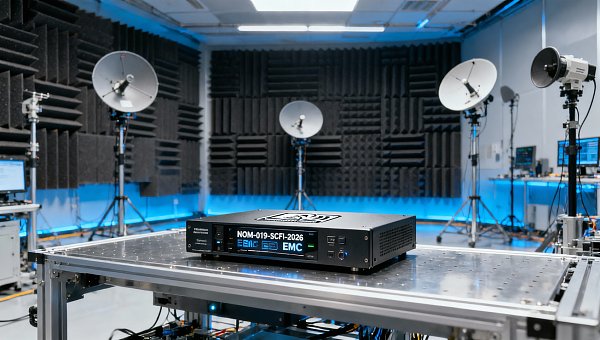
 Mexico NOM-019-SCFI-2026 Effective: Automotive Electronics Require New EMC CertificationMexico NOM-019-SCFI-2026 takes effect May 1, 2026 — new EMC certification mandatory for automotive electronics, EV accessories & aftermarket parts entering Mexico.
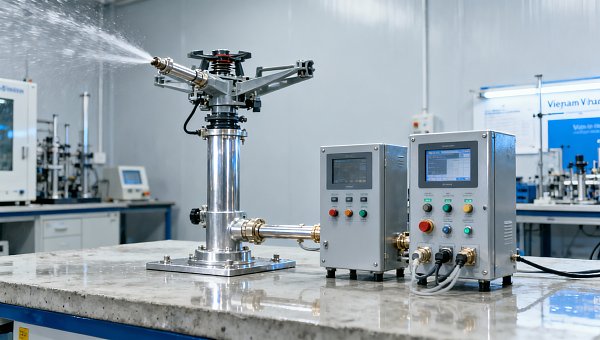
 Vietnam Suspends China Irrigation Equipment SASO Mutual RecognitionVietnam suspends China irrigation equipment SASO mutual recognition—urgent QCVN certification now required for drip tapes, sprinklers & smart controllers.
 Red Sea Diversion Normalized; Asia-Europe Freight Premium at $1,850/TEURed Sea diversion normalized: Asia-Europe freight premium holds at $1,850/TEU — impacting manufacturing, retail & procurement. Act now to optimize costs & resilience.
 FDA Drafts AI Bias Assessment Rule for Imported Medical DevicesFDA's new AI bias assessment rule for imported medical devices demands third-party verified fairness reports—act now to prep your 510(k)/De Novo submissions.
 TÜV Rheinland Updates CE Requirements for Servo DrivesTÜV Rheinland updates CE requirements for servo drives: integrated PLd + EN 61800-3 validation mandatory from July 1, 2026. Act now to avoid EU market delays!
 SABER Phase II Launch: Building Hardware Must Submit Digital Type Test Reports & Unique Product IDsSABER Phase II is live: Building hardware exporters must now submit digital type test reports & secure unique SABER Product IDs—avoid customs delays. Act now!
 IMDG Code 41-24 Enforced: New UN3480 Class 9 Label for Lithium Battery Sea FreightIMDG Code 41-24 enforced: UN3480 Class 9 label now mandatory for lithium battery sea freight — avoid delays in US, EU, UAE & Chile ports.
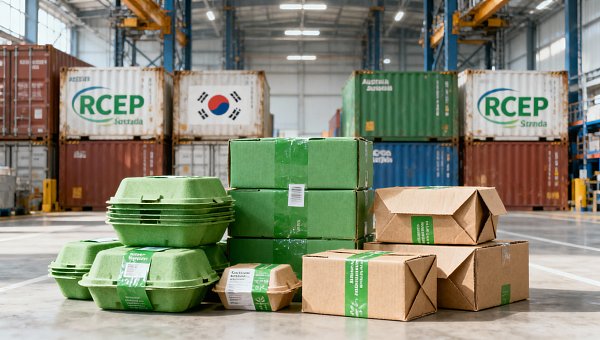
 RCEP Green Packaging Mutual Recognition Takes EffectRCEP Green Packaging Mutual Recognition takes effect Apr 21, 2026—unlock faster customs clearance for compostable, recycled & bio-based packaging in AU, NZ, JP, KR.
 China’s 10-Dept AI Ethics Review Rule for Exported AI DevicesChina’s 10-dept AI ethics review rule mandates algorithmic bias assessments for exported AI devices—key for EU, ME & SEA markets. Stay compliant ahead of enforcement.
 US CPSC Updates Child Sleep Sack Standard Effective July 2026US CPSC updates child sleep sack standard with new DSST test—mandatory for all U.S.-bound infant sleep sacks from July 2026. Act now to ensure compliance and market access.
 Red Sea Rerouting Pushes Asia-Europe Freight Premium to $1,850/TEURed Sea rerouting pushes Asia-Europe freight premium to $1,850/TEU—impacting importers, manufacturers & logistics providers. Act now to reassess costs, lead times & contracts.
 Mexico NOM-019-SCFI-2026 Effective May 1, 2026: EMC Certification Mandatory for Auto ElectronicsNOM-019-SCFI-2026 EMC certification is now mandatory for auto electronics in Mexico—effective May 1, 2026. Ensure compliance for infotainment, ADAS, OBD-II & more.
") TÜV Rheinland Updates CE Requirements for Servo Drives (PLd + EMC Class 3)TÜV Rheinland updates CE requirements for servo drives: PLd + EMC Class 3 joint validation mandatory from Q3 2026. Act now to avoid delays, rejections, or compliance risks.
TÜV Rheinland Updates CE Requirements for Servo Drives (PLd + EMC Class 3)TÜV Rheinland updates CE requirements for servo drives: PLd + EMC Class 3 joint validation mandatory from Q3 2026. Act now to avoid delays, rejections, or compliance risks. SABER Phase II Launch: Building Hardware Must Submit Digital e-CoC & UPISABER Phase II mandates digital e-CoC & UPI for building hardware imports to Saudi Arabia—act now to ensure customs clearance and market access.
 FDA AI Diagnostic Device Draft Rules: Bias Assessment for ImportsFDA AI diagnostic device draft rules mandate bias assessment for imports — discover how algorithmic fairness impacts 510(k)/De Novo submissions and what to do now.
 RCEP Green Packaging Mutual Recognition Starts June 1, 2026RCEP Green Packaging Mutual Recognition starts June 1, 2026 — unlock faster exports to Australia, NZ, Japan & Korea with GB/T 37572-2025 certification.
 Vietnam Suspends SASO Mutual Recognition for Chinese Irrigation EquipmentVietnam suspends SASO mutual recognition for Chinese irrigation equipment—impacting exporters, testers & suppliers. Act now to avoid 6–8 week delays & 35% cost hikes.
 IMDG Code 41-24 Enforces UN3480 Class 9 Labeling for Li-ion Battery Sea FreightIMDG Code 41-24 enforces UN3480 Class 9 labeling for Li-ion battery sea freight—learn mandatory QR labels, compliance actions & port enforcement risks.
 EU CBAM Enters Enforcement Phase on April 1, 2026EU CBAM enforcement starts April 1, 2026 — critical for Chinese battery materials, construction profiles & industrial coatings exporters. Act now to avoid customs delays.
 Mexico Enforces NOM-019-SCFI-2026 EMC Certification for Auto Electronics from May 2026Mexico enforces NOM-019-SCFI-2026 EMC certification for auto electronics from May 2026 — mandatory local testing, stricter standards, and urgent compliance action required.
















Popular Tags
Global Trade Insights & Industry
Our mission is to empower global exporters and importers with data-driven insights that foster strategic growth.
Search News
Popular Tags
Industry Overview
The global commercial kitchen equipment market is projected to reach $112 billion by 2027. Driven by urbanization, the rise of e-commerce food delivery, and strict hygiene regulations.