

How to Avoid Low-Quality Charging Cable Suppliers
Choosing the right charging cable supplier is not just about finding the lowest price. For buyers, distributors, and sourcing teams, the real challenge is avoiding vendors whose products look acceptable on paper but fail in quality, compliance, consistency, or delivery. A low-quality supplier can lead to customer complaints, returns, customs issues, brand damage, and unstable margins. The safest approach is to evaluate suppliers through material quality, certification credibility, manufacturing control, testing standards, and supply reliability before placing volume orders.
In today’s crowded sourcing environment, many charging cable suppliers promote similar claims: fast lead times, factory-direct pricing, and customizable solutions. But not all suppliers can consistently meet the standards required for commercial distribution or international trade. This guide explains how to identify weak suppliers early, what warning signs matter most, and how to build a practical supplier evaluation process that reduces procurement risk.
What buyers are really trying to avoid when sourcing charging cables
When someone searches for how to avoid low-quality charging cable suppliers, the intent is usually practical rather than theoretical. They want to prevent business problems before they happen. For procurement teams, traders, and distributors, the biggest risks typically include:
- High defect rates after delivery
- Misleading claims about cable speed, power output, or durability
- Fake or incomplete compliance certifications
- Inconsistent production quality between samples and bulk orders
- Weak packaging, labeling, or traceability for international distribution
- Late shipments that disrupt inventory planning
- Low prices that create hidden costs through returns, replacements, and customer dissatisfaction
This means the most useful evaluation standard is not “Is this supplier cheap?” but “Can this supplier support stable, compliant, repeatable business?”
Why low-quality charging cable suppliers create bigger problems than most buyers expect
Charging cables are often treated as simple accessories, but they directly affect user experience, device safety, and brand reputation. A poor-quality cable may have weak conductors, unstable connectors, inadequate shielding, low-grade insulation, or poor strain relief. These issues can cause slow charging, overheating, intermittent data transfer, early breakage, or compatibility complaints.
For distributors and resellers, the damage extends beyond one bad shipment. Low-quality supply can lead to:
- Higher after-sales service costs
- Increased return and replacement rates
- Marketplace penalties or negative reviews
- Lost confidence from wholesale customers
- Compliance exposure in regulated markets
- Reduced repeat business from channel partners
In other words, a low-quality charging cable supplier can undermine both revenue and trust. This is why serious buyers should focus on total procurement risk, not unit cost alone.
How to spot a low-quality charging cable supplier early
The best suppliers usually show evidence, consistency, and transparency. Weak suppliers often rely on vague promises. During early screening, watch for these red flags:
- Unclear product specifications: If the supplier cannot clearly explain conductor material, wire gauge, connector type, charging protocol support, jacket material, or durability ratings, quality control is likely weak.
- Generic certification claims: Statements like “CE approved” or “compliant with all markets” without supporting documents should be treated carefully.
- Very low pricing without explanation: Extremely cheap offers often indicate cost-cutting in copper content, shielding, connector plating, or testing procedures.
- Inconsistent communication: Delayed replies, changing answers, and poor technical understanding may signal weak internal management.
- No testing transparency: Reliable suppliers should be able to explain continuity tests, bending tests, insertion tests, charging performance tests, and safety checks.
- Samples that do not match future production commitments: A good-looking sample means little if the factory cannot guarantee consistent batch quality.
- No traceability or production documentation: If the supplier cannot identify materials, batches, or process controls, problem resolution will be difficult later.
These warning signs do not always prove a supplier is unsuitable, but they are strong signals that further verification is necessary before moving to trial or bulk procurement.
What questions should you ask before approving a supplier?
Strong supplier evaluation depends on asking operational questions, not just commercial ones. Many buyers spend too much time negotiating price and too little time checking process reliability. Before approval, ask questions such as:
- What charging standards and power ratings do your cables support?
- What conductor materials are used: pure copper, tinned copper, copper-clad alternatives, or mixed materials?
- What is the wire gauge and how does it affect charging and data performance?
- What test procedures are used before shipment?
- Which certifications or compliance documents are available for each model?
- Can you provide batch-level quality records?
- How do you control connector fit, pull strength, and bending resistance?
- How do you manage consistency between sample orders and mass production?
- What are your defect rate targets and claims handling procedures?
- Can you support custom labeling, barcodes, packaging, and market-specific requirements?
The goal of these questions is not to make sourcing complicated. It is to reveal whether the supplier has a real manufacturing and quality system or is simply trading generic products with limited control.
How to verify charging cable quality beyond product photos
Photos and catalogs rarely reveal true cable quality. A supplier can present attractive packaging while using substandard internal materials. Buyers should verify quality through evidence-based checks.
Start with a structured sample review. Test the cable for:
- Charging stability under expected power conditions
- Data transfer performance if applicable
- Connector insertion and removal smoothness
- Jacket flexibility and finish consistency
- Strain relief strength at both ends
- Heat generation during use
- Durability after repeated bending or connection cycles
Then compare sample performance with written specifications. If the actual performance is vague, unstable, or undocumented, the risk is high. For larger orders, many professional buyers also use third-party inspection, pre-shipment testing, or pilot orders to confirm consistency.
One of the most common sourcing mistakes is approving a supplier based only on one acceptable sample. The better approach is to assess whether the supplier can repeat that quality at scale.
How to check whether certifications and compliance claims are trustworthy
Compliance is one of the biggest areas where low-quality suppliers create hidden risk. Some suppliers misuse certification language, provide outdated reports, or apply one document to multiple products that were never tested equally.
To reduce compliance risk, buyers should verify:
- Whether certificates match the exact product model being sourced
- Whether reports are recent and issued by credible testing bodies
- Whether material declarations meet destination-market requirements
- Whether labeling and packaging meet import and distribution rules
- Whether product claims such as fast charging or high wattage are technically supported
If you sell into regulated or brand-sensitive channels, documentation quality matters almost as much as physical product quality. A supplier that cannot support compliance clearly may expose your business to customs delays, platform removals, or legal issues.
Why manufacturing consistency matters more than a low first quote
Many unreliable charging cable suppliers win orders through aggressive pricing. But low initial quotes often hide unstable production capability. A supplier may deliver one acceptable batch, then quietly downgrade materials or rush production when volume increases.
This is why experienced sourcing teams examine manufacturing consistency, including:
- Raw material sourcing stability
- Standard operating procedures for assembly
- In-process quality inspection
- Finished goods testing
- Packaging control
- Batch traceability
- Capacity planning during peak demand periods
For importers and distributors, consistency is what protects margins over time. A slightly higher-priced supplier with predictable quality is often more profitable than a cheaper vendor with unstable output.
How to compare charging cable suppliers in a practical procurement framework
A simple scorecard can help buyers avoid decisions based only on price or sales presentation. When comparing suppliers, evaluate them across the following dimensions:
- Product quality: Materials, durability, charging performance, and defect history
- Compliance: Valid certifications, accurate product claims, and market readiness
- Manufacturing control: Testing systems, process discipline, and consistency
- Commercial reliability: Pricing transparency, MOQ flexibility, and payment terms
- Delivery capability: Lead times, production capacity, and shipping coordination
- Communication quality: Technical clarity, response speed, and problem-solving ability
- After-sales support: Claims handling, replacement policy, and accountability
This kind of framework helps teams justify supplier selection internally and reduces the chance of selecting a weak supplier because of short-term price pressure.
Best practices for trial orders and risk control before scaling up
Even if a supplier appears credible, it is wise to move in stages. A controlled onboarding process is one of the most effective ways to avoid low-quality charging cable suppliers.
Recommended steps include:
- Request detailed specifications and compliance documents
- Order samples from the exact production line or model intended for bulk purchase
- Run internal or third-party functional tests
- Place a small pilot order before committing to larger volumes
- Check packaging, labeling, and carton quality during the trial stage
- Monitor defect rates and delivery performance closely
- Approve scale-up only after consistency is proven
This approach is especially useful for distributors, sourcing analysts, and brand owners who need dependable long-term supply rather than one-time transactional buying.
What reliable charging cable suppliers usually do differently
Good suppliers do not just sell products. They make procurement easier and safer. In many cases, the difference is visible in how they manage information, quality, and accountability.
Reliable charging cable suppliers typically:
- Provide complete and accurate specifications
- Explain material and performance differences honestly
- Maintain documented testing procedures
- Offer stable communication through professional sales or technical teams
- Set realistic lead times rather than overpromising
- Support custom business needs such as packaging, private label, or market compliance
- Address quality issues with clear corrective action
These traits matter because they signal a supplier that understands long-term B2B cooperation, not just short-term order capture.
Conclusion: choose suppliers that reduce risk, not just cost
Avoiding low-quality charging cable suppliers means looking beyond attractive prices and polished catalogs. The best procurement decisions come from checking what really affects business outcomes: material quality, testing discipline, certification credibility, production consistency, and delivery reliability.
For buyers, distributors, and sourcing professionals, the key takeaway is simple: the cheapest supplier is rarely the lowest-cost option once returns, complaints, delays, and reputational damage are included. A structured supplier evaluation process helps you identify reliable partners, reduce supply chain risk, and build a more stable product portfolio.
If your business depends on consistent accessory quality and dependable international sourcing, choosing the right charging cable supplier should be treated as a strategic decision, not a routine purchase.
Recommended News
 EU CBAM Carbon Tariff Starts Oct 2026 for Chinese Battery, Cement, Chemical ExportsEU CBAM carbon tariff hits Chinese battery, cement & chemical exports from Oct 2026 — mandatory emissions reporting starts now. Avoid €98/t default fees.
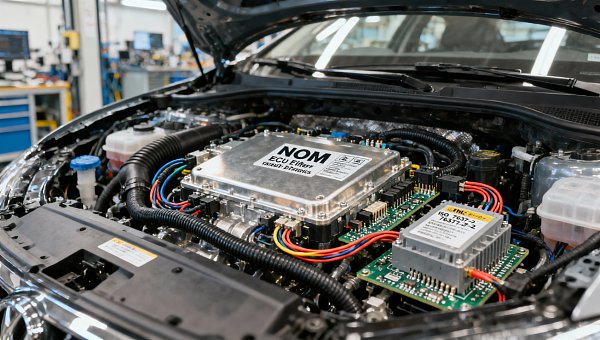
 Mexico NOM-019-SCFI-2026 Effective: Automotive Electronics Require New EMC CertificationMexico NOM-019-SCFI-2026 takes effect May 1, 2026 — new EMC certification mandatory for automotive electronics, EV accessories & aftermarket parts entering Mexico.
 Vietnam Suspends China Irrigation Equipment SASO Mutual RecognitionVietnam suspends China irrigation equipment SASO mutual recognition—urgent QCVN certification now required for drip tapes, sprinklers & smart controllers.
 Red Sea Diversion Normalized; Asia-Europe Freight Premium at $1,850/TEURed Sea diversion normalized: Asia-Europe freight premium holds at $1,850/TEU — impacting manufacturing, retail & procurement. Act now to optimize costs & resilience.
 FDA Drafts AI Bias Assessment Rule for Imported Medical DevicesFDA's new AI bias assessment rule for imported medical devices demands third-party verified fairness reports—act now to prep your 510(k)/De Novo submissions.
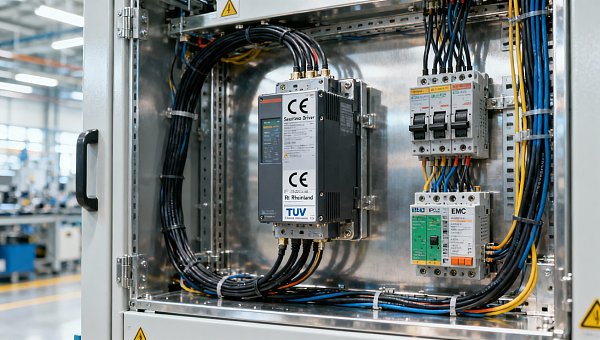
 TÜV Rheinland Updates CE Requirements for Servo DrivesTÜV Rheinland updates CE requirements for servo drives: integrated PLd + EN 61800-3 validation mandatory from July 1, 2026. Act now to avoid EU market delays!
 SABER Phase II Launch: Building Hardware Must Submit Digital Type Test Reports & Unique Product IDsSABER Phase II is live: Building hardware exporters must now submit digital type test reports & secure unique SABER Product IDs—avoid customs delays. Act now!
 IMDG Code 41-24 Enforced: New UN3480 Class 9 Label for Lithium Battery Sea FreightIMDG Code 41-24 enforced: UN3480 Class 9 label now mandatory for lithium battery sea freight — avoid delays in US, EU, UAE & Chile ports.
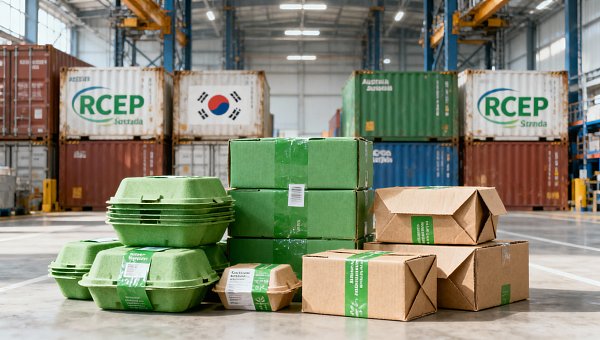
 RCEP Green Packaging Mutual Recognition Takes EffectRCEP Green Packaging Mutual Recognition takes effect Apr 21, 2026—unlock faster customs clearance for compostable, recycled & bio-based packaging in AU, NZ, JP, KR.
 China’s 10-Dept AI Ethics Review Rule for Exported AI DevicesChina’s 10-dept AI ethics review rule mandates algorithmic bias assessments for exported AI devices—key for EU, ME & SEA markets. Stay compliant ahead of enforcement.
 US CPSC Updates Child Sleep Sack Standard Effective July 2026US CPSC updates child sleep sack standard with new DSST test—mandatory for all U.S.-bound infant sleep sacks from July 2026. Act now to ensure compliance and market access.
 Red Sea Rerouting Pushes Asia-Europe Freight Premium to $1,850/TEURed Sea rerouting pushes Asia-Europe freight premium to $1,850/TEU—impacting importers, manufacturers & logistics providers. Act now to reassess costs, lead times & contracts.
 Mexico NOM-019-SCFI-2026 Effective May 1, 2026: EMC Certification Mandatory for Auto ElectronicsNOM-019-SCFI-2026 EMC certification is now mandatory for auto electronics in Mexico—effective May 1, 2026. Ensure compliance for infotainment, ADAS, OBD-II & more.
") TÜV Rheinland Updates CE Requirements for Servo Drives (PLd + EMC Class 3)TÜV Rheinland updates CE requirements for servo drives: PLd + EMC Class 3 joint validation mandatory from Q3 2026. Act now to avoid delays, rejections, or compliance risks.
TÜV Rheinland Updates CE Requirements for Servo Drives (PLd + EMC Class 3)TÜV Rheinland updates CE requirements for servo drives: PLd + EMC Class 3 joint validation mandatory from Q3 2026. Act now to avoid delays, rejections, or compliance risks. SABER Phase II Launch: Building Hardware Must Submit Digital e-CoC & UPISABER Phase II mandates digital e-CoC & UPI for building hardware imports to Saudi Arabia—act now to ensure customs clearance and market access.
 FDA AI Diagnostic Device Draft Rules: Bias Assessment for ImportsFDA AI diagnostic device draft rules mandate bias assessment for imports — discover how algorithmic fairness impacts 510(k)/De Novo submissions and what to do now.
 RCEP Green Packaging Mutual Recognition Starts June 1, 2026RCEP Green Packaging Mutual Recognition starts June 1, 2026 — unlock faster exports to Australia, NZ, Japan & Korea with GB/T 37572-2025 certification.
 Vietnam Suspends SASO Mutual Recognition for Chinese Irrigation EquipmentVietnam suspends SASO mutual recognition for Chinese irrigation equipment—impacting exporters, testers & suppliers. Act now to avoid 6–8 week delays & 35% cost hikes.
 IMDG Code 41-24 Enforces UN3480 Class 9 Labeling for Li-ion Battery Sea FreightIMDG Code 41-24 enforces UN3480 Class 9 labeling for Li-ion battery sea freight—learn mandatory QR labels, compliance actions & port enforcement risks.
 EU CBAM Enters Enforcement Phase on April 1, 2026EU CBAM enforcement starts April 1, 2026 — critical for Chinese battery materials, construction profiles & industrial coatings exporters. Act now to avoid customs delays.
 Mexico Enforces NOM-019-SCFI-2026 EMC Certification for Auto Electronics from May 2026Mexico enforces NOM-019-SCFI-2026 EMC certification for auto electronics from May 2026 — mandatory local testing, stricter standards, and urgent compliance action required.













Popular Tags
Global Trade Insights & Industry
Our mission is to empower global exporters and importers with data-driven insights that foster strategic growth.
Search News
Popular Tags
Industry Overview
The global commercial kitchen equipment market is projected to reach $112 billion by 2027. Driven by urbanization, the rise of e-commerce food delivery, and strict hygiene regulations.