

Water Treatment Systems: Which Option Fits Your Site
Choosing the right water treatment solution starts with understanding your site conditions, compliance targets, and operating costs. For buyers comparing industrial suppliers, this guide explains how different water treatment systems fit varied applications, from food processing and assembly line operations to advanced materials manufacturing. Whether you are conducting market research or supplier evaluation, you will find practical insights to support smarter sourcing decisions.
In cross-industry procurement, water treatment is rarely a one-size-fits-all purchase. A system that performs well for a 20 m³/day packaging plant may be underpowered for a 200 m³/day metal finishing site, while a solution built for high-purity process water may be unnecessarily complex for general utility use. Buyers, distributors, and sourcing teams need a framework that connects water quality, plant layout, compliance exposure, and lifecycle cost.
This article is designed for market researchers, procurement managers, commercial evaluators, and channel partners looking to compare industrial water treatment systems with practical criteria. It focuses on decision-making factors that matter in supplier assessment: feedwater variability, treatment targets, maintenance frequency, footprint, delivery scope, and technical support. The goal is not to promote a single technology, but to help you identify which option fits your site with less risk and better long-term value.
Start With Site Conditions, Water Quality, and End-Use Requirements
The first step in selecting water treatment systems is to define what the water must do inside the facility. Some sites need stable utility water for washing, cooling, or rinsing. Others require treated water for boilers, ingredient preparation, membrane-fed processes, or precision manufacturing. These uses create very different quality thresholds, often involving turbidity, hardness, conductivity, total dissolved solids, microbial load, or suspended solids.
A practical site assessment usually starts with 3 basic inputs: feedwater source, daily flow, and discharge constraints. Feedwater may come from municipal supply, borewell, river intake, recycled process water, or a mixed source. Daily flow can range from less than 10 m³/day for a small workshop to more than 500 m³/day for an industrial complex. Discharge limits may also shape system design if local permits require pH adjustment, solids reduction, or staged wastewater handling.
Buyers should also evaluate seasonal variation. A source that remains stable for 8 months may show higher turbidity, organic load, or hardness during rainy periods or peak production cycles. If the treatment design only matches average values, performance gaps may appear during the worst 10% to 20% of operating conditions. That is why many experienced sourcing teams request both typical and peak water quality data before comparing suppliers.
Key site questions before shortlisting suppliers
Before asking for quotations, it helps to prepare a site profile. This reduces back-and-forth communication and makes supplier proposals easier to compare on equal terms. Even a simple technical brief can improve quotation accuracy, especially when multiple treatment stages are involved.
- What is the incoming water source, and how stable is it across 12 months?
- What is the design flow in m³/hour and the average daily operating time, such as 8, 16, or 24 hours?
- Is the treated water intended for process use, cooling, boiler feed, ingredient contact, or final rinse?
- What compliance thresholds or customer standards must be met at the point of use?
- How much floor space, drainage access, and utility support are available for installation?
The table below shows how common site conditions usually influence the type of water treatment system under consideration. It is a useful starting point for buyers who are screening several technologies across different plant environments.
The main takeaway is that system fit begins with site reality, not brochure claims. A supplier that asks for raw water reports, process diagrams, and operating schedules is usually more likely to provide an accurate proposal than one that prices a standard skid after a short inquiry. For procurement teams, the quality of the pre-sale technical review is itself an important supplier evaluation signal.
Compare the Main Water Treatment System Options by Function
Industrial water treatment systems are often combined in stages, but each technology solves a different problem. Pretreatment equipment removes particles, reduces scaling risk, or stabilizes feedwater. Membrane-based systems reduce dissolved contaminants. Disinfection controls biological risk. Wastewater systems focus on discharge compliance, solids removal, or water reuse. Understanding this functional logic helps buyers avoid comparing unlike-for-like proposals.
For example, a water softener and a reverse osmosis system are not interchangeable, even though both improve water quality. A softener mainly reduces hardness ions such as calcium and magnesium. RO reduces a wider range of dissolved solids, often achieving 95% to 99% salt rejection depending on feed conditions and membrane configuration. In many facilities, the softener acts as pretreatment for RO rather than a substitute.
Similarly, ultrafiltration and multimedia filtration may both be used before sensitive downstream processes, but their performance range, backwash demand, fouling behavior, and capital profile are different. A distributor or sourcing advisor who understands these distinctions can guide end users toward better system matching instead of overengineering the plant.
Technology comparison for industrial buyers
The table below summarizes common water treatment options, where they fit best, and what procurement teams should watch during evaluation.
A frequent sourcing mistake is to focus only on equipment labels rather than treatment sequence. In many projects, performance depends on the order of stages more than on any single unit. A typical line could include multimedia filtration, activated carbon, softening, cartridge filtration, RO, and UV. If pretreatment is undersized, downstream operating cost can rise by 15% to 30% through higher chemical use, membrane fouling, and more frequent shutdowns.
When wastewater treatment becomes part of the decision
For many industrial sites, incoming water treatment and wastewater treatment should be evaluated together. Surface finishing, food processing, textile, chemical blending, and parts washing operations may need equal attention on both ends. If discharge fees are increasing or water availability is tightening, an integrated approach can improve the total site water balance over 12 to 36 months.
In those cases, buyers should ask not only how clean the incoming water becomes, but also how much reject water, sludge, or chemical residuals the process produces. A system that looks attractive on capex may become less competitive if disposal and service costs remain high over a 3-year operating period.
Match the System to Specific Industrial Applications
Application fit is the most practical way to narrow options. Different sectors use water in different risk environments. In food and beverage plants, water often has direct or indirect product contact, so microbial control and consistent quality are central. In assembly operations, the focus may be scaling prevention, surface cleanliness, and repeatable rinse results. In advanced materials manufacturing, conductivity, silica, and dissolved ions may influence yield or coating performance.
This is why procurement teams should avoid generic supplier language such as “suitable for all industries.” A better question is: what exactly has to be controlled at the point of use, and what happens if water quality drifts? In some lines, off-spec water causes minor maintenance inconvenience. In others, it can disrupt product finish, shorten tool life, trigger batch rejection, or increase utility energy demand by 5% to 12% through scaling.
When sourcing for multi-site groups or distributors serving several verticals, it is useful to separate needs into utility-grade, process-grade, and high-purity categories. That allows a more modular supply strategy and helps channel partners recommend the right system family without overselling complexity to every customer.
Application-based selection points
- Food processing and beverage lines often require stable pretreatment, low chlorine exposure for membranes, and validated disinfection steps.
- Assembly line operations typically benefit from hardness control, particle reduction, and rinse quality management to prevent spotting or deposits.
- Metal and surface treatment sites may need stronger integration between process water conditioning and wastewater handling.
- Electronics, coatings, and advanced materials facilities usually need tighter conductivity targets and more disciplined monitoring routines.
The following matrix can help buyers compare treatment priorities by application. It is especially useful during early-stage supplier evaluation and internal budget planning.
What this comparison shows is that the “best” water treatment system depends on operational context. A distributor evaluating suppliers for resale should therefore look for configurable designs, not just fixed packages. Systems that can scale from 1 m³/hour to 20 m³/hour, or that allow pretreatment upgrades without replacing the full line, usually offer stronger commercial flexibility across industries.
Evaluate Total Cost, Maintenance Burden, and Delivery Scope
Purchase price is only one part of the decision. In industrial water treatment, the more important question is often total cost over 24 to 60 months. This includes consumables, salt or chemicals, membrane replacement, labor time, downtime exposure, energy demand, and service availability. Two systems with similar capex can have noticeably different operating profiles after the first 6 to 12 months.
Maintenance intensity should be discussed early. Some buyers accept manual valve operation and basic instrumentation if the site has strong utility staff. Others need semi-automatic or fully automatic systems because production teams cannot support daily monitoring. In practice, filter backwash frequency, cartridge replacement interval, CIP cycle requirements, and spare parts lead time can influence system ownership cost as much as the initial equipment configuration.
Delivery scope is another area where quotations can look similar while offering very different value. One supplier may include pumps, instruments, local control panel, commissioning, and operator training. Another may price only the core skid, leaving chemical dosing, storage tank, pipework tie-in, and startup support to the buyer. Commercial teams should normalize these differences before any price comparison.
A practical procurement checklist
- Confirm design basis: raw water data, design flow, operating hours, and treated water target.
- Request utility consumption estimates, including power, chemical use, reject rate, and backwash water.
- Review maintenance items by month, quarter, and year rather than asking only for “easy maintenance.”
- Check what is included in installation, commissioning, training, documentation, and after-sales response.
- Ask for recommended spare parts for the first 12 months of operation.
The table below helps buyers compare lifecycle-related factors in a structured way during supplier screening.
For sourcing teams serving global supply chains, supplier communication quality also matters. A capable supplier should provide P&ID-level clarity, consumables assumptions, and exception notes in the quotation. This makes commercial review faster and supports cleaner comparison across exporters, regional integrators, and local fabricators.
Implementation Risks, Common Mistakes, and Questions Buyers Should Ask
Even a technically sound water treatment system can underperform if implementation details are weak. Common issues include poor raw water sampling, unrealistic recovery assumptions, insufficient pretreatment, low-quality instrumentation, or inadequate operator training. In many projects, the problem is not the technology itself but the mismatch between design assumptions and site operation.
One of the biggest mistakes is specifying treatment output without defining the acceptance point. If a supplier guarantees conductivity at the RO skid outlet, but the water degrades in downstream storage or piping, the end user may still face production issues. Buyers should clarify whether performance guarantees apply at the equipment discharge, the buffer tank, or the final process use point.
Another frequent issue is underestimating startup readiness. Utility connections, drainage, chemical storage, ventilation, and floor loading should be checked before shipment. A system that arrives on time can still be delayed by 2 to 4 weeks if the site is not prepared for installation. For procurement teams managing multiple vendors, this coordination risk should be included in the project timeline.
Common warning signs during supplier evaluation
- The supplier quotes without asking for raw water analysis or production use case.
- Performance claims are broad, but no operating conditions or exclusions are listed.
- Maintenance intervals are described only as “low” or “minimal” with no replacement schedule.
- No clear distinction is made between equipment supply, installation scope, and commissioning responsibility.
FAQ: How should buyers compare competing proposals?
Use a side-by-side matrix with at least 6 fields: design flow, treated water target, recovery rate, included scope, consumables assumptions, and lead time. If possible, compare cost on a 12-month and 36-month basis, not only capex. This is especially important when one proposal uses more automation or stronger pretreatment than another.
FAQ: What delivery timeline is typical for industrial water treatment systems?
Lead times vary by complexity. Standard filtration or softening skids may ship in 3 to 6 weeks. Custom RO systems, integrated wastewater modules, or projects requiring imported instruments may take 8 to 12 weeks. Site installation and commissioning can add another 5 to 15 days depending on utilities, piping readiness, and local labor coordination.
FAQ: Which metrics matter most for distributor and agent evaluation?
Channel partners should prioritize modularity, documentation quality, spare parts availability, and remote support capability. A technically strong system is harder to scale commercially if drawings are incomplete, consumables are proprietary, or spare parts require long import cycles. For multi-market resale, documentation in standard formats and stable technical response times can be as important as price.
For decision-makers working across international markets, independent industry intelligence also adds value to supplier selection. Tracking sector demand, regional regulatory pressure, and application trends across manufacturing clusters can help buyers choose systems that are not only fit for today’s site, but also aligned with future operating requirements and sourcing strategy.
How to Build a Smarter Sourcing Decision
The best water treatment systems are the ones that match site conditions, process sensitivity, compliance needs, and operating resources in a balanced way. For some facilities, a compact filtration and softening line is enough. For others, reliable performance depends on a staged solution that includes RO, disinfection, monitoring, and wastewater recovery planning. The right answer comes from matching function to risk, not from choosing the most complex package.
For procurement managers and commercial evaluators, a strong decision process includes at least 4 checkpoints: verify raw water data, define end-use quality targets, compare lifecycle cost, and review delivery scope in detail. Distributors and sourcing advisors should also look for scalable product platforms that can serve multiple industries without forcing the same design into every site condition.
As industrial buyers navigate increasingly data-driven supply chains, access to timely market intelligence and supplier visibility becomes part of the competitive advantage. TradeVantage supports that process by helping global exporters, importers, and industry stakeholders identify relevant trends, strengthen trust signals, and improve commercial discovery across sectors. If you are evaluating water treatment suppliers, planning a sourcing project, or exploring industrial solution partners, now is the right time to get a tailored assessment.
Contact us today to discuss your application, request a customized sourcing perspective, or learn more about solution pathways that fit your site, your market, and your long-term operating goals.
Recommended News
 EU CBAM Carbon Tariff Starts Oct 2026 for Chinese Battery, Cement, Chemical ExportsEU CBAM carbon tariff hits Chinese battery, cement & chemical exports from Oct 2026 — mandatory emissions reporting starts now. Avoid €98/t default fees.
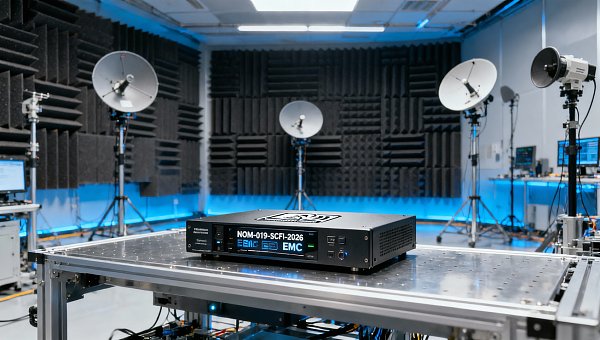
 Mexico NOM-019-SCFI-2026 Effective: Automotive Electronics Require New EMC CertificationMexico NOM-019-SCFI-2026 takes effect May 1, 2026 — new EMC certification mandatory for automotive electronics, EV accessories & aftermarket parts entering Mexico.
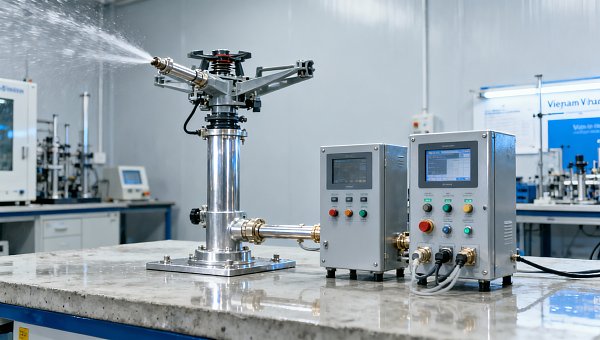
 Vietnam Suspends China Irrigation Equipment SASO Mutual RecognitionVietnam suspends China irrigation equipment SASO mutual recognition—urgent QCVN certification now required for drip tapes, sprinklers & smart controllers.
 Red Sea Diversion Normalized; Asia-Europe Freight Premium at $1,850/TEURed Sea diversion normalized: Asia-Europe freight premium holds at $1,850/TEU — impacting manufacturing, retail & procurement. Act now to optimize costs & resilience.
 FDA Drafts AI Bias Assessment Rule for Imported Medical DevicesFDA's new AI bias assessment rule for imported medical devices demands third-party verified fairness reports—act now to prep your 510(k)/De Novo submissions.
 TÜV Rheinland Updates CE Requirements for Servo DrivesTÜV Rheinland updates CE requirements for servo drives: integrated PLd + EN 61800-3 validation mandatory from July 1, 2026. Act now to avoid EU market delays!
 SABER Phase II Launch: Building Hardware Must Submit Digital Type Test Reports & Unique Product IDsSABER Phase II is live: Building hardware exporters must now submit digital type test reports & secure unique SABER Product IDs—avoid customs delays. Act now!
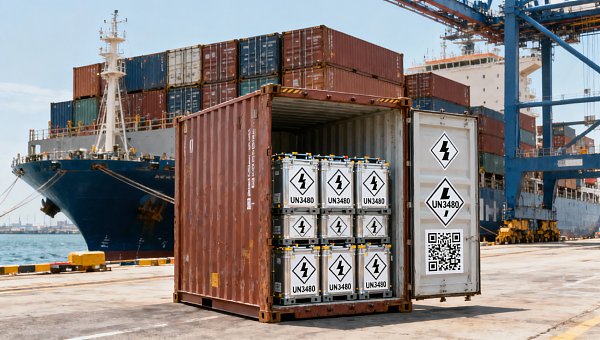
 IMDG Code 41-24 Enforced: New UN3480 Class 9 Label for Lithium Battery Sea FreightIMDG Code 41-24 enforced: UN3480 Class 9 label now mandatory for lithium battery sea freight — avoid delays in US, EU, UAE & Chile ports.
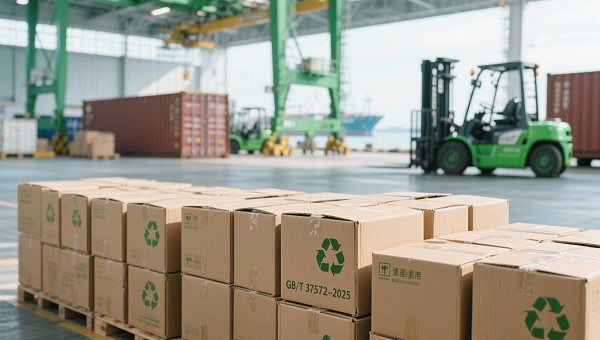
 RCEP Green Packaging Mutual Recognition Takes EffectRCEP Green Packaging Mutual Recognition takes effect Apr 21, 2026—unlock faster customs clearance for compostable, recycled & bio-based packaging in AU, NZ, JP, KR.
 China’s 10-Dept AI Ethics Review Rule for Exported AI DevicesChina’s 10-dept AI ethics review rule mandates algorithmic bias assessments for exported AI devices—key for EU, ME & SEA markets. Stay compliant ahead of enforcement.
 US CPSC Updates Child Sleep Sack Standard Effective July 2026US CPSC updates child sleep sack standard with new DSST test—mandatory for all U.S.-bound infant sleep sacks from July 2026. Act now to ensure compliance and market access.
 Red Sea Rerouting Pushes Asia-Europe Freight Premium to $1,850/TEURed Sea rerouting pushes Asia-Europe freight premium to $1,850/TEU—impacting importers, manufacturers & logistics providers. Act now to reassess costs, lead times & contracts.
 Mexico NOM-019-SCFI-2026 Effective May 1, 2026: EMC Certification Mandatory for Auto ElectronicsNOM-019-SCFI-2026 EMC certification is now mandatory for auto electronics in Mexico—effective May 1, 2026. Ensure compliance for infotainment, ADAS, OBD-II & more.
") TÜV Rheinland Updates CE Requirements for Servo Drives (PLd + EMC Class 3)TÜV Rheinland updates CE requirements for servo drives: PLd + EMC Class 3 joint validation mandatory from Q3 2026. Act now to avoid delays, rejections, or compliance risks.
TÜV Rheinland Updates CE Requirements for Servo Drives (PLd + EMC Class 3)TÜV Rheinland updates CE requirements for servo drives: PLd + EMC Class 3 joint validation mandatory from Q3 2026. Act now to avoid delays, rejections, or compliance risks. SABER Phase II Launch: Building Hardware Must Submit Digital e-CoC & UPISABER Phase II mandates digital e-CoC & UPI for building hardware imports to Saudi Arabia—act now to ensure customs clearance and market access.
 FDA AI Diagnostic Device Draft Rules: Bias Assessment for ImportsFDA AI diagnostic device draft rules mandate bias assessment for imports — discover how algorithmic fairness impacts 510(k)/De Novo submissions and what to do now.
 RCEP Green Packaging Mutual Recognition Starts June 1, 2026RCEP Green Packaging Mutual Recognition starts June 1, 2026 — unlock faster exports to Australia, NZ, Japan & Korea with GB/T 37572-2025 certification.
 Vietnam Suspends SASO Mutual Recognition for Chinese Irrigation EquipmentVietnam suspends SASO mutual recognition for Chinese irrigation equipment—impacting exporters, testers & suppliers. Act now to avoid 6–8 week delays & 35% cost hikes.
 IMDG Code 41-24 Enforces UN3480 Class 9 Labeling for Li-ion Battery Sea FreightIMDG Code 41-24 enforces UN3480 Class 9 labeling for Li-ion battery sea freight—learn mandatory QR labels, compliance actions & port enforcement risks.
 EU CBAM Enters Enforcement Phase on April 1, 2026EU CBAM enforcement starts April 1, 2026 — critical for Chinese battery materials, construction profiles & industrial coatings exporters. Act now to avoid customs delays.
 Mexico Enforces NOM-019-SCFI-2026 EMC Certification for Auto Electronics from May 2026Mexico enforces NOM-019-SCFI-2026 EMC certification for auto electronics from May 2026 — mandatory local testing, stricter standards, and urgent compliance action required.












Popular Tags
Global Trade Insights & Industry
Our mission is to empower global exporters and importers with data-driven insights that foster strategic growth.
Search News
Popular Tags
Industry Overview
The global commercial kitchen equipment market is projected to reach $112 billion by 2027. Driven by urbanization, the rise of e-commerce food delivery, and strict hygiene regulations.