

How to Source Streetwear Without Quality Issues
Sourcing reliable streetwear suppliers can be challenging when quality, consistency, and delivery standards vary widely across global markets. For buyers, distributors, and trade researchers, understanding how to evaluate streetwear production is as important as comparing suppliers in sectors like 3D printing, CNC machines, car maintenance, or outdoor furniture. This guide explores practical ways to reduce quality risks, verify manufacturers, and build a dependable streetwear sourcing strategy that supports long-term business growth.
In B2B apparel trade, quality problems rarely come from one single mistake. They usually result from weak factory screening, unclear specifications, incomplete sample approval, and poor production follow-up. For procurement teams, distributors, and business evaluators, the goal is not only to find a low-cost source, but to build a supply chain that can maintain fabric quality, print durability, stitching consistency, and delivery reliability across repeated orders.
Streetwear adds another layer of complexity because it often combines trend-sensitive design, multiple embellishment methods, lower tolerance for visible defects, and frequent small-to-medium batch orders. A hoodie with a 2 cm print misalignment, a T-shirt with uneven GSM, or a jacket with unstable zipper quality can quickly damage a brand’s resale value. The sections below break down how to source streetwear with fewer quality issues and better commercial control.
Understand What Quality Means in Streetwear Sourcing
Before comparing suppliers, buyers need a clear definition of quality in the streetwear category. In this segment, quality usually covers 4 layers: fabric performance, garment construction, decoration accuracy, and consistency between approved samples and bulk production. A factory may perform well on basic knitwear but still fail when handling oversized fits, washed finishes, puff prints, or embroidered patches that require tighter process control.
Unlike commodity apparel, streetwear buyers often expect distinctive hand feel, shape retention, and visual impact. For example, a heavyweight cotton T-shirt may target 220–280 GSM, while fleece hoodies often range from 320–460 GSM depending on market positioning. If the actual delivered fabric drops 8%–12% below the approved weight, the final garment can feel cheaper, drape differently, and disappoint distributors or retailers.
Core quality checkpoints buyers should define early
A purchase order should not rely on broad statements such as “good quality” or “same as sample.” Buyers should document measurable requirements, especially when sourcing from multiple regions. This is where procurement teams can reduce disputes before production starts.
- Fabric composition, such as 100% cotton, 80/20 cotton-poly blend, or French terry with defined shrinkage tolerance.
- Fabric weight range, for example 240 GSM ±5% for T-shirts or 380 GSM ±7% for hoodies.
- Color fastness, wash performance, and dimensional stability after 1, 3, and 5 wash cycles.
- Construction details, including stitch density, seam reinforcement, bartacks, zipper brand preference, and label positioning.
- Decoration standards for screen print, DTG, embroidery, applique, heat transfer, or garment wash effects.
The table below shows how quality criteria typically differ across common streetwear product categories. This helps buyers avoid using one checklist for all product types.
The key takeaway is simple: quality sourcing starts with category-specific specifications. Buyers who define 6–10 measurable checkpoints per SKU are usually in a stronger position than those relying only on supplier promises or photos.
How to Vet Streetwear Manufacturers Before Placing Orders
Factory selection is where most quality problems can be prevented. A supplier may present strong visuals and competitive quotes, yet still subcontract production, change mills without notice, or struggle with repeatability. For streetwear sourcing, manufacturer vetting should combine document review, technical assessment, and production capacity checks.
Start by asking what percentage of the factory’s output is apparel similar to your category. A supplier focused 70% on uniforms and only 10% on fashion streetwear may not be the right fit for oversized silhouettes, pigment dye, or specialty trims. Product relevance matters more than broad capacity claims.
A practical supplier verification process
A structured vetting flow helps procurement teams compare suppliers on more than price. In many cases, 3–5 screened factories are enough for a serious sourcing round.
- Review company profile, export markets, and product specialization over the last 12–24 months.
- Request recent sample photos and close-up production details, not only styled marketing images.
- Confirm in-house versus outsourced processes for knitting, dyeing, printing, embroidery, washing, and packing.
- Ask for a sample timeline, bulk lead time, typical MOQ, and re-order capability.
- Conduct a video audit or third-party inspection before bulk approval if the order value is material.
The following comparison table can help sourcing teams evaluate whether a supplier is operationally suitable for long-term cooperation, not just the first order.
A manufacturer that answers technical questions clearly, provides process visibility, and flags risks early is usually more valuable than a cheaper supplier that simply says yes to everything. In B2B sourcing, transparency often predicts reliability better than the initial unit price.
Platforms that aggregate supplier intelligence, industrial updates, and cross-market trade information can support this step. For procurement teams using global B2B information hubs such as GTIIN and TradeVantage, supplier discovery becomes stronger when market visibility is combined with structured factory evaluation, lead-time benchmarking, and trade signal analysis.
Use Samples, Specs, and Testing to Reduce Quality Risk
Sampling is not just a design confirmation step. It is the most effective tool for controlling quality before bulk production begins. In streetwear sourcing, buyers should treat the sample stage as a technical approval process that verifies fit, fabric, wash effect, and decoration durability under realistic conditions.
A common mistake is approving a showroom-quality pre-production sample without checking whether the same fabric lot, trim source, and print process will be used in bulk. This gap is especially risky for acid wash, garment dye, puff print, and contrast stitching, where small process differences can create visible inconsistencies across 500 to 5,000 pieces.
Recommended sample stages
For most B2B streetwear programs, 3 sample stages provide a practical balance between speed and control. Higher-value programs may add one more stage for wash or fit revision.
- Proto sample: used to verify silhouette, fit concept, and major construction points.
- Fit or revised sample: used to confirm measurements, grading, and wearability after comments.
- Pre-production sample: made with bulk-intended fabric, trims, print, labels, and packaging details.
Testing points that matter in streetwear
Testing does not always require expensive laboratory work on every order, but some checks are essential. Buyers should at minimum confirm wash shrinkage, print adhesion, color migration risk, seam slippage where relevant, and measurement tolerance. Typical garment measurement tolerance may range from ±1 cm on key points for knit tops, while print placement tolerance often needs to stay within 0.5–1.0 cm.
The table below outlines a practical quality control framework that many sourcing teams use before authorizing bulk production.
The strongest sourcing programs document every approved detail in a tech pack or production sheet. That file should include measurements, artwork size, Pantone references where relevant, stitch details, packaging method, and defect acceptance rules. Good documentation reduces costly assumptions and gives buyers a stronger basis for claims if quality drops in bulk.
Manage Production, Lead Times, and Inspection During Bulk Orders
Even a strong supplier can produce weak results if bulk production is not monitored. Streetwear orders are vulnerable to delays caused by dyeing queues, print scheduling, fabric substitutions, and trim shortages. A realistic production calendar gives buyers better control than a simple ex-factory promise.
For many programs, the total cycle from approved pre-production sample to shipment may range from 25–60 days, depending on fabric development, order size, and finishing complexity. Basic jersey programs can move faster, while washed outerwear with custom trims may take significantly longer. Procurement teams should break this into milestones rather than managing only the final deadline.
Production milestones worth tracking
A milestone-based approach allows sourcing teams to detect risk early, especially if the supplier is handling several processes through different subcontractors.
- Material booking and fabric lab dip or strike-off approval.
- Bulk fabric arrival and initial quality check.
- Cutting start and first inline sewing review.
- Decoration or washing confirmation on pilot pieces.
- Final inspection, packing verification, and shipment release.
Inline inspection is particularly useful because many defects are cheaper to fix before production reaches 30%–40% completion. If issues such as skipped stitches, shade variation, or print misplacement are only caught at final inspection, rework costs can escalate and delivery dates may slip by 7–14 days.
What buyers should verify during final inspection
- Measurement results across multiple sizes, not just one salesman sample.
- Color consistency between cartons and between size ratios.
- Print, embroidery, zipper, button, and label application quality.
- Packaging accuracy, barcode placement, carton marking, and quantity reconciliation.
A disciplined inspection process also matters for distributors and agents who need predictable replenishment. Re-order success depends on the factory’s ability to maintain pattern, trim, and fabric continuity over multiple cycles, not only to ship one acceptable lot.
Common Mistakes, Risk Signals, and Smarter Sourcing Decisions
Many quality failures in streetwear sourcing are preventable. The most common mistake is buying mainly on unit price. A quote that is 8% lower may hide thinner fabric, lower stitch density, unstable printing, or less experienced subcontractors. In fashion-driven categories, a small quality drop can create a much larger commercial loss through claims, markdowns, or damaged brand reputation.
Another frequent issue is unclear communication. Buyers may send a mood board and basic measurements, while the supplier interprets the garment using different fabric bases or trim assumptions. Without a complete tech pack and an approved reference sample, even a capable manufacturer may deliver a product that is technically acceptable but commercially wrong.
Red flags that deserve attention
- The supplier changes fabric source after sample approval without written confirmation.
- Bulk lead time sounds unusually short for the process complexity, such as 10 days for custom washed hoodies with embroidery.
- The quotation lacks detail on fabric GSM, trim quality, print method, or packaging standards.
- Communication becomes slow or vague once technical questions are raised.
- There is no clear policy for defective rate handling, rework, or claim resolution.
Streetwear buyers can improve sourcing outcomes by using a scorecard approach. Instead of assigning 100% weight to price, distribute points across quality, technical communication, lead time, MOQ fit, and repeat-order capability. In many cases, a balanced supplier with a moderate MOQ of 200–500 pieces per style and reliable process control creates stronger margins than an ultra-cheap source with inconsistent output.
FAQ: questions buyers often ask
How many suppliers should I compare for a new streetwear program?
For most sourcing projects, comparing 3 to 5 qualified suppliers is enough. Fewer than 3 may limit your benchmark data, while reviewing more than 5 often slows decisions without adding proportionate value.
What MOQ is common in streetwear manufacturing?
MOQ varies by product and decoration, but many factories set entry levels around 100–300 pieces per color or style for simpler items. Custom fabric development, special washing, or mixed embellishment can increase MOQ requirements.
How long should bulk production take?
A common range is 25–60 days after final sample approval. Basic jersey styles may move closer to the lower end, while outerwear or heavily decorated garments usually require more time.
Should I use third-party inspection?
If order value is significant, if the supplier is new, or if the product includes strict visual standards, third-party inspection is often a practical safeguard. It is especially useful before shipment release.
Reliable streetwear sourcing depends on disciplined supplier evaluation, precise specifications, controlled sampling, and milestone-based production management. Buyers who define measurable quality targets, verify manufacturer capability, and inspect before shipment are far more likely to avoid costly defects and unstable replenishment.
For information researchers, procurement teams, distributors, and commercial evaluators, better sourcing decisions start with better market intelligence. GTIIN and TradeVantage support that process by connecting global trade insight, supplier visibility, and industrial analysis into a more informed sourcing workflow. To reduce quality risk in your next streetwear project, contact us for tailored sourcing intelligence, supplier evaluation support, and deeper trade insights.
Recommended News
 EU CBAM Carbon Tariff Starts Oct 2026 for Chinese Battery, Cement, Chemical ExportsEU CBAM carbon tariff hits Chinese battery, cement & chemical exports from Oct 2026 — mandatory emissions reporting starts now. Avoid €98/t default fees.
 Mexico NOM-019-SCFI-2026 Effective: Automotive Electronics Require New EMC CertificationMexico NOM-019-SCFI-2026 takes effect May 1, 2026 — new EMC certification mandatory for automotive electronics, EV accessories & aftermarket parts entering Mexico.
 Vietnam Suspends China Irrigation Equipment SASO Mutual RecognitionVietnam suspends China irrigation equipment SASO mutual recognition—urgent QCVN certification now required for drip tapes, sprinklers & smart controllers.
 Red Sea Diversion Normalized; Asia-Europe Freight Premium at $1,850/TEURed Sea diversion normalized: Asia-Europe freight premium holds at $1,850/TEU — impacting manufacturing, retail & procurement. Act now to optimize costs & resilience.
 FDA Drafts AI Bias Assessment Rule for Imported Medical DevicesFDA's new AI bias assessment rule for imported medical devices demands third-party verified fairness reports—act now to prep your 510(k)/De Novo submissions.
 TÜV Rheinland Updates CE Requirements for Servo DrivesTÜV Rheinland updates CE requirements for servo drives: integrated PLd + EN 61800-3 validation mandatory from July 1, 2026. Act now to avoid EU market delays!
 SABER Phase II Launch: Building Hardware Must Submit Digital Type Test Reports & Unique Product IDsSABER Phase II is live: Building hardware exporters must now submit digital type test reports & secure unique SABER Product IDs—avoid customs delays. Act now!
 IMDG Code 41-24 Enforced: New UN3480 Class 9 Label for Lithium Battery Sea FreightIMDG Code 41-24 enforced: UN3480 Class 9 label now mandatory for lithium battery sea freight — avoid delays in US, EU, UAE & Chile ports.
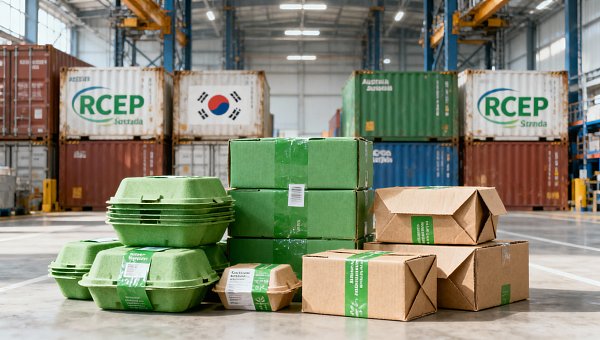
 RCEP Green Packaging Mutual Recognition Takes EffectRCEP Green Packaging Mutual Recognition takes effect Apr 21, 2026—unlock faster customs clearance for compostable, recycled & bio-based packaging in AU, NZ, JP, KR.
 China’s 10-Dept AI Ethics Review Rule for Exported AI DevicesChina’s 10-dept AI ethics review rule mandates algorithmic bias assessments for exported AI devices—key for EU, ME & SEA markets. Stay compliant ahead of enforcement.
 US CPSC Updates Child Sleep Sack Standard Effective July 2026US CPSC updates child sleep sack standard with new DSST test—mandatory for all U.S.-bound infant sleep sacks from July 2026. Act now to ensure compliance and market access.
 Red Sea Rerouting Pushes Asia-Europe Freight Premium to $1,850/TEURed Sea rerouting pushes Asia-Europe freight premium to $1,850/TEU—impacting importers, manufacturers & logistics providers. Act now to reassess costs, lead times & contracts.
 Mexico NOM-019-SCFI-2026 Effective May 1, 2026: EMC Certification Mandatory for Auto ElectronicsNOM-019-SCFI-2026 EMC certification is now mandatory for auto electronics in Mexico—effective May 1, 2026. Ensure compliance for infotainment, ADAS, OBD-II & more.
") TÜV Rheinland Updates CE Requirements for Servo Drives (PLd + EMC Class 3)TÜV Rheinland updates CE requirements for servo drives: PLd + EMC Class 3 joint validation mandatory from Q3 2026. Act now to avoid delays, rejections, or compliance risks.
TÜV Rheinland Updates CE Requirements for Servo Drives (PLd + EMC Class 3)TÜV Rheinland updates CE requirements for servo drives: PLd + EMC Class 3 joint validation mandatory from Q3 2026. Act now to avoid delays, rejections, or compliance risks. SABER Phase II Launch: Building Hardware Must Submit Digital e-CoC & UPISABER Phase II mandates digital e-CoC & UPI for building hardware imports to Saudi Arabia—act now to ensure customs clearance and market access.
 FDA AI Diagnostic Device Draft Rules: Bias Assessment for ImportsFDA AI diagnostic device draft rules mandate bias assessment for imports — discover how algorithmic fairness impacts 510(k)/De Novo submissions and what to do now.
 RCEP Green Packaging Mutual Recognition Starts June 1, 2026RCEP Green Packaging Mutual Recognition starts June 1, 2026 — unlock faster exports to Australia, NZ, Japan & Korea with GB/T 37572-2025 certification.
 Vietnam Suspends SASO Mutual Recognition for Chinese Irrigation EquipmentVietnam suspends SASO mutual recognition for Chinese irrigation equipment—impacting exporters, testers & suppliers. Act now to avoid 6–8 week delays & 35% cost hikes.
 IMDG Code 41-24 Enforces UN3480 Class 9 Labeling for Li-ion Battery Sea FreightIMDG Code 41-24 enforces UN3480 Class 9 labeling for Li-ion battery sea freight—learn mandatory QR labels, compliance actions & port enforcement risks.
 EU CBAM Enters Enforcement Phase on April 1, 2026EU CBAM enforcement starts April 1, 2026 — critical for Chinese battery materials, construction profiles & industrial coatings exporters. Act now to avoid customs delays.
 Mexico Enforces NOM-019-SCFI-2026 EMC Certification for Auto Electronics from May 2026Mexico enforces NOM-019-SCFI-2026 EMC certification for auto electronics from May 2026 — mandatory local testing, stricter standards, and urgent compliance action required.




















Popular Tags
Global Trade Insights & Industry
Our mission is to empower global exporters and importers with data-driven insights that foster strategic growth.
Search News
Popular Tags
Industry Overview
The global commercial kitchen equipment market is projected to reach $112 billion by 2027. Driven by urbanization, the rise of e-commerce food delivery, and strict hygiene regulations.