

FDA AI Diagnostic Device Draft Rules: Bias Assessment for Imports
On April 21, 2026, the U.S. Food and Drug Administration (FDA) released the draft guidance AI/ML-Based Software as a Medical Device (SaMD) Regulatory Framework 2.0, introducing new requirements for imported medical equipment incorporating AI algorithms — including portable ultrasound systems, glucose prediction devices, and dermatoscopic AI-assisted diagnostic modules. The rule mandates submission of a third-party algorithmic bias impact assessment report with 510(k) or De Novo applications, covering clinical data disparities across at least three racial groups, two sexes, and older adults. With a public comment period ending July 2026 and anticipated implementation in Q3 2026, this development directly affects medical device exporters, regulatory affairs teams, and AI validation service providers serving the U.S. market.
Event Overview
The U.S. FDA published the draft AI/ML-Based SaMD Regulatory Framework 2.0 on April 21, 2026. It requires all imported medical equipment containing AI/ML-based software functions — specifically naming portable ultrasound, glucose prediction instruments, and skin imaging AI diagnostic modules — to include an independently issued ‘Algorithmic Bias Impact Assessment Report’ as part of their 510(k) or De Novo premarket submission. The report must analyze clinical data bias across at least three racial groups, two sexes, and older adult populations. The draft is open for public comment until July 2026 and is expected to take effect in Q3 2026.
Industries Affected
Medical Device Exporters (U.S.-bound)
Exporters submitting 510(k) or De Novo applications for AI-enabled devices will face new evidentiary requirements before market entry. The need for third-party bias assessments adds both timeline and cost implications to premarket planning — particularly for firms without existing diversity-aligned clinical datasets or validated bias testing protocols.
AI Validation & Regulatory Consultancies
Firms offering regulatory support or algorithm validation services may see increased demand for bias impact assessments. However, the requirement for independent third-party issuance — rather than internal or vendor-conducted analysis — narrows eligible providers to those with recognized methodological rigor and audit-ready documentation practices.
Manufacturers Integrating AI Modules (OEMs & Module Suppliers)
OEMs embedding AI diagnostic modules — e.g., skin imaging engines or glucose forecasting algorithms — into broader hardware platforms must now ensure upstream suppliers provide bias-relevant clinical validation evidence. This extends accountability beyond final-device applicants to component-level AI developers, especially where modules are marketed separately or reused across product lines.
Key Considerations and Recommended Actions
Monitor official updates through FDA’s docket and guidance revision logs
The draft remains subject to change during the public comment period (through July 2026). Stakeholders should track revisions to scope definitions — such as whether ‘imported medical equipment’ includes AI software hosted outside the U.S. but used in conjunction with U.S.-cleared hardware.
Identify high-priority product categories requiring immediate bias assessment scoping
Devices already in late-stage 510(k) preparation — particularly portable ultrasound units and AI-powered point-of-care diagnostics — should initiate bias assessment planning now. Early engagement with qualified third parties can help align data collection strategies with FDA’s stated demographic coverage expectations.
Distinguish between policy signal and operational readiness
While the draft signals FDA’s prioritization of algorithmic equity, its formal adoption and enforcement posture (e.g., acceptance criteria for bias metrics, thresholds for acceptable disparity) remain undefined. Current efforts should focus on capability mapping — not full-scale compliance — until final language and review expectations are published.
Prepare cross-functional alignment between clinical, regulatory, and AI engineering teams
Developing a defensible bias impact assessment requires coordinated access to de-identified clinical datasets, demographic metadata standards, and model performance benchmarks. Firms should begin documenting current data provenance and gap analysis against the draft’s demographic coverage requirements — especially for older adult and multi-racial cohort representation.
Editorial Perspective / Industry Observation
From an industry perspective, this draft is best understood as a regulatory signal — not yet an enforceable standard. It reflects FDA’s growing emphasis on real-world representativeness in AI validation, but the absence of finalized methodology, accepted bias metrics, or enforcement timelines means practical implementation remains contingent on further guidance. Observers note that the requirement for independent third-party assessment — rather than manufacturer self-attestation — suggests FDA intends to raise evidentiary bar for trustworthiness, particularly for devices used in diverse care settings. That said, the draft does not define what constitutes ‘independent’ or how third-party qualifications will be verified — areas likely to draw significant stakeholder feedback during the comment period.
Current more appropriate interpretation is that this marks the beginning of structured scrutiny for AI fairness in U.S. medical device regulation — not the conclusion of its definition. Sustained attention is warranted not only for final rule language, but also for emerging alignment with international frameworks (e.g., EU MDR Annex I updates, IMDRF AI/ML SaMD guidelines), which may influence harmonization pathways.
Conclusion
This draft represents a consequential step in the operationalization of AI accountability within U.S. medical device regulation. Its significance lies less in immediate compliance obligations and more in its indication of long-term expectations: that clinical validity of AI tools will increasingly be evaluated alongside demographic inclusivity. For affected stakeholders, the most rational approach is not reactive overhaul, but deliberate, evidence-informed readiness — grounded in transparent data governance, early third-party engagement, and close monitoring of FDA’s next-phase clarifications.
Information Sources
Main source: U.S. FDA draft guidance AI/ML-Based SaMD Regulatory Framework 2.0, published April 21, 2026. Public comment period open until July 2026; final effective date pending and scheduled for Q3 2026 per FDA announcement. Areas requiring continued observation include: (1) final definition of ‘independent third-party’, (2) acceptable methodologies for bias quantification, and (3) applicability to legacy AI devices undergoing software updates.
Recommended News
 EU CBAM Carbon Tariff Starts Oct 2026 for Chinese Battery, Cement, Chemical ExportsEU CBAM carbon tariff hits Chinese battery, cement & chemical exports from Oct 2026 — mandatory emissions reporting starts now. Avoid €98/t default fees.
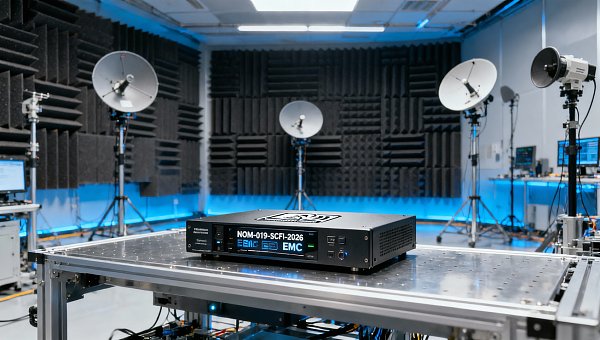
 Mexico NOM-019-SCFI-2026 Effective: Automotive Electronics Require New EMC CertificationMexico NOM-019-SCFI-2026 takes effect May 1, 2026 — new EMC certification mandatory for automotive electronics, EV accessories & aftermarket parts entering Mexico.
 Vietnam Suspends China Irrigation Equipment SASO Mutual RecognitionVietnam suspends China irrigation equipment SASO mutual recognition—urgent QCVN certification now required for drip tapes, sprinklers & smart controllers.
 Red Sea Diversion Normalized; Asia-Europe Freight Premium at $1,850/TEURed Sea diversion normalized: Asia-Europe freight premium holds at $1,850/TEU — impacting manufacturing, retail & procurement. Act now to optimize costs & resilience.
 FDA Drafts AI Bias Assessment Rule for Imported Medical DevicesFDA's new AI bias assessment rule for imported medical devices demands third-party verified fairness reports—act now to prep your 510(k)/De Novo submissions.
 TÜV Rheinland Updates CE Requirements for Servo DrivesTÜV Rheinland updates CE requirements for servo drives: integrated PLd + EN 61800-3 validation mandatory from July 1, 2026. Act now to avoid EU market delays!
 SABER Phase II Launch: Building Hardware Must Submit Digital Type Test Reports & Unique Product IDsSABER Phase II is live: Building hardware exporters must now submit digital type test reports & secure unique SABER Product IDs—avoid customs delays. Act now!
 IMDG Code 41-24 Enforced: New UN3480 Class 9 Label for Lithium Battery Sea FreightIMDG Code 41-24 enforced: UN3480 Class 9 label now mandatory for lithium battery sea freight — avoid delays in US, EU, UAE & Chile ports.
 RCEP Green Packaging Mutual Recognition Takes EffectRCEP Green Packaging Mutual Recognition takes effect Apr 21, 2026—unlock faster customs clearance for compostable, recycled & bio-based packaging in AU, NZ, JP, KR.
 China’s 10-Dept AI Ethics Review Rule for Exported AI DevicesChina’s 10-dept AI ethics review rule mandates algorithmic bias assessments for exported AI devices—key for EU, ME & SEA markets. Stay compliant ahead of enforcement.
 US CPSC Updates Child Sleep Sack Standard Effective July 2026US CPSC updates child sleep sack standard with new DSST test—mandatory for all U.S.-bound infant sleep sacks from July 2026. Act now to ensure compliance and market access.
 Red Sea Rerouting Pushes Asia-Europe Freight Premium to $1,850/TEURed Sea rerouting pushes Asia-Europe freight premium to $1,850/TEU—impacting importers, manufacturers & logistics providers. Act now to reassess costs, lead times & contracts.
 Mexico NOM-019-SCFI-2026 Effective May 1, 2026: EMC Certification Mandatory for Auto ElectronicsNOM-019-SCFI-2026 EMC certification is now mandatory for auto electronics in Mexico—effective May 1, 2026. Ensure compliance for infotainment, ADAS, OBD-II & more.
") TÜV Rheinland Updates CE Requirements for Servo Drives (PLd + EMC Class 3)TÜV Rheinland updates CE requirements for servo drives: PLd + EMC Class 3 joint validation mandatory from Q3 2026. Act now to avoid delays, rejections, or compliance risks.
TÜV Rheinland Updates CE Requirements for Servo Drives (PLd + EMC Class 3)TÜV Rheinland updates CE requirements for servo drives: PLd + EMC Class 3 joint validation mandatory from Q3 2026. Act now to avoid delays, rejections, or compliance risks. SABER Phase II Launch: Building Hardware Must Submit Digital e-CoC & UPISABER Phase II mandates digital e-CoC & UPI for building hardware imports to Saudi Arabia—act now to ensure customs clearance and market access.
 FDA AI Diagnostic Device Draft Rules: Bias Assessment for ImportsFDA AI diagnostic device draft rules mandate bias assessment for imports — discover how algorithmic fairness impacts 510(k)/De Novo submissions and what to do now.
 RCEP Green Packaging Mutual Recognition Starts June 1, 2026RCEP Green Packaging Mutual Recognition starts June 1, 2026 — unlock faster exports to Australia, NZ, Japan & Korea with GB/T 37572-2025 certification.
 Vietnam Suspends SASO Mutual Recognition for Chinese Irrigation EquipmentVietnam suspends SASO mutual recognition for Chinese irrigation equipment—impacting exporters, testers & suppliers. Act now to avoid 6–8 week delays & 35% cost hikes.
 IMDG Code 41-24 Enforces UN3480 Class 9 Labeling for Li-ion Battery Sea FreightIMDG Code 41-24 enforces UN3480 Class 9 labeling for Li-ion battery sea freight—learn mandatory QR labels, compliance actions & port enforcement risks.
 EU CBAM Enters Enforcement Phase on April 1, 2026EU CBAM enforcement starts April 1, 2026 — critical for Chinese battery materials, construction profiles & industrial coatings exporters. Act now to avoid customs delays.
 Mexico Enforces NOM-019-SCFI-2026 EMC Certification for Auto Electronics from May 2026Mexico enforces NOM-019-SCFI-2026 EMC certification for auto electronics from May 2026 — mandatory local testing, stricter standards, and urgent compliance action required.



















Popular Tags
Global Trade Insights & Industry
Our mission is to empower global exporters and importers with data-driven insights that foster strategic growth.
Search News
Popular Tags
Industry Overview
The global commercial kitchen equipment market is projected to reach $112 billion by 2027. Driven by urbanization, the rise of e-commerce food delivery, and strict hygiene regulations.