

What to Compare Before Buying MRI Scanners
Before investing in MRI scanners, buyers should compare far more than price. From imaging quality and software compatibility to maintenance needs, total lifecycle cost, and supplier credibility, every factor can affect long-term value. For procurement teams, distributors, and market researchers, understanding how MRI scanners differ helps reduce risk, improve purchasing decisions, and identify the most competitive solutions in a fast-evolving medical equipment market.
What should buyers compare first when evaluating MRI scanners?
For most B2B buyers, the first mistake is comparing MRI scanners as if they were interchangeable capital assets. They are not. A useful comparison starts with 4 core dimensions: clinical application fit, magnet strength, workflow efficiency, and long-term service support. A scanner that looks cost-effective at quotation stage can become expensive if image quality, uptime, or site requirements do not match operational needs.
MRI scanners are often evaluated by information researchers, procurement managers, and distributors under time pressure. In that setting, a structured review model helps separate marketing claims from practical purchasing criteria. Buyers should compare not only the system itself, but also installation scope, staff training, software licensing, coil package, and expected maintenance intervals over a 5–10 year ownership window.
In real procurement discussions, the right question is not simply “Which MRI scanner is cheaper?” but “Which MRI scanner fits the target use case with acceptable risk?” A hospital imaging center, a private diagnostic clinic, and a distributor entering a regional market will evaluate the same scanner very differently. Their priorities usually differ across 3 areas: patient throughput, reimbursement suitability, and after-sales reliability.
A practical starting checklist
- Define the main scan volume: brain, spine, musculoskeletal, cardiac, or general imaging. This affects coil selection, protocol demand, and software requirements.
- Confirm target throughput per day or per shift. A site expecting 8–15 exams daily will compare workflow differently from a center targeting 20+ exams.
- Review installation conditions such as room size, shielding, power supply, HVAC load, and quench pipe planning before requesting final quotations.
- Check service response time, spare parts access, and preventive maintenance frequency, especially for cross-border procurement projects.
This early-stage screening matters because MRI scanner procurement is rarely a single-product decision. It is usually a package decision involving equipment, site adaptation, compliance review, financing assumptions, and operational readiness. For global B2B buyers, market intelligence platforms such as GTIIN and TradeVantage add value by helping compare suppliers, regional availability, and industrial trends across multiple sourcing markets.
How do MRI scanner specifications affect real purchasing decisions?
Technical performance should always be interpreted through use case, not in isolation. Magnet strength is one of the most visible comparison points, with 1.5T and 3T systems being the most commonly evaluated in institutional purchasing. However, stronger specifications do not automatically mean better procurement value. The right choice depends on image requirements, scan volume, operating cost, and staff experience.
A meaningful MRI scanner comparison should include gradient performance, bore design, coil ecosystem, software package, reconstruction speed, and patient comfort features. Buyers should also verify whether quoted configurations are standard or optional. In many tenders, headline specifications appear attractive, but essential tools such as advanced neuro packages, cardiac workflows, or additional coils are priced separately.
Another overlooked factor is interoperability. Procurement teams should confirm compatibility with PACS, RIS, hospital information systems, DICOM workflows, and remote service tools. Integration problems can delay commissioning by 2–6 weeks and increase implementation cost. For distributors and agents, software localization and user interface language support are also relevant in multi-country deployment.
The table below summarizes common MRI scanner comparison dimensions that influence technical suitability and commercial viability.
For buyers, this comparison framework turns technical language into decision language. Instead of focusing on a single parameter, teams can compare MRI scanners according to expected exam mix, future expansion, and distributor support capability. That is especially useful when evaluating bids from multiple countries with different packaging practices and specification transparency levels.
Which technical points are most often missed?
Installed versus quoted configuration
Some proposals list a platform specification but not the exact delivered bundle. Buyers should ask for a line-by-line configuration sheet covering coils, software licenses, workstation modules, injector interfaces if needed, and training days. A 3-day basic training package is very different from a 7–10 day application support plan.
Upgrade path and software continuity
A scanner with limited upgrade flexibility may constrain revenue opportunities later. Procurement teams should ask whether future modules can be added remotely, on-site, or only through major hardware replacement. This affects lifecycle planning for 3–5 years after installation.
How should buyers compare total cost, not just purchase price?
MRI scanner price is only one part of the investment equation. Total cost of ownership usually includes site preparation, shielding, power and cooling adjustments, freight, customs handling, commissioning, operator training, service contracts, helium management where relevant, and software upgrades. A lower initial quotation may result in a higher 5-year cost if uptime and service access are weak.
For procurement teams and commercial evaluators, cost comparison should be broken into at least 5 categories: capital equipment, installation, operating expense, maintenance, and downtime risk. This structure helps decision-makers compare MRI scanners on a like-for-like basis. It also improves negotiations because optional items and hidden costs become visible earlier in the sourcing process.
Distributors and regional agents should also calculate inventory and support economics. If a supplier has long spare-parts lead times, each service event may create revenue loss and reputational damage. In some cross-border projects, parts availability can change recovery time from 48–72 hours to more than 2 weeks, which materially affects end-user satisfaction.
The following table provides a useful framework for comparing MRI scanner lifecycle cost components in B2B procurement.
This cost view helps buyers move from unit price thinking to business-case thinking. For market researchers and sourcing teams, it also creates better benchmarks when comparing suppliers across different manufacturing regions. GTIIN and TradeVantage are especially relevant here because procurement decisions increasingly require both product intelligence and supplier visibility, not just catalog-level information.
A 4-step cost comparison method
- Normalize the quoted configuration so every bidder includes the same coil set, software bundle, warranty term, and training scope.
- Separate one-time site costs from recurring annual costs to avoid mixing infrastructure with service fees.
- Estimate downtime exposure based on service response windows such as 24 hours, 48 hours, or 72 hours.
- Model the scanner over a 5-year and 7-year scenario to see how upgrades and maintenance affect long-term value.
What procurement and compliance checks reduce supplier risk?
MRI scanner procurement is not only a technical exercise. It is also a supplier risk review. Buyers should examine manufacturing origin, export documentation readiness, service network coverage, training capability, and documentation quality before entering final negotiations. In international trade, even a technically strong scanner can become a weak procurement choice if the supplier cannot support compliance, installation coordination, or after-sales escalation.
A practical supplier assessment usually includes 6 checkpoints: configuration clarity, regulatory documentation, installation support, spare parts planning, service escalation process, and commercial transparency. These checkpoints matter for hospitals and imaging centers, but they matter even more for distributors who will carry local customer expectations and warranty pressure in their own market.
Depending on the destination market, buyers may need to confirm general medical device documentation, electrical safety expectations, electromagnetic compatibility records, labeling conformity, and import registration requirements. Because regulations differ by country, the key is not assuming that one document package covers all markets. Commercial teams should align legal, technical, and logistics review at least 2–4 weeks before shipment planning.
Supplier due diligence checklist for MRI scanners
- Request a formal configuration list and confirm whether all core coils and software are included in the quoted MRI scanner package.
- Verify what documentation will be provided before shipment, at installation, and at final acceptance.
- Check who performs installation: manufacturer engineers, local partners, or third-party contractors, and how responsibilities are divided.
- Confirm service KPIs such as remote response, on-site response, preventive maintenance frequency, and parts replacement route.
- Review whether user training covers operators only or also biomedical engineers and administrators.
For many B2B buyers, market visibility is part of risk control. That is where an industry intelligence platform becomes useful. GTIIN and TradeVantage help companies monitor supplier exposure, market movement, content credibility, and sector signals across 50+ industries. For exporters, distributors, and import-side evaluators, this broader context supports more reliable shortlisting and more informed commercial positioning.
Why documentation quality matters in cross-border sourcing
It affects customs, installation, and acceptance
Incomplete packing lists, inconsistent serial references, or unclear pre-installation drawings can delay customs clearance and on-site preparation. For large medical equipment, even a 7–15 day delay can disrupt contractor schedules and commissioning windows.
It influences distributor confidence
Agents and resellers need suppliers whose product information is consistent across catalogs, quotations, training material, and service manuals. Inconsistent technical communication creates downstream liability during tender response and end-user handover.
Which MRI scanner choices fit different business scenarios?
The best MRI scanner depends on business model, not only imaging ambition. A private clinic focused on routine exams may prioritize balanced throughput, manageable operating cost, and patient comfort. A tertiary hospital may place more value on advanced applications, research-capable software, and broader protocol depth. A distributor may focus first on serviceability, pricing structure, and how easily the system can be positioned across multiple customer segments.
That is why buyers should compare MRI scanners through scenario-based planning. Instead of asking which scanner is “best,” ask which configuration is best for a defined use case over the next 24–60 months. This helps align capex with expected referral growth, staffing capacity, and local reimbursement realities.
The table below shows how different buyer groups often prioritize MRI scanner comparison criteria.
This scenario approach reduces misalignment between internal stakeholders. Technical teams can focus on application needs, procurement can focus on total cost and compliance, and commercial teams can evaluate supplier fit. For multi-country sourcing programs, this structured comparison also supports faster decision cycles and cleaner communication across departments.
Common buying mistakes to avoid
- Choosing by magnet strength alone without reviewing actual exam mix and budget tolerance.
- Ignoring site preparation cost until after contract signing.
- Comparing quotations with different coil and software scopes.
- Underestimating local service readiness, especially in distributor-led market entry projects.
FAQ: what do buyers and distributors ask most about MRI scanners?
How do I choose between 1.5T and 3T MRI scanners?
Start with application mix, not marketing hierarchy. If the site mainly handles routine neurological, spine, and musculoskeletal exams, a 1.5T system may provide a balanced combination of capability and operating control. If the target includes more advanced neuro, vascular, or specialized protocols, buyers may compare 3T systems more closely. The decision should also include staff experience, budget range, and expected exam complexity over the next 3–5 years.
What is a typical delivery and installation timeline?
Timelines vary by configuration, export route, and site readiness. In many projects, buyers should plan for several linked phases: pre-installation review, shipment coordination, room preparation, installation, and application training. If site preparation is incomplete, even an available scanner can face delays of 2–4 weeks or more. Procurement teams should align logistics and civil works before fixing go-live dates.
Which documents should be requested before purchase approval?
At minimum, ask for a full configuration sheet, pre-installation requirements, documentation list for the destination market, warranty scope, maintenance proposal, and training plan. If the MRI scanner is part of a tender, request clarification on optional versus included items. This helps finance, legal, and technical teams review the same scope.
Why do distributors need a different comparison model than end users?
Distributors evaluate not only technical fit but also resale readiness. They need clear product positioning, stable documentation, predictable service escalation, and marketable value propositions. A scanner that works for one end user may still be difficult for a distributor if training burden, spare-parts access, or branding support is weak.
Why work with us when comparing MRI scanner suppliers and market options?
For complex purchases like MRI scanners, buyers need more than product brochures. They need reliable supplier visibility, cross-market intelligence, and structured information that supports negotiation, procurement approval, and channel development. GTIIN, through TradeVantage, helps bridge that gap by connecting global industrial insight with practical B2B decision support across 50+ sectors.
If you are researching MRI scanners, evaluating international sourcing options, or building a distributor portfolio, we can help you compare suppliers more effectively. Our value lies in market intelligence, content-driven visibility, and industry signal tracking that supports exporters, importers, procurement teams, and commercial analysts in making more confident decisions.
You can contact us for targeted support on MRI scanner parameter comparison, supplier shortlisting, configuration review, expected delivery cycle, documentation readiness, and market positioning research. If you are a distributor or manufacturer, we can also support brand exposure, content visibility, and stronger trust-building in international search and trade ecosystems.
What you can discuss with our team
- MRI scanner specification comparison for different business and clinical scenarios.
- Supplier research support for procurement, distribution, and international trade evaluation.
- Guidance on delivery timing, site-readiness checkpoints, and documentation planning.
- Content and visibility opportunities for manufacturers and exporters seeking stronger global exposure.
When MRI scanner decisions involve multiple stakeholders, fragmented information slows action. A more structured comparison process reduces risk, improves sourcing clarity, and creates better commercial outcomes. If you need support with selection logic, supplier visibility, or international market intelligence, this is the right time to start the conversation.
Recommended News
 EU CBAM Carbon Tariff Starts Oct 2026 for Chinese Battery, Cement, Chemical ExportsEU CBAM carbon tariff hits Chinese battery, cement & chemical exports from Oct 2026 — mandatory emissions reporting starts now. Avoid €98/t default fees.
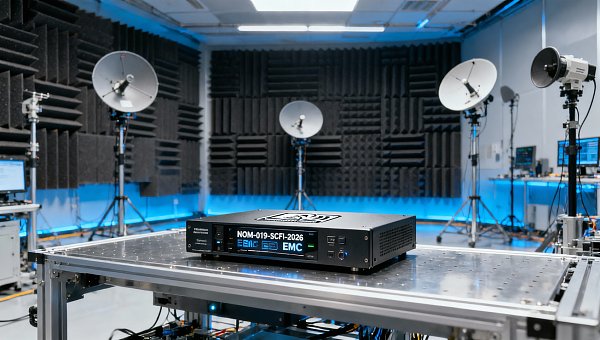
 Mexico NOM-019-SCFI-2026 Effective: Automotive Electronics Require New EMC CertificationMexico NOM-019-SCFI-2026 takes effect May 1, 2026 — new EMC certification mandatory for automotive electronics, EV accessories & aftermarket parts entering Mexico.
 Vietnam Suspends China Irrigation Equipment SASO Mutual RecognitionVietnam suspends China irrigation equipment SASO mutual recognition—urgent QCVN certification now required for drip tapes, sprinklers & smart controllers.
 Red Sea Diversion Normalized; Asia-Europe Freight Premium at $1,850/TEURed Sea diversion normalized: Asia-Europe freight premium holds at $1,850/TEU — impacting manufacturing, retail & procurement. Act now to optimize costs & resilience.
 FDA Drafts AI Bias Assessment Rule for Imported Medical DevicesFDA's new AI bias assessment rule for imported medical devices demands third-party verified fairness reports—act now to prep your 510(k)/De Novo submissions.
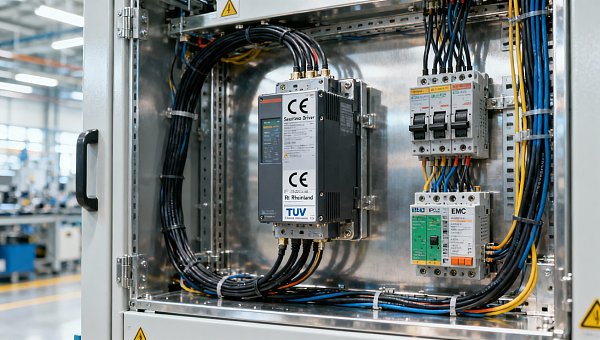
 TÜV Rheinland Updates CE Requirements for Servo DrivesTÜV Rheinland updates CE requirements for servo drives: integrated PLd + EN 61800-3 validation mandatory from July 1, 2026. Act now to avoid EU market delays!
 SABER Phase II Launch: Building Hardware Must Submit Digital Type Test Reports & Unique Product IDsSABER Phase II is live: Building hardware exporters must now submit digital type test reports & secure unique SABER Product IDs—avoid customs delays. Act now!
 IMDG Code 41-24 Enforced: New UN3480 Class 9 Label for Lithium Battery Sea FreightIMDG Code 41-24 enforced: UN3480 Class 9 label now mandatory for lithium battery sea freight — avoid delays in US, EU, UAE & Chile ports.
 RCEP Green Packaging Mutual Recognition Takes EffectRCEP Green Packaging Mutual Recognition takes effect Apr 21, 2026—unlock faster customs clearance for compostable, recycled & bio-based packaging in AU, NZ, JP, KR.
 China’s 10-Dept AI Ethics Review Rule for Exported AI DevicesChina’s 10-dept AI ethics review rule mandates algorithmic bias assessments for exported AI devices—key for EU, ME & SEA markets. Stay compliant ahead of enforcement.
 US CPSC Updates Child Sleep Sack Standard Effective July 2026US CPSC updates child sleep sack standard with new DSST test—mandatory for all U.S.-bound infant sleep sacks from July 2026. Act now to ensure compliance and market access.
 Red Sea Rerouting Pushes Asia-Europe Freight Premium to $1,850/TEURed Sea rerouting pushes Asia-Europe freight premium to $1,850/TEU—impacting importers, manufacturers & logistics providers. Act now to reassess costs, lead times & contracts.
 Mexico NOM-019-SCFI-2026 Effective May 1, 2026: EMC Certification Mandatory for Auto ElectronicsNOM-019-SCFI-2026 EMC certification is now mandatory for auto electronics in Mexico—effective May 1, 2026. Ensure compliance for infotainment, ADAS, OBD-II & more.
") TÜV Rheinland Updates CE Requirements for Servo Drives (PLd + EMC Class 3)TÜV Rheinland updates CE requirements for servo drives: PLd + EMC Class 3 joint validation mandatory from Q3 2026. Act now to avoid delays, rejections, or compliance risks.
TÜV Rheinland Updates CE Requirements for Servo Drives (PLd + EMC Class 3)TÜV Rheinland updates CE requirements for servo drives: PLd + EMC Class 3 joint validation mandatory from Q3 2026. Act now to avoid delays, rejections, or compliance risks. SABER Phase II Launch: Building Hardware Must Submit Digital e-CoC & UPISABER Phase II mandates digital e-CoC & UPI for building hardware imports to Saudi Arabia—act now to ensure customs clearance and market access.
 FDA AI Diagnostic Device Draft Rules: Bias Assessment for ImportsFDA AI diagnostic device draft rules mandate bias assessment for imports — discover how algorithmic fairness impacts 510(k)/De Novo submissions and what to do now.
 RCEP Green Packaging Mutual Recognition Starts June 1, 2026RCEP Green Packaging Mutual Recognition starts June 1, 2026 — unlock faster exports to Australia, NZ, Japan & Korea with GB/T 37572-2025 certification.
 Vietnam Suspends SASO Mutual Recognition for Chinese Irrigation EquipmentVietnam suspends SASO mutual recognition for Chinese irrigation equipment—impacting exporters, testers & suppliers. Act now to avoid 6–8 week delays & 35% cost hikes.
 IMDG Code 41-24 Enforces UN3480 Class 9 Labeling for Li-ion Battery Sea FreightIMDG Code 41-24 enforces UN3480 Class 9 labeling for Li-ion battery sea freight—learn mandatory QR labels, compliance actions & port enforcement risks.
 EU CBAM Enters Enforcement Phase on April 1, 2026EU CBAM enforcement starts April 1, 2026 — critical for Chinese battery materials, construction profiles & industrial coatings exporters. Act now to avoid customs delays.
 Mexico Enforces NOM-019-SCFI-2026 EMC Certification for Auto Electronics from May 2026Mexico enforces NOM-019-SCFI-2026 EMC certification for auto electronics from May 2026 — mandatory local testing, stricter standards, and urgent compliance action required.

















Popular Tags
Global Trade Insights & Industry
Our mission is to empower global exporters and importers with data-driven insights that foster strategic growth.
Search News
Popular Tags
Industry Overview
The global commercial kitchen equipment market is projected to reach $112 billion by 2027. Driven by urbanization, the rise of e-commerce food delivery, and strict hygiene regulations.