

TÜV Rheinland Updates CE Requirements for Servo Drives (PLd + EMC)
On April 18, 2026, German certification body TÜV Rheinland issued a revised technical notice mandating combined functional safety (PLd per ISO 13849-1) and EMC immunity (IEC 61000-6-2 Ed.4) validation for servo drives used in Smart Factory and CNC machining applications — impacting CE marking eligibility across the EU supply chain.
Event Overview
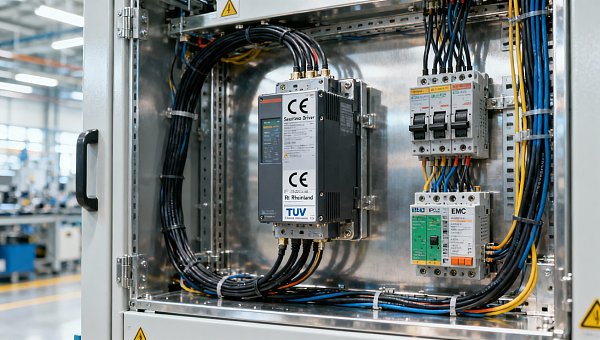
On April 18, 2026, TÜV Rheinland published a new technical bulletin concerning CE certification for servo drives governed by IEC 61800-5-2. The bulletin requires that functional safety performance at Performance Level d (PLd) and electromagnetic compatibility (EMC) immunity compliance with IEC 61000-6-2 Edition 4 must be verified within the same test cycle. Products previously certified to either requirement individually will no longer qualify for the updated CE mark under this policy.
Which Sub-Sectors Are Affected
Smart Factory System Integrators
Servo drives are core motion-control components in automated production lines. Integration into PLC-based or safety-rated control architectures now requires joint PLd/EMC evidence. Failure to provide such documentation may delay system-level CE conformity assessments and disqualify bids for EU-funded Industry 4.0 projects.
CNC Machine Builders
OEMs assembling CNC machine tools rely on certified servo drive modules for final machinery CE marking under the Machinery Directive (2006/42/EC). Under the new requirement, drive suppliers must supply test reports demonstrating concurrent PLd and EMC validation — otherwise, machine builders face retesting, redesign, or certification rejection at the whole-machine level.
Servo Drive Manufacturers & Exporters
Manufacturers supplying into the EU market must adapt their product testing protocols and technical documentation. Previously accepted standalone certifications (e.g., PLd-only or EMC-only reports) are insufficient. This affects both new product launches and legacy models still in active export cycles.
EU-Based Distributors & Technical Support Providers
Distributors handling technical documentation for end customers must verify that incoming servo drive shipments include valid joint-validation reports. Support teams may need to update internal compliance checklists and customer-facing datasheets to reflect the updated CE evidence requirements.
What Relevant Companies or Practitioners Should Monitor and Do Now
Track official updates from TÜV Rheinland and EU Notified Bodies
The bulletin is effective as of April 18, 2026, but implementation timelines for existing stock or pending applications remain subject to interpretation by individual Notified Bodies. Companies should monitor clarifications from TÜV Rheinland and other EU-accredited bodies regarding grace periods, grandfathering provisions, or transitional arrangements.
Review current servo drive inventory and procurement pipelines
Manufacturers and integrators should identify which servo drive models in active use or procurement lack joint PLd/EMC validation reports. Prioritize verification for models deployed in safety-critical motion sequences (e.g., robotic axis control, emergency stop-linked axes) where PLd is explicitly required.
Align technical documentation with the joint-validation requirement
Update internal technical files, Declaration of Conformity templates, and customer-facing compliance summaries to explicitly reference combined PLd and IEC 61000-6-2 Ed.4 test evidence — not just separate certifications. Avoid ambiguous phrasing such as “complies with safety and EMC standards” without specifying concurrent validation.
Engage early with test laboratories accredited for both functional safety and EMC
Not all labs hold dual accreditation for PLd assessment (under ISO 13849-1 or IEC 62061) and full IEC 61000-6-2 Ed.4 immunity testing. Confirm lab capability before scheduling tests — especially for high-power or multi-axis drive configurations where test setup complexity increases.
Editorial Observation / Industry Perspective
From industry perspective, this update signals a tightening of harmonized interpretation between functional safety and EMC requirements — two domains historically assessed in isolation. It reflects growing recognition that EMC disturbances can compromise safety-related control functions, particularly in high-density industrial automation environments. Analysis来看, the requirement is less about introducing new technical thresholds and more about enforcing integrated risk assessment in certification practice. Current more appropriate understanding is that this is a procedural alignment signal rather than a de facto technical upgrade — but its enforcement will reshape how conformity evidence is structured and validated across the supply chain.
Conclusion
This change underscores the increasing interdependence of safety and EMC compliance in industrial drive systems. For stakeholders, it means shifting from checklist-based certification to integrated validation planning. It is best understood not as an isolated regulatory event, but as a reinforcement of systemic conformity expectations under the EU’s New Legislative Framework — where evidence must demonstrate coherent performance across multiple essential requirements, not just compliance in silos.
Information Source
Main source: TÜV Rheinland Technical Bulletin (published April 18, 2026). Ongoing observation is needed regarding implementation guidance from EU Notified Bodies and potential alignment with upcoming revisions to EN IEC 61800-5-2.
Recommended News
 EU CBAM Carbon Tariff Starts Oct 2026 for Chinese Battery, Cement, Chemical ExportsEU CBAM carbon tariff hits Chinese battery, cement & chemical exports from Oct 2026 — mandatory emissions reporting starts now. Avoid €98/t default fees.
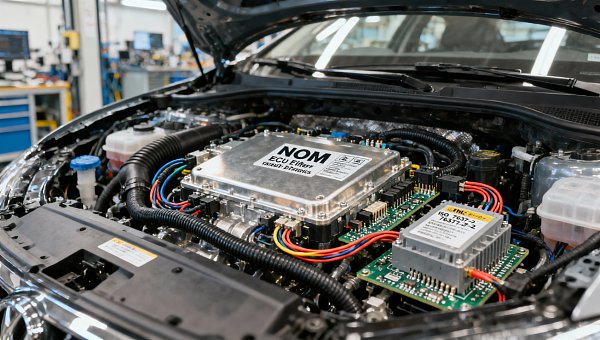
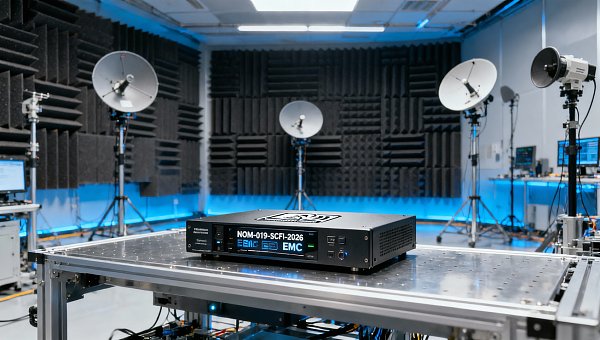
 Mexico NOM-019-SCFI-2026 Effective: Automotive Electronics Require New EMC CertificationMexico NOM-019-SCFI-2026 takes effect May 1, 2026 — new EMC certification mandatory for automotive electronics, EV accessories & aftermarket parts entering Mexico.
 Vietnam Suspends China Irrigation Equipment SASO Mutual RecognitionVietnam suspends China irrigation equipment SASO mutual recognition—urgent QCVN certification now required for drip tapes, sprinklers & smart controllers.
 Red Sea Diversion Normalized; Asia-Europe Freight Premium at $1,850/TEURed Sea diversion normalized: Asia-Europe freight premium holds at $1,850/TEU — impacting manufacturing, retail & procurement. Act now to optimize costs & resilience.
 FDA Drafts AI Bias Assessment Rule for Imported Medical DevicesFDA's new AI bias assessment rule for imported medical devices demands third-party verified fairness reports—act now to prep your 510(k)/De Novo submissions.
 TÜV Rheinland Updates CE Requirements for Servo DrivesTÜV Rheinland updates CE requirements for servo drives: integrated PLd + EN 61800-3 validation mandatory from July 1, 2026. Act now to avoid EU market delays!
 SABER Phase II Launch: Building Hardware Must Submit Digital Type Test Reports & Unique Product IDsSABER Phase II is live: Building hardware exporters must now submit digital type test reports & secure unique SABER Product IDs—avoid customs delays. Act now!
 IMDG Code 41-24 Enforced: New UN3480 Class 9 Label for Lithium Battery Sea FreightIMDG Code 41-24 enforced: UN3480 Class 9 label now mandatory for lithium battery sea freight — avoid delays in US, EU, UAE & Chile ports.
 RCEP Green Packaging Mutual Recognition Takes EffectRCEP Green Packaging Mutual Recognition takes effect Apr 21, 2026—unlock faster customs clearance for compostable, recycled & bio-based packaging in AU, NZ, JP, KR.
 China’s 10-Dept AI Ethics Review Rule for Exported AI DevicesChina’s 10-dept AI ethics review rule mandates algorithmic bias assessments for exported AI devices—key for EU, ME & SEA markets. Stay compliant ahead of enforcement.
 US CPSC Updates Child Sleep Sack Standard Effective July 2026US CPSC updates child sleep sack standard with new DSST test—mandatory for all U.S.-bound infant sleep sacks from July 2026. Act now to ensure compliance and market access.
 Red Sea Rerouting Pushes Asia-Europe Freight Premium to $1,850/TEURed Sea rerouting pushes Asia-Europe freight premium to $1,850/TEU—impacting importers, manufacturers & logistics providers. Act now to reassess costs, lead times & contracts.
 Mexico NOM-019-SCFI-2026 Effective May 1, 2026: EMC Certification Mandatory for Auto ElectronicsNOM-019-SCFI-2026 EMC certification is now mandatory for auto electronics in Mexico—effective May 1, 2026. Ensure compliance for infotainment, ADAS, OBD-II & more.
") TÜV Rheinland Updates CE Requirements for Servo Drives (PLd + EMC Class 3)TÜV Rheinland updates CE requirements for servo drives: PLd + EMC Class 3 joint validation mandatory from Q3 2026. Act now to avoid delays, rejections, or compliance risks.
TÜV Rheinland Updates CE Requirements for Servo Drives (PLd + EMC Class 3)TÜV Rheinland updates CE requirements for servo drives: PLd + EMC Class 3 joint validation mandatory from Q3 2026. Act now to avoid delays, rejections, or compliance risks. SABER Phase II Launch: Building Hardware Must Submit Digital e-CoC & UPISABER Phase II mandates digital e-CoC & UPI for building hardware imports to Saudi Arabia—act now to ensure customs clearance and market access.
 FDA AI Diagnostic Device Draft Rules: Bias Assessment for ImportsFDA AI diagnostic device draft rules mandate bias assessment for imports — discover how algorithmic fairness impacts 510(k)/De Novo submissions and what to do now.
 RCEP Green Packaging Mutual Recognition Starts June 1, 2026RCEP Green Packaging Mutual Recognition starts June 1, 2026 — unlock faster exports to Australia, NZ, Japan & Korea with GB/T 37572-2025 certification.
 Vietnam Suspends SASO Mutual Recognition for Chinese Irrigation EquipmentVietnam suspends SASO mutual recognition for Chinese irrigation equipment—impacting exporters, testers & suppliers. Act now to avoid 6–8 week delays & 35% cost hikes.
 IMDG Code 41-24 Enforces UN3480 Class 9 Labeling for Li-ion Battery Sea FreightIMDG Code 41-24 enforces UN3480 Class 9 labeling for Li-ion battery sea freight—learn mandatory QR labels, compliance actions & port enforcement risks.
 EU CBAM Enters Enforcement Phase on April 1, 2026EU CBAM enforcement starts April 1, 2026 — critical for Chinese battery materials, construction profiles & industrial coatings exporters. Act now to avoid customs delays.
 Mexico Enforces NOM-019-SCFI-2026 EMC Certification for Auto Electronics from May 2026Mexico enforces NOM-019-SCFI-2026 EMC certification for auto electronics from May 2026 — mandatory local testing, stricter standards, and urgent compliance action required.
















Popular Tags
Global Trade Insights & Industry
Our mission is to empower global exporters and importers with data-driven insights that foster strategic growth.
Search News
Popular Tags
Industry Overview
The global commercial kitchen equipment market is projected to reach $112 billion by 2027. Driven by urbanization, the rise of e-commerce food delivery, and strict hygiene regulations.