

Red Sea Rerouting Normalized, EBA at $1,850/TEU
Global port congestion has eased, but Red Sea rerouting has become structural—driving sustained freight cost pressure on Asia-Europe trade lanes. According to Drewry’s Week 16 (2026) shipping report, this shift is now embedded in operational and commercial realities, with implications for shippers, manufacturers, and logistics providers across the supply chain.
Event Overview
Per Drewry’s Week 16 (2026) Shipping Update, average anchorage time at major Chinese ports—including Shanghai and Ningbo—has declined to 2.1 days, a 37% reduction week-on-week. However, 72% of vessels on Asia–Europe routes continue to reroute via the Cape of Good Hope due to ongoing Red Sea security risks. This adds 12–15 days to transit time and lifts fuel costs by 28%. The Shanghai–Rotterdam 40HQ spot rate stands at $4,200/FEU, with the Red Sea EBA (Emergency Bunker Adjustment) fixed at $1,850/TEU—a level now treated as a permanent line-item cost.
Impact on Specific Industry Segments
Direct Trading Enterprises
These companies face higher landed costs and extended order-to-delivery cycles. The $1,850/TEU EBA directly erodes margin on mid- to low-value goods, particularly where freight represents >10% of FOB value. Longer transits also increase inventory carrying costs and reduce responsiveness to demand shifts.
Raw Material Procurement Teams
Procurement functions sourcing components or commodities from Europe—or shipping intermediates into European assembly hubs—now contend with both cost inflation and schedule uncertainty. Extended Cape transits compound lead-time variability, challenging just-in-time replenishment models and increasing safety stock requirements.
Manufacturing Exporters
For exporters producing finished goods in China for EU markets, the EBA adds a non-negotiable cost layer that cannot be absorbed without pricing adjustments or volume trade-offs. Combined with longer delivery windows, it weakens competitiveness against regional suppliers (e.g., Turkey, Morocco) with shorter sea legs.
Supply Chain Service Providers
Freight forwarders, NVOCCs, and 3PLs must now price, contract, and communicate around a stable—but elevated—EBA baseline. Their service differentiation increasingly hinges on visibility into vessel routing decisions, bunker cost pass-through transparency, and ability to secure space amid tighter capacity on alternative routings.
What Relevant Businesses or Practitioners Should Monitor and Do
Track official carrier announcements—not just index reports
The $1,850/TEU EBA is currently carrier-mandated and published in tariff bulletins; it is not an index-derived surcharge. Companies should monitor individual carrier notices (e.g., Maersk, MSC, Hapag-Lloyd) for changes in applicability scope, exemption criteria, or billing methodology—rather than relying solely on aggregated market reports.
Reassess lane economics for high-frequency, low-margin SKUs
Analysis来看, products with tight margins and short shelf lives (e.g., certain consumer electronics, seasonal apparel, fresh-packaged foods) are most exposed to the combined impact of EBA + extended transit. Prioritize SKU-level landed-cost modeling—not just ocean freight quotes—to identify candidates for nearshoring, dual-sourcing, or air-freight bridging.
Validate routing assumptions in booking confirmations
Although 72% of vessels currently reroute, carriers may still deploy direct services on select sailings. From industry角度看, shippers should require explicit confirmation of routing (Cape vs. Suez) in booking acknowledgments—and verify actual vessel AIS data post-booking—to avoid unplanned delays or misaligned cost expectations.
Update Incoterms and documentation protocols
Current more suitable understanding is that EBA is treated as a mandatory, non-waivable charge under most carrier contracts. Review Incoterms (especially CIF and C&F) to clarify who bears EBA risk—and ensure customs declarations and commercial invoices reflect accurate freight cost breakdowns, avoiding classification or valuation disputes at EU entry points.
Editorial Perspective / Industry Observation
This development is better understood as a structural recalibration—not a temporary disruption. Observation来看, the persistence of 72% rerouting despite easing port congestion signals that Red Sea risk is now priced in as a long-term variable, not a short-term contingency. Analysis来看, the stabilization of the $1,850/TEU EBA suggests carriers have moved beyond emergency surcharging into embedded cost recovery. From industry角度, this marks the point where route diversification, rather than cost mitigation, becomes the primary strategic response.
Conclusion
The normalization of Red Sea rerouting and its associated EBA reflects a durable shift in Asia–Europe maritime economics—not a transient volatility event. It signals that cost predictability now depends less on crisis duration and more on how effectively stakeholders adapt procurement, contracting, and logistics design to a permanently elongated, higher-cost corridor. Current more suitable interpretation is that this is a new baseline, not a phase to wait out.
Information Source
Main source: Drewry Weekly Container Freight Rate Update, Week 16, 2026. Note: Ongoing monitoring is required for changes in carrier EBA implementation policies, EU regulatory stance on surcharge transparency, and potential shifts in rerouting share following geopolitical developments.
Recommended News
 EU CBAM Carbon Tariff Starts Oct 2026 for Chinese Battery, Cement, Chemical ExportsEU CBAM carbon tariff hits Chinese battery, cement & chemical exports from Oct 2026 — mandatory emissions reporting starts now. Avoid €98/t default fees.
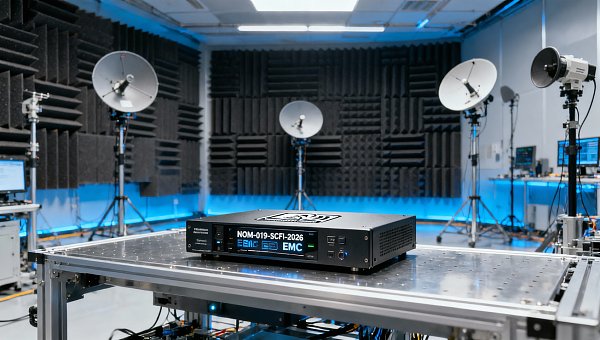
 Mexico NOM-019-SCFI-2026 Effective: Automotive Electronics Require New EMC CertificationMexico NOM-019-SCFI-2026 takes effect May 1, 2026 — new EMC certification mandatory for automotive electronics, EV accessories & aftermarket parts entering Mexico.
 Vietnam Suspends China Irrigation Equipment SASO Mutual RecognitionVietnam suspends China irrigation equipment SASO mutual recognition—urgent QCVN certification now required for drip tapes, sprinklers & smart controllers.
 Red Sea Diversion Normalized; Asia-Europe Freight Premium at $1,850/TEURed Sea diversion normalized: Asia-Europe freight premium holds at $1,850/TEU — impacting manufacturing, retail & procurement. Act now to optimize costs & resilience.
 FDA Drafts AI Bias Assessment Rule for Imported Medical DevicesFDA's new AI bias assessment rule for imported medical devices demands third-party verified fairness reports—act now to prep your 510(k)/De Novo submissions.
 TÜV Rheinland Updates CE Requirements for Servo DrivesTÜV Rheinland updates CE requirements for servo drives: integrated PLd + EN 61800-3 validation mandatory from July 1, 2026. Act now to avoid EU market delays!
 SABER Phase II Launch: Building Hardware Must Submit Digital Type Test Reports & Unique Product IDsSABER Phase II is live: Building hardware exporters must now submit digital type test reports & secure unique SABER Product IDs—avoid customs delays. Act now!
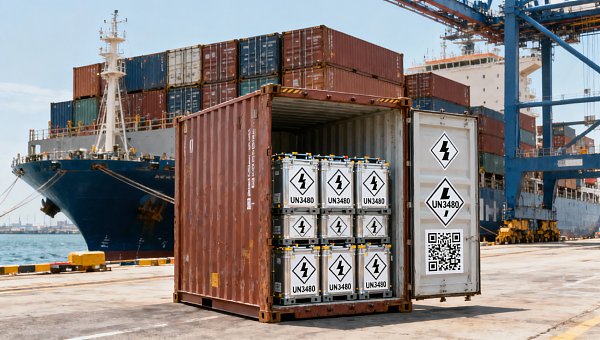
 IMDG Code 41-24 Enforced: New UN3480 Class 9 Label for Lithium Battery Sea FreightIMDG Code 41-24 enforced: UN3480 Class 9 label now mandatory for lithium battery sea freight — avoid delays in US, EU, UAE & Chile ports.
 RCEP Green Packaging Mutual Recognition Takes EffectRCEP Green Packaging Mutual Recognition takes effect Apr 21, 2026—unlock faster customs clearance for compostable, recycled & bio-based packaging in AU, NZ, JP, KR.
 China’s 10-Dept AI Ethics Review Rule for Exported AI DevicesChina’s 10-dept AI ethics review rule mandates algorithmic bias assessments for exported AI devices—key for EU, ME & SEA markets. Stay compliant ahead of enforcement.
 US CPSC Updates Child Sleep Sack Standard Effective July 2026US CPSC updates child sleep sack standard with new DSST test—mandatory for all U.S.-bound infant sleep sacks from July 2026. Act now to ensure compliance and market access.
 Red Sea Rerouting Pushes Asia-Europe Freight Premium to $1,850/TEURed Sea rerouting pushes Asia-Europe freight premium to $1,850/TEU—impacting importers, manufacturers & logistics providers. Act now to reassess costs, lead times & contracts.
 Mexico NOM-019-SCFI-2026 Effective May 1, 2026: EMC Certification Mandatory for Auto ElectronicsNOM-019-SCFI-2026 EMC certification is now mandatory for auto electronics in Mexico—effective May 1, 2026. Ensure compliance for infotainment, ADAS, OBD-II & more.
") TÜV Rheinland Updates CE Requirements for Servo Drives (PLd + EMC Class 3)TÜV Rheinland updates CE requirements for servo drives: PLd + EMC Class 3 joint validation mandatory from Q3 2026. Act now to avoid delays, rejections, or compliance risks.
TÜV Rheinland Updates CE Requirements for Servo Drives (PLd + EMC Class 3)TÜV Rheinland updates CE requirements for servo drives: PLd + EMC Class 3 joint validation mandatory from Q3 2026. Act now to avoid delays, rejections, or compliance risks. SABER Phase II Launch: Building Hardware Must Submit Digital e-CoC & UPISABER Phase II mandates digital e-CoC & UPI for building hardware imports to Saudi Arabia—act now to ensure customs clearance and market access.
 FDA AI Diagnostic Device Draft Rules: Bias Assessment for ImportsFDA AI diagnostic device draft rules mandate bias assessment for imports — discover how algorithmic fairness impacts 510(k)/De Novo submissions and what to do now.
 RCEP Green Packaging Mutual Recognition Starts June 1, 2026RCEP Green Packaging Mutual Recognition starts June 1, 2026 — unlock faster exports to Australia, NZ, Japan & Korea with GB/T 37572-2025 certification.
 Vietnam Suspends SASO Mutual Recognition for Chinese Irrigation EquipmentVietnam suspends SASO mutual recognition for Chinese irrigation equipment—impacting exporters, testers & suppliers. Act now to avoid 6–8 week delays & 35% cost hikes.
 IMDG Code 41-24 Enforces UN3480 Class 9 Labeling for Li-ion Battery Sea FreightIMDG Code 41-24 enforces UN3480 Class 9 labeling for Li-ion battery sea freight—learn mandatory QR labels, compliance actions & port enforcement risks.
 EU CBAM Enters Enforcement Phase on April 1, 2026EU CBAM enforcement starts April 1, 2026 — critical for Chinese battery materials, construction profiles & industrial coatings exporters. Act now to avoid customs delays.
 Mexico Enforces NOM-019-SCFI-2026 EMC Certification for Auto Electronics from May 2026Mexico enforces NOM-019-SCFI-2026 EMC certification for auto electronics from May 2026 — mandatory local testing, stricter standards, and urgent compliance action required.


















Popular Tags
Global Trade Insights & Industry
Our mission is to empower global exporters and importers with data-driven insights that foster strategic growth.
Search News
Popular Tags
Industry Overview
The global commercial kitchen equipment market is projected to reach $112 billion by 2027. Driven by urbanization, the rise of e-commerce food delivery, and strict hygiene regulations.