

China’s 10 Agencies Issue AI Export Ethics Review Rules
On April 19, 2026, ten Chinese government departments—including the Cyberspace Administration of China—jointly issued the Guidance on Ethical Review for Artificial Intelligence Exports. The regulation mandates algorithmic bias assessment for AI applications exported overseas, including AI-powered visual quality inspection devices, intelligent warehouse scheduling systems, and industrial defect detection algorithms. Affected sectors include industrial automation, smart manufacturing, logistics technology, and AI hardware exporters.
Event Overview
On April 19, 2026, the Cyberspace Administration of China and nine other departments jointly released the Guidance on Ethical Review for Artificial Intelligence Exports. Under the Guidance, AI applications intended for overseas markets—including AI visual quality inspection equipment, intelligent warehouse scheduling systems, and industrial defect identification algorithms—must complete registration with the National Artificial Intelligence Ethics Review Center prior to export. Applicants must submit an algorithmic bias assessment report covering training data diversity, output fairness, and impact on vulnerable groups. Products failing to complete this备案 (filing) will be ineligible for the AI Export Compliance Certificate, thereby restricting participation in overseas government procurement and large-scale project tenders.
Which Subsectors Are Affected
Direct Exporters of AI Applications
Companies exporting AI software or integrated AI systems (e.g., defect detection SaaS platforms, cloud-based warehouse optimization APIs) are directly subject to the filing requirement. Impact arises from mandatory pre-export review timelines, documentation burden, and potential delays in customs clearance or tender qualification if the AI Export Compliance Certificate is not obtained.
Hardware Integrators Embedding AI Algorithms
Firms embedding third-party or proprietary AI models into physical devices—such as smart cameras for factory floor inspection or autonomous mobile robots with onboard scheduling logic—must verify whether their embedded algorithms fall under the defined scope. Since the Guidance explicitly lists ‘AI visual quality inspection devices’ and ‘industrial defect recognition algorithms’, such integrators may face new compliance obligations even when selling turnkey hardware solutions.
Industrial AI Solution Providers Serving Global Clients
Providers delivering customized AI solutions to multinational manufacturers or logistics operators must assess whether their deployments—especially those involving cross-border data flows or remote model updates—trigger the export review requirement. The Guidance applies to ‘AI applications intended for overseas markets’, suggesting that even cloud-hosted services accessed by foreign users may require evaluation depending on deployment architecture and contractual terms.
What Enterprises and Practitioners Should Focus On Now
Monitor official interpretation and implementation notices
The Guidance is a regulatory framework—not yet accompanied by detailed technical standards or assessment methodologies. Enterprises should track upcoming announcements from the National AI Ethics Review Center, particularly regarding accepted formats for bias assessment reports and criteria for determining ‘impact on vulnerable groups’ in industrial contexts.
Identify high-priority product categories and target markets
Given the explicit mention of visual quality inspection devices and industrial defect identification algorithms, firms exporting these categories—especially to jurisdictions with active public procurement (e.g., EU, ASEAN, GCC countries)—should prioritize internal readiness. Early alignment with national review procedures may become a differentiator in international bidding processes.
Distinguish between policy signal and operational requirements
This Guidance establishes a formal review pathway but does not yet specify enforcement mechanisms, timelines for transitional arrangements, or exemptions for low-risk applications. Companies should avoid assuming immediate mandatory rollout; instead, treat it as a binding procedural expectation beginning with first exports after April 19, 2026, unless further clarified otherwise.
Prepare documentation and cross-functional coordination workflows
Algorithmic bias assessment requires input from data science, product management, legal, and export compliance teams. Firms should begin mapping current data sourcing practices, documenting demographic or geographic representation in training sets, and drafting internal templates for fairness metrics—even before formal submission guidelines are published.
Editorial Perspective / Industry Observation
From an industry perspective, this Guidance signals a formal institutionalization of AI ethics as a trade-enabling requirement—not merely a domestic governance initiative. It reflects a shift toward treating algorithmic accountability as part of export control infrastructure. Analysis来看, the requirement is less about banning specific technologies and more about introducing structured transparency: exporters must now demonstrate awareness and mitigation of bias risks as a condition of market access. Observation来看, the timing—coinciding with intensified global scrutiny of AI supply chains—suggests China is aligning its outbound AI governance with broader multilateral expectations, albeit through a domestically administered process. Current更值得关注的是 how strictly the National AI Ethics Review Center interprets ‘AI application’ and whether modular components (e.g., standalone inference engines) fall under scope without full system integration.

In summary, the Guidance introduces a new procedural gate for AI exports—not a technical restriction, but a documentation and accountability layer tied to fairness assurance. Its immediate significance lies in reshaping pre-export planning cycles for affected firms. It is best understood not as a sudden compliance shock, but as the codification of an emerging norm: ethical due diligence is becoming a baseline prerequisite for AI-enabled international trade.
Source: Joint notice issued by the Cyberspace Administration of China and nine other departments on April 19, 2026. No further implementation rules or technical annexes have been publicly released as of the date of publication. Continued observation is warranted for official guidance on assessment methodology, exemption thresholds, and phased enforcement timelines.
Recommended News
 EU CBAM Carbon Tariff Starts Oct 2026 for Chinese Battery, Cement, Chemical ExportsEU CBAM carbon tariff hits Chinese battery, cement & chemical exports from Oct 2026 — mandatory emissions reporting starts now. Avoid €98/t default fees.
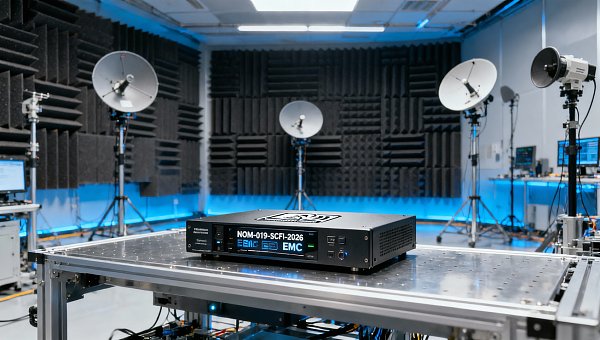
 Mexico NOM-019-SCFI-2026 Effective: Automotive Electronics Require New EMC CertificationMexico NOM-019-SCFI-2026 takes effect May 1, 2026 — new EMC certification mandatory for automotive electronics, EV accessories & aftermarket parts entering Mexico.
 Vietnam Suspends China Irrigation Equipment SASO Mutual RecognitionVietnam suspends China irrigation equipment SASO mutual recognition—urgent QCVN certification now required for drip tapes, sprinklers & smart controllers.
 Red Sea Diversion Normalized; Asia-Europe Freight Premium at $1,850/TEURed Sea diversion normalized: Asia-Europe freight premium holds at $1,850/TEU — impacting manufacturing, retail & procurement. Act now to optimize costs & resilience.
 FDA Drafts AI Bias Assessment Rule for Imported Medical DevicesFDA's new AI bias assessment rule for imported medical devices demands third-party verified fairness reports—act now to prep your 510(k)/De Novo submissions.
 TÜV Rheinland Updates CE Requirements for Servo DrivesTÜV Rheinland updates CE requirements for servo drives: integrated PLd + EN 61800-3 validation mandatory from July 1, 2026. Act now to avoid EU market delays!
 SABER Phase II Launch: Building Hardware Must Submit Digital Type Test Reports & Unique Product IDsSABER Phase II is live: Building hardware exporters must now submit digital type test reports & secure unique SABER Product IDs—avoid customs delays. Act now!
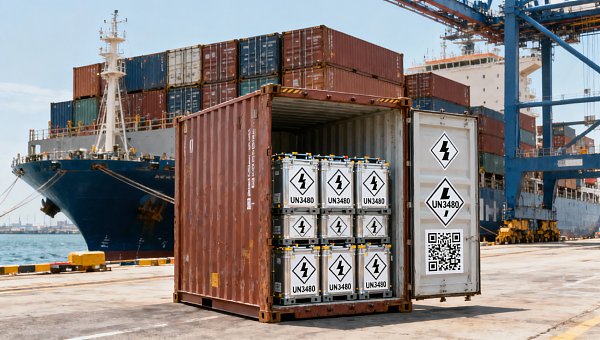
 IMDG Code 41-24 Enforced: New UN3480 Class 9 Label for Lithium Battery Sea FreightIMDG Code 41-24 enforced: UN3480 Class 9 label now mandatory for lithium battery sea freight — avoid delays in US, EU, UAE & Chile ports.
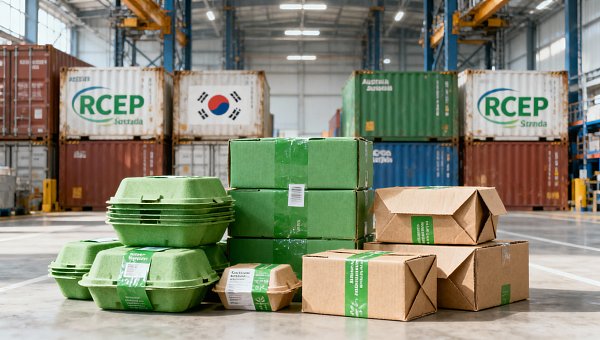
 RCEP Green Packaging Mutual Recognition Takes EffectRCEP Green Packaging Mutual Recognition takes effect Apr 21, 2026—unlock faster customs clearance for compostable, recycled & bio-based packaging in AU, NZ, JP, KR.
 China’s 10-Dept AI Ethics Review Rule for Exported AI DevicesChina’s 10-dept AI ethics review rule mandates algorithmic bias assessments for exported AI devices—key for EU, ME & SEA markets. Stay compliant ahead of enforcement.
 US CPSC Updates Child Sleep Sack Standard Effective July 2026US CPSC updates child sleep sack standard with new DSST test—mandatory for all U.S.-bound infant sleep sacks from July 2026. Act now to ensure compliance and market access.
 Red Sea Rerouting Pushes Asia-Europe Freight Premium to $1,850/TEURed Sea rerouting pushes Asia-Europe freight premium to $1,850/TEU—impacting importers, manufacturers & logistics providers. Act now to reassess costs, lead times & contracts.
 Mexico NOM-019-SCFI-2026 Effective May 1, 2026: EMC Certification Mandatory for Auto ElectronicsNOM-019-SCFI-2026 EMC certification is now mandatory for auto electronics in Mexico—effective May 1, 2026. Ensure compliance for infotainment, ADAS, OBD-II & more.
") TÜV Rheinland Updates CE Requirements for Servo Drives (PLd + EMC Class 3)TÜV Rheinland updates CE requirements for servo drives: PLd + EMC Class 3 joint validation mandatory from Q3 2026. Act now to avoid delays, rejections, or compliance risks.
TÜV Rheinland Updates CE Requirements for Servo Drives (PLd + EMC Class 3)TÜV Rheinland updates CE requirements for servo drives: PLd + EMC Class 3 joint validation mandatory from Q3 2026. Act now to avoid delays, rejections, or compliance risks. SABER Phase II Launch: Building Hardware Must Submit Digital e-CoC & UPISABER Phase II mandates digital e-CoC & UPI for building hardware imports to Saudi Arabia—act now to ensure customs clearance and market access.
 FDA AI Diagnostic Device Draft Rules: Bias Assessment for ImportsFDA AI diagnostic device draft rules mandate bias assessment for imports — discover how algorithmic fairness impacts 510(k)/De Novo submissions and what to do now.
 RCEP Green Packaging Mutual Recognition Starts June 1, 2026RCEP Green Packaging Mutual Recognition starts June 1, 2026 — unlock faster exports to Australia, NZ, Japan & Korea with GB/T 37572-2025 certification.
 Vietnam Suspends SASO Mutual Recognition for Chinese Irrigation EquipmentVietnam suspends SASO mutual recognition for Chinese irrigation equipment—impacting exporters, testers & suppliers. Act now to avoid 6–8 week delays & 35% cost hikes.
 IMDG Code 41-24 Enforces UN3480 Class 9 Labeling for Li-ion Battery Sea FreightIMDG Code 41-24 enforces UN3480 Class 9 labeling for Li-ion battery sea freight—learn mandatory QR labels, compliance actions & port enforcement risks.
 EU CBAM Enters Enforcement Phase on April 1, 2026EU CBAM enforcement starts April 1, 2026 — critical for Chinese battery materials, construction profiles & industrial coatings exporters. Act now to avoid customs delays.
 Mexico Enforces NOM-019-SCFI-2026 EMC Certification for Auto Electronics from May 2026Mexico enforces NOM-019-SCFI-2026 EMC certification for auto electronics from May 2026 — mandatory local testing, stricter standards, and urgent compliance action required.


















Popular Tags
Global Trade Insights & Industry
Our mission is to empower global exporters and importers with data-driven insights that foster strategic growth.
Search News
Popular Tags
Industry Overview
The global commercial kitchen equipment market is projected to reach $112 billion by 2027. Driven by urbanization, the rise of e-commerce food delivery, and strict hygiene regulations.