

Vietnam Suspends SASO Mutual Recognition for Chinese Irrigation Equipment
Vietnam’s Ministry of Industry and Trade announced on April 20, 2026, the immediate suspension of the Sino-Vietnamese Mutual Recognition Agreement on Agricultural Machinery and Irrigation Equipment. This decision triggers mandatory local type testing under Vietnam’s national standards (TCVN) for Chinese-made sprinklers, drip controllers, and smart fertigation systems — directly impacting exporters, importers, and supply chain stakeholders in agricultural technology and irrigation equipment trade.
Event Overview
On April 20, 2026, Vietnam’s Ministry of Industry and Trade issued an official notice suspending implementation of the China–Vietnam SASO Mutual Recognition Agreement for Agricultural Machinery and Irrigation Equipment. Effective immediately, Chinese-origin sprinkler systems, drip irrigation controllers, and intelligent water-fertilizer integration equipment must undergo compulsory type examination by designated Vietnamese laboratories against TCVN standards. Previously accepted China-issued CMA-certified products no longer qualify for automatic market access. A QCVN certificate — issued only after successful local testing — is now required. The average certification cycle has extended to 8–12 weeks.
Industries Affected
Direct Exporters & Trading Enterprises
Exporters of Chinese irrigation equipment face delayed clearance and increased compliance costs. Since CMA certification no longer serves as a valid entry credential, shipments may stall at Vietnamese customs pending test results. Cash flow, delivery timelines, and contract fulfillment are now exposed to new regulatory risk.
Manufacturers & OEMs
Manufacturers supplying to Vietnamese markets must restructure technical documentation and sample submission protocols to align with TCVN requirements — including language, labeling, electrical safety, and environmental resilience specifications. Product redesign or component substitution may be necessary if existing configurations fail local test criteria.
Distribution & Channel Partners
Vietnamese importers and distributors lose the ability to rely on pre-cleared inventory. Stock planning must now account for 8–12-week lead times for certification renewal per model. Shelf-ready stock may become obsolete if untested variants remain unsold during the transition period.
Supply Chain & Certification Service Providers
Third-party labs, conformity assessment bodies, and logistics partners supporting cross-border agri-tech trade must adjust service offerings to include TCVN-aligned pre-testing, document translation, and liaison with Vietnamese accredited laboratories. Demand for bilingual technical support and local representation is likely to rise.
What Enterprises Should Monitor and Do Now
Track official updates from Vietnam’s National Agency for Standards and Quality (STAMEQ) and Ministry of Industry and Trade
The current notice is an administrative suspension — not a permanent termination. Any revision, grace period extension, or scope clarification will be published through these channels. Subscribing to STAMEQ’s regulatory bulletins is recommended.
Prioritize verification for high-volume or high-value product lines
Given limited lab capacity and extended timelines, enterprises should identify top-selling models (e.g., solar-powered controllers or multi-zone fertigation units) for immediate TCVN test preparation — rather than submitting full catalogs at once.
Distinguish between policy signal and operational impact
This measure applies exclusively to agricultural irrigation equipment covered under the suspended agreement. It does not extend to general industrial pumps, non-agricultural electronics, or machinery outside the agreed scope. Misinterpreting its breadth could trigger unnecessary internal overhauls.
Prepare documentation and samples for Vietnamese laboratory submission
TCVN testing requires Vietnamese-language technical files, user manuals, circuit diagrams, and physical samples. Companies should begin translating and validating documents now — especially those related to electromagnetic compatibility (EMC), IP ratings, and chemical resistance — to avoid delays upon submission.
Editorial Observation / Industry Perspective
From an industry perspective, this suspension is better understood as a procedural recalibration than a trade barrier escalation. Analysis来看, it reflects Vietnam’s broader shift toward strengthening domestic conformity infrastructure — particularly for critical agricultural inputs — rather than targeting Chinese goods per se. Observation来看, similar adjustments have followed recent ASEAN-wide harmonization efforts, suggesting this may be part of a regional standardization trend. Current more relevant interpretation is that it signals heightened scrutiny on technical traceability and post-market surveillance — not a reversal of bilateral trade engagement.
That said, the 8–12-week certification delay represents a material operational constraint. For firms reliant on just-in-time distribution or seasonal deployment cycles (e.g., dry-season irrigation rollout), this timeline compresses margin and responsiveness. Continuous monitoring remains essential — especially for potential alignment with upcoming ASEAN Agri-Tech Technical Regulation (AATR) drafts expected in late 2026.
Conclusion
This measure marks a formal reset in market access conditions for Chinese irrigation equipment in Vietnam — shifting from mutual recognition to mandatory local verification. It is neither a blanket restriction nor a temporary glitch, but a structural adjustment requiring targeted compliance adaptation. Enterprises are advised to treat it as a sustained operational parameter — not a transient disruption — and integrate TCVN readiness into product development and export planning cycles.
Source Attribution
Main source: Official notice issued by Vietnam’s Ministry of Industry and Trade on April 20, 2026.
Points requiring ongoing observation: Possible issuance of implementing guidelines by STAMEQ; any bilateral consultation outcomes; and inclusion of irrigation equipment in future ASEAN-wide technical regulation frameworks.
Recommended News
 EU CBAM Carbon Tariff Starts Oct 2026 for Chinese Battery, Cement, Chemical ExportsEU CBAM carbon tariff hits Chinese battery, cement & chemical exports from Oct 2026 — mandatory emissions reporting starts now. Avoid €98/t default fees.
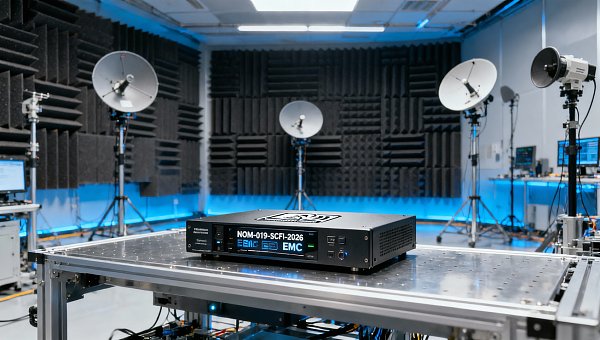
 Mexico NOM-019-SCFI-2026 Effective: Automotive Electronics Require New EMC CertificationMexico NOM-019-SCFI-2026 takes effect May 1, 2026 — new EMC certification mandatory for automotive electronics, EV accessories & aftermarket parts entering Mexico.
 Vietnam Suspends China Irrigation Equipment SASO Mutual RecognitionVietnam suspends China irrigation equipment SASO mutual recognition—urgent QCVN certification now required for drip tapes, sprinklers & smart controllers.
 Red Sea Diversion Normalized; Asia-Europe Freight Premium at $1,850/TEURed Sea diversion normalized: Asia-Europe freight premium holds at $1,850/TEU — impacting manufacturing, retail & procurement. Act now to optimize costs & resilience.
 FDA Drafts AI Bias Assessment Rule for Imported Medical DevicesFDA's new AI bias assessment rule for imported medical devices demands third-party verified fairness reports—act now to prep your 510(k)/De Novo submissions.
 TÜV Rheinland Updates CE Requirements for Servo DrivesTÜV Rheinland updates CE requirements for servo drives: integrated PLd + EN 61800-3 validation mandatory from July 1, 2026. Act now to avoid EU market delays!
 SABER Phase II Launch: Building Hardware Must Submit Digital Type Test Reports & Unique Product IDsSABER Phase II is live: Building hardware exporters must now submit digital type test reports & secure unique SABER Product IDs—avoid customs delays. Act now!
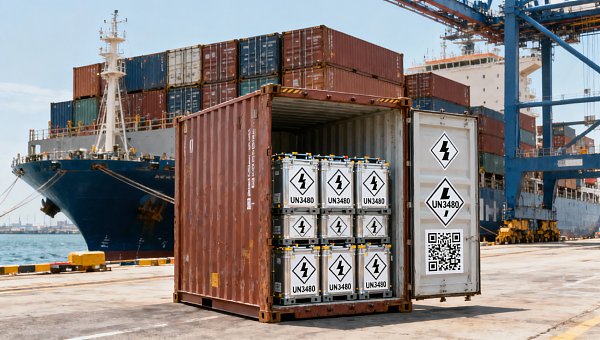
 IMDG Code 41-24 Enforced: New UN3480 Class 9 Label for Lithium Battery Sea FreightIMDG Code 41-24 enforced: UN3480 Class 9 label now mandatory for lithium battery sea freight — avoid delays in US, EU, UAE & Chile ports.
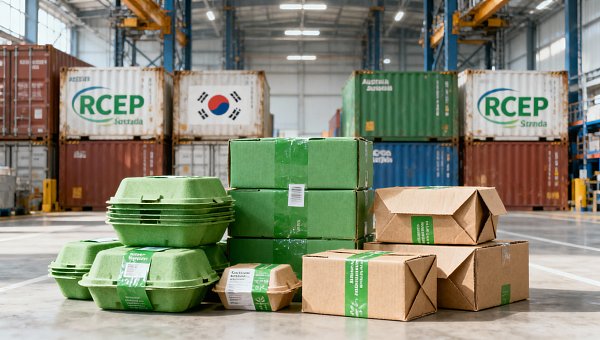
 RCEP Green Packaging Mutual Recognition Takes EffectRCEP Green Packaging Mutual Recognition takes effect Apr 21, 2026—unlock faster customs clearance for compostable, recycled & bio-based packaging in AU, NZ, JP, KR.
 China’s 10-Dept AI Ethics Review Rule for Exported AI DevicesChina’s 10-dept AI ethics review rule mandates algorithmic bias assessments for exported AI devices—key for EU, ME & SEA markets. Stay compliant ahead of enforcement.
 US CPSC Updates Child Sleep Sack Standard Effective July 2026US CPSC updates child sleep sack standard with new DSST test—mandatory for all U.S.-bound infant sleep sacks from July 2026. Act now to ensure compliance and market access.
 Red Sea Rerouting Pushes Asia-Europe Freight Premium to $1,850/TEURed Sea rerouting pushes Asia-Europe freight premium to $1,850/TEU—impacting importers, manufacturers & logistics providers. Act now to reassess costs, lead times & contracts.
 Mexico NOM-019-SCFI-2026 Effective May 1, 2026: EMC Certification Mandatory for Auto ElectronicsNOM-019-SCFI-2026 EMC certification is now mandatory for auto electronics in Mexico—effective May 1, 2026. Ensure compliance for infotainment, ADAS, OBD-II & more.
") TÜV Rheinland Updates CE Requirements for Servo Drives (PLd + EMC Class 3)TÜV Rheinland updates CE requirements for servo drives: PLd + EMC Class 3 joint validation mandatory from Q3 2026. Act now to avoid delays, rejections, or compliance risks.
TÜV Rheinland Updates CE Requirements for Servo Drives (PLd + EMC Class 3)TÜV Rheinland updates CE requirements for servo drives: PLd + EMC Class 3 joint validation mandatory from Q3 2026. Act now to avoid delays, rejections, or compliance risks. SABER Phase II Launch: Building Hardware Must Submit Digital e-CoC & UPISABER Phase II mandates digital e-CoC & UPI for building hardware imports to Saudi Arabia—act now to ensure customs clearance and market access.
 FDA AI Diagnostic Device Draft Rules: Bias Assessment for ImportsFDA AI diagnostic device draft rules mandate bias assessment for imports — discover how algorithmic fairness impacts 510(k)/De Novo submissions and what to do now.
 RCEP Green Packaging Mutual Recognition Starts June 1, 2026RCEP Green Packaging Mutual Recognition starts June 1, 2026 — unlock faster exports to Australia, NZ, Japan & Korea with GB/T 37572-2025 certification.
 Vietnam Suspends SASO Mutual Recognition for Chinese Irrigation EquipmentVietnam suspends SASO mutual recognition for Chinese irrigation equipment—impacting exporters, testers & suppliers. Act now to avoid 6–8 week delays & 35% cost hikes.
 IMDG Code 41-24 Enforces UN3480 Class 9 Labeling for Li-ion Battery Sea FreightIMDG Code 41-24 enforces UN3480 Class 9 labeling for Li-ion battery sea freight—learn mandatory QR labels, compliance actions & port enforcement risks.
 EU CBAM Enters Enforcement Phase on April 1, 2026EU CBAM enforcement starts April 1, 2026 — critical for Chinese battery materials, construction profiles & industrial coatings exporters. Act now to avoid customs delays.
 Mexico Enforces NOM-019-SCFI-2026 EMC Certification for Auto Electronics from May 2026Mexico enforces NOM-019-SCFI-2026 EMC certification for auto electronics from May 2026 — mandatory local testing, stricter standards, and urgent compliance action required.

















Popular Tags
Global Trade Insights & Industry
Our mission is to empower global exporters and importers with data-driven insights that foster strategic growth.
Search News
Popular Tags
Industry Overview
The global commercial kitchen equipment market is projected to reach $112 billion by 2027. Driven by urbanization, the rise of e-commerce food delivery, and strict hygiene regulations.