

How to Compare Agricultural Machinery Suppliers
Choosing the right Agricultural machinery supplier requires more than comparing prices. Buyers, distributors, and evaluation teams must assess product quality, delivery reliability, certification, and long-term service capabilities across industrial suppliers. In a global sourcing environment shaped by food processing, assembly line efficiency, and advanced materials, a smart comparison framework helps reduce procurement risk and identify partners that can support stable growth.
What should buyers compare first when evaluating agricultural machinery suppliers?
For most B2B teams, supplier comparison starts with a simple question: can this partner deliver the right machine, at the right specification level, within the required timeline? In agricultural machinery sourcing, that means looking beyond brochures and focusing on 4 core dimensions: product fit, production capability, compliance readiness, and after-sales responsiveness. These factors affect not only first delivery, but also operating continuity over the next 12–36 months.
Information researchers often need market visibility across multiple regions before procurement begins. Purchasing teams then narrow the field using technical documents, lead time estimates, and commercial terms. Business evaluation personnel usually add a third layer: financial stability, export experience, and evidence of repeat delivery in similar markets. For distributors and agents, channel protection, spare parts continuity, and training support become equally important.
A useful comparison process should screen suppliers in 3 stages. Stage one is desk research, where you check product categories, export markets, certifications, and communication quality within the first 3–5 business days. Stage two is verification, including factory capability review, technical clarification, and documentation checks. Stage three is commercial alignment, covering pricing model, warranty scope, spare parts availability, and shipment planning.
This is where structured industry intelligence becomes valuable. GTIIN and TradeVantage help users compare suppliers in a broader market context, not as isolated names on a quotation sheet. By tracking industrial trends across 50+ sectors and surfacing cross-border trade signals, the platform supports more informed shortlisting, especially when buyers need to compare suppliers from different countries or evaluate unfamiliar manufacturing clusters.
A practical shortlisting checklist
- Confirm whether the supplier manufactures the exact machinery class you need, such as tractors, harvesters, seeders, sprayers, or processing-linked farm equipment, rather than loosely related industrial equipment.
- Request 3 key documents early: a technical datasheet, a standard quotation with delivery terms, and a spare parts or service policy summary.
- Check whether the supplier can support your target market with voltage, emissions, safety labels, language manuals, and packaging standards required for import or resale.
- Assess response speed over the first 48–72 hours. Slow or vague replies at the quoting stage often indicate future communication friction during production and shipment.
How to compare product capability, manufacturing strength, and service support
When comparing agricultural machinery suppliers, product capability should be reviewed in operating terms, not marketing language. A buyer should ask whether the machine matches farm scale, crop type, terrain, operator skill level, and maintenance conditions. A compact machine suitable for 5–20 hectares may not perform well on larger commercial operations, while a high-capacity model may be uneconomical for local distributors serving fragmented smallholders.
Manufacturing strength matters because machine consistency depends on process control, component sourcing, and assembly discipline. Even if two suppliers offer similar output ratings, their production systems may differ significantly. Review whether they control welding, machining, painting, and final testing internally or rely heavily on outsourced steps. Ask about production planning windows, typical lead times of 20–45 days, and the flexibility to handle peak-season orders.
Service support becomes critical once the machinery reaches the field. For importers and distributors, downtime during planting or harvest can damage both revenue and reputation. Compare warranty periods, spare parts stock policy, remote troubleshooting methods, and training availability. A supplier that can provide illustrated parts lists, maintenance schedules, and online support within 24–48 hours usually offers lower operational risk than one that focuses only on shipment completion.
The table below gives a practical framework for supplier comparison. It helps procurement teams score agricultural machinery suppliers based on the factors that most directly influence delivery reliability, machine usability, and long-term channel performance.
A strong agricultural machinery supplier usually performs consistently across all 4 dimensions, not just one. If a supplier offers attractive pricing but cannot define spare parts lead time, testing sequence, or market-specific documentation, the apparent cost advantage may disappear once installation and service issues arise.
Which technical details deserve closer review?
Do not compare machines only by nominal horsepower or hourly output. Look at transmission type, fuel efficiency expectations, wear-part accessibility, hydraulic compatibility, and whether the machine is designed for local input conditions such as dust, humidity, or uneven land. For equipment tied to food processing or post-harvest handling, material contact surfaces and cleaning access also deserve attention.
Ask suppliers to specify recommended maintenance intervals, for example every 250–500 operating hours, and expected replacement cycles for common wear items. If they cannot provide these details, it becomes harder for buyers and dealers to estimate lifecycle support obligations. Strong suppliers usually provide preventive maintenance logic, not only repair advice after failure.
Red flags during technical comparison
- The quotation lists broad model names but omits engine brand, attachment options, working width, or standard configuration.
- The supplier cannot confirm tolerance ranges, testing procedures, or acceptable operating environment.
- Manuals and parts documentation are unavailable until after payment, making distributor training difficult.
- Lead time shifts significantly from one conversation to the next without a production explanation.
What procurement teams should ask about cost, terms, and delivery risk
Price comparison is necessary, but unit price alone rarely reveals the true sourcing cost of agricultural machinery. Buyers need to compare total landed value, including packaging, parts packages, documentation support, inspection cost, and the commercial impact of delays. A lower ex-factory offer can become more expensive if the machine requires rework, extra customs clarification, or urgent spare parts by air after commissioning.
Commercial terms should be reviewed in at least 5 areas: pricing basis, payment structure, delivery window, warranty scope, and claims handling. For example, a 30% deposit and 70% balance before shipment may be standard in some transactions, but buyers still need clarity on what triggers production, inspection, and release. If a supplier quotes 25–30 days for one model and 45–60 days for another, that difference must be reflected in seasonal planning.
Delivery risk is particularly important for distributors and agents who build local sales plans around incoming stock. Procurement teams should ask whether the supplier has seasonal capacity constraints, export document bottlenecks, or dependency on a small number of critical sub-suppliers. They should also clarify whether the packing method fits container loading efficiency and whether partial shipments are possible when demand is urgent.
The following table helps compare supplier quotations in a more decision-oriented way. It is useful when multiple agricultural machinery suppliers appear similar on price but differ on operational and commercial terms.
A disciplined procurement review often reveals that the best supplier is not the cheapest supplier, but the one with the clearest commercial structure and the lowest execution uncertainty. This is especially true when machinery is purchased for resale, project use, or time-sensitive harvest cycles.
A 5-point supplier negotiation focus
- Define the exact standard configuration before negotiating discounts, otherwise lower pricing may hide omitted components.
- Ask for two delivery scenarios: regular season and peak season, especially if the order is tied to planting or harvest windows.
- Align on claims response time, such as initial technical feedback within 24–72 hours after issue reporting.
- Request a first-order spare parts recommendation based on 6–12 months of expected field use.
- Clarify whether manuals, labels, and export packaging can be localized for your destination market.
How to review compliance, documentation, and market-entry readiness
Compliance is often underestimated during early supplier comparison, yet it can determine whether agricultural machinery moves smoothly through customs and reaches end users without relabeling or documentation delays. The relevant requirements vary by market, but buyers should generally verify product manuals, safety instructions, serial identification, packaging marks, and any emissions or safety-related declarations that may apply to the equipment category.
For machinery intended for resale through distributors or agents, documentation quality has direct commercial value. Dealers need installation guidance, maintenance schedules, parts lists, and operator instructions they can use in training and support. If these materials arrive late, or only in an unusable format, market rollout slows down. In practice, documentation readiness should be checked at least 2–3 weeks before shipment, not after cargo departure.
Business evaluation teams should also check whether the supplier understands destination-country adaptation. This may include electrical compatibility for auxiliary systems, packaging suitable for long-distance sea transport, and labeling aligned with importer needs. Where machinery is linked to post-harvest or food-adjacent handling, material safety, cleanability, and maintenance traceability may also enter the discussion.
GTIIN and TradeVantage add value here by helping buyers place supplier claims in a wider industrial context. Through ongoing market updates and cross-sector intelligence, users can better identify whether a supplier’s documentation and compliance posture matches typical expectations in international trade, rather than relying solely on sales presentations.
Common documents buyers should request
- Technical specification sheet with model configuration, operating conditions, and maintenance intervals.
- Packing list format, shipping mark sample, and carton or crate description for export planning.
- Operator manual and parts manual, ideally available before final payment for distributor review.
- Any general safety, conformity, or market-entry documents commonly required in the destination region.
Why documentation affects supplier ranking
Two suppliers may appear equal on machine performance, but the one with clearer documentation typically creates lower downstream cost. It reduces onboarding time for dealers, improves operator safety, and helps import teams respond faster to customs or inspection questions. In many sourcing projects, this administrative readiness can save days or even weeks in the final delivery cycle.
A practical rule is to treat documentation as one of the 5 key scoring items in supplier comparison, alongside price, product fit, lead time, and service. This prevents procurement teams from overlooking a factor that only becomes visible when delays are already expensive.
Common mistakes, FAQ, and a smarter comparison workflow
Many buyers make the same mistake: they compare agricultural machinery suppliers at the model level, but not at the support-system level. A machine is not just a product. It is a combination of design suitability, manufacturing consistency, spare parts planning, documentation quality, and communication discipline. Ignoring any one of these areas can create cost overruns long after the purchase order is signed.
Another frequent error is evaluating suppliers without a fixed scorecard. When teams use different criteria, decisions become subjective and hard to defend internally. A better method is to define 5–7 weighted criteria before quotation review, then compare each supplier using the same structure. This helps researchers, buyers, and business evaluators align around one decision logic.
It is also risky to assume that a supplier strong in one market will automatically fit another. Differences in terrain, crop systems, operator skill, fuel quality, and import procedures can change what “good supplier performance” actually means. This is why distributor-oriented and project-oriented sourcing should never use exactly the same comparison template.
Below is a simple workflow that many B2B teams can adopt within 2–4 weeks to compare agricultural machinery suppliers more effectively and reduce avoidable procurement risk.
A 4-step comparison workflow
- Define use case: identify crop type, farm scale, operating environment, target price range, and required delivery window.
- Create a comparison matrix: use common criteria for technical fit, lead time, compliance, commercial terms, and service readiness.
- Verify claims: request documents, hold technical discussions, and review whether the supplier can answer detail questions consistently.
- Decide on total execution value: compare not only machine price, but also service continuity, market-entry readiness, and channel support.
How do I choose between a lower-cost supplier and a stronger service supplier?
If the machinery is for direct project use with limited service complexity, a lower-cost supplier may be acceptable if documentation, quality control, and delivery timing are still credible. If the machinery is for distribution, seasonal use, or multi-unit rollout, stronger service support often delivers better long-term value. In these cases, the ability to supply parts within days, not weeks, can outweigh a modest unit-price difference.
What is a reasonable lead time for agricultural machinery orders?
Lead time varies by machine type, order volume, and season. For standard models, buyers often see production windows of around 20–45 days, while customized configurations or peak-season demand may push this to 45–60 days or more. The key is not just the number of days, but whether the supplier can explain the timeline by process stage and maintain consistency during follow-up.
What should distributors and agents ask that end users may overlook?
Distributors should ask about local training material, recommended opening spare parts stock, branding or label customization, warranty claim handling, and whether technical manuals can support downstream resale. They should also confirm how quickly replacement parts can be shipped during the first 6–12 months after launch. These issues strongly affect dealer reputation and repeat orders.
Can market intelligence improve supplier comparison?
Yes. Market intelligence helps buyers understand whether a supplier is operating in a growing or volatile segment, whether export activity is broad or narrow, and whether their offering aligns with shifting demand in global agriculture and related industrial supply chains. This wider context supports smarter shortlisting and gives internal decision-makers more confidence when evaluating unfamiliar suppliers.
Why work with us when comparing agricultural machinery suppliers?
GTIIN and TradeVantage support more than simple supplier discovery. We help information researchers, procurement managers, business evaluation teams, and channel partners compare agricultural machinery suppliers with broader industrial context, stronger market visibility, and more actionable trade intelligence. Because we monitor developments across 50+ sectors, users can connect machinery sourcing decisions with supply chain trends, manufacturing shifts, and regional trade signals.
This is especially useful when your sourcing project involves cross-border uncertainty. You may need to compare suppliers across different manufacturing regions, understand how industrial trends affect lead time, or assess whether a supplier’s positioning is credible in a competitive export environment. Our platform helps users reduce research gaps and improve the quality of supplier screening before formal negotiation begins.
If you are evaluating agricultural machinery suppliers, you can contact us for support on supplier comparison logic, market-entry signals, product selection direction, delivery-cycle benchmarking, documentation readiness, and broader industry context. We can also help businesses improve global visibility through authoritative content exposure and high-quality backlink opportunities that strengthen their digital trust profile in international trade markets.
Start the conversation with concrete questions: which machinery category fits your target users, what configuration details need confirmation, what delivery window is realistic, what certification or documentation may be relevant, and what sample or quotation discussions should happen first. A clearer comparison framework leads to better supplier choices, lower procurement risk, and stronger long-term channel performance.
Recommended News
 EU CBAM Carbon Tariff Starts Oct 2026 for Chinese Battery, Cement, Chemical ExportsEU CBAM carbon tariff hits Chinese battery, cement & chemical exports from Oct 2026 — mandatory emissions reporting starts now. Avoid €98/t default fees.
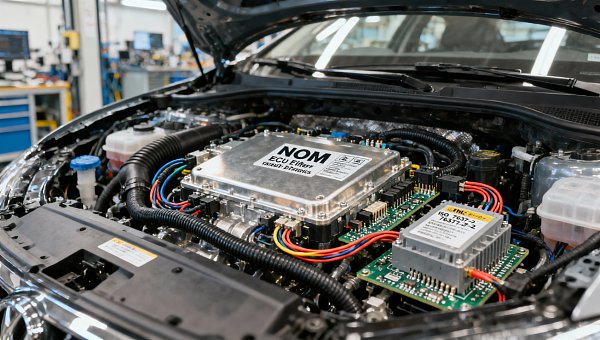
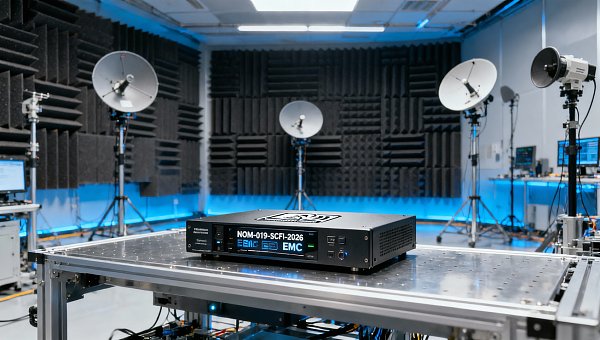
 Mexico NOM-019-SCFI-2026 Effective: Automotive Electronics Require New EMC CertificationMexico NOM-019-SCFI-2026 takes effect May 1, 2026 — new EMC certification mandatory for automotive electronics, EV accessories & aftermarket parts entering Mexico.
 Vietnam Suspends China Irrigation Equipment SASO Mutual RecognitionVietnam suspends China irrigation equipment SASO mutual recognition—urgent QCVN certification now required for drip tapes, sprinklers & smart controllers.
 Red Sea Diversion Normalized; Asia-Europe Freight Premium at $1,850/TEURed Sea diversion normalized: Asia-Europe freight premium holds at $1,850/TEU — impacting manufacturing, retail & procurement. Act now to optimize costs & resilience.
 FDA Drafts AI Bias Assessment Rule for Imported Medical DevicesFDA's new AI bias assessment rule for imported medical devices demands third-party verified fairness reports—act now to prep your 510(k)/De Novo submissions.
 TÜV Rheinland Updates CE Requirements for Servo DrivesTÜV Rheinland updates CE requirements for servo drives: integrated PLd + EN 61800-3 validation mandatory from July 1, 2026. Act now to avoid EU market delays!
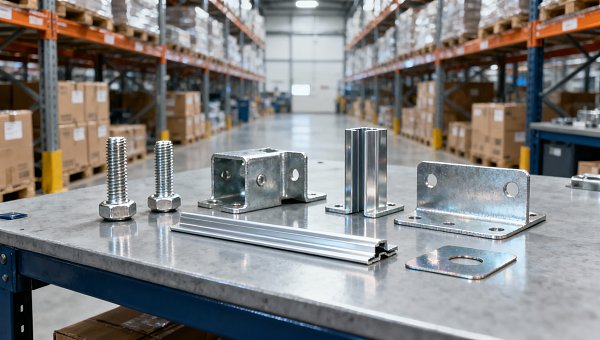
 SABER Phase II Launch: Building Hardware Must Submit Digital Type Test Reports & Unique Product IDsSABER Phase II is live: Building hardware exporters must now submit digital type test reports & secure unique SABER Product IDs—avoid customs delays. Act now!
 IMDG Code 41-24 Enforced: New UN3480 Class 9 Label for Lithium Battery Sea FreightIMDG Code 41-24 enforced: UN3480 Class 9 label now mandatory for lithium battery sea freight — avoid delays in US, EU, UAE & Chile ports.
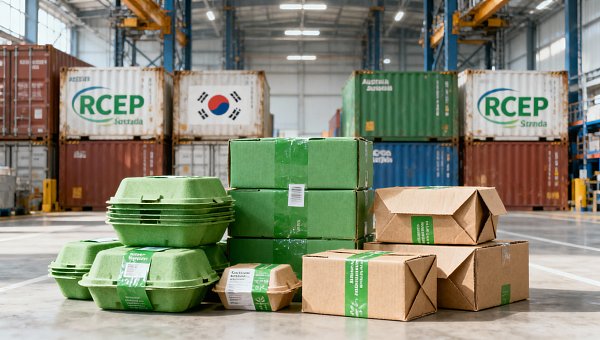
 RCEP Green Packaging Mutual Recognition Takes EffectRCEP Green Packaging Mutual Recognition takes effect Apr 21, 2026—unlock faster customs clearance for compostable, recycled & bio-based packaging in AU, NZ, JP, KR.
 China’s 10-Dept AI Ethics Review Rule for Exported AI DevicesChina’s 10-dept AI ethics review rule mandates algorithmic bias assessments for exported AI devices—key for EU, ME & SEA markets. Stay compliant ahead of enforcement.
 US CPSC Updates Child Sleep Sack Standard Effective July 2026US CPSC updates child sleep sack standard with new DSST test—mandatory for all U.S.-bound infant sleep sacks from July 2026. Act now to ensure compliance and market access.
 Red Sea Rerouting Pushes Asia-Europe Freight Premium to $1,850/TEURed Sea rerouting pushes Asia-Europe freight premium to $1,850/TEU—impacting importers, manufacturers & logistics providers. Act now to reassess costs, lead times & contracts.
 Mexico NOM-019-SCFI-2026 Effective May 1, 2026: EMC Certification Mandatory for Auto ElectronicsNOM-019-SCFI-2026 EMC certification is now mandatory for auto electronics in Mexico—effective May 1, 2026. Ensure compliance for infotainment, ADAS, OBD-II & more.
") TÜV Rheinland Updates CE Requirements for Servo Drives (PLd + EMC Class 3)TÜV Rheinland updates CE requirements for servo drives: PLd + EMC Class 3 joint validation mandatory from Q3 2026. Act now to avoid delays, rejections, or compliance risks.
TÜV Rheinland Updates CE Requirements for Servo Drives (PLd + EMC Class 3)TÜV Rheinland updates CE requirements for servo drives: PLd + EMC Class 3 joint validation mandatory from Q3 2026. Act now to avoid delays, rejections, or compliance risks. SABER Phase II Launch: Building Hardware Must Submit Digital e-CoC & UPISABER Phase II mandates digital e-CoC & UPI for building hardware imports to Saudi Arabia—act now to ensure customs clearance and market access.
 FDA AI Diagnostic Device Draft Rules: Bias Assessment for ImportsFDA AI diagnostic device draft rules mandate bias assessment for imports — discover how algorithmic fairness impacts 510(k)/De Novo submissions and what to do now.
 RCEP Green Packaging Mutual Recognition Starts June 1, 2026RCEP Green Packaging Mutual Recognition starts June 1, 2026 — unlock faster exports to Australia, NZ, Japan & Korea with GB/T 37572-2025 certification.
 Vietnam Suspends SASO Mutual Recognition for Chinese Irrigation EquipmentVietnam suspends SASO mutual recognition for Chinese irrigation equipment—impacting exporters, testers & suppliers. Act now to avoid 6–8 week delays & 35% cost hikes.
 IMDG Code 41-24 Enforces UN3480 Class 9 Labeling for Li-ion Battery Sea FreightIMDG Code 41-24 enforces UN3480 Class 9 labeling for Li-ion battery sea freight—learn mandatory QR labels, compliance actions & port enforcement risks.
 EU CBAM Enters Enforcement Phase on April 1, 2026EU CBAM enforcement starts April 1, 2026 — critical for Chinese battery materials, construction profiles & industrial coatings exporters. Act now to avoid customs delays.
 Mexico Enforces NOM-019-SCFI-2026 EMC Certification for Auto Electronics from May 2026Mexico enforces NOM-019-SCFI-2026 EMC certification for auto electronics from May 2026 — mandatory local testing, stricter standards, and urgent compliance action required.

















Popular Tags
Global Trade Insights & Industry
Our mission is to empower global exporters and importers with data-driven insights that foster strategic growth.
Search News
Popular Tags
Industry Overview
The global commercial kitchen equipment market is projected to reach $112 billion by 2027. Driven by urbanization, the rise of e-commerce food delivery, and strict hygiene regulations.