

Radiators Buying Tips: Brass, Aluminum or Plastic?
Choosing the right radiators can directly affect vehicle cooling efficiency, durability, and maintenance costs. Whether you are comparing brass, aluminum, or plastic models for car maintenance, procurement, or distribution, understanding material performance is essential. This guide breaks down the key differences, buying factors, and market considerations to help buyers make smarter sourcing decisions in today’s competitive automotive parts landscape.
For buyers in the aftermarket, fleet maintenance, and international trade, radiator selection is rarely just a technical issue. It affects warranty risk, replacement cycles, logistics costs, and customer satisfaction. A distributor may focus on turnover and complaint rates, while a procurement manager may prioritize unit economics, fitment consistency, and supplier stability across 3 to 5 vehicle segments.
Brass, aluminum, and plastic radiators each serve different operating conditions and pricing strategies. The best option depends on vehicle age, thermal load, repair expectations, and target market positioning. Understanding these differences helps importers, dealers, and sourcing teams reduce costly mismatches before the purchase order is placed.
Material Basics: How Brass, Aluminum, and Plastic Radiators Differ
At a basic level, a radiator transfers engine heat from coolant to ambient air. The core material, tank design, and joining method influence heat dissipation, weight, corrosion resistance, and repairability. In passenger vehicles and light commercial applications, these variables can affect cooling stability during stop-and-go traffic, towing, or high-temperature operation above 35°C.
Brass radiators are often associated with older vehicles, heavy-duty service, and repair-friendly designs. They are usually heavier than modern alternatives, but they can be easier to solder and refurbish. For restoration markets or regions where workshops prefer component-level repair over full replacement, brass still retains practical value.
Aluminum radiators have become the dominant choice in many OEM and aftermarket segments. Their appeal comes from a strong balance of heat transfer, lower weight, and broad fitment availability. In many sourcing projects, aluminum models are selected for mainstream passenger vehicles because they support competitive pricing without creating excessive shipping weight across container loads.
Plastic radiators usually refer to radiators with aluminum cores and plastic end tanks, rather than fully plastic heat exchangers. This design is common because it reduces manufacturing cost and weight. However, long-term durability depends heavily on tank material quality, crimping integrity, and performance under repeated thermal cycling that may exceed 1,000 heating and cooling cycles over its service life.
Core comparison points
When comparing radiator materials, buyers should evaluate five dimensions: thermal efficiency, mechanical strength, repair potential, lifespan under local climate conditions, and landed cost. These factors matter more than simple material labels because a low-cost unit with poor brazing or weak tank seals may fail faster than a better-built alternative in the same category.
The table below summarizes common purchasing differences seen across standard automotive cooling applications.
A key takeaway is that no radiator material is universally superior. Brass often wins in repairability, aluminum in balance and market acceptance, and plastic-tank designs in price competitiveness. For B2B buyers, the right choice comes from matching the product to vehicle mix, climate exposure, service expectations, and target retail positioning.
Performance and Durability Factors That Matter in Real Procurement
Cooling performance is not defined by material alone. Tube density, fin design, core thickness, and tank seal quality influence actual operating behavior. A radiator with a 16 mm core may fit low-demand applications, while higher-load systems often use 26 mm to 40 mm core structures depending on engine size and package space. Buyers who ignore these specifications may compare unlike products on price alone.
Durability is especially important in export markets with mixed road and climate conditions. In regions with large day-night temperature swings or sustained ambient heat above 40°C, repeated thermal stress can accelerate end-tank cracks or seam fatigue. This is why distributors should not evaluate radiators only by invoice cost; return rates within the first 6 to 12 months can reshape total profitability.
Corrosion resistance is another major factor. Poor coolant maintenance, mineral-heavy water, or incompatible additives can shorten service life. Brass units may tolerate some repair intervention, while aluminum systems require close attention to coolant chemistry. Plastic end tanks may perform well for years, but degraded seals or brittle polymer behavior can become failure points if system pressure rises beyond normal operating range.
Weight also matters in bulk purchasing. Across a shipment of 1,000 units, choosing a lighter radiator design can reduce freight costs and improve handling efficiency in warehouses. This may not be decisive for every buyer, but for importers moving mixed SKUs across regional distribution centers, the logistics impact can be substantial.
Key quality checks before supplier approval
- Confirm core thickness, fin density, and tube count against the intended OE-equivalent specification, not just overall dimensions.
- Review pressure testing practices. A standard leak test and thermal cycling validation are stronger indicators than visual inspection alone.
- Check end-tank material consistency, crimp quality, and gasket seating for plastic tank models.
- Request information on coating or anti-corrosion treatment where relevant, especially for humid or coastal markets.
- Verify packaging standards to reduce fin damage during 20-foot or 40-foot container transport.
Common buyer mistake
One frequent mistake is treating all aluminum radiators as equal. In reality, a low-cost unit may use thinner material, weaker welds, or inconsistent dimensional tolerances of ±2 mm or more. For fit-critical applications, even a small bracket misalignment can increase installation time, create return requests, or damage relationships with workshops and resellers.
Another mistake is assuming plastic-tank radiators are always low grade. Many modern vehicles use this structure successfully when the design and manufacturing controls are sound. The better procurement question is whether the product is appropriate for the target service life, warranty window, and market price band.
How to Choose the Right Radiator by Vehicle Type and Sales Channel
Selection should begin with application logic rather than material preference. A classic vehicle restoration business may value brass because repairability and original-style construction support authenticity. A regional distributor serving compact and mid-size passenger cars may favor aluminum or plastic-tank models because turnover speed, fitment breadth, and price competitiveness are more important than rebuild potential.
Fleet buyers should evaluate duty cycle. Vehicles that idle for long periods, operate in dense traffic, or carry heavy loads may require stronger heat rejection margins. In these cases, asking for specifications related to core design and pressure performance is more useful than focusing only on material labels. A 10% to 15% price increase for better durability may be justified if it reduces downtime across 50 or 100 vehicles.
For resellers and agents, the right radiator mix often depends on replacement frequency and local repair habits. In some markets, older vehicle populations create steady demand for metal-heavy designs. In others, high-volume retail channels prefer OE-style plastic-tank radiators because end users prioritize affordability and immediate fitment over long-term repair options.
Importers should also consider SKU rationalization. Carrying too many low-volume radiator variants can tie up working capital and warehouse space. A practical approach is to segment products into A, B, and C demand tiers based on monthly movement, target vehicle parc, and return history. This keeps procurement disciplined while preserving market coverage.
Selection matrix by business scenario
The following matrix can help buyers align radiator material with commercial priorities.
This comparison shows that material choice should support channel strategy. For distribution businesses, the most profitable radiator is often the one with the best balance of fitment accuracy, manageable return rates, and acceptable price positioning, rather than the cheapest unit on the quotation sheet.
Pricing, Sourcing, and Risk Control in International Trade
Radiator purchasing in global B2B trade requires a broader view than unit price. Buyers need to examine MOQ, tooling stability, lead time, packaging quality, and after-sales response. A supplier offering a 7% lower ex-works price may still create higher landed cost if defect handling is slow or if replacement claims take 30 to 45 days to resolve.
Lead time planning is particularly important for seasonal demand. Before summer peaks or heavy transport cycles, many buyers try to secure stock 6 to 10 weeks in advance. If procurement starts too late, teams may face substitute sourcing, partial shipments, or forced acceptance of lower-spec alternatives. This can hurt both brand credibility and gross margin.
Documentation also matters. A strong supplier should provide fitment data, material descriptions, test information, and clear packaging labels. Even without proprietary certifications or special branding claims, disciplined documentation reduces disputes across import, warehousing, and reseller transfer. It also improves catalog accuracy for e-commerce and dealer networks.
For distributors building long-term sourcing partnerships, audit the supplier on consistency, not just sample quality. Many returns originate from batch-to-batch variation after the first successful order. A good trial program may begin with 20 to 50 units across high-demand SKUs, followed by failure tracking over the next 60 to 90 days before scaling up.
Practical sourcing checklist
- Define the target vehicle range, annual volume, and acceptable warranty window before requesting quotations.
- Compare sample units on dimensions, weld quality, fin condition, and packaging protection.
- Confirm MOQ, standard lead time, and replenishment flexibility for urgent orders.
- Establish a defect claim process with response targets, such as initial feedback within 48 to 72 hours.
- Track first-order performance by installation ease, leak incidence, and field return rate.
Risks buyers should flag early
The most common sourcing risks include inconsistent bracket placement, weak protective packaging, low-grade plastic tanks, and incomplete fitment references. These issues may not appear on a quotation form, but they can quickly surface after market launch. For cross-border trade, each additional return or claim adds labor, freight, and reputation cost.
It is also wise to clarify whether the product is designed as OE-equivalent replacement or a value-grade aftermarket option. This distinction helps align technical expectations, pricing, and customer communication across wholesalers, agents, and repair shops.
Maintenance, Service Life, and Frequently Asked Buying Questions
Even the best radiator can underperform if the cooling system is poorly maintained. Contaminated coolant, pressure cap failure, blocked fins, and trapped air all shorten service life. In many cases, radiator complaints are linked not only to product quality but also to installation or coolant management errors. Buyers serving workshops should therefore support products with clear fitting and maintenance guidance.
From a commercial perspective, service life expectations should match the market tier. A budget replacement sold into older vehicles may prioritize affordability and a shorter ownership cycle. A premium channel may require stronger durability, lower return rates, and more stable thermal performance over 2 to 4 years of typical operation.
Routine inspection intervals also matter. For active fleet or delivery vehicles, visual cooling-system checks every 3 to 6 months can detect early issues such as seepage, fin damage, or hose stress. Preventive maintenance is often cheaper than roadside failure, especially when downtime interrupts transport schedules or service commitments.
For importers and distributors, offering basic technical education can reduce claims. Simple guidance on coolant compatibility, system flushing, and installation torque control may help protect both the radiator and the reseller relationship.
FAQ: common purchasing questions
Which radiator material lasts the longest?
There is no single answer without context. Brass can offer long service life where repair and refurbishment are common. Aluminum performs very well in many modern applications when coolant quality and manufacturing standards are controlled. Plastic-tank radiators can also last for years, but their lifespan is more sensitive to thermal cycling, seal quality, and cooling-system maintenance.
Is aluminum always better than brass?
Not always. Aluminum is usually lighter and widely available, which makes it a strong choice for most modern passenger vehicles. Brass may still be preferable for repair-focused markets, older vehicle platforms, or heavy-service conditions where rebuildability has commercial value.
Are plastic radiators suitable for distribution programs?
Yes, if they are sourced carefully. Many distribution businesses rely on plastic-tank radiators because they fit mainstream demand and cost targets. The key is to validate tank quality, sealing reliability, and packaging protection before scaling volume.
What should buyers inspect first when comparing offers?
Start with fitment accuracy, core specification, tank construction, test method, and warranty terms. Price should come after technical alignment. A 5% to 8% unit saving can be erased quickly if installation failures or leak claims rise after launch.
How often should radiator-related maintenance be reviewed?
For normal use, periodic checks every 6 to 12 months are common. Under fleet, towing, or high-temperature use, a shorter 3 to 6 month interval may be more appropriate. Buyers serving these segments should align product quality with actual service intensity.
Choosing between brass, aluminum, and plastic radiators is ultimately a decision about application fit, lifecycle cost, and market strategy. Brass supports repair-oriented and classic segments, aluminum offers strong all-round value for modern aftermarket demand, and plastic-tank designs remain important where cost and OE-style replacement dominate buying behavior.
For procurement teams, distributors, and trade decision-makers, the most effective buying process combines technical checks, supplier consistency review, and channel-specific positioning. If you are evaluating radiator sourcing options for export, aftermarket distribution, or fleet supply, now is the right time to refine your shortlist, request detailed specifications, and compare real operational value before placing your next order.
To explore more market-focused sourcing insights, product comparison guidance, and trade intelligence for automotive parts and related industrial categories, contact us, request a customized solution, or learn more about tailored procurement support through GTIIN and TradeVantage.
Recommended News
 EU CBAM Carbon Tariff Starts Oct 2026 for Chinese Battery, Cement, Chemical ExportsEU CBAM carbon tariff hits Chinese battery, cement & chemical exports from Oct 2026 — mandatory emissions reporting starts now. Avoid €98/t default fees.
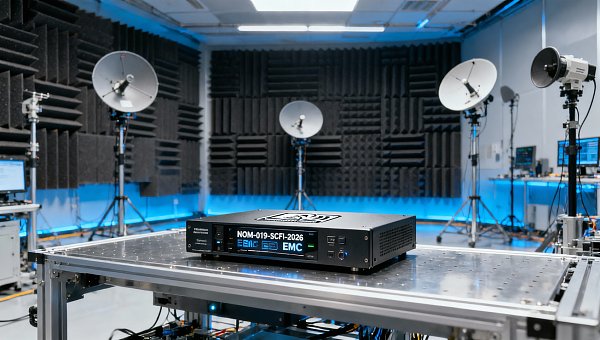
 Mexico NOM-019-SCFI-2026 Effective: Automotive Electronics Require New EMC CertificationMexico NOM-019-SCFI-2026 takes effect May 1, 2026 — new EMC certification mandatory for automotive electronics, EV accessories & aftermarket parts entering Mexico.
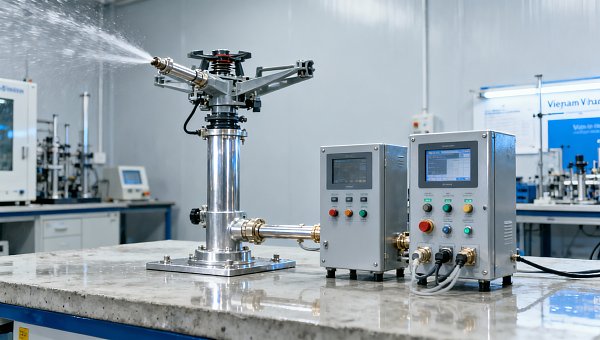
 Vietnam Suspends China Irrigation Equipment SASO Mutual RecognitionVietnam suspends China irrigation equipment SASO mutual recognition—urgent QCVN certification now required for drip tapes, sprinklers & smart controllers.
 Red Sea Diversion Normalized; Asia-Europe Freight Premium at $1,850/TEURed Sea diversion normalized: Asia-Europe freight premium holds at $1,850/TEU — impacting manufacturing, retail & procurement. Act now to optimize costs & resilience.
 FDA Drafts AI Bias Assessment Rule for Imported Medical DevicesFDA's new AI bias assessment rule for imported medical devices demands third-party verified fairness reports—act now to prep your 510(k)/De Novo submissions.
 TÜV Rheinland Updates CE Requirements for Servo DrivesTÜV Rheinland updates CE requirements for servo drives: integrated PLd + EN 61800-3 validation mandatory from July 1, 2026. Act now to avoid EU market delays!
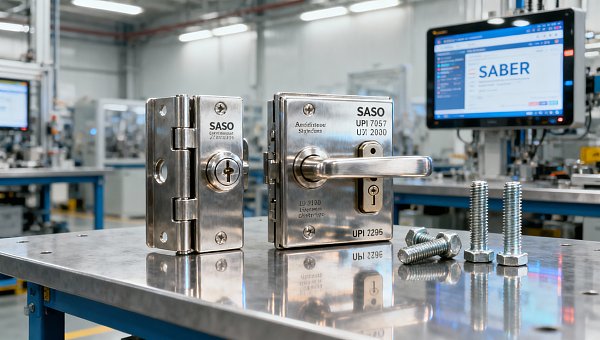
 SABER Phase II Launch: Building Hardware Must Submit Digital Type Test Reports & Unique Product IDsSABER Phase II is live: Building hardware exporters must now submit digital type test reports & secure unique SABER Product IDs—avoid customs delays. Act now!
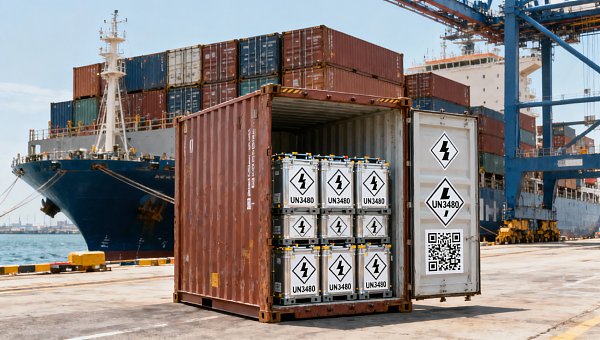
 IMDG Code 41-24 Enforced: New UN3480 Class 9 Label for Lithium Battery Sea FreightIMDG Code 41-24 enforced: UN3480 Class 9 label now mandatory for lithium battery sea freight — avoid delays in US, EU, UAE & Chile ports.
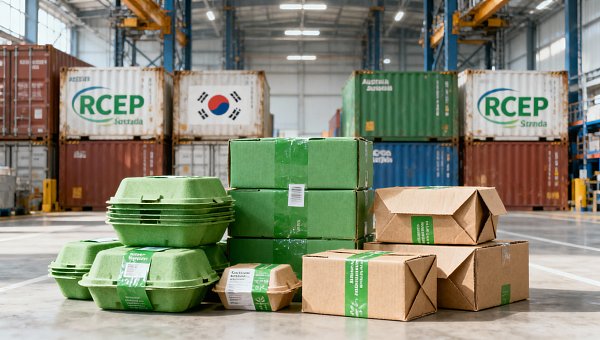
 RCEP Green Packaging Mutual Recognition Takes EffectRCEP Green Packaging Mutual Recognition takes effect Apr 21, 2026—unlock faster customs clearance for compostable, recycled & bio-based packaging in AU, NZ, JP, KR.
 China’s 10-Dept AI Ethics Review Rule for Exported AI DevicesChina’s 10-dept AI ethics review rule mandates algorithmic bias assessments for exported AI devices—key for EU, ME & SEA markets. Stay compliant ahead of enforcement.
 US CPSC Updates Child Sleep Sack Standard Effective July 2026US CPSC updates child sleep sack standard with new DSST test—mandatory for all U.S.-bound infant sleep sacks from July 2026. Act now to ensure compliance and market access.
 Red Sea Rerouting Pushes Asia-Europe Freight Premium to $1,850/TEURed Sea rerouting pushes Asia-Europe freight premium to $1,850/TEU—impacting importers, manufacturers & logistics providers. Act now to reassess costs, lead times & contracts.
 Mexico NOM-019-SCFI-2026 Effective May 1, 2026: EMC Certification Mandatory for Auto ElectronicsNOM-019-SCFI-2026 EMC certification is now mandatory for auto electronics in Mexico—effective May 1, 2026. Ensure compliance for infotainment, ADAS, OBD-II & more.
") TÜV Rheinland Updates CE Requirements for Servo Drives (PLd + EMC Class 3)TÜV Rheinland updates CE requirements for servo drives: PLd + EMC Class 3 joint validation mandatory from Q3 2026. Act now to avoid delays, rejections, or compliance risks.
TÜV Rheinland Updates CE Requirements for Servo Drives (PLd + EMC Class 3)TÜV Rheinland updates CE requirements for servo drives: PLd + EMC Class 3 joint validation mandatory from Q3 2026. Act now to avoid delays, rejections, or compliance risks. SABER Phase II Launch: Building Hardware Must Submit Digital e-CoC & UPISABER Phase II mandates digital e-CoC & UPI for building hardware imports to Saudi Arabia—act now to ensure customs clearance and market access.
 FDA AI Diagnostic Device Draft Rules: Bias Assessment for ImportsFDA AI diagnostic device draft rules mandate bias assessment for imports — discover how algorithmic fairness impacts 510(k)/De Novo submissions and what to do now.
 RCEP Green Packaging Mutual Recognition Starts June 1, 2026RCEP Green Packaging Mutual Recognition starts June 1, 2026 — unlock faster exports to Australia, NZ, Japan & Korea with GB/T 37572-2025 certification.
 Vietnam Suspends SASO Mutual Recognition for Chinese Irrigation EquipmentVietnam suspends SASO mutual recognition for Chinese irrigation equipment—impacting exporters, testers & suppliers. Act now to avoid 6–8 week delays & 35% cost hikes.
 IMDG Code 41-24 Enforces UN3480 Class 9 Labeling for Li-ion Battery Sea FreightIMDG Code 41-24 enforces UN3480 Class 9 labeling for Li-ion battery sea freight—learn mandatory QR labels, compliance actions & port enforcement risks.
 EU CBAM Enters Enforcement Phase on April 1, 2026EU CBAM enforcement starts April 1, 2026 — critical for Chinese battery materials, construction profiles & industrial coatings exporters. Act now to avoid customs delays.
 Mexico Enforces NOM-019-SCFI-2026 EMC Certification for Auto Electronics from May 2026Mexico enforces NOM-019-SCFI-2026 EMC certification for auto electronics from May 2026 — mandatory local testing, stricter standards, and urgent compliance action required.











Popular Tags
Global Trade Insights & Industry
Our mission is to empower global exporters and importers with data-driven insights that foster strategic growth.
Search News
Popular Tags
Industry Overview
The global commercial kitchen equipment market is projected to reach $112 billion by 2027. Driven by urbanization, the rise of e-commerce food delivery, and strict hygiene regulations.