

Industrial Suppliers: How to Vet Them Before Ordering
Choosing reliable industrial suppliers before placing an order is not just a compliance step—it is a profit-protection decision. For procurement teams, distributors, and business evaluators, the real question is simple: can this supplier consistently deliver the right product, at the agreed quality, with acceptable risk? A strong vetting process helps you avoid production delays, quality disputes, hidden costs, and reputational damage. It also improves negotiation leverage and supports better long-term sourcing decisions across sectors such as PPE, water treatment, agricultural machinery, and advanced materials.
In practice, the best supplier assessment goes beyond checking a website or comparing quotes. You need to verify legal identity, manufacturing capability, quality control systems, export experience, communication discipline, and market credibility. This article explains how to evaluate industrial suppliers in a practical, decision-oriented way before ordering, so you can reduce uncertainty and move forward with greater confidence.
What Buyers Really Need to Know Before Ordering
When people search for how to vet industrial suppliers, they are usually trying to avoid three core risks: poor product quality, unreliable delivery, and commercial fraud. Price matters, but experienced buyers know that the cheapest quotation can become the most expensive option if it leads to returns, delays, compliance issues, or customer complaints.
For procurement professionals and business evaluators, the most useful supplier vetting process answers a few direct questions:
- Is the supplier a legitimate and traceable business entity?
- Do they actually manufacture the product, or are they only trading it?
- Can they meet required quality, compliance, and volume standards?
- Do they have a stable history of export performance and customer support?
- Are there warning signs in their pricing, documentation, or communication?
If you can answer those questions with evidence rather than assumptions, your sourcing decision becomes much stronger.
Start With Basic Supplier Verification, But Do Not Stop There
The first step in industrial supplier vetting is confirming that the company exists, operates legally, and matches the identity presented in its sales materials. This sounds obvious, but many sourcing problems begin because buyers rely on email conversations and product catalogs without validating the company behind them.
At a minimum, verify the following:
- Registered company name and registration number
- Business license and legal representative details
- Operational address, factory address, and export address if different
- Years in operation
- Main product categories and target export markets
- Website ownership, corporate email domain, and public business presence
Then compare these details across multiple sources. A legitimate industrial supplier should have a consistent corporate identity across registration documents, website pages, trade platforms, customs data where available, and third-party references. Inconsistencies do not always indicate fraud, but they do justify deeper review.
This is especially important in broad industrial sourcing, where some companies present themselves as manufacturers while actually operating as brokers. A trading company is not automatically a bad option, but buyers should know the difference because it affects quality control, lead times, pricing transparency, and accountability.
Confirm Whether the Supplier Is a Manufacturer or a Trader
One of the most valuable supplier checks is understanding where your product is really made and who controls production. Buyers often assume they are negotiating directly with a factory, only to discover later that there are intermediaries between the order and the production line.
To clarify the supplier’s role, ask practical questions such as:
- Which products are made in-house, and which are outsourced?
- How many production lines do they operate?
- What are their main machines, monthly capacity, and peak output?
- Can they provide factory photos, equipment lists, and process flow details?
- Can they support virtual or in-person factory audits?
For sectors like agricultural machinery, water treatment equipment, and advanced materials, the distinction matters even more because technical consistency and after-sales support often depend on direct manufacturing control. In PPE and regulated product categories, tracing the actual production source is also critical for compliance and liability reasons.
If the supplier is a trader, assess their value honestly. Some trading companies offer strong sourcing coordination, mixed-container efficiency, language support, and supplier management. The key is transparency. You should know who manufactures the goods and who is responsible for specifications, defects, documentation, and delivery performance.
Evaluate Production Capability Against Your Actual Order Needs
A supplier may be credible on paper and still be a poor fit for your order. Vetting should therefore move from identity verification to capability verification. The goal is not simply to ask whether they can produce the item, but whether they can produce it at your required standard, quantity, and timeline.
Focus on these capability areas:
- Capacity: Can they handle your order volume without overloading operations?
- Lead time discipline: Are quoted timelines realistic based on current production load?
- Technical fit: Do they understand your specifications, tolerances, materials, and application requirements?
- Customization ability: Can they support OEM, private labeling, special packaging, or design modifications?
- Supply chain resilience: Do they depend on unstable raw material sources or single-point subcontractors?
A useful test is to request a breakdown of the production process from raw material sourcing to final inspection. Serious industrial suppliers can usually explain where quality risks occur and how they control them. Vague answers, generic brochures, or repeated sales language without operational detail are signs that the supplier may not have strong process ownership.
Buyers should also compare minimum order quantity, standard lead time, and peak season performance. A supplier that performs well on sample orders may still fail when larger commercial volumes are introduced.
Check Quality Control Systems, Not Just Certifications
Many buyers make the mistake of treating certificates as proof of quality. Certifications matter, but they are only one part of the evaluation. What matters more is whether the supplier has a functioning quality management process that works consistently in daily operations.
Ask how quality is controlled at each stage:
- Incoming material inspection
- In-process checks during production
- Final inspection before packing and shipment
- Defect classification and rework procedures
- Batch traceability and record keeping
For industrial products, request sample inspection reports, test records, and non-conformance handling examples. These documents often reveal more than marketing claims. If the supplier says they maintain strict quality standards but cannot show a usable inspection format or traceability process, that is a warning sign.
In regulated categories such as PPE or water treatment components, you should also verify whether test reports are current, relevant to the exact model, and issued by credible institutions. Outdated certificates, copied declarations, or documents that do not match the offered product are common red flags.
Assess Compliance, Documentation, and Export Readiness
A capable industrial supplier must be able to support documentation requirements as well as production. This is particularly important for importers, distributors, and agents who face legal or customer accountability in their local markets.
Before ordering, review whether the supplier can provide:
- Product specifications and technical datasheets
- Certificates of conformity where required
- Material safety or performance documentation
- Packing lists, commercial invoices, and origin documents
- Labeling and packaging aligned with destination market requirements
- Warranty terms and claims handling procedures
Export readiness also includes communication accuracy. A supplier that regularly makes errors in quotations, HS codes, dimensions, or packaging details may create customs delays or downstream disputes. Good documentation is not paperwork for its own sake—it is evidence of operational maturity.
For cross-border trade, it is also wise to ask about their main export markets. Suppliers with proven shipping experience to your destination region are often better prepared to handle standard compliance expectations, language requirements, and logistics coordination.
Look for Market Reputation and Real Transaction Signals
Reputation is not just about testimonials on a website. Buyers should look for verifiable signs that the supplier has completed real business with credible customers and maintained acceptable performance over time.
Useful reputation signals include:
- Repeat export history
- Customer references in similar industries or regions
- Trade fair participation and industry association presence
- Third-party audit reports
- Complaint patterns visible through online searches, forums, or business networks
- Consistent product focus rather than random unrelated offerings
One practical method is to evaluate the supplier’s specialization. Companies that sell highly unrelated products across too many categories may simply be lead generators or opportunistic traders. In contrast, suppliers with a focused product line, technical content, and coherent application knowledge are generally easier to evaluate and more likely to support long-term cooperation.
This is where industry intelligence platforms and B2B information aggregators become especially useful. Reliable market data, sector updates, and supplier visibility signals help buyers compare vendors in context rather than in isolation.
Red Flags That Should Trigger Extra Caution
Not every issue means you should reject a supplier immediately, but some patterns deserve immediate scrutiny. The most common warning signs include:
- Pricing that is far below market without a clear explanation
- Reluctance to share company registration or factory information
- Certificates that appear altered, expired, or unrelated to the offered item
- Frequent changes in bank account details or payment instructions
- Pressure for full upfront payment without verification safeguards
- Slow, inconsistent, or technically weak responses from the sales team
- Overpromising on lead times, customization, or certifications
- Sample quality that does not match quotation claims
Industrial sourcing failures often come from a cluster of small warning signs rather than one dramatic problem. If several of these issues appear together, you should slow the process, request more evidence, or shift to a lower-risk trial order structure.
Use a Practical Supplier Vetting Workflow Before the First Order
To make supplier evaluation repeatable, buyers should use a structured process rather than relying on intuition alone. A simple workflow can save time and improve cross-team decision-making.
- Initial screening: Check business legitimacy, product relevance, export profile, and communication quality.
- Capability review: Confirm manufacturing role, capacity, specifications, and technical fit.
- Quality and compliance review: Verify inspection systems, certifications, test reports, and documentation support.
- Commercial review: Compare pricing logic, payment terms, lead times, warranty, and Incoterms.
- Sample or pilot order: Test product quality, packaging, response speed, and shipment execution.
- Audit or third-party verification: Use on-site or remote checks if the order value or risk level justifies it.
- Approved supplier decision: Rate the supplier against objective criteria and define next-step volume limits.
This process is especially useful for procurement teams managing multiple categories and geographies. It also helps distributors and agents justify sourcing decisions internally with evidence rather than opinion.
How to Balance Cost, Risk, and Long-Term Partnership Value
The goal of vetting industrial suppliers is not to find a perfect vendor. It is to identify the supplier that offers the best risk-adjusted value for your business. In many cases, the strongest choice is not the lowest-cost option, but the supplier that can reliably protect delivery performance, product consistency, and market reputation.
When making the final decision, weigh these factors together:
- Total landed cost, not just unit price
- Expected defect and return risk
- Lead time reliability
- Communication efficiency and problem-solving ability
- Scalability for future orders
- Documentation quality and compliance support
- Potential for strategic partnership
For importers and global trade businesses, a well-vetted supplier can become a competitive asset. Reliable sourcing improves forecasting, customer satisfaction, and margin stability. Poor supplier selection, on the other hand, creates hidden operational costs that often exceed any initial price savings.
Conclusion
Before placing an industrial order, buyers should focus on one core objective: verify whether the supplier can be trusted to deliver consistent value under real business conditions. That means checking legal identity, manufacturing role, production capability, quality systems, compliance readiness, and market credibility—not just reviewing a quote.
The most effective supplier vetting process is evidence-based and practical. It helps procurement teams reduce sourcing risk, helps distributors protect their customer relationships, and helps business evaluators make decisions with greater confidence. In a global supply environment where visibility and trust are critical, careful supplier assessment is not a delay to purchasing—it is a necessary part of smart purchasing.
Recommended News
 EU CBAM Carbon Tariff Starts Oct 2026 for Chinese Battery, Cement, Chemical ExportsEU CBAM carbon tariff hits Chinese battery, cement & chemical exports from Oct 2026 — mandatory emissions reporting starts now. Avoid €98/t default fees.
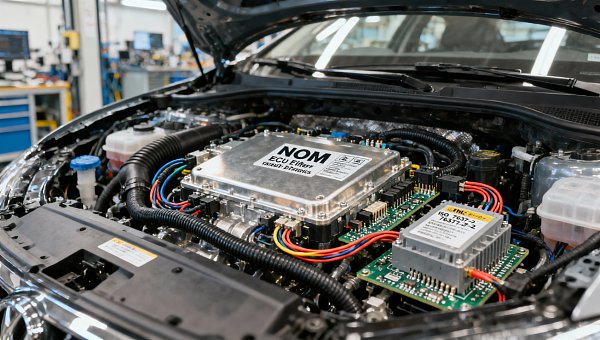
 Mexico NOM-019-SCFI-2026 Effective: Automotive Electronics Require New EMC CertificationMexico NOM-019-SCFI-2026 takes effect May 1, 2026 — new EMC certification mandatory for automotive electronics, EV accessories & aftermarket parts entering Mexico.
 Vietnam Suspends China Irrigation Equipment SASO Mutual RecognitionVietnam suspends China irrigation equipment SASO mutual recognition—urgent QCVN certification now required for drip tapes, sprinklers & smart controllers.
 Red Sea Diversion Normalized; Asia-Europe Freight Premium at $1,850/TEURed Sea diversion normalized: Asia-Europe freight premium holds at $1,850/TEU — impacting manufacturing, retail & procurement. Act now to optimize costs & resilience.
 FDA Drafts AI Bias Assessment Rule for Imported Medical DevicesFDA's new AI bias assessment rule for imported medical devices demands third-party verified fairness reports—act now to prep your 510(k)/De Novo submissions.
 TÜV Rheinland Updates CE Requirements for Servo DrivesTÜV Rheinland updates CE requirements for servo drives: integrated PLd + EN 61800-3 validation mandatory from July 1, 2026. Act now to avoid EU market delays!
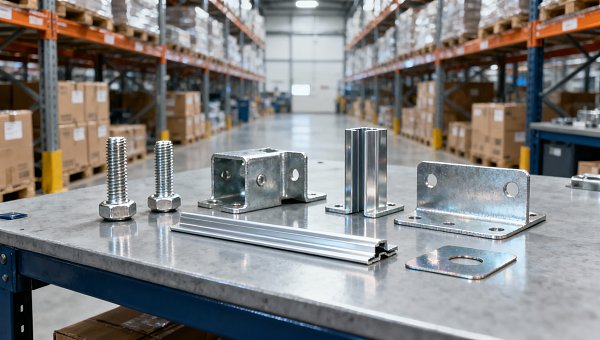
 SABER Phase II Launch: Building Hardware Must Submit Digital Type Test Reports & Unique Product IDsSABER Phase II is live: Building hardware exporters must now submit digital type test reports & secure unique SABER Product IDs—avoid customs delays. Act now!
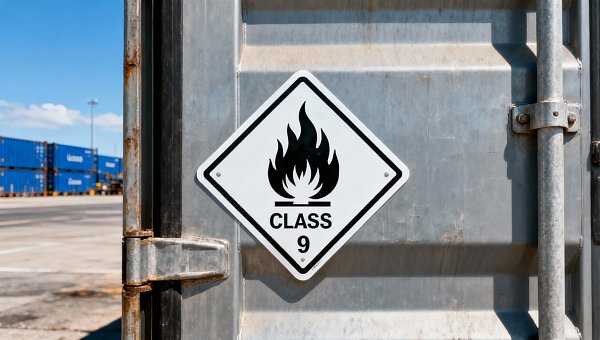
 IMDG Code 41-24 Enforced: New UN3480 Class 9 Label for Lithium Battery Sea FreightIMDG Code 41-24 enforced: UN3480 Class 9 label now mandatory for lithium battery sea freight — avoid delays in US, EU, UAE & Chile ports.
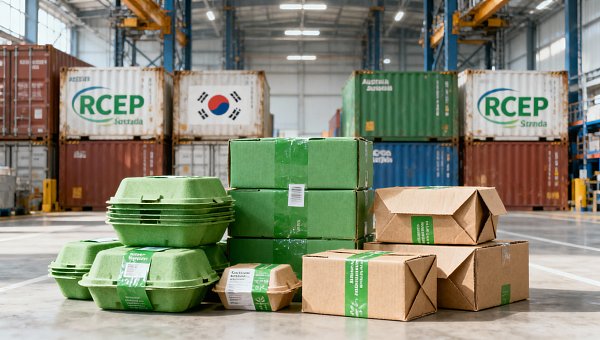
 RCEP Green Packaging Mutual Recognition Takes EffectRCEP Green Packaging Mutual Recognition takes effect Apr 21, 2026—unlock faster customs clearance for compostable, recycled & bio-based packaging in AU, NZ, JP, KR.
 China’s 10-Dept AI Ethics Review Rule for Exported AI DevicesChina’s 10-dept AI ethics review rule mandates algorithmic bias assessments for exported AI devices—key for EU, ME & SEA markets. Stay compliant ahead of enforcement.
 US CPSC Updates Child Sleep Sack Standard Effective July 2026US CPSC updates child sleep sack standard with new DSST test—mandatory for all U.S.-bound infant sleep sacks from July 2026. Act now to ensure compliance and market access.
 Red Sea Rerouting Pushes Asia-Europe Freight Premium to $1,850/TEURed Sea rerouting pushes Asia-Europe freight premium to $1,850/TEU—impacting importers, manufacturers & logistics providers. Act now to reassess costs, lead times & contracts.
 Mexico NOM-019-SCFI-2026 Effective May 1, 2026: EMC Certification Mandatory for Auto ElectronicsNOM-019-SCFI-2026 EMC certification is now mandatory for auto electronics in Mexico—effective May 1, 2026. Ensure compliance for infotainment, ADAS, OBD-II & more.
") TÜV Rheinland Updates CE Requirements for Servo Drives (PLd + EMC Class 3)TÜV Rheinland updates CE requirements for servo drives: PLd + EMC Class 3 joint validation mandatory from Q3 2026. Act now to avoid delays, rejections, or compliance risks.
TÜV Rheinland Updates CE Requirements for Servo Drives (PLd + EMC Class 3)TÜV Rheinland updates CE requirements for servo drives: PLd + EMC Class 3 joint validation mandatory from Q3 2026. Act now to avoid delays, rejections, or compliance risks. SABER Phase II Launch: Building Hardware Must Submit Digital e-CoC & UPISABER Phase II mandates digital e-CoC & UPI for building hardware imports to Saudi Arabia—act now to ensure customs clearance and market access.
 FDA AI Diagnostic Device Draft Rules: Bias Assessment for ImportsFDA AI diagnostic device draft rules mandate bias assessment for imports — discover how algorithmic fairness impacts 510(k)/De Novo submissions and what to do now.
 RCEP Green Packaging Mutual Recognition Starts June 1, 2026RCEP Green Packaging Mutual Recognition starts June 1, 2026 — unlock faster exports to Australia, NZ, Japan & Korea with GB/T 37572-2025 certification.
 Vietnam Suspends SASO Mutual Recognition for Chinese Irrigation EquipmentVietnam suspends SASO mutual recognition for Chinese irrigation equipment—impacting exporters, testers & suppliers. Act now to avoid 6–8 week delays & 35% cost hikes.
 IMDG Code 41-24 Enforces UN3480 Class 9 Labeling for Li-ion Battery Sea FreightIMDG Code 41-24 enforces UN3480 Class 9 labeling for Li-ion battery sea freight—learn mandatory QR labels, compliance actions & port enforcement risks.
 EU CBAM Enters Enforcement Phase on April 1, 2026EU CBAM enforcement starts April 1, 2026 — critical for Chinese battery materials, construction profiles & industrial coatings exporters. Act now to avoid customs delays.
 Mexico Enforces NOM-019-SCFI-2026 EMC Certification for Auto Electronics from May 2026Mexico enforces NOM-019-SCFI-2026 EMC certification for auto electronics from May 2026 — mandatory local testing, stricter standards, and urgent compliance action required.















Popular Tags
Global Trade Insights & Industry
Our mission is to empower global exporters and importers with data-driven insights that foster strategic growth.
Search News
Popular Tags
Industry Overview
The global commercial kitchen equipment market is projected to reach $112 billion by 2027. Driven by urbanization, the rise of e-commerce food delivery, and strict hygiene regulations.