

Japan Boosts Rapidus with ¥631.5B; China Semiconductor Export Opportunities Rise
On April 13, 2026, Japan’s Ministry of Economy, Trade and Industry announced an additional up to ¥631.5 billion in public funding for Rapidus, its flagship advanced semiconductor venture — signaling intensified global competition in sub-2nm chip manufacturing and elevating demand for specialized supporting products from Chinese suppliers, particularly in high-purity chemicals, precision components, cleanroom equipment, wafer carriers, and test instrumentation.
Event Overview
On April 13, 2026, Japan’s Ministry of Economy, Trade and Industry confirmed it would provide up to ¥631.5 billion in supplementary support to Rapidus, bringing total government backing to over ¥2.3 trillion. The stated objective is to achieve volume production of 2nm-class chips by fiscal year 2027.
Industries Affected
Direct export-oriented trading firms: These enterprises supply finished or semi-finished goods — such as etching solutions, photomask storage boxes (FOUPs), quartz crucibles, and probe station calibration parts — to overseas semiconductor fabs or tier-1 equipment makers. The funding boost accelerates Rapidus’ fab construction and process validation timelines, increasing near-term procurement inquiries for qualified Chinese-sourced auxiliary items.
Material and chemical producers: Manufacturers of ultra-high-purity specialty chemicals (e.g., silicon etchants, cleaning agents) and synthetic quartz materials face rising technical evaluation activity from international customers seeking cost-competitive, non-U.S./non-Korean alternatives. Validation cycles — especially for materials used in front-end processes — are becoming a key bottleneck.
Precision component and subsystem fabricators: Firms producing cleanroom-compatible mechanical parts (e.g., wafer chucks, chamber liners, gas delivery fittings) or modular subsystems (e.g., temperature-controlled stages, vacuum-compatible sensors) may see expanded qualification opportunities — provided they meet Rapidus’ evolving reliability and contamination control requirements.
Distribution and logistics service providers: Companies offering certified cold-chain transport, customs-compliant documentation, and traceable inventory management for semiconductor-grade consumables are seeing increased coordination requests from both Chinese exporters and Japanese/Asian fab procurement teams — particularly for time-sensitive validation shipments.
What Relevant Enterprises or Practitioners Should Monitor and Do Now
Track official implementation details and eligibility criteria
The ¥631.5 billion allocation is described as “up to” — indicating disbursement will be tied to verified milestones (e.g., cleanroom completion, tool installation, process integration trials). Exporters should monitor Rapidus’ quarterly progress reports and METI’s updated subsidy guidelines for supplier engagement pathways.
Focus on validated product categories and technical specifications
Initial procurement interest centers on etching liquids meeting SEMI C12 purity standards, FOUPs compliant with SEMI F47 mechanical shock resistance, quartz crucibles with ≤10 ppb metallic impurities, and probe station calibration kits traceable to NMIJ (Japan’s National Metrology Institute). Prioritizing third-party certification (e.g., SGS, TÜV) for these specs enhances responsiveness to RFQs.
Distinguish policy intent from near-term procurement reality
While the funding signals long-term commitment, Rapidus remains in pilot-line phase. Most current orders are for evaluation lots or engineering samples — not volume contracts. Exporters should treat early engagements as technical partnerships rather than immediate revenue drivers, allocating internal resources accordingly.
Prepare for cross-border technical alignment and documentation rigor
Rapidus requires full material declarations (IMDS), lot-level analytical reports, and cleanroom handling protocols aligned with ISO 14644-1 Class 1–3. Firms lacking documented quality management systems (e.g., ISO 9001:2015, IATF 16949) or bilingual technical support capacity may face extended qualification timelines.
Editorial Perspective / Industry Observation
From industry perspective, this announcement is less about immediate market expansion and more about structural recalibration: it confirms Japan’s strategic pivot toward domestic advanced logic capability — and, by extension, its willingness to diversify sourcing beyond traditional U.S./European/Korean suppliers where technically viable. Analysis来看, the ¥631.5 billion injection lowers the perceived risk threshold for foreign buyers evaluating Chinese secondary suppliers — but does not override existing technical or logistical constraints. Observation来看, the real signal lies not in the funding amount itself, but in the explicit linkage between public capital and supplier qualification timelines. Current more appropriate understanding is that this marks the formal start of a multi-year, specification-driven vetting cycle — not a sudden opening of procurement channels.
This development underscores how national semiconductor strategies increasingly shape downstream export dynamics — not just for chipmakers, but for their entire enabling ecosystem. For Chinese suppliers, the opportunity is real but conditional: it hinges on consistency, traceability, and alignment with metrology and cleanliness benchmarks already embedded in Japan’s industrial standards framework. The path forward favors methodical technical readiness over rapid commercial scaling.
Source: Japan Ministry of Economy, Trade and Industry (METI), official press release dated April 13, 2026.
Note: Ongoing monitoring is recommended for Rapidus’ technical roadmap updates, METI’s subsidy disbursement schedule, and any revisions to Japan’s export control classifications affecting dual-use semiconductor materials.
Recommended News
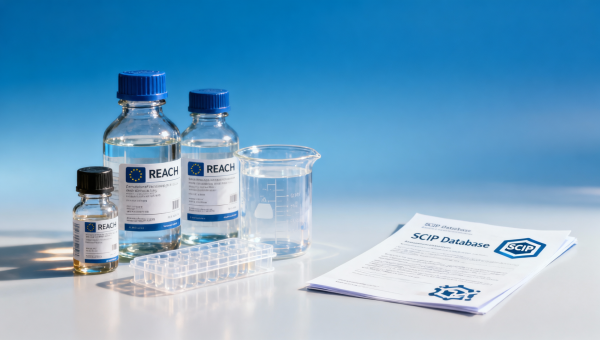
 EU REACH Adds 12 SVHCs: Impact on China's Chemical, Plastic & Coating ExportsEU REACH adds 12 SVHCs, impacting China's chemical, plastic & coating exports. Learn key compliance actions & market risks before the Oct 2026 deadline.
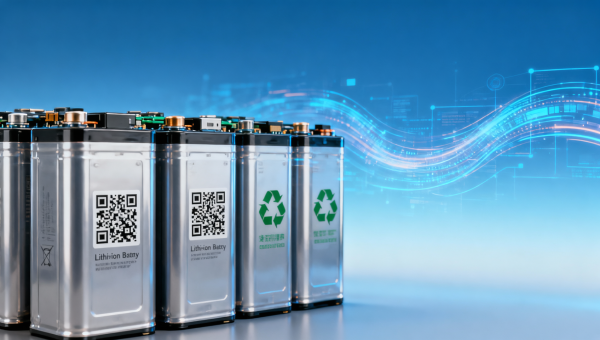
 China Launches First Global Battery Lifecycle Traceability PlatformChina launches the first global battery lifecycle traceability platform, revolutionizing EV and energy storage compliance. Learn how this impacts manufacturers, exporters, and recyclers worldwide.
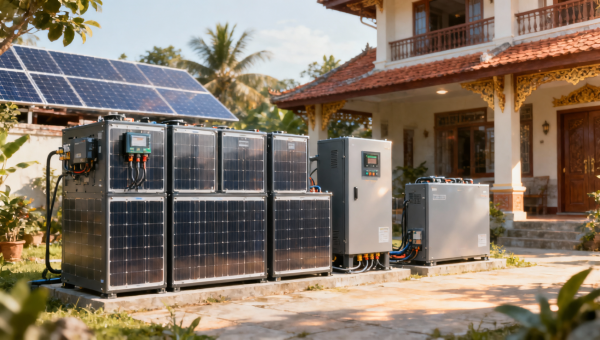
 Vietnam's Home Energy Storage Demand Doubles, Boosting Chinese ExportsVietnam's home energy storage demand doubles, boosting Chinese exports of inverters & LFP batteries. Learn how 217% export growth creates opportunities amid power instability.
 EU REACH Adds 12 SVHCs: China's Chemical, Plastic, and Coating Exports Must Comply Within 6 MonthsEU REACH adds 12 new SVHCs, impacting China's chemical, plastic, and coating exports. Companies must comply with SCIP notifications within 6 months. Learn key actions for affected industries.
 China Releases 100 5G Factory Applications Covering Key Export IndustriesChina's MIIT releases 100 5G factory applications, transforming key export industries like automotive, PCB, and textiles. Discover how these smart manufacturing solutions impact global supply chains and supplier evaluations.
 U.S.-Iran Ceasefire Takes Effect, Strait of Hormuz Shipping Returns to Normal, Middle East Logistics Costs Drop 35%U.S.-Iran ceasefire stabilizes Strait of Hormuz shipping, cutting Middle East logistics costs by 35%. Learn how exporters of industrial goods & solar equipment can benefit from improved trade routes.
 China-Thailand Agricultural & Green Manufacturing Cooperation: Key Impacts on Rubber, Farm Machinery, and Solar SectorsExplore how China-Thailand agricultural & green manufacturing cooperation impacts rubber, farm machinery, and solar sectors. Learn about reduced compliance costs and faster market access for exporters.
 Hainan Launches 'Zero Wait' Customs for Medical Devices & Smart SensorsHainan's 'zero wait' customs for medical devices & smart sensors slashes export cycles by 50% at Yangpu Port. Urgent orders to ASEAN, Middle East & Latin America now clear in 30 minutes. Learn how this boosts time-sensitive exports.
 China Launches Full Lifecycle Battery Traceability Platform, Mandates Export ComplianceChina's new battery traceability platform mandates export compliance for EU, US & South Korea markets. Learn how battery manufacturers, NEV producers, and energy storage providers can adapt to avoid clearance barriers and secure certifications.
 U.S. Imposes 100% Tariffs on Imported Patent Drugs and Pharmaceutical IngredientsU.S. imposes 100% tariffs on imported patent drugs and pharmaceutical ingredients, impacting global API supply chains. Learn how this affects manufacturers, importers, and compliance strategies.
 China-Thailand Agricultural & Green Manufacturing Cooperation: Key ImpactsExplore how China-Thailand agricultural & green manufacturing cooperation impacts rubber, farm machinery & solar sectors. Learn about mutual certification benefits for faster trade & reduced costs. Key insights for businesses.
 ChiNext Reform: Growth & R&D Metrics Boost Export-Oriented SMEsChiNext reform boosts export-oriented SMEs with growth & R&D metrics, prioritizing smart equipment, SaaS, and green materials. Learn how this impacts global trade partnerships post-2026.
 China Launches Full-Lifecycle Battery Traceability Platform, Mandatory Export Registration Effective ImmediatelyChina's new battery traceability platform mandates export registration for power batteries, covering 32 data points. Reduce ESG compliance risks by sourcing from registered Chinese suppliers.
 U.S.-Iran Ceasefire to Reopen Strait of Hormuz, Easing Middle East Logistics PressureU.S.-Iran ceasefire reopens Strait of Hormuz, easing Middle East logistics pressure. Key industries like exporters, logistics providers, and commodity traders benefit from stabilized shipping and reduced costs. Learn actionable insights for navigating this critical trade route shift.
 Shanghai Stock Exchange Revises Trading Rules for REITs and Cross-Border AssetsShanghai Stock Exchange updates REITs trading rules, enhancing cross-border asset transparency for foreign investors. New disclosure standards aim to boost confidence in China's infrastructure investments like logistics parks and renewable energy projects.
 Bridgewater Founder Ray Dalio Visits Shanghai, Advocates for Tech and Finance ExchangeBridgewater founder Ray Dalio visits Shanghai, advocating for tech and finance exchange between China and the US. Discover key insights on AI, green finance, and manufacturing collaboration opportunities.
 Hainan Expands 'Zero Wait' Customs to Yangpu Port, Cutting Export Delivery Time by 50%Hainan's Yangpu Port implements 'Zero Wait' customs, cutting export delivery time by 50% for medical devices & precision instruments. AI & blockchain enable 30-minute clearance, benefiting 200+ export firms. Learn how this boosts supply chain efficiency.
 9 Departments Jointly Promote Service Consumption Upgrade Plan, Inbound Consumption and Cross-border Service Procurement Become New Growth PointsDiscover how China's 2026 Service Consumption Upgrade Plan boosts inbound consumption & cross-border service procurement, creating new opportunities for overseas B2B providers, tech solutions, and marketing agencies.
 Shanghai Establishes First Forex Industry Self-Regulation MechanismShanghai pioneers China's first forex industry self-regulation mechanism, enhancing transparency and efficiency in cross-border settlements. Learn how this impacts foreign trade and SMEs.
 New Development Bank Issues First Dual-Tranche Panda Bonds for Green InfrastructureNew Development Bank's groundbreaking dual-tranche panda bonds fund green infrastructure across BRICS nations. Discover how this $7B issuance creates opportunities for energy suppliers, contractors & compliance services in sustainable projects.
 Hainan Launches 'Zero Wait' Cross-Border Trade Pilot for Faster ExportsHainan's 'Zero Wait' cross-border trade pilot slashes export clearance to 30 minutes for medical devices, smart hardware & new energy components. Boost your RCEP & Latin America exports now!


















Popular Tags
Global Trade Insights & Industry
Our mission is to empower global exporters and importers with data-driven insights that foster strategic growth.
Search News
Popular Tags
Industry Overview
The global commercial kitchen equipment market is projected to reach $112 billion by 2027. Driven by urbanization, the rise of e-commerce food delivery, and strict hygiene regulations.