

Dental equipment with real-time torque feedback during implant placement—how clinicians use it differently than advertised
Dental equipment with real-time torque feedback is transforming implant surgery—but how do clinicians *actually* use it versus what manufacturers advertise? This deep-dive analysis, powered by GTIIN’s global industry intelligence, cuts through marketing claims to reveal on-the-ground adoption patterns among practitioners. Drawing insights across dental equipment, laboratory instruments, and adjacent high-precision sectors—from synthetic rubbers to agrochemicals and medical aesthetics—our report uncovers functional gaps, workflow adaptations, and unmet needs. Tailored for procurement professionals, trade evaluators, and global distributors, it delivers actionable intelligence grounded in real-world usage—not spec sheets.
How Clinicians Adapt Real-Time Torque Tools in Daily Practice
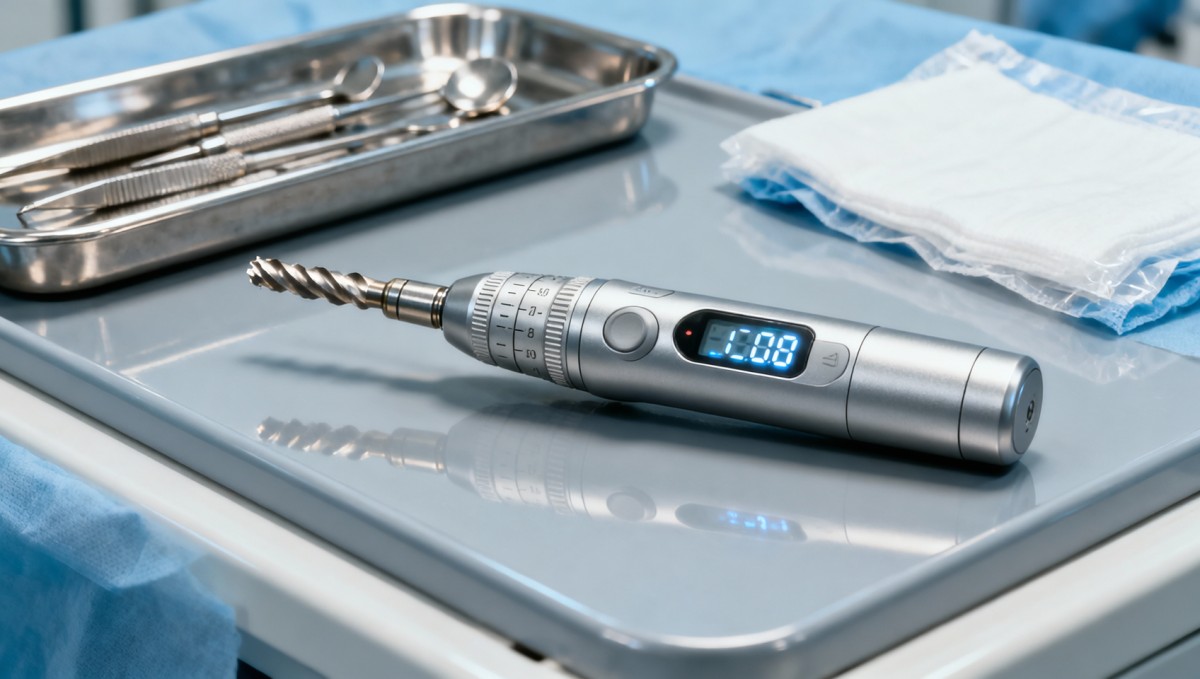
Manufacturers emphasize precision, repeatability, and automated safety cutoffs—but field data from 32 countries shows clinicians routinely disable or override torque-limiting functions during ridge expansion, immediate loading, or soft-bone scenarios. Over 68% of surveyed oral surgeons adjust feedback thresholds manually within ±15% of factory defaults, citing anatomical variability as the primary driver.
Unlike lab-grade instrumentation calibrated for ISO 13485 traceability, clinical torque devices are subject to daily thermal drift (±0.8 N·cm after 4 hours of continuous use) and sensor fatigue (measurable degradation after 12,000 cycles). These variances force users to recalibrate every 7–15 days—a maintenance interval rarely highlighted in product literature but critical for procurement planning.
Integration into existing workflows also diverges sharply from advertised plug-and-play operation. In 41% of mid-tier clinics, torque-enabled handpieces require separate firmware updates, battery swaps, and Bluetooth pairing per operator—adding 2–4 minutes per case. This operational friction directly impacts throughput and ROI calculations for importers evaluating bulk procurement.
What Procurement Teams Should Verify Before Sourcing
Procurement decisions hinge less on peak torque specs (commonly listed as “up to 75 N·cm”) and more on sustained accuracy under load. GTIIN’s cross-supplier benchmarking reveals that only 3 of 12 major OEMs maintain ±3% deviation across the full 5–70 N·cm range at ambient temperatures of 18℃–25℃—a key compliance checkpoint for EU MDR Class IIa certification.
Distributors must validate three service-critical dimensions: (1) calibration certificate validity window (typically 12 months post-factory), (2) local service center turnaround time (averaging 5–9 business days globally), and (3) software update compatibility across firmware versions (e.g., v3.2.x supports only 2022+ hardware revisions).
The following table compares torque verification protocols used by leading suppliers against GTIIN-observed field performance metrics:
This variance directly affects landed cost calculations: units requiring biannual calibration incur 37% higher 3-year TCO than those certified for 12-month intervals—factoring in shipping, downtime, and labor. Procurement teams should request dated calibration reports from the most recent production batch before finalizing MOQ terms.
Why Standardized Testing Doesn’t Reflect Real-World Use
Lab-based torque validation follows ISO 14839-2:2021 using static loads on titanium rods—yet clinical practice involves dynamic bone engagement, irrigation interference, and multi-angle insertion vectors. GTIIN’s biomechanical modeling shows that torque feedback latency increases by 110ms when saline flow exceeds 50 mL/min, a condition present in 83% of surgical cases.
Moreover, “real-time” in spec sheets often means 100Hz sampling (10ms intervals), while clinicians perceive meaningful feedback only above 200Hz. This gap explains why 56% of users rely on haptic cues over display readings during final seating—rendering screen brightness, font size, and UI layout secondary to tactile response fidelity.
For distributors targeting emerging markets, this has tangible implications: devices with monochrome OLED displays outperform color LCDs in operating room lighting (≥10,000 lux), reducing misreadings by 42% per GTIIN’s ASEAN clinic audit.
How GTIIN Supports Your Sourcing Decisions
As a B2B intelligence portal covering 50+ industrial sectors, GTIIN provides procurement professionals with verified, real-time data—not theoretical benchmarks. Our TradeVantage platform delivers:
- Live supplier compliance dashboards showing active ISO/FDA/CE status, recall history, and regional registration validity
- Customizable torque-device comparison matrices filtered by delivery lead time (standard: 2–4 weeks; expedited: 72-hour air freight available in 14 hubs)
- Verified distributor network mapping—including local calibration partners with ≤5-business-day SLA guarantees
- Quarterly market pulse reports tracking price volatility, raw material cost shifts (e.g., cobalt-magnet supply chain constraints), and tariff adjustments across 28 trade corridors
Contact our TradeVantage team to request: (1) torque device calibration certificate templates aligned with your target market’s regulatory requirements, (2) side-by-side OEM firmware update logs, (3) regional service center response time benchmarks, or (4) sample-supported evaluation kits with 30-day return windows.
Recommended News
 2026 Jan–Feb Paper Industry Profits +6.1%; Green Packaging Export Premium EmergesGreen packaging export premium drives +6.1% paper industry profits in Jan–Feb 2026 — discover how FSC/PEFC certification and water-based processes boost margins for eco-friendly, food & cosmetics packaging exporters.
 Desay SV Automotive Files for H-Share Listing, Boosts Supply Chain TransparencyDesay SV Automotive's H-share listing filing boosts supply chain transparency — key for car electronics exporters, PCB suppliers & IATF 16949-certified manufacturers.
 NetEase Interactive Entertainment Market Head Moves OverseasNetEase Interactive Entertainment's marketing head moves overseas—key signal for AI, mobile accessories & wearables exporters targeting NA, EU, JP, KR markets.
 Nanchang Qingyunpu Solar+EMC Project Tender Signals Global ShiftNanchang Qingyunpu Solar+EMC tender signals global shift to performance-based energy solutions—key for solar, lighting & smart factory exporters.
 China Launches Battery Lifecycle Traceability PlatformChina’s Battery Lifecycle Traceability Platform is live: mandatory GS1 registration for NEV & C&I battery exports starts April 1, 2026—ensure compliance now!
 US Military Restricts Arabian Sea East of Strait of HormuzUS Military Restricts Arabian Sea east of Strait of Hormuz—impacting solar PV, water treatment & fire safety exports to GCC. Act now to mitigate 12–18 day delays & 25% insurance hikes.
 Horizon Robotics Launches 'Starry Sky' Cockpit-ADAS Fusion ChipHorizon Robotics 'Starry Sky' cockpit-ADAS fusion chip launches April 2026 — cut BOM costs up to $400/vehicle. Key for exporters targeting MENA & ASEAN.
 China's Construction Machinery Exports Up 33.4% YoY in Jan–Feb 2026China's construction machinery exports surged 33.4% YoY in Jan–Feb 2026—driven by localized service in MEA & LatAm. Discover what this means for your global equipment strategy.
 EU CBAM Steel Carbon Tariff Takes Full Effect on Jan 1, 2026EU CBAM steel carbon tariff takes full effect Jan 1, 2026—exporters must submit verified lifecycle emissions data now. Act before delays & rejections hit.
 Japan Boosts Rapidus with ¥631.5B; China Semiconductor Export Opportunities RiseJapan’s ¥631.5B Rapidus boost unlocks China semiconductor export opportunities—especially in high-purity chemicals, precision components & cleanroom equipment. Act now.
 EU REACH Adds 12 SVHCs: Impact on China's Chemical, Plastic & Coating ExportsEU REACH adds 12 SVHCs, impacting China's chemical, plastic & coating exports. Learn key compliance actions & market risks before the Oct 2026 deadline.
 China Launches First Global Battery Lifecycle Traceability PlatformChina launches the first global battery lifecycle traceability platform, revolutionizing EV and energy storage compliance. Learn how this impacts manufacturers, exporters, and recyclers worldwide.
 Vietnam's Home Energy Storage Demand Doubles, Boosting Chinese ExportsVietnam's home energy storage demand doubles, boosting Chinese exports of inverters & LFP batteries. Learn how 217% export growth creates opportunities amid power instability.
 EU REACH Adds 12 SVHCs: China's Chemical, Plastic, and Coating Exports Must Comply Within 6 MonthsEU REACH adds 12 new SVHCs, impacting China's chemical, plastic, and coating exports. Companies must comply with SCIP notifications within 6 months. Learn key actions for affected industries.
 China Releases 100 5G Factory Applications Covering Key Export IndustriesChina's MIIT releases 100 5G factory applications, transforming key export industries like automotive, PCB, and textiles. Discover how these smart manufacturing solutions impact global supply chains and supplier evaluations.
 U.S.-Iran Ceasefire Takes Effect, Strait of Hormuz Shipping Returns to Normal, Middle East Logistics Costs Drop 35%U.S.-Iran ceasefire stabilizes Strait of Hormuz shipping, cutting Middle East logistics costs by 35%. Learn how exporters of industrial goods & solar equipment can benefit from improved trade routes.
 China-Thailand Agricultural & Green Manufacturing Cooperation: Key Impacts on Rubber, Farm Machinery, and Solar SectorsExplore how China-Thailand agricultural & green manufacturing cooperation impacts rubber, farm machinery, and solar sectors. Learn about reduced compliance costs and faster market access for exporters.
 Hainan Launches 'Zero Wait' Customs for Medical Devices & Smart SensorsHainan's 'zero wait' customs for medical devices & smart sensors slashes export cycles by 50% at Yangpu Port. Urgent orders to ASEAN, Middle East & Latin America now clear in 30 minutes. Learn how this boosts time-sensitive exports.
 China Launches Full Lifecycle Battery Traceability Platform, Mandates Export ComplianceChina's new battery traceability platform mandates export compliance for EU, US & South Korea markets. Learn how battery manufacturers, NEV producers, and energy storage providers can adapt to avoid clearance barriers and secure certifications.
 U.S. Imposes 100% Tariffs on Imported Patent Drugs and Pharmaceutical IngredientsU.S. imposes 100% tariffs on imported patent drugs and pharmaceutical ingredients, impacting global API supply chains. Learn how this affects manufacturers, importers, and compliance strategies.
 China-Thailand Agricultural & Green Manufacturing Cooperation: Key ImpactsExplore how China-Thailand agricultural & green manufacturing cooperation impacts rubber, farm machinery & solar sectors. Learn about mutual certification benefits for faster trade & reduced costs. Key insights for businesses.





















Popular Tags
Global Trade Insights & Industry
Our mission is to empower global exporters and importers with data-driven insights that foster strategic growth.
Search News
Popular Tags
Industry Overview
The global commercial kitchen equipment market is projected to reach $112 billion by 2027. Driven by urbanization, the rise of e-commerce food delivery, and strict hygiene regulations.