

Phoenix Electric's QUINT4 PLUS Series Smart Power Supply Achieves Dual EN 50155 + UL 62368 Certification, Setting a New Benchmark for Rail Transit and Industrial Automation Equipment Going Global
Phoenix Electric's QUINT4 PLUS Series Smart Power Supply Achieves Dual EN 50155 + UL 62368 Certification, Setting a New Benchmark for Rail Transit and Industrial Automation Equipment Going Global
Introduction
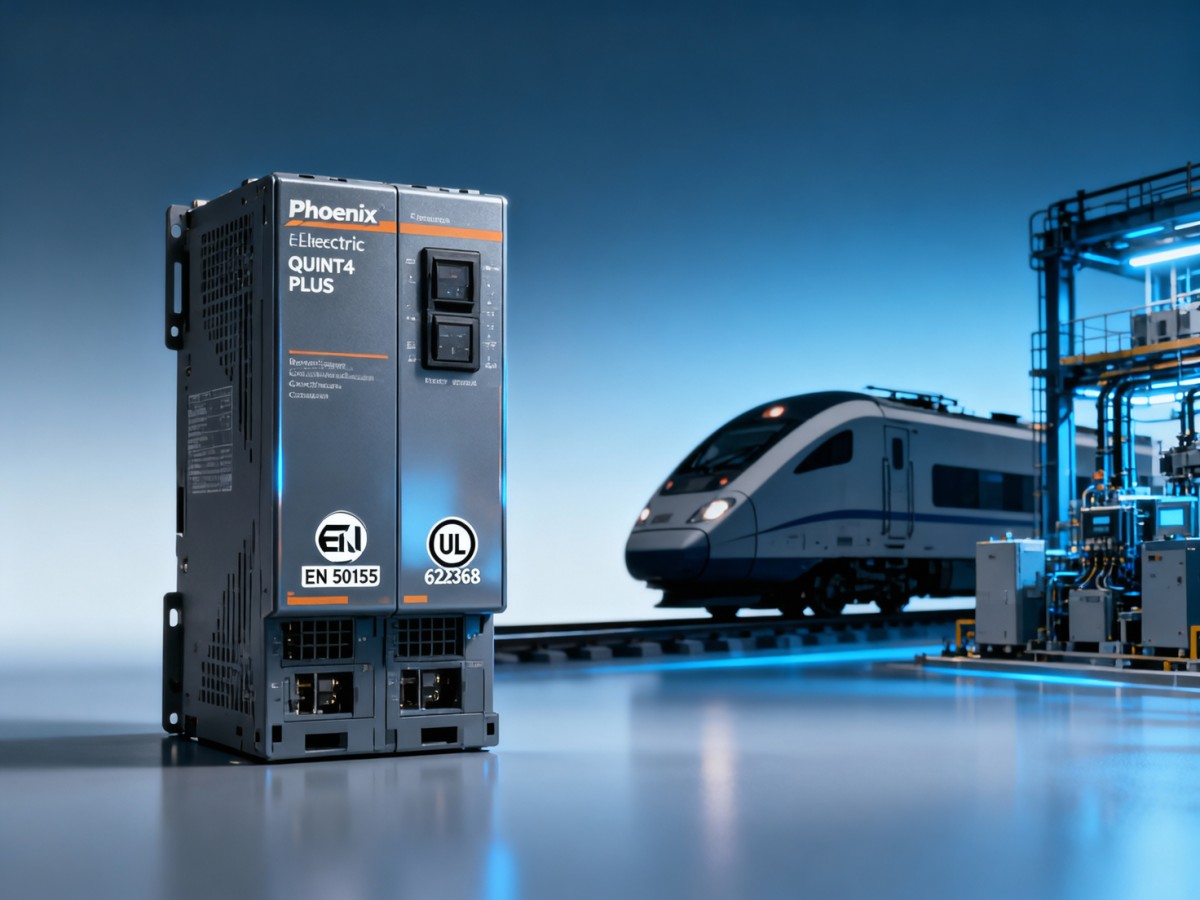
On March 28, 2026, Phoenix Electric announced that its QUINT4 PLUS POWER intelligent switch power supply series has obtained dual certification for EN 50155 (rail transit) and UL 62368-1 (information technology equipment). This development is particularly significant for industries involved in rail transit, industrial automation, and OEM manufacturing for global markets. The certification underscores the growing importance of compliance with international standards in these sectors, especially for companies aiming to expand their presence in overseas markets.
Event Overview
The QUINT4 PLUS series, known for its wide temperature range (-40°C to +70°C), dynamic power margin, and pre-diagnostic data output, has been designated by international giants like Siemens and Alstom for use in next-generation signal power supplies and PLC power modules. Chinese OEM clients looking to export must ensure their overall machine designs meet the electromagnetic compatibility and safety distance requirements of both standards.
Impact on Specific Sub-Industries
Rail Transit Equipment Manufacturers
The dual certification directly benefits rail transit equipment manufacturers by providing a compliant power supply solution that meets stringent international standards. This reduces the burden of additional testing and certification for end products, potentially accelerating time-to-market for new rail systems.
Industrial Automation Providers
For industrial automation providers, the certification offers a reliable power solution that can operate in extreme conditions, crucial for harsh industrial environments. The pre-diagnostic features also align with the growing trend of predictive maintenance in Industry 4.0 applications.
OEM Manufacturers for Global Markets
OEM manufacturers targeting international markets, particularly in North America and Europe, now have a certified component that simplifies compliance with regional standards. This is especially relevant for Chinese manufacturers looking to expand their global footprint.
Key Considerations for Businesses and Professionals
Compliance Verification
Companies using or considering the QUINT4 PLUS series should verify that their overall system designs align with both EN 50155 and UL 62368-1 requirements, particularly regarding electromagnetic compatibility and safety spacing.
Supply Chain Integration
Integrating this certified component into existing supply chains may require adjustments to ensure seamless compatibility with other system elements. Early testing and validation are recommended.
Market Positioning
For businesses competing in international markets, leveraging this dual-certified component could enhance product positioning and competitiveness, especially in regions with strict regulatory requirements.
Editorial Perspective / Industry Observation
From an industry perspective, this dual certification represents more than just a product milestone—it signals a shift toward global standardization in critical infrastructure components. While the immediate impact is clear for Phoenix Electric's clients, the broader implication is the raising of the bar for power supply solutions in rail and industrial applications worldwide. The industry should monitor how this development influences certification trends and competitor responses in the coming months.
Conclusion
The dual certification of Phoenix Electric's QUINT4 PLUS series marks a significant step forward in power supply solutions for rail transit and industrial automation. It provides a clear benchmark for quality and compliance in these sectors, particularly for companies with global aspirations. Currently, this development is best understood as both a practical solution for immediate compliance needs and a indicator of evolving international standards in industrial power systems.
Source Information
Primary source: Phoenix Electric official announcement dated March 28, 2026. Additional context from industry standard documentation for EN 50155 and UL 62368-1. Ongoing observation recommended for implementation cases and market adoption patterns.
Recommended News
 2026 Jan–Feb Paper Industry Profits +6.1%; Green Packaging Export Premium EmergesGreen packaging export premium drives +6.1% paper industry profits in Jan–Feb 2026 — discover how FSC/PEFC certification and water-based processes boost margins for eco-friendly, food & cosmetics packaging exporters.
 Desay SV Automotive Files for H-Share Listing, Boosts Supply Chain TransparencyDesay SV Automotive's H-share listing filing boosts supply chain transparency — key for car electronics exporters, PCB suppliers & IATF 16949-certified manufacturers.
 NetEase Interactive Entertainment Market Head Moves OverseasNetEase Interactive Entertainment's marketing head moves overseas—key signal for AI, mobile accessories & wearables exporters targeting NA, EU, JP, KR markets.
 Nanchang Qingyunpu Solar+EMC Project Tender Signals Global ShiftNanchang Qingyunpu Solar+EMC tender signals global shift to performance-based energy solutions—key for solar, lighting & smart factory exporters.
 China Launches Battery Lifecycle Traceability PlatformChina’s Battery Lifecycle Traceability Platform is live: mandatory GS1 registration for NEV & C&I battery exports starts April 1, 2026—ensure compliance now!
 US Military Restricts Arabian Sea East of Strait of HormuzUS Military Restricts Arabian Sea east of Strait of Hormuz—impacting solar PV, water treatment & fire safety exports to GCC. Act now to mitigate 12–18 day delays & 25% insurance hikes.
 Horizon Robotics Launches 'Starry Sky' Cockpit-ADAS Fusion ChipHorizon Robotics 'Starry Sky' cockpit-ADAS fusion chip launches April 2026 — cut BOM costs up to $400/vehicle. Key for exporters targeting MENA & ASEAN.
 China's Construction Machinery Exports Up 33.4% YoY in Jan–Feb 2026China's construction machinery exports surged 33.4% YoY in Jan–Feb 2026—driven by localized service in MEA & LatAm. Discover what this means for your global equipment strategy.
 EU CBAM Steel Carbon Tariff Takes Full Effect on Jan 1, 2026EU CBAM steel carbon tariff takes full effect Jan 1, 2026—exporters must submit verified lifecycle emissions data now. Act before delays & rejections hit.
 Japan Boosts Rapidus with ¥631.5B; China Semiconductor Export Opportunities RiseJapan’s ¥631.5B Rapidus boost unlocks China semiconductor export opportunities—especially in high-purity chemicals, precision components & cleanroom equipment. Act now.
 EU REACH Adds 12 SVHCs: Impact on China's Chemical, Plastic & Coating ExportsEU REACH adds 12 SVHCs, impacting China's chemical, plastic & coating exports. Learn key compliance actions & market risks before the Oct 2026 deadline.
 China Launches First Global Battery Lifecycle Traceability PlatformChina launches the first global battery lifecycle traceability platform, revolutionizing EV and energy storage compliance. Learn how this impacts manufacturers, exporters, and recyclers worldwide.
 Vietnam's Home Energy Storage Demand Doubles, Boosting Chinese ExportsVietnam's home energy storage demand doubles, boosting Chinese exports of inverters & LFP batteries. Learn how 217% export growth creates opportunities amid power instability.
 EU REACH Adds 12 SVHCs: China's Chemical, Plastic, and Coating Exports Must Comply Within 6 MonthsEU REACH adds 12 new SVHCs, impacting China's chemical, plastic, and coating exports. Companies must comply with SCIP notifications within 6 months. Learn key actions for affected industries.
 China Releases 100 5G Factory Applications Covering Key Export IndustriesChina's MIIT releases 100 5G factory applications, transforming key export industries like automotive, PCB, and textiles. Discover how these smart manufacturing solutions impact global supply chains and supplier evaluations.
 U.S.-Iran Ceasefire Takes Effect, Strait of Hormuz Shipping Returns to Normal, Middle East Logistics Costs Drop 35%U.S.-Iran ceasefire stabilizes Strait of Hormuz shipping, cutting Middle East logistics costs by 35%. Learn how exporters of industrial goods & solar equipment can benefit from improved trade routes.
 China-Thailand Agricultural & Green Manufacturing Cooperation: Key Impacts on Rubber, Farm Machinery, and Solar SectorsExplore how China-Thailand agricultural & green manufacturing cooperation impacts rubber, farm machinery, and solar sectors. Learn about reduced compliance costs and faster market access for exporters.
 Hainan Launches 'Zero Wait' Customs for Medical Devices & Smart SensorsHainan's 'zero wait' customs for medical devices & smart sensors slashes export cycles by 50% at Yangpu Port. Urgent orders to ASEAN, Middle East & Latin America now clear in 30 minutes. Learn how this boosts time-sensitive exports.
 China Launches Full Lifecycle Battery Traceability Platform, Mandates Export ComplianceChina's new battery traceability platform mandates export compliance for EU, US & South Korea markets. Learn how battery manufacturers, NEV producers, and energy storage providers can adapt to avoid clearance barriers and secure certifications.
 U.S. Imposes 100% Tariffs on Imported Patent Drugs and Pharmaceutical IngredientsU.S. imposes 100% tariffs on imported patent drugs and pharmaceutical ingredients, impacting global API supply chains. Learn how this affects manufacturers, importers, and compliance strategies.
 China-Thailand Agricultural & Green Manufacturing Cooperation: Key ImpactsExplore how China-Thailand agricultural & green manufacturing cooperation impacts rubber, farm machinery & solar sectors. Learn about mutual certification benefits for faster trade & reduced costs. Key insights for businesses.

















Popular Tags
Global Trade Insights & Industry
Our mission is to empower global exporters and importers with data-driven insights that foster strategic growth.
Search News
Popular Tags
Industry Overview
The global commercial kitchen equipment market is projected to reach $112 billion by 2027. Driven by urbanization, the rise of e-commerce food delivery, and strict hygiene regulations.