

Agricultural Machinery Buying Guide for Small Farms
Choosing the right agricultural machinery for a small farm is not mainly about buying the biggest or cheapest machine. For most buyers, the real question is simpler: which equipment will improve output, control labor costs, and stay economical over several seasons without creating maintenance or financing pressure? For procurement teams, distributors, and market researchers, a sound buying decision depends on matching machine capacity to acreage, crop type, terrain, labor availability, after-sales support, and total cost of ownership.
This guide explains how to evaluate agricultural machinery for small farms with a practical sourcing mindset. It focuses on what buyers actually need to compare: use case, machine class, performance, durability, service access, supplier credibility, and return on investment. It also places farm equipment purchasing in a broader industrial sourcing context, where automation, materials quality, food processing integration, and cross-border supplier intelligence increasingly influence procurement decisions.
What Is the Real Buying Intent Behind Small Farm Machinery Searches?
Most users searching for an agricultural machinery buying guide for small farms are not looking for generic definitions. They want help making a financially safe and operationally effective purchase. Their intent usually falls into four practical categories:
- Equipment selection: identifying which machines are actually necessary for a small farm size, crop system, or livestock operation.
- Supplier comparison: evaluating brands, manufacturers, exporters, and distributors on quality, parts availability, and commercial reliability.
- Cost control: understanding upfront price versus lifetime operating cost, repair expense, fuel use, and resale value.
- Risk reduction: avoiding overbuying, underpowered equipment, poor compatibility, and weak after-sales service.
That means the most useful buying guide should not spend too much time on broad agricultural trends. Instead, it should help readers decide what to buy, how much machine is enough, and how to judge whether a supplier can support the equipment after delivery.
What Small Farm Buyers Care About Most
Small farm buyers and the business professionals advising them usually focus on a narrower set of concerns than large-scale commercial farms. Their priorities are closely tied to cash flow, machine versatility, and downtime risk.
- Right-sized capacity: the machine must fit the farm’s acreage and workload, not just look powerful on paper.
- Multi-purpose use: small farms often need one machine to support plowing, hauling, mowing, planting, spraying, or material handling.
- Ease of operation: limited labor means equipment should be simple to train on and maintain.
- Serviceability: replacement parts, dealer support, and local technicians matter as much as purchase price.
- Budget fit: financing structure, maintenance frequency, and fuel consumption strongly influence final value.
- Durability in local conditions: soil type, weather, terrain, and crop cycle affect machinery lifespan.
For distributors and sourcing teams, another major concern is whether machinery demand is shifting toward compact, modular, and technology-enabled equipment. This matters when building product portfolios or assessing trade opportunities in regional farm mechanization markets.
How to Choose the Right Agricultural Machinery for a Small Farm
The best purchase process starts with the farm operation, not the machine catalog. Buyers should evaluate equipment in the following order:
1. Define the core farm tasks
List the highest-frequency and highest-labor activities across the year. These may include land preparation, seeding, irrigation support, fertilizing, crop protection, harvesting, transport, feed handling, or post-harvest movement. Machinery should first solve the biggest labor bottlenecks.
2. Match equipment size to acreage and crop system
A compact tractor may be ideal for orchards, vegetable plots, mixed-use farms, and narrow-field operations. A larger unit may increase fuel and maintenance cost without generating proportional productivity gains. For small farms, maneuverability often matters more than maximum horsepower.
3. Prioritize attachment compatibility
Machines with broad implement compatibility usually offer better long-term value. A tractor or power unit that supports multiple attachments can replace several single-purpose machines and improve seasonal utilization.
4. Evaluate operator skill requirements
If the machine will be used by seasonal workers or operators with limited technical training, controls, safety systems, and maintenance access should be simple. More advanced systems may improve precision, but only if users can operate them reliably.
5. Consider transport and storage constraints
Small farms may have limited shed space, narrow access roads, or soft ground conditions. Machine width, turning radius, weight, and transport method should be checked before purchase.
Which Types of Agricultural Machinery Deliver the Best Value on Small Farms?
Not every farm needs a full equipment fleet. In many cases, value comes from a few carefully selected machines with high annual utilization.
Compact tractors
These are often the most versatile choice for small farms. They can support tillage, mowing, spraying, hauling, loader work, and light planting tasks. For many buyers, the compact tractor is the foundation purchase because it creates flexibility through attachments.
Power tillers and two-wheel tractors
These are useful in smaller plots, specialty crops, and areas where low cost and ease of transport are more important than heavy-duty power. They are especially relevant in developing markets and fragmented land structures.
Seeders and planters
Where planting consistency affects yield and labor efficiency, a suitable seeder or planter may deliver a faster return than a larger tractor upgrade. Precision at the planting stage often improves downstream productivity.
Sprayers
For farms managing vegetables, fruit, or row crops, sprayers can reduce labor time and improve application consistency. Buyers should compare tank size, nozzle system, pressure control, and compatibility with local compliance requirements.
Mini harvesters and harvesting attachments
These can be valuable where labor shortages are severe or harvest windows are short. However, they should be purchased only when crop volume is high enough to justify utilization.
Loaders and transport equipment
Material movement is often underestimated in cost analysis. Small trailers, front-end loaders, and utility vehicles may significantly reduce labor time, especially on mixed farms.
For many small operations, the best-value machinery mix is not the most advanced lineup. It is the combination that covers the highest number of recurring tasks with the lowest downtime risk.
How to Evaluate Total Cost of Ownership Instead of Just Purchase Price
Agricultural machinery buying decisions often fail when buyers focus too heavily on invoice price. A cheaper machine can become more expensive over three to five years if it consumes more fuel, breaks down often, or lacks spare parts.
Procurement teams should assess total cost of ownership using the following factors:
- Acquisition cost: machine price, shipping, import duty, setup, and training.
- Operating cost: fuel or energy use, lubricants, and labor efficiency.
- Maintenance cost: routine service intervals, wear parts, repair complexity, and technician access.
- Downtime impact: lost field time during planting or harvest can carry a cost far beyond repair bills.
- Residual value: resale market strength for the brand and model.
- Financing burden: repayment structure versus seasonal farm income.
A practical buying rule is to compare machines over their likely annual usage, not just on unit price. If an equipment option reduces labor hours, improves timing of field operations, and holds resale value, it may outperform a lower-cost alternative in real business terms.
How to Compare Suppliers, Manufacturers, and Distributors
For B2B buyers, supplier evaluation is as important as technical evaluation. The machinery itself may look acceptable, but weak supplier capability can create long-term operational risk.
Check product specialization
Suppliers focused on compact agricultural machinery, implements, or small-farm systems are often better positioned to provide relevant recommendations and spare-part support than broad, unfocused sellers.
Review export and compliance capability
If sourcing across borders, buyers should verify documentation standards, packaging quality, quality control processes, and experience with destination market requirements.
Assess after-sales infrastructure
Ask whether the supplier offers technical manuals, remote troubleshooting, service training, consumables, and replacement parts with reliable lead times.
Look for evidence of market reputation
Trade visibility, repeat export activity, distributor networks, and industry presence can signal supplier stability. For international buyers, trusted B2B information platforms and industry intelligence sources can help validate whether a manufacturer is active, expanding, and commercially credible.
Compare communication quality
Fast, clear, technically accurate responses often indicate stronger operational discipline. Delayed or vague answers during pre-sale stages may signal larger service issues later.
What Risks Should Buyers Avoid When Purchasing Small Farm Equipment?
The most common buying mistakes are usually preventable. These include:
- Buying oversized machinery: this increases fuel, maintenance, and financing costs without enough productivity gain.
- Ignoring implement compatibility: a machine with poor attachment options can limit future flexibility.
- Underestimating service access: attractive pricing means little if spare parts are unavailable during peak season.
- Choosing based only on horsepower: balance, traction, hydraulic performance, and maneuverability may matter more.
- Skipping operator and terrain assessment: poor fit with slope, soil, or field layout can reduce real-world performance.
- Overlooking lifecycle economics: low upfront cost can hide high long-term expense.
For distributors and resellers, another risk is carrying product lines that are not aligned with actual regional farm structure. In smallholder or fragmented land markets, demand often favors affordable, repairable, adaptable equipment over premium high-spec models.
Why Broader Industrial Trends Matter in Agricultural Machinery Sourcing
Modern agricultural machinery sourcing does not happen in isolation. Smart buyers increasingly monitor adjacent sectors because these trends affect machine quality, operating efficiency, and supplier competitiveness.
Industrial suppliers and component ecosystems
The quality of engines, hydraulics, bearings, tires, electronics, and fabricated metal parts directly influences equipment reliability. A machinery supplier connected to a strong industrial supply chain may offer better consistency and service life.
Advanced materials
Lighter and more durable materials can improve corrosion resistance, reduce wear, and extend equipment longevity, especially in harsh outdoor use conditions.
Food processing integration
For farms supplying processing facilities, machinery choices may need to support more consistent raw material quality, harvest timing, and handling efficiency. This can affect the selection of planters, harvesters, washers, conveyors, or grading-related equipment.
Industrial robots and automation logic
While fully robotic systems may not be practical for many small farms today, automation principles are already influencing compact machinery design. Features such as sensor-assisted controls, precision application, and semi-automated operations are becoming more relevant in small-scale mechanization.
For procurement professionals and market researchers, this cross-sector view helps identify which agricultural machinery segments are likely to gain commercial traction over the next several years.
A Practical Checklist for Making the Final Buying Decision
Before confirming a purchase, buyers should be able to answer the following questions clearly:
- What exact farm task will this machine improve?
- How many hours per season is it likely to be used?
- Is the capacity appropriate for the acreage and crop system?
- Can one machine support multiple attachments or functions?
- What are the expected fuel, maintenance, and repair costs?
- How quickly can spare parts be delivered?
- Is operator training simple and realistic?
- Does the supplier have proven export, service, and communication capability?
- What is the likely payback period based on labor savings or output gains?
- Will this machine still fit the business if the farm scales moderately?
If buyers cannot answer these questions with confidence, more supplier validation or operational analysis is needed before proceeding.
Conclusion
The best agricultural machinery buying guide for small farms is one that helps buyers make an economically sound, operationally practical decision. For most small-farm applications, the right choice is a right-sized, versatile, serviceable machine that solves labor bottlenecks and supports multiple tasks without straining cash flow. Compact tractors, power tillers, seeders, sprayers, and transport-support equipment often deliver the strongest value when selected according to acreage, crop type, and seasonal workload.
For procurement teams, distributors, and business evaluators, the decision should go beyond product specs. Supplier reliability, parts access, financing impact, and total cost of ownership are just as important as horsepower or machine features. In an increasingly connected industrial landscape, buyers who combine farm-level needs with broader supplier intelligence are better positioned to make durable, data-driven purchasing decisions.
Recommended News
 EU CBAM Carbon Tariff Starts Oct 2026 for Chinese Battery, Cement, Chemical ExportsEU CBAM carbon tariff hits Chinese battery, cement & chemical exports from Oct 2026 — mandatory emissions reporting starts now. Avoid €98/t default fees.
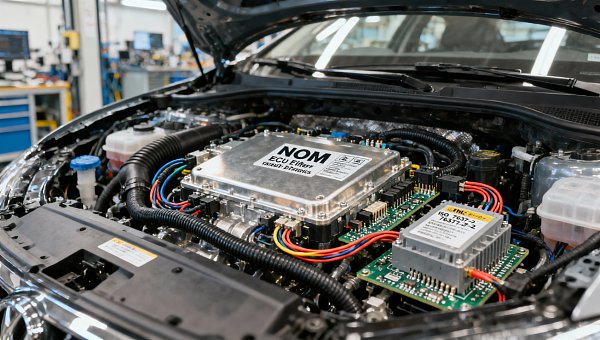
 Mexico NOM-019-SCFI-2026 Effective: Automotive Electronics Require New EMC CertificationMexico NOM-019-SCFI-2026 takes effect May 1, 2026 — new EMC certification mandatory for automotive electronics, EV accessories & aftermarket parts entering Mexico.
 Vietnam Suspends China Irrigation Equipment SASO Mutual RecognitionVietnam suspends China irrigation equipment SASO mutual recognition—urgent QCVN certification now required for drip tapes, sprinklers & smart controllers.
 Red Sea Diversion Normalized; Asia-Europe Freight Premium at $1,850/TEURed Sea diversion normalized: Asia-Europe freight premium holds at $1,850/TEU — impacting manufacturing, retail & procurement. Act now to optimize costs & resilience.
 FDA Drafts AI Bias Assessment Rule for Imported Medical DevicesFDA's new AI bias assessment rule for imported medical devices demands third-party verified fairness reports—act now to prep your 510(k)/De Novo submissions.
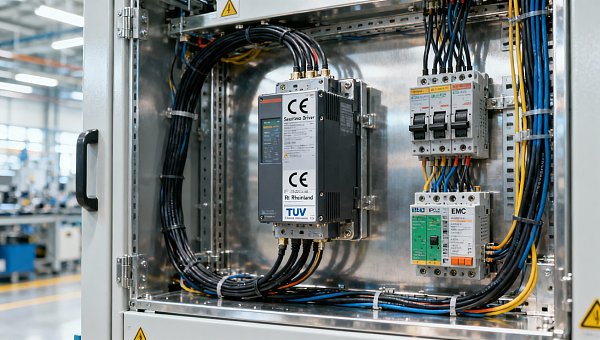
 TÜV Rheinland Updates CE Requirements for Servo DrivesTÜV Rheinland updates CE requirements for servo drives: integrated PLd + EN 61800-3 validation mandatory from July 1, 2026. Act now to avoid EU market delays!
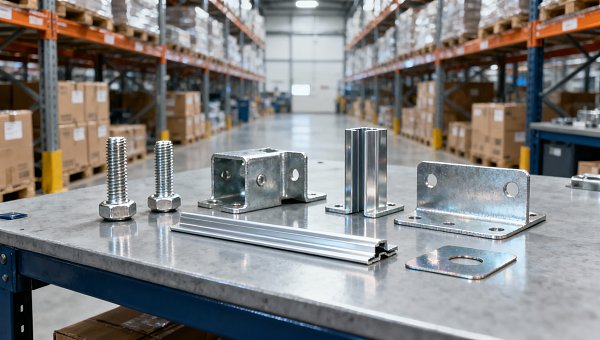
 SABER Phase II Launch: Building Hardware Must Submit Digital Type Test Reports & Unique Product IDsSABER Phase II is live: Building hardware exporters must now submit digital type test reports & secure unique SABER Product IDs—avoid customs delays. Act now!
 IMDG Code 41-24 Enforced: New UN3480 Class 9 Label for Lithium Battery Sea FreightIMDG Code 41-24 enforced: UN3480 Class 9 label now mandatory for lithium battery sea freight — avoid delays in US, EU, UAE & Chile ports.
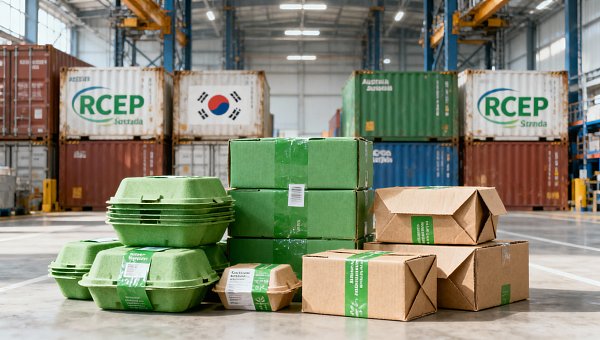
 RCEP Green Packaging Mutual Recognition Takes EffectRCEP Green Packaging Mutual Recognition takes effect Apr 21, 2026—unlock faster customs clearance for compostable, recycled & bio-based packaging in AU, NZ, JP, KR.
 China’s 10-Dept AI Ethics Review Rule for Exported AI DevicesChina’s 10-dept AI ethics review rule mandates algorithmic bias assessments for exported AI devices—key for EU, ME & SEA markets. Stay compliant ahead of enforcement.
 US CPSC Updates Child Sleep Sack Standard Effective July 2026US CPSC updates child sleep sack standard with new DSST test—mandatory for all U.S.-bound infant sleep sacks from July 2026. Act now to ensure compliance and market access.
 Red Sea Rerouting Pushes Asia-Europe Freight Premium to $1,850/TEURed Sea rerouting pushes Asia-Europe freight premium to $1,850/TEU—impacting importers, manufacturers & logistics providers. Act now to reassess costs, lead times & contracts.
 Mexico NOM-019-SCFI-2026 Effective May 1, 2026: EMC Certification Mandatory for Auto ElectronicsNOM-019-SCFI-2026 EMC certification is now mandatory for auto electronics in Mexico—effective May 1, 2026. Ensure compliance for infotainment, ADAS, OBD-II & more.
") TÜV Rheinland Updates CE Requirements for Servo Drives (PLd + EMC Class 3)TÜV Rheinland updates CE requirements for servo drives: PLd + EMC Class 3 joint validation mandatory from Q3 2026. Act now to avoid delays, rejections, or compliance risks.
TÜV Rheinland Updates CE Requirements for Servo Drives (PLd + EMC Class 3)TÜV Rheinland updates CE requirements for servo drives: PLd + EMC Class 3 joint validation mandatory from Q3 2026. Act now to avoid delays, rejections, or compliance risks. SABER Phase II Launch: Building Hardware Must Submit Digital e-CoC & UPISABER Phase II mandates digital e-CoC & UPI for building hardware imports to Saudi Arabia—act now to ensure customs clearance and market access.
 FDA AI Diagnostic Device Draft Rules: Bias Assessment for ImportsFDA AI diagnostic device draft rules mandate bias assessment for imports — discover how algorithmic fairness impacts 510(k)/De Novo submissions and what to do now.
 RCEP Green Packaging Mutual Recognition Starts June 1, 2026RCEP Green Packaging Mutual Recognition starts June 1, 2026 — unlock faster exports to Australia, NZ, Japan & Korea with GB/T 37572-2025 certification.
 Vietnam Suspends SASO Mutual Recognition for Chinese Irrigation EquipmentVietnam suspends SASO mutual recognition for Chinese irrigation equipment—impacting exporters, testers & suppliers. Act now to avoid 6–8 week delays & 35% cost hikes.
 IMDG Code 41-24 Enforces UN3480 Class 9 Labeling for Li-ion Battery Sea FreightIMDG Code 41-24 enforces UN3480 Class 9 labeling for Li-ion battery sea freight—learn mandatory QR labels, compliance actions & port enforcement risks.
 EU CBAM Enters Enforcement Phase on April 1, 2026EU CBAM enforcement starts April 1, 2026 — critical for Chinese battery materials, construction profiles & industrial coatings exporters. Act now to avoid customs delays.
 Mexico Enforces NOM-019-SCFI-2026 EMC Certification for Auto Electronics from May 2026Mexico enforces NOM-019-SCFI-2026 EMC certification for auto electronics from May 2026 — mandatory local testing, stricter standards, and urgent compliance action required.














Popular Tags
Global Trade Insights & Industry
Our mission is to empower global exporters and importers with data-driven insights that foster strategic growth.
Search News
Popular Tags
Industry Overview
The global commercial kitchen equipment market is projected to reach $112 billion by 2027. Driven by urbanization, the rise of e-commerce food delivery, and strict hygiene regulations.