

Vietnam Imposes 28.6% Anti-Dumping Duty on Chinese Tractors, Cultivators
Vietnam’s Ministry of Industry and Trade announced the final anti-dumping duty on Chinese agricultural machinery — specifically tractors (HS 8701) and cultivators (HS 8432) — effective April 19, 2026. This decision directly impacts exporters in Guangdong, Shandong, and Henan provinces and signals a material shift in cross-border trade dynamics for farm equipment suppliers targeting the ASEAN market.
Event Overview
On April 18, 2026, Vietnam’s Ministry of Industry and Trade published the final determination of its anti-dumping investigation into imported tractors and cultivators originating from China. The ministry concluded that these imports caused material injury to domestic producers. As a result, a definitive anti-dumping duty of 28.6% was imposed on the subject goods, effective April 19, 2026, for a five-year period.
Industries Affected by Product Category and Role
Direct Exporters (OEM/ODM Manufacturers)
Manufacturers in Guangdong, Shandong, and Henan exporting tractors or micro-cultivators to Vietnam face immediate margin compression and reduced competitiveness. The 28.6% duty applies at customs clearance, increasing landed costs and potentially triggering contract renegotiations or order cancellations.
Export-Oriented Trading Companies
Firms acting as intermediaries between Chinese factories and Vietnamese importers must now reassess pricing models, Incoterms, and compliance documentation. Their role in managing tariff classification, origin certification, and post-clearance audits becomes more operationally critical.
Supply Chain Service Providers (Logistics, Customs Brokers, Compliance Consultants)
These service providers may see increased demand for tariff engineering support, HS code verification, and preferential origin assessment — particularly for alternative sourcing routes such as Thailand or Indonesia, where some orders are already shifting.
Domestic Distributors & Aftermarket Parts Suppliers in Vietnam
Local distributors relying on low-cost Chinese OEM units may face inventory repricing or delays in restocking. Concurrently, aftermarket parts supply chains tied to those platforms could experience demand volatility if end-user adoption slows.
What Relevant Enterprises or Practitioners Should Monitor and Do Now
Track official implementation guidance and potential exemptions
Vietnamese customs authorities have yet to publish detailed enforcement protocols — including how origin verification will be conducted for assembled units (e.g., CKD/SKD kits imported into Thailand/Indonesia). Exporters should monitor updates from Vietnam’s General Department of Vietnam Customs and the Ministry of Industry and Trade for procedural clarifications.
Assess exposure by product-level HS subheading and export channel
Not all tractors or cultivators under HS 8701 or 8432 may fall within the scope of the measure. Enterprises should verify whether their specific models, engine specifications, or assembly configurations match the defined scope — especially if exports transit through third countries or involve local assembly partnerships.
Review existing contracts and logistics arrangements for tariff pass-through clauses
Commercial contracts signed before April 19, 2026, may not account for the new duty. Exporters and importers should jointly assess liability for the additional cost, particularly where delivery terms (e.g., CIF, DAP) do not explicitly assign tariff responsibility.
Prepare contingency plans for regional re-sourcing or assembly localization
Given observed shifts toward Thailand and Indonesia for assembly, companies with flexible manufacturing footprints should evaluate feasibility of light assembly or CKD-based production in those jurisdictions — while ensuring compliance with local content requirements and Vietnam’s rules of origin for potential tariff preferences under ASEAN agreements.
Editorial Perspective / Industry Observation
From an industry perspective, this measure is less a sudden policy shock and more a formalization of long-standing trade tensions around agricultural mechanization capacity-building in Vietnam. Analysis来看, the 28.6% rate reflects a calculated balance: high enough to deter volume-driven exports, but below levels that would trigger WTO dispute mechanisms outright. Observation来看, the timing — coinciding with Vietnam’s push for domestic agri-mechanization under its 2025–2030 National Strategy — suggests alignment between trade defense and industrial policy goals. Current more relevant interpretation is that this is a structural signal, not just a tactical tariff adjustment: it underscores growing scrutiny of China-sourced capital goods across ASEAN markets, especially where local industry development is prioritized.
Current more relevant understanding is that this ruling marks the start of a multi-year operational recalibration phase — not merely a one-off customs hurdle. It highlights how trade remedies increasingly intersect with regional supply chain strategy, requiring proactive rather than reactive enterprise responses.

Conclusion
This anti-dumping duty represents a concrete escalation in trade regulation affecting Chinese agricultural machinery exports to Vietnam. Its significance lies not only in the tariff level itself, but in what it reveals about evolving regional trade governance — where industrial policy objectives increasingly shape import controls. For affected enterprises, the priority is operational clarity: confirming product scope, verifying contractual obligations, and evaluating near-term alternatives. It is better understood as a durable constraint on current export pathways, rather than a temporary administrative measure.
Information Sources
Main source: Vietnam Ministry of Industry and Trade (Announcement dated April 18, 2026).
Note: Implementation details — including origin verification methodology for third-country-assembled units and potential review timelines — remain pending official publication and are subject to ongoing observation.
Recommended News
 Mexico Enforces NOM-019-SCFI-2026 EMC Certification for Auto Electronics from May 2026Mexico enforces NOM-019-SCFI-2026 EMC certification for auto electronics from May 2026 — mandatory local testing, stricter standards, and urgent compliance action required.
 Global Port Congestion Eases, but Red Sea Rerouting PersistsRed Sea rerouting persists amid easing port congestion—Shanghai–Rotterdam freight rates surge 4.2% to $5,280/TEU. Critical insights for exporters, importers & logistics leaders.
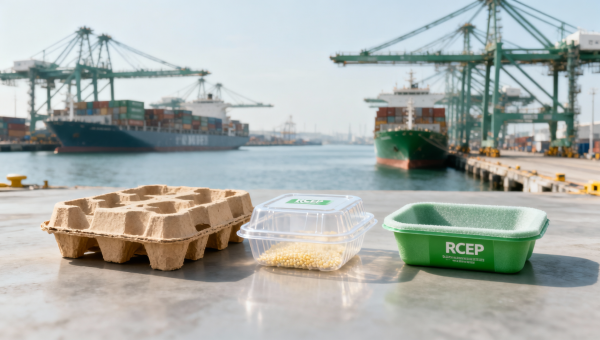
 RCEP Green Packaging Mutual Recognition Starts June 2026RCEP Green Packaging Mutual Recognition starts June 2026 — streamline exports to Australia, NZ, Japan & SK with GB/T 37572-2025 certification. Save time & costs!
 FDA AI Diagnostic Device Rules: ABIA Required from Q3 2026FDA AI diagnostic device rules now require ABIA reports from Q3 2026 — essential for 510(k)/De Novo submissions. Stay compliant, avoid delays & secure U.S. market access.
 Vietnam Suspends SASO Mutual Recognition for Chinese Irrigation EquipmentVietnam suspends SASO mutual recognition for Chinese irrigation equipment—sprinkler systems, drip controllers & irrigation systems now require local QUATEST 3 testing. Act now to avoid 12-week delays & 35% cost hikes.
") TÜV Rheinland Updates CE Certification for Industrial Robot Drives (2026 Q3)TÜV Rheinland’s 2026 Q3 CE certification update for industrial robot drives mandates PLd safety + EN 61800-3 EMC — act now to avoid EU market delays.
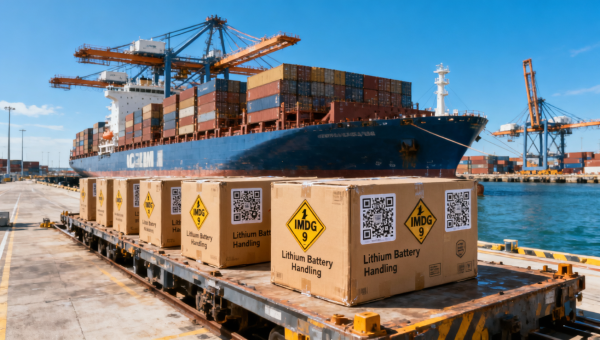
TÜV Rheinland Updates CE Certification for Industrial Robot Drives (2026 Q3)TÜV Rheinland’s 2026 Q3 CE certification update for industrial robot drives mandates PLd safety + EN 61800-3 EMC — act now to avoid EU market delays. IMDG Code Amendment 41-24 Takes Effect for Lithium Battery Sea FreightIMDG Code Amendment 41-24 is live: New QR labels, bilingual handling tags & SOC disclosure required for UN3480 lithium battery sea freight—act now to avoid delays.
 SASO SABER Phase II: Digital Type Test Reports Required for Building Hardware from Jun 2026SASO SABER Phase II requires digital type test reports & unique product IDs for building hardware exports to Saudi Arabia — effective June 2026. Act now to ensure compliance and avoid customs delays.
 CPSC Updates 16 CFR Part 1236: New Suffocation Test for Children's Sleep Sacks Effective July 2026CPSC Updates 16 CFR Part 1236: New suffocation test for children's sleep sacks takes effect July 2026 — ensure compliance, avoid delays & protect your U.S. market access.
 EN IEC 62471-2:2026 Effective Oct 2026 for EU LED Lighting ExportsEN IEC 62471-2:2026 mandates full-spectrum photobiological safety testing (200–3000 nm) for all EU-bound LED lighting — effective 1 Oct 2026. Act now to secure CE marking & avoid market access delays.
 AI Patent Tools Security Flaw Triggers Compliance ReviewAI Patent Tools security flaw exposed—triggering urgent compliance reviews for medical device, semiconductor & AI firms. Act now to secure submissions.
 Lithium Carbonate Price Rebound Pressures Battery CostsLithium carbonate price rebound in April 2026 pressures battery costs—impacting procurement, EV manufacturing & EU energy storage compliance. Key insights inside.
 AI+New Materials Summit at Canton Fair ClosesAI+New Materials Summit at Canton Fair closes—key insights for AI testing instruments, optical metrology & ISO/IEC 17025 compliance. Discover what Tier 1 auto buyers and TÜV/JIS labs really want.
 Sodium-Ion Battery Mass Production Accelerates for Energy StorageSodium-ion battery mass production accelerates in 2026 — lower-cost, UL 9540A-certified energy storage for solar exporters and off-grid markets.
 GMCC & Welling Showcase R290-Ready Compressors at CIFF 2026R290-ready compressors from GMCC & Welling—ultra-low noise (≤22 dB), high IPLV, EU F-Gas III & US DOE 2026 compliant. See why HVAC exporters must act now.
 Dongfang Select's Blue Hat Supplements Go Global with TraceabilityBlue Hat supplements with blockchain traceability—Dongfang Select’s global launch sets a new standard for trusted health & beauty exports.
 China’s New Green Design Guidelines Mandate LCA for Export Packaging & Building MaterialsChina’s new Green Design Guidelines mandate LCA for export packaging & building materials—key for EU, Korea, Canada market access. Act now to secure green procurement eligibility & tariff benefits.
 Semiconductor Supply Chain Price Hikes Extend Lead TimesSemiconductor supply chain price hikes hit MCUs, power ICs & automotive sensors—lead times now stretch 16–20 weeks. Act now to secure A-BOM readiness and local packaging capacity.
 Wuxi E-Bike Cluster Seeks Global Market at Canton FairWuxi e-bike cluster (Yadea, Aima, Tailg) targets global markets at Canton Fair—UL2849, IEC62133 & UN38.3 compliance is now key for LATAM entry.
 EU CBAM Enters Enforcement Phase on Jan 1, 2026EU CBAM enforcement starts Jan 1, 2026 — critical for exporters of iron, steel, aluminium, cement, fertilizers, electricity & hydrogen to the EU. Act now.
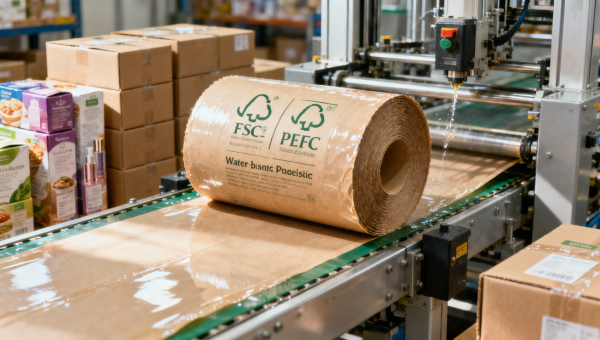
 2026 Jan–Feb Paper Industry Profits +6.1%; Green Packaging Export Premium EmergesGreen packaging export premium drives +6.1% paper industry profits in Jan–Feb 2026 — discover how FSC/PEFC certification and water-based processes boost margins for eco-friendly, food & cosmetics packaging exporters.


















Popular Tags
Global Trade Insights & Industry
Our mission is to empower global exporters and importers with data-driven insights that foster strategic growth.
Search News
Popular Tags
Industry Overview
The global commercial kitchen equipment market is projected to reach $112 billion by 2027. Driven by urbanization, the rise of e-commerce food delivery, and strict hygiene regulations.