

Smart street lighting saves energy only when controls are tuned properly
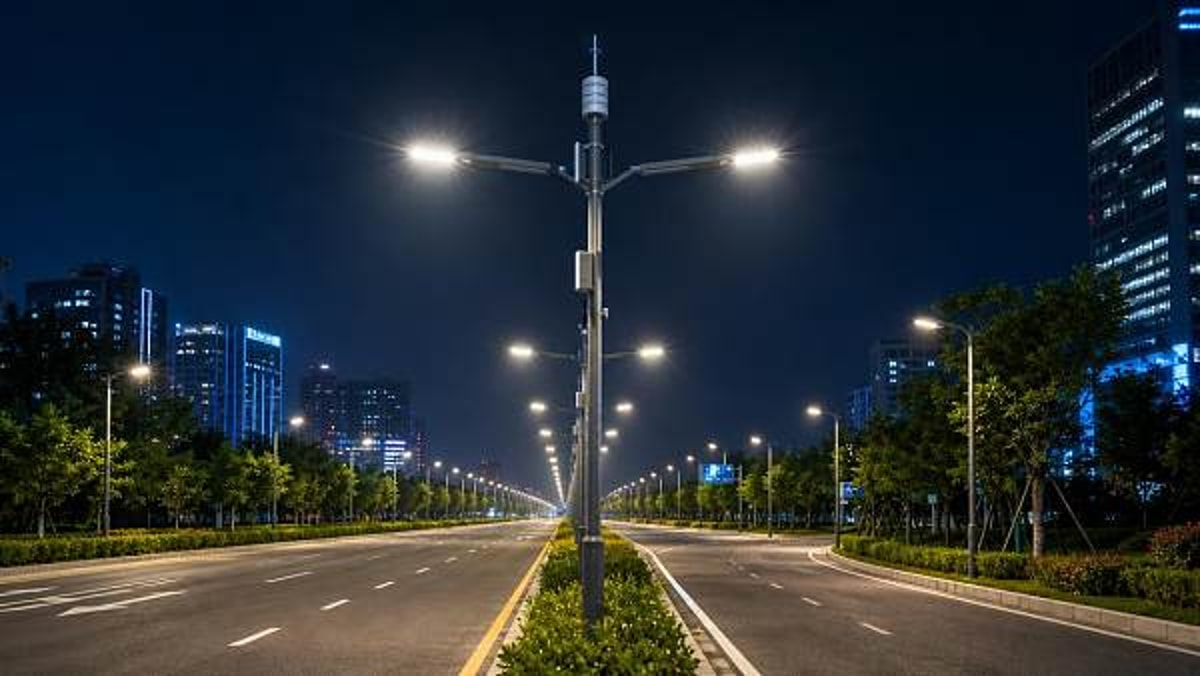
Smart street lighting delivers real energy savings only when control strategies are calibrated to real project conditions, usage patterns, and maintenance goals. For project managers and engineering leads, the challenge is not simply installing connected systems, but tuning sensors, dimming schedules, and monitoring logic to balance efficiency, safety, and long-term performance. This article explores why proper control configuration determines whether smart lighting investments achieve measurable results.
Why does Smart street lighting often underperform after installation?
Many projects assume that adding connectivity, sensors, and a cloud dashboard automatically delivers energy reduction. In practice, Smart street lighting underperforms when controls are left at factory defaults or copied from another site with different traffic, weather, road classes, and maintenance capacity. A residential street, a logistics corridor, and a mixed-use urban road may all use the same luminaires, but they should not run the same dimming profile.
The most common gap appears between design intent and operating reality. Teams may specify adaptive lighting, occupancy sensing, or group dimming during procurement, yet fail to define trigger thresholds, fallback behavior, reporting intervals, or seasonal changes. As a result, lights remain brighter than needed, sensors generate false activations, or maintenance crews disable functions to stop complaints. The system still looks “smart,” but savings flatten.
For project managers, the lesson is simple: the control layer is where return on investment is won or lost. Hardware quality matters, but performance depends on how the network behaves every night across actual operating conditions.
What does “proper tuning” mean in Smart street lighting projects?
Proper tuning means aligning lighting behavior with measurable site objectives instead of generic assumptions. In Smart street lighting, this usually includes dimming schedules by time block, motion response sensitivity, ramp-up and fade-down timing, daylight thresholds, alarm priorities, and communication frequency. It also includes deciding what should happen when parts of the system fail: should fixtures default to a safe output level, maintain the last command, or switch to a local control mode?
A well-tuned system starts with road use patterns. If pedestrian activity spikes late in the evening near transit stations, aggressive dimming from 9 p.m. may not be appropriate. If a port access road has low traffic but high safety importance, minimum light levels may need to stay above the theoretical energy optimum. Tuning is therefore not just a technical exercise; it is an operational policy translated into control logic.
Engineering leads should also remember that proper tuning is iterative. Baseline settings are only the starting point. Data from the first weeks or months should inform refinements based on usage trends, complaint records, local authority requirements, and maintenance findings.
Which control settings have the biggest impact on energy savings?
Not every parameter has equal value. In most Smart street lighting deployments, four settings drive the largest share of savings and operational outcomes.
- Baseline dimming schedule: Time-based dimming by traffic period is often the largest and most predictable source of savings. A project that only reduces output by 20% during low-activity hours can outperform a more complex system that relies on poorly configured sensors.
- Minimum light level: Teams frequently set the floor too high to avoid stakeholder concerns. That protects comfort, but it can erase expected savings. The minimum should reflect road class, visibility targets, and local standards rather than habit.
- Occupancy sensor sensitivity and hold time: If sensitivity is too high, passing animals, wind movement, or adjacent traffic may trigger unnecessary brightening. If hold time is too long, lights remain at full output after activity has passed.
- Grouping logic: Whether fixtures respond individually, by segment, or by corridor affects both safety perception and energy use. Corridor-based response may suit roads better than isolated point response.
The strongest projects do not maximize complexity. They prioritize a stable dimming plan, then layer adaptive functions where they add clear value.
How can project managers tell whether a Smart street lighting strategy fits the actual site?
A control strategy fits the site when it can be defended with data, not just supplier claims. Before approval, project managers should review operating assumptions against five practical checkpoints: traffic variation, safety expectations, maintenance access, local climate, and communications reliability. If any of these are poorly understood, the controls may be too ambitious for the environment.
For example, occupancy-based Smart street lighting sounds attractive on roads with low night traffic. But if fog, heavy rain, foliage movement, or line-of-sight constraints reduce sensor reliability, the system may create inconsistent illumination or constant nuisance alerts. In such cases, scheduled dimming with selective sensor zones can deliver better overall results than network-wide adaptive behavior.
Fit also depends on who will operate the system after commissioning. If the owner lacks a team that can interpret analytics, adjust profiles, and manage firmware updates, a simpler control architecture may produce stronger long-term savings than a feature-rich platform that is never fully used.
Quick evaluation table for site-fit decisions
The table below helps engineering leads evaluate whether a Smart street lighting control plan is realistic before rollout.
What are the biggest mistakes teams make when configuring Smart street lighting controls?
One frequent mistake is treating the pilot area as representative of the entire network. A downtown test block with stable power, strong connectivity, and high visibility is rarely the same as suburban roads, industrial access routes, or rural connectors. Expanding the same settings everywhere can distort both energy results and public response.
Another mistake is optimizing only for electricity reduction. Smart street lighting must also support safety, asset life, and maintenance efficiency. Deep dimming that looks excellent in a spreadsheet may increase service calls if users perceive the road as underlit or if the transition logic is abrupt. The correct target is not the lowest possible wattage; it is the best balance between energy, reliability, and service quality.
Teams also underestimate governance. Who has authority to change dimming schedules? How are exceptions approved during festivals, roadworks, or emergency periods? What is the escalation path if residents complain? Without clear control ownership, settings drift and documentation becomes outdated.
A final mistake is ignoring measurement methodology. If a project cannot compare pre- and post-implementation consumption under equivalent conditions, savings claims remain weak. Baselines, metering points, and reporting rules should be defined before tuning begins.
How should Smart street lighting be commissioned and adjusted after deployment?
Commissioning should be staged, not rushed. The first stage is functional verification: every luminaire, node, gateway, and control command must work as specified. The second stage is operational tuning: settings should be tested at different times, traffic levels, and weather conditions. The third stage is validation: performance data should confirm whether the selected profiles achieve the intended savings without undermining safety or user confidence.
For Smart street lighting, a useful adjustment cycle often includes a 30-day review, a 90-day optimization checkpoint, and a seasonal reassessment. This is especially important where daylight duration, tourism patterns, rainfall, or freight movement vary over the year. A schedule that performs well in one quarter may be inefficient in another.
Project managers should ask for reporting that goes beyond power use. Good review dashboards connect energy data with fault rates, manual overrides, sensor activity, outage duration, and complaint trends. That broader view prevents false conclusions, such as assuming energy savings are strong when in fact adaptive features were disabled for half the system.
How do you balance energy savings, public safety, and maintenance goals?
The balance comes from setting priorities by road function rather than applying one rule everywhere. Smart street lighting on arterial roads should usually prioritize consistent visibility and smooth transitions. In parks, campuses, industrial estates, or low-use side streets, deeper dimming and occupancy response may be more acceptable. Segment-based policy is often more effective than citywide uniformity.
Maintenance goals also deserve a place in control design. Frequent switching, overly sensitive sensors, or excessive communications polling can increase operational burden. A well-managed Smart street lighting system should reduce truck rolls through fault visibility and remote diagnostics, not create new workload through unstable settings.
From a governance perspective, the best balance is achieved when stakeholders agree in advance on acceptable service levels. Define target illuminance behavior, response time, fault tolerance, and override procedures early. When the policy is documented, tuning decisions become easier to justify.
What should buyers and engineering teams confirm before procurement or large-scale rollout?
Before expansion, teams should confirm whether the supplier’s Smart street lighting platform supports practical control flexibility, not just a long feature list. Can dimming schedules vary by zone? Can sensor thresholds be tuned remotely? Are reports exportable for energy verification? What happens if communication fails? Can local fallback behavior be customized?
They should also check integration and lifecycle issues. A system that saves power today but locks the owner into difficult upgrades tomorrow may not be the best investment. Firmware management, cybersecurity practice, interoperability, spare parts planning, and training support all affect total project value.
For B2B decision-makers using industry intelligence platforms such as GTIIN and TradeVantage, procurement confidence improves when technical claims are cross-checked with real project references, supply chain stability, and implementation support capability. In international sourcing, the strongest vendor is not only the one with advanced controls, but the one that can help tune them for local conditions and document results clearly.
FAQ: What are the most practical questions to ask before finalizing a Smart street lighting plan?
- What is the expected traffic and pedestrian pattern by hour and season? This determines whether schedule-based or sensor-based control should dominate.
- What is the minimum acceptable light level for each road segment? Without this, energy targets may conflict with safety expectations.
- Who will own tuning after handover? Smart street lighting needs ongoing control management, not one-time setup.
- How will savings be measured? Baseline consumption, reporting intervals, and exceptions should be agreed in advance.
- What is the fallback mode during communication or sensor failure? Reliability planning prevents service disruption.
- Which areas truly benefit from adaptive controls? Not every zone needs the same intelligence level.
Smart street lighting creates meaningful savings only when the control strategy matches real operating conditions and is actively managed over time. For project managers and engineering leads, the most important decision is not whether to choose connected lighting, but how to define, test, and refine the rules that govern it. If you need to confirm a specific solution, parameters, implementation timeline, supplier fit, or cross-border sourcing approach, prioritize discussions around site data, control flexibility, maintenance responsibility, fallback logic, and savings verification before moving forward.
Recommended News
 Portable oxygen concentrators are quieter now, but are they easier to maintain?Portable oxygen concentrators are quieter, but are they easier to maintain? Explore service challenges, scenario-based insights, and smart ways to reduce downtime.
 Interactive whiteboards are underused when training stops after installationInteractive whiteboards often underperform when training ends at installation. Learn how continuous, role-based support boosts adoption, productivity, and ROI.
 Medical diagnostic equipment buying mistakes often start with workflow mismatchMedical diagnostic equipment buying mistakes often stem from workflow mismatch. Learn how to assess fit, avoid hidden costs, and choose scalable systems that support real clinical operations.
![]() Eco-friendly building materials can add compliance work, not just green valueEco-friendly building materials can boost sustainability but also add compliance work. Learn how they affect approvals, costs, timelines, and risk across key project scenarios.
Eco-friendly building materials can add compliance work, not just green valueEco-friendly building materials can boost sustainability but also add compliance work. Learn how they affect approvals, costs, timelines, and risk across key project scenarios. Ergonomic workspace design fails when posture is treated as the whole answerErgonomic workspace design fails when posture is the only focus. Learn how integrated planning improves productivity, retention, and workplace performance.
 Outdoor garden supplies demand changes faster than seasonal forecasts suggestOutdoor garden supplies demand is changing faster than seasonal forecasts. Discover key signals, sourcing strategies, and inventory tactics to stay competitive and capture growth.
 Sustainable home decor sells better when the material story is verifiableSustainable home decor wins more buyers when material claims are verifiable. Discover how traceable sourcing, certifications, and clear proof build trust and drive sales.
 Modern office furniture choices can raise complaints instead of comfortModern office furniture can improve productivity—or trigger costly complaints. Learn how to choose ergonomic, durable, flexible office solutions that support comfort and long-term value.
 Smart street lighting saves energy only when controls are tuned properlySmart street lighting saves energy only when controls are tuned to real traffic, safety, and maintenance needs. Learn how proper settings turn connected lighting into measurable ROI.
 Solid-state battery breakthroughs are real, but scaling is another storySolid-state battery breakthroughs are real, but scaling remains the real test. Explore where commercialization starts first, what limits adoption, and which markets may gain the earliest edge.
![]() Commercial LED lighting upgrades often disappoint in high-heat spacesCommercial LED lighting often underperforms in high-heat spaces. Learn the hidden causes, warning signs, and smart upgrade choices to improve reliability, safety, and long-term value.
Commercial LED lighting upgrades often disappoint in high-heat spacesCommercial LED lighting often underperforms in high-heat spaces. Learn the hidden causes, warning signs, and smart upgrade choices to improve reliability, safety, and long-term value.![]() Lithium battery storage projects look profitable until thermal risk is priced inLithium battery storage may look highly profitable, but thermal risk can change the real ROI. Discover the hidden costs, insurance impacts, and approval factors investors must assess.
Lithium battery storage projects look profitable until thermal risk is priced inLithium battery storage may look highly profitable, but thermal risk can change the real ROI. Discover the hidden costs, insurance impacts, and approval factors investors must assess. Photovoltaic solar panels lose output for reasons many installers missPhotovoltaic solar panels lose output for more than dirt or age. Discover the hidden faults installers often miss and how smarter troubleshooting restores performance faster.
 Plant-based protein processing: why texture remains the hardest partPlant-based protein processing explained: discover why texture is the toughest challenge, how it affects scale-up and product quality, and what technical teams should evaluate for market-ready success.
 Foldable screen technology still faces a trust gap on long-term durabilityFoldable screen technology still excites buyers, but durability concerns remain. Explore hinge reliability, screen wear, and smart buying tips before choosing a foldable phone.
 Next-gen wireless charging sounds convenient, but what slows real rollout?Next-gen wireless charging looks effortless, but rollout is slowed by cost, efficiency, standards, and safety. Explore where real market value and adoption potential are emerging.
 Wearable technology adoption often stalls over charging habitsWearable technology adoption often slows when charging feels inconvenient. Discover practical buying checks, battery tips, and habit-based insights to choose a device you’ll actually keep using.
 Smart home devices wholesale is shifting from gadgets to ecosystemsSmart home devices wholesale is shifting from single gadgets to connected ecosystems. Learn how compatibility, repeat sales, and supplier strategy create stronger channel growth.
 Agri-PV systems can reduce land conflict, but not in every projectAgri-PV systems can ease land conflict, but only in the right scenarios. Explore where dual-use solar adds value, where risks rise, and how to screen projects before deployment.
![]() Organic fertilizers work slowly, so when do they make economic sense?Organic fertilizers can make strong economic sense when farms value premium pricing, healthier soils, and lower risk. See when slower returns lead to better long-term margins.
Organic fertilizers work slowly, so when do they make economic sense?Organic fertilizers can make strong economic sense when farms value premium pricing, healthier soils, and lower risk. See when slower returns lead to better long-term margins. Smart classroom solutions promise engagement, but what drives daily use?Smart classroom solutions succeed when they fit daily teaching workflows, integrate smoothly, and prove measurable value. Discover what drives real adoption and smarter investment.















Popular Tags
Global Trade Insights & Industry
Our mission is to empower global exporters and importers with data-driven insights that foster strategic growth.
Search News
Popular Tags
Industry Overview
The global commercial kitchen equipment market is projected to reach $112 billion by 2027. Driven by urbanization, the rise of e-commerce food delivery, and strict hygiene regulations.