

Ergonomic workspace design fails when posture is treated as the whole answer
Ergonomic workspace design often underdelivers when businesses reduce performance, comfort, and safety to posture alone. For decision-makers, the real challenge is building environments that align with workflow, employee behavior, technology use, and long-term operational goals. A smarter approach to ergonomic workspace design reveals how productivity, retention, and risk reduction depend on a more integrated strategy.
Why does ergonomic workspace design fail when companies focus only on posture?
Many organizations invest in chairs, monitor arms, or standing desks and expect immediate results. Yet ergonomic workspace design is not a posture correction program alone. Posture matters, but it is only one visible part of a broader system that includes task flow, meeting patterns, device switching, lighting, noise, cognitive load, and employee habits. When leaders treat posture as the complete answer, they often solve a symptom while leaving the root causes of discomfort and inefficiency untouched.
For example, a team may have adjustable workstations but still spend hours in repetitive screen-based activity without breaks, move constantly between laptops and phones, or work in spaces that create visual strain and interruptions. In that case, even well-intended ergonomic workspace design produces limited gains. Employees may still report fatigue, shoulder tension, reduced focus, and dissatisfaction because the work environment does not support how work is actually performed.
Business leaders should view ergonomics as an operational design issue rather than a furniture checklist. The most effective programs connect physical comfort with productivity metrics, work quality, attendance, and retention. This approach is especially relevant for decision-makers managing distributed teams, hybrid offices, customer service centers, procurement operations, or export-driven functions where long periods of digital work are common.
What should decision-makers include in ergonomic workspace design beyond chair and desk adjustments?
A high-value ergonomic workspace design strategy should examine the full employee-workspace interaction. That means looking at more than body alignment. It includes how people access tools, how long they remain in one task, how often they collaborate, and what environmental conditions shape performance. In practice, leaders should evaluate five connected dimensions.
- Task structure: Are employees doing repetitive data entry, video meetings, product reviews, or analytical work that requires sustained concentration?
- Technology use: Are they using one screen or multiple screens, external keyboards, mobile devices, headsets, or specialized tools?
- Movement patterns: Do employees sit for long blocks, rotate between stations, or need support for frequent transitions?
- Environmental factors: Are lighting, temperature, acoustics, and glare helping or hurting performance?
- Behavior and adoption: Do teams understand how to use the setup correctly, and do managers reinforce healthy work practices?
This broader view turns ergonomic workspace design into a business system. It reduces the risk of buying equipment that looks modern but does not fit the job. It also helps procurement, HR, facilities, and operations work from a shared decision framework instead of making fragmented purchases that create inconsistent employee experiences.
Which business scenarios benefit most from integrated ergonomic workspace design?
The benefits are strongest where employee output depends on sustained focus, repetitive device use, or high interaction with information. In these settings, poorly planned workspaces can quietly reduce accuracy, increase fatigue, and raise the likelihood of absenteeism or turnover. An integrated ergonomic workspace design approach is especially useful in several common business scenarios.
First, hybrid and multinational office teams need adaptable setups. Employees may work from headquarters, satellite offices, or home offices, often using different equipment standards. A consistent ergonomics strategy helps protect performance across locations while supporting policy clarity.
Second, customer support, sourcing, and back-office functions benefit because these roles involve extended seated work, high screen time, and repetitive inputs. Even minor workstation flaws can scale into larger operational issues when multiplied across teams.
Third, leadership teams concerned with employer branding should not ignore workspace quality. Employees increasingly associate workplace design with how seriously a company takes wellbeing, professionalism, and long-term development. In competitive labor markets, ergonomic workspace design supports retention and sends a measurable trust signal to current and prospective talent.
Finally, organizations expanding globally often need standards that can be communicated across departments and regions. For these businesses, ergonomics is not just a local office issue. It becomes part of governance, compliance awareness, and operational maturity.
How can companies tell whether their current ergonomic workspace design is actually working?
A common mistake is to judge success by purchase completion rather than performance outcomes. Buying new chairs or desks does not prove that ergonomic workspace design is effective. Decision-makers need a practical review model that combines employee feedback, workspace observations, and operational indicators.
Start by asking whether discomfort complaints are decreasing over time. Then assess whether employees are using equipment as intended or bypassing features because the setup feels inconvenient. Review whether certain teams still experience concentration loss, visual strain, or repeated workflow interruptions. These signs often reveal that the design does not match actual task behavior.
The table below summarizes how leaders can evaluate results more accurately.
What are the most common mistakes businesses make with ergonomic workspace design?
Several errors appear repeatedly across industries. The first is treating ergonomics as a one-time procurement event. Good ergonomic workspace design requires review, adjustment, and user education. Without follow-up, even premium products can be underused or misused.
The second mistake is standardizing too aggressively. A single workstation formula may seem cost-efficient, but job roles vary. Finance analysts, sales coordinators, designers, and trade operations staff do not interact with tools in the same way. When leaders ignore these differences, dissatisfaction rises and return on investment drops.
A third mistake is separating ergonomics from management behavior. If managers reward uninterrupted desk time, overload calendars with meetings, or ignore micro-breaks, physical improvements alone will not solve fatigue. Sustainable ergonomic workspace design depends on both equipment and work culture.
Another frequent issue is ignoring environmental design. Glare, poor acoustics, low air quality, and temperature inconsistency can undermine even the best seating and desk configurations. Decision-makers who want measurable outcomes should think in terms of total work conditions rather than isolated furniture features.
How should leaders compare cost, value, and implementation timelines?
Cost discussions often focus on unit price, but the stronger question is total business value. Ergonomic workspace design affects productivity, employee experience, absence patterns, and long-term workplace resilience. A lower-cost purchase that does not fit user needs can become more expensive than a staged, evidence-based rollout that actually works.
A practical way to manage implementation is to phase decisions. Begin with role mapping and workspace assessment. Then prioritize high-impact groups, such as employees with heavy screen exposure or critical knowledge tasks. After that, combine equipment deployment with usage guidance, manager communication, and review points. This creates a more reliable path than a fast bulk purchase based only on vendor claims.
Timelines also depend on organizational complexity. A small office may improve ergonomic workspace design within weeks, while a regional or global business may need a structured rollout that accounts for procurement cycles, supplier consistency, local compliance expectations, and employee training. The key is to avoid seeing ergonomics as a cosmetic office refresh. It is closer to a performance infrastructure project.
What should companies confirm before choosing a vendor, consultant, or internal rollout plan?
Before selecting a solution provider or launching an internal initiative, leaders should clarify what success means in business terms. Is the goal to reduce discomfort, support hybrid work, improve output consistency, strengthen employer reputation, or standardize workspace quality across locations? Without this clarity, ergonomic workspace design becomes a vague spending category rather than a strategic investment.
It is also important to verify whether the provider understands workflows, not just furniture specifications. A credible partner should ask about device usage, team structure, workstation variability, and adoption challenges. They should be able to explain how their recommendations support actual work patterns rather than simply promoting products.
Decision-makers should also request answers to several practical questions:
- How will the ergonomic workspace design be tailored for different job roles?
- What training or onboarding support is included?
- How will results be measured after implementation?
- Can the solution scale across multiple offices or countries?
- What adjustments are available if employee feedback reveals gaps?
These questions help companies move beyond surface-level promises and toward a more durable solution. For organizations active in global trade and cross-border business, this level of discipline is consistent with how other strategic suppliers are evaluated: by reliability, adaptability, measurable outcomes, and long-term value creation.
What is the key takeaway for decision-makers?
The main lesson is simple: ergonomic workspace design fails when posture is treated as the entire strategy. Businesses that want real returns must connect ergonomics with workflow design, technology behavior, environmental quality, management practices, and measurable employee outcomes. This broader perspective is more useful for modern enterprises than a narrow checklist built around chairs and sitting angles.
For leaders evaluating next steps, the most productive conversations should begin with role-specific needs, implementation priorities, success metrics, adoption support, and scalability across teams or regions. If you need to confirm a concrete direction, timeline, budget range, or cooperation model, those are the first questions to bring into vendor discussions, internal planning sessions, or workplace improvement reviews.
Recommended News
 Portable oxygen concentrators are quieter now, but are they easier to maintain?Portable oxygen concentrators are quieter, but are they easier to maintain? Explore service challenges, scenario-based insights, and smart ways to reduce downtime.
 Interactive whiteboards are underused when training stops after installationInteractive whiteboards often underperform when training ends at installation. Learn how continuous, role-based support boosts adoption, productivity, and ROI.
 Medical diagnostic equipment buying mistakes often start with workflow mismatchMedical diagnostic equipment buying mistakes often stem from workflow mismatch. Learn how to assess fit, avoid hidden costs, and choose scalable systems that support real clinical operations.
![]() Eco-friendly building materials can add compliance work, not just green valueEco-friendly building materials can boost sustainability but also add compliance work. Learn how they affect approvals, costs, timelines, and risk across key project scenarios.
Eco-friendly building materials can add compliance work, not just green valueEco-friendly building materials can boost sustainability but also add compliance work. Learn how they affect approvals, costs, timelines, and risk across key project scenarios. Ergonomic workspace design fails when posture is treated as the whole answerErgonomic workspace design fails when posture is the only focus. Learn how integrated planning improves productivity, retention, and workplace performance.
 Outdoor garden supplies demand changes faster than seasonal forecasts suggestOutdoor garden supplies demand is changing faster than seasonal forecasts. Discover key signals, sourcing strategies, and inventory tactics to stay competitive and capture growth.
 Sustainable home decor sells better when the material story is verifiableSustainable home decor wins more buyers when material claims are verifiable. Discover how traceable sourcing, certifications, and clear proof build trust and drive sales.
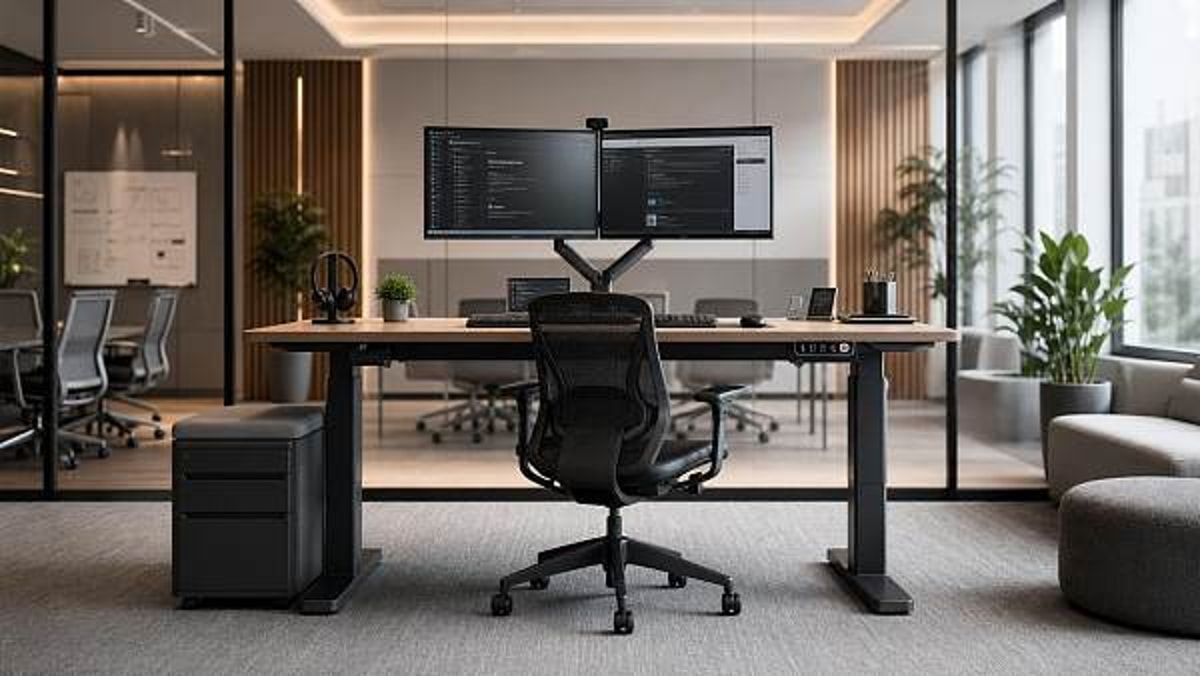
 Modern office furniture choices can raise complaints instead of comfortModern office furniture can improve productivity—or trigger costly complaints. Learn how to choose ergonomic, durable, flexible office solutions that support comfort and long-term value.
 Smart street lighting saves energy only when controls are tuned properlySmart street lighting saves energy only when controls are tuned to real traffic, safety, and maintenance needs. Learn how proper settings turn connected lighting into measurable ROI.
 Solid-state battery breakthroughs are real, but scaling is another storySolid-state battery breakthroughs are real, but scaling remains the real test. Explore where commercialization starts first, what limits adoption, and which markets may gain the earliest edge.
![]() Commercial LED lighting upgrades often disappoint in high-heat spacesCommercial LED lighting often underperforms in high-heat spaces. Learn the hidden causes, warning signs, and smart upgrade choices to improve reliability, safety, and long-term value.
Commercial LED lighting upgrades often disappoint in high-heat spacesCommercial LED lighting often underperforms in high-heat spaces. Learn the hidden causes, warning signs, and smart upgrade choices to improve reliability, safety, and long-term value.![]() Lithium battery storage projects look profitable until thermal risk is priced inLithium battery storage may look highly profitable, but thermal risk can change the real ROI. Discover the hidden costs, insurance impacts, and approval factors investors must assess.
Lithium battery storage projects look profitable until thermal risk is priced inLithium battery storage may look highly profitable, but thermal risk can change the real ROI. Discover the hidden costs, insurance impacts, and approval factors investors must assess. Photovoltaic solar panels lose output for reasons many installers missPhotovoltaic solar panels lose output for more than dirt or age. Discover the hidden faults installers often miss and how smarter troubleshooting restores performance faster.
 Plant-based protein processing: why texture remains the hardest partPlant-based protein processing explained: discover why texture is the toughest challenge, how it affects scale-up and product quality, and what technical teams should evaluate for market-ready success.
 Foldable screen technology still faces a trust gap on long-term durabilityFoldable screen technology still excites buyers, but durability concerns remain. Explore hinge reliability, screen wear, and smart buying tips before choosing a foldable phone.
 Next-gen wireless charging sounds convenient, but what slows real rollout?Next-gen wireless charging looks effortless, but rollout is slowed by cost, efficiency, standards, and safety. Explore where real market value and adoption potential are emerging.
 Wearable technology adoption often stalls over charging habitsWearable technology adoption often slows when charging feels inconvenient. Discover practical buying checks, battery tips, and habit-based insights to choose a device you’ll actually keep using.
 Smart home devices wholesale is shifting from gadgets to ecosystemsSmart home devices wholesale is shifting from single gadgets to connected ecosystems. Learn how compatibility, repeat sales, and supplier strategy create stronger channel growth.
 Agri-PV systems can reduce land conflict, but not in every projectAgri-PV systems can ease land conflict, but only in the right scenarios. Explore where dual-use solar adds value, where risks rise, and how to screen projects before deployment.
![]() Organic fertilizers work slowly, so when do they make economic sense?Organic fertilizers can make strong economic sense when farms value premium pricing, healthier soils, and lower risk. See when slower returns lead to better long-term margins.
Organic fertilizers work slowly, so when do they make economic sense?Organic fertilizers can make strong economic sense when farms value premium pricing, healthier soils, and lower risk. See when slower returns lead to better long-term margins. Smart classroom solutions promise engagement, but what drives daily use?Smart classroom solutions succeed when they fit daily teaching workflows, integrate smoothly, and prove measurable value. Discover what drives real adoption and smarter investment.












Popular Tags
Global Trade Insights & Industry
Our mission is to empower global exporters and importers with data-driven insights that foster strategic growth.
Search News
Popular Tags
Industry Overview
The global commercial kitchen equipment market is projected to reach $112 billion by 2027. Driven by urbanization, the rise of e-commerce food delivery, and strict hygiene regulations.