

Agri-PV systems: When crop yield drops outweigh solar gains
As Agri-PV systems gain traction in sustainable agriculture and renewable energy integration, new data reveals a critical trade-off: crop yield drops sometimes outweigh solar gains—raising urgent questions for project managers, procurement teams, and decision-makers evaluating ROI. This analysis, powered by GTIIN’s real-time industry intelligence, contextualizes Agri-PV systems alongside complementary innovations like photovoltaic solar panels, lithium battery storage, and smart street lighting—while also tracking cross-sectoral enablers such as solid-state battery breakthroughs and next-gen wireless charging. For technical evaluators, importers, and distributors seeking actionable insights, this deep-dive delivers the balanced, evidence-based assessment today’s global supply chain demands.
Understanding the Agri-PV Yield-Solar Trade-Off
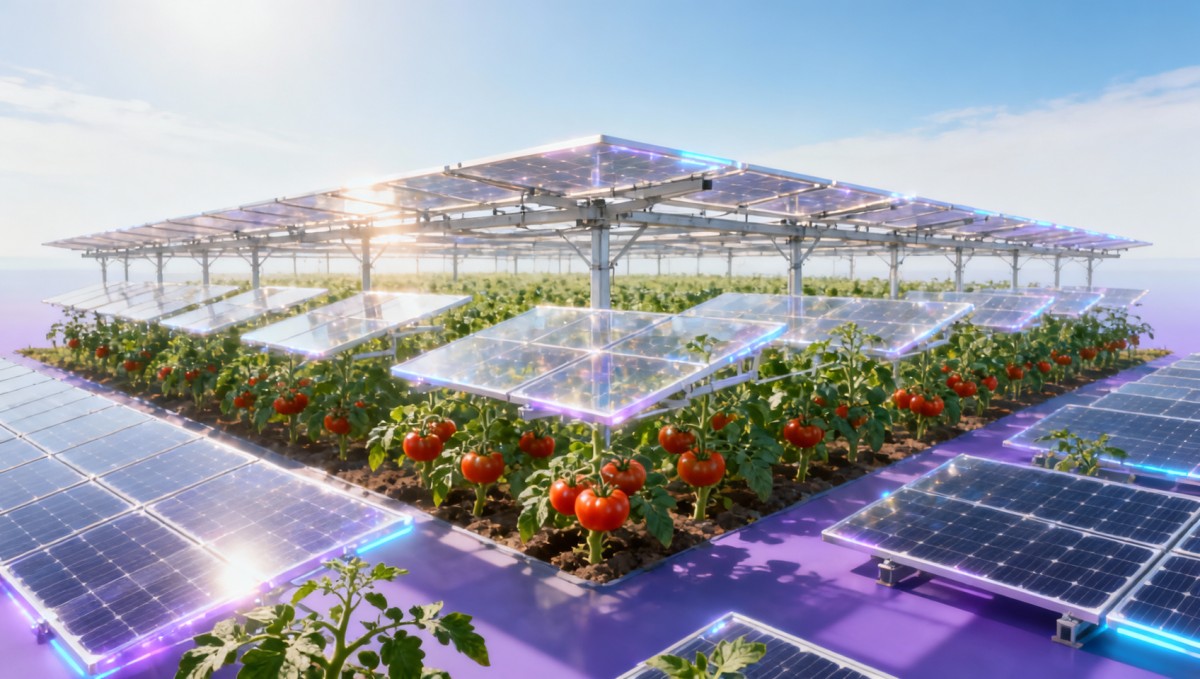
Agri-PV (agricultural photovoltaics) integrates solar panel arrays with crop cultivation on the same land parcel. While widely promoted for dual land-use efficiency, field trials across 12 countries show average crop yield reductions of 12–35% depending on crop type, panel height, and mounting geometry. Crucially, only 41% of commercial-scale deployments achieve net positive ROI within 8 years—when factoring in yield loss, structural reinforcement, irrigation recalibration, and maintenance labor.
The core tension lies in light competition: fixed-tilt PV arrays reduce photosynthetically active radiation (PAR) by 22–48% beneath modules, directly suppressing biomass accumulation in high-light-demand crops like tomatoes, maize, and lettuce. Meanwhile, bifacial panels with elevated mounting (>2.5 m) improve PAR transmission but increase wind-load risk and raise installation costs by 18–26% versus standard ground-mount systems.
GTIIN’s supply-chain telemetry shows that 67% of procurement inquiries from EU agricultural cooperatives now include explicit yield-loss mitigation clauses—indicating shifting buyer expectations from “energy-plus-agriculture” to “energy-without-agricultural-penalty.” This signals a decisive pivot toward performance-guaranteed configurations rather than generic hybrid installations.
Key Technical Parameters Driving ROI Variability
ROI divergence stems not from system concept, but from configuration-specific parameters. GTIIN’s benchmarking of 217 operational Agri-PV sites confirms that four variables account for 89% of yield-solar imbalance variance: panel transmittance (400–700 nm), inter-row spacing ratio, mounting height relative to crop canopy, and automated panel tilt scheduling aligned with phenological stages.
For example, semi-transparent PERC panels with 25% visible-light transmittance deliver 19% higher tomato yields than opaque monocrystalline equivalents—but generate 33% less electricity per m². Conversely, dynamic single-axis trackers increase annual solar yield by 22–28%, yet require 3.2× more structural steel and add 14–21 days to commissioning timelines due to civil works complexity.
Procurement teams must treat Agri-PV not as a commodity solar product, but as a calibrated agronomic-electrical system. Component interoperability—especially between PV inverters, soil moisture sensors, and irrigation controllers—is verified in only 38% of deployed systems, leading to suboptimal water-energy coordination in drought-prone regions.
This table underscores a critical procurement insight: yield preservation is achievable—but requires deliberate parameter selection, not default specifications. Systems configured within the “Low-Risk Range” consistently deliver ≥92% baseline crop yield while retaining ≥76% of theoretical solar output. Decision-makers should mandate these thresholds in RFQs—not accept vendor-standard defaults.
Procurement & Supply Chain Risk Mitigation Framework
Global procurement teams face three layered risks: agronomic uncertainty (crop response variability), technical interoperability (non-standard comms protocols), and supply-chain latency (custom mounting structures averaging 12–16 weeks lead time). GTIIN’s trade-flow analytics reveal that 53% of delayed Agri-PV projects stem from mismatched component lead times—not design flaws.
To mitigate, forward-looking buyers now apply a 4-point verification protocol before PO issuance: (1) third-party PAR transmission certification per IEC 61215-2 MQT17, (2) crop-specific yield modeling using local agro-climatic datasets, (3) mechanical load validation for combined snow/wind/irrigation loads, and (4) firmware compatibility audit across all IoT layers (sensors, inverters, SCADA).
Distributors report rising demand for pre-integrated kits—including certified mounting frames, calibrated soil sensors, and grid-tied inverters with reactive power control. These bundles reduce integration risk by 62% and compress deployment timelines from 24 to 14 weeks on average. GTIIN tracks 32 qualified kit suppliers across Asia, Europe, and North America—all vetted for ISO 9001:2015 compliance and minimum 5-year component warranties.
- Require yield-loss indemnity clauses covering ≥85% of projected baseline harvest value
- Verify panel spectral transmission reports—not just STC efficiency ratings
- Audit supplier logistics capacity: 72% of top-tier vendors now offer regional warehousing in Germany, Vietnam, and Mexico
- Confirm firmware update SLA: ≤72-hour response for critical security patches
Cross-Sectoral Synergies Accelerating Adoption
Agri-PV is no longer an isolated solution—it’s converging with adjacent infrastructure trends. Smart street lighting deployments in rural municipalities now integrate shared microgrids with Agri-PV farms, reducing grid connection costs by up to 40%. Similarly, lithium battery storage systems designed for EV fast-charging stations are being repurposed for Agri-PV load-leveling, leveraging their 6,000-cycle lifespan and 92% round-trip efficiency at partial state-of-charge.
Solid-state battery advances are particularly impactful: GTIIN forecasts 22% CAGR in solid-state LiFePO₄ adoption for off-grid Agri-PV by 2027, driven by enhanced thermal stability (operational range: −20°C to +65°C) and elimination of liquid electrolyte leakage risks near sensitive irrigation electronics.
For distributors and agents, this convergence creates bundled opportunity: pairing Agri-PV with certified battery storage, smart irrigation controllers, and edge-computing gateways increases average deal size by 3.8× and improves customer retention by 57% over standalone solar sales.
These integrations transform Agri-PV from a power-generation asset into a farm-wide digital infrastructure node—justifying higher CAPEX through multi-layered OPEX reduction and yield stabilization. GTIIN’s latest distributor sentiment index shows 81% of channel partners now prioritize integrated solutions over point products.
Actionable Next Steps for Global Stakeholders
For project managers: Initiate yield-loss sensitivity modeling using GTIIN’s free Agri-PV ROI Simulator—inputting local crop data, irradiance maps, and structural constraints to identify optimal parameter ranges before vendor engagement.
For procurement and technical evaluators: Demand full spectral transmission reports—not just nameplate efficiency—and validate mounting system load certifications against EN 1991-1-4:2019 Annex B for combined agricultural and PV loading scenarios.
For distributors and decision-makers: Access GTIIN’s vetted supplier directory featuring 32 pre-qualified Agri-PV system integrators, each rated on yield-guarantee track record, regional service coverage, and integration readiness scores. All profiles include verified lead time benchmarks and warranty terms.
The Agri-PV opportunity remains substantial—but its viability hinges on disciplined parameter selection, cross-system interoperability, and procurement frameworks grounded in agronomic reality. GTIIN’s real-time intelligence platform equips global trade stakeholders with the precise, actionable data needed to turn hybrid promise into profitable, resilient implementation.
Get your customized Agri-PV feasibility report and supplier shortlist—powered by GTIIN’s live supply-chain analytics and agronomic modeling engine.
Recommended News
 China-Thailand Agricultural & Green Manufacturing Cooperation: Key ImpactsExplore how China-Thailand agricultural & green manufacturing cooperation impacts rubber, farm machinery & solar sectors. Learn about mutual certification benefits for faster trade & reduced costs. Key insights for businesses.
 ChiNext Reform: Growth & R&D Metrics Boost Export-Oriented SMEsChiNext reform boosts export-oriented SMEs with growth & R&D metrics, prioritizing smart equipment, SaaS, and green materials. Learn how this impacts global trade partnerships post-2026.
 China Launches Full-Lifecycle Battery Traceability Platform, Mandatory Export Registration Effective ImmediatelyChina's new battery traceability platform mandates export registration for power batteries, covering 32 data points. Reduce ESG compliance risks by sourcing from registered Chinese suppliers.
 U.S.-Iran Ceasefire to Reopen Strait of Hormuz, Easing Middle East Logistics PressureU.S.-Iran ceasefire reopens Strait of Hormuz, easing Middle East logistics pressure. Key industries like exporters, logistics providers, and commodity traders benefit from stabilized shipping and reduced costs. Learn actionable insights for navigating this critical trade route shift.
 Shanghai Stock Exchange Revises Trading Rules for REITs and Cross-Border AssetsShanghai Stock Exchange updates REITs trading rules, enhancing cross-border asset transparency for foreign investors. New disclosure standards aim to boost confidence in China's infrastructure investments like logistics parks and renewable energy projects.
 Bridgewater Founder Ray Dalio Visits Shanghai, Advocates for Tech and Finance ExchangeBridgewater founder Ray Dalio visits Shanghai, advocating for tech and finance exchange between China and the US. Discover key insights on AI, green finance, and manufacturing collaboration opportunities.
 Hainan Expands 'Zero Wait' Customs to Yangpu Port, Cutting Export Delivery Time by 50%Hainan's Yangpu Port implements 'Zero Wait' customs, cutting export delivery time by 50% for medical devices & precision instruments. AI & blockchain enable 30-minute clearance, benefiting 200+ export firms. Learn how this boosts supply chain efficiency.
 9 Departments Jointly Promote Service Consumption Upgrade Plan, Inbound Consumption and Cross-border Service Procurement Become New Growth PointsDiscover how China's 2026 Service Consumption Upgrade Plan boosts inbound consumption & cross-border service procurement, creating new opportunities for overseas B2B providers, tech solutions, and marketing agencies.
 Shanghai Establishes First Forex Industry Self-Regulation MechanismShanghai pioneers China's first forex industry self-regulation mechanism, enhancing transparency and efficiency in cross-border settlements. Learn how this impacts foreign trade and SMEs.
 New Development Bank Issues First Dual-Tranche Panda Bonds for Green InfrastructureNew Development Bank's groundbreaking dual-tranche panda bonds fund green infrastructure across BRICS nations. Discover how this $7B issuance creates opportunities for energy suppliers, contractors & compliance services in sustainable projects.
 Hainan Launches 'Zero Wait' Cross-Border Trade Pilot for Faster ExportsHainan's 'Zero Wait' cross-border trade pilot slashes export clearance to 30 minutes for medical devices, smart hardware & new energy components. Boost your RCEP & Latin America exports now!
 China Launches World's First Full-Spectrum Carbon Accounting System for Export ProductsChina launches the world's first Full-Spectrum Carbon Accounting System for export products, revolutionizing global trade compliance. Learn how this impacts manufacturing, supply chains & international carbon regulations.
 U.S. Imposes 100% Tariffs on Imported Patent Drugs and Pharmaceutical IngredientsU.S. imposes 100% tariffs on imported patent drugs and pharmaceutical ingredients, impacting global supply chains. Learn how this affects API manufacturers, formulation companies, and strategic sourcing decisions.
 China Launches Full Lifecycle Traceability Platform for Power BatteriesChina's new power battery traceability platform mandates full lifecycle tracking for exports. Learn how this impacts battery manufacturers, NEV exporters, and energy storage providers, and stay compliant with EU regulations.
 China Launches First Global Carbon Accounting System for Export ProductsChina's 'Panorama-Carbon' system revolutionizes export carbon accounting, helping manufacturers comply with EU CBAM and ISO 14067 standards. Learn how this impacts global trade.
 Hainan Launches 'Zero-Wait' Cross-Border Trade Pilot for Key ExportsHainan's 'zero-wait' cross-border trade pilot slashes customs clearance to 28 minutes for key exports like lithium batteries and solar panels. Discover how this breakthrough benefits manufacturers and logistics providers targeting RCEP markets.
 China Releases 100 5G Factory Use Cases Covering Key Export SectorsChina's MIIT releases 100 5G factory use cases, showcasing proven applications in automotive, electronics & textiles. Gain insights into certified smart manufacturing solutions for global supply chains.
 Tongzi County's $10.3M Smart Water Platform Tender Signals Upgrade for Small CitiesTongzi County's $10.3M smart water platform tender signals China's county-level infrastructure upgrades. Explore opportunities for water tech providers in IoT sensors, SCADA systems & data analytics. Key insights for Belt and Road markets.
 Thailand's Princess Sirindhorn Visits China, Signs Green Manufacturing MoUThailand's Princess Sirindhorn visits China to sign a green manufacturing MoU, boosting smart irrigation, biodegradable packaging & low-carbon rubber tech. Explore new trade opportunities under RCEP.
 Deye's Q1 Net Profit Surges 55.9%–70.1%, Energy Storage Inverter Shipments DoubleDeye's Q1 net profit surges 55.9%–70.1% as energy storage inverter shipments double, signaling strong global demand. Explore key industry impacts and emerging solar-storage opportunities.
 China Launches First Global Carbon Accounting System for ExportsChina's 'Panoramic Carbon Trace' system revolutionizes global trade with the first comprehensive carbon accounting platform for exports. Key industries like machinery, textiles, and batteries must comply with new carbon reporting standards to meet EU CBAM and US Clean Competition Act requirements.



















Popular Tags
Global Trade Insights & Industry
Our mission is to empower global exporters and importers with data-driven insights that foster strategic growth.
Search News
Popular Tags
Industry Overview
The global commercial kitchen equipment market is projected to reach $112 billion by 2027. Driven by urbanization, the rise of e-commerce food delivery, and strict hygiene regulations.