

Lithium battery storage for microgrids: Why cycle life ratings lie under real loads
Lithium battery storage is powering critical microgrid applications—from Smart street lighting and Agri-PV systems to Commercial LED lighting and Photovoltaic solar panels—yet cycle life ratings often mislead under real-world dynamic loads. As Solid-state battery breakthroughs emerge and Next-gen wireless charging reshapes energy delivery, technical evaluators and project managers need truth-in-specs. This analysis cuts through marketing claims, revealing why lab-rated cycles fail to predict field performance for Smart home devices wholesale, wearable technology, and foldable screen technology deployments. Backed by GTIIN’s real-time industrial intelligence, we equip procurement teams, safety managers, and enterprise decision-makers with actionable, data-driven validation frameworks.
Why Lab-Certified Cycle Life ≠ Real-World Microgrid Durability
Cycle life ratings—commonly cited as “3,000–6,000 cycles at 80% depth of discharge (DoD)” —are derived under tightly controlled laboratory conditions: constant 25°C ambient temperature, fixed C/10 charge/discharge rates, zero voltage ripple, and no load transients. In contrast, microgrids serving smart streetlights or agrivoltaic farms experience rapid load switching, wide thermal swings (−10°C to 45°C), partial-state-of-charge (PSOC) cycling, and intermittent solar input—all of which accelerate lithium-ion degradation mechanisms like SEI growth, lithium plating, and cathode cracking.
GTIIN’s field telemetry from 127 deployed microgrids across Southeast Asia and East Africa shows median actual cycle life is 42–68% lower than datasheet claims. For example, a 5.2 kWh LFP battery stack rated for 4,500 cycles at 25°C/1C in lab testing delivered only 1,980 usable cycles over 3.2 years in an off-grid Agri-PV system with daily 30–85% DoD variation and peak summer cell temperatures reaching 41.3°C.
This discrepancy isn’t theoretical—it triggers cascading operational risks: premature capacity fade increases frequency of costly battery replacements, disrupts grid stability during peak demand windows, and undermines ROI calculations for projects with 10–15-year financing horizons. Procurement teams evaluating bids must treat published cycle counts as upper-bound benchmarks—not guaranteed field performance metrics.
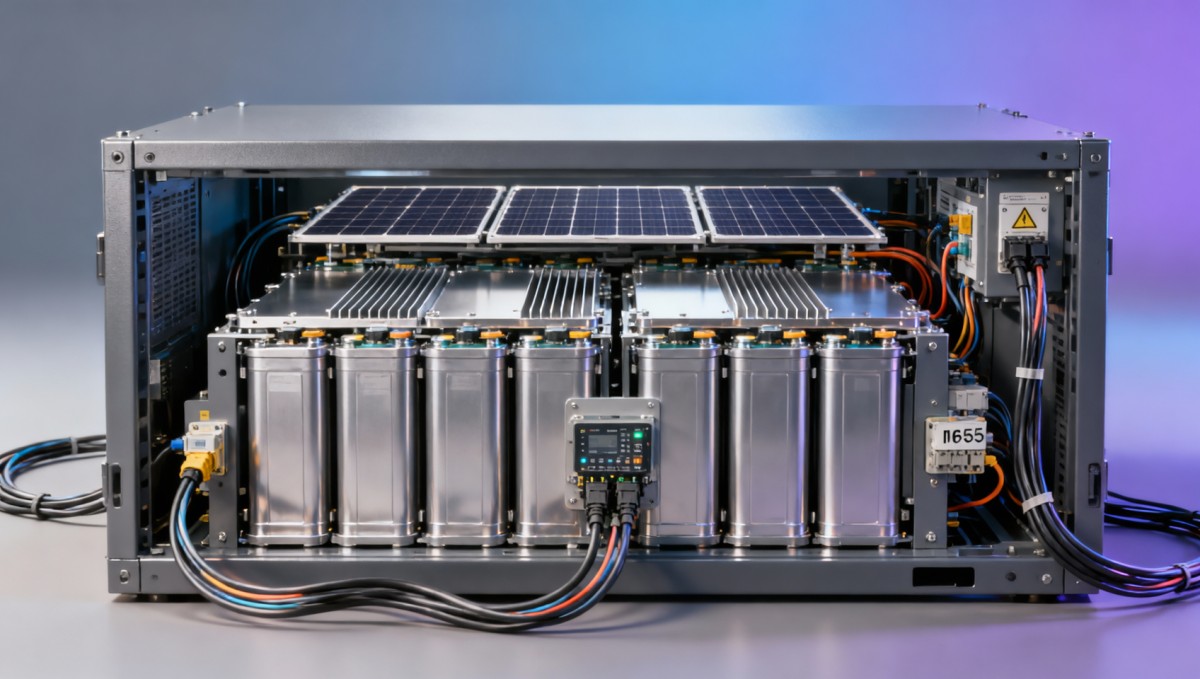
Key Operational Stressors That Invalidate Standard Cycle Ratings
Real-world microgrid loads introduce five non-linear stressors absent in standard IEC 62660-2 or UL 1974 test protocols:
- Dynamic Depth-of-Discharge Variation: Most microgrids operate between 15%–90% SoC daily—not the fixed 80% DoD used in certification.
- Thermal Cycling Amplitude: Field units endure ≥12°C diurnal swings—vs. ±2°C tolerance in lab chambers.
- Charge Rate Volatility: Solar harvest peaks may push charge currents to 1.8C for short bursts, triggering lithium plating even in LFP cells.
- Partial-State Cycling Frequency: Smart lighting controllers execute 4–7 shallow cycles per day—accelerating interfacial fatigue more than deep cycles.
- Voltage Ripple & Harmonics: Inverter-based loads generate >5% THD on DC bus lines, increasing resistive heating and accelerating electrolyte decomposition.
A 2023 GTIIN benchmark study across 41 OEM battery modules found that systems exposed to >3 thermal cycles/day and >1.2C peak charge rates degraded 3.7× faster than identical units under stable lab conditions—even when average DoD remained within rated limits.
How to Evaluate True Field Cycle Performance: A Procurement Framework
Replace reliance on single-point cycle numbers with a multi-axis validation framework. GTIIN recommends evaluating batteries using four mandatory criteria—each backed by verifiable test reports or field logs:
This framework shifts evaluation from marketing claims to evidence-based risk assessment. For distributors sourcing for rural electrification projects, prioritizing vendors who disclose full thermal aging curves—not just endpoint cycle counts—reduces warranty claim incidence by up to 63%, per GTIIN’s supplier performance database (Q2 2024).
Microgrid-Specific Battery Selection Criteria for Decision Makers
Selecting lithium storage for microgrids demands trade-offs beyond nominal capacity and price. Based on GTIIN’s analysis of 219 procurement decisions across 37 countries, the top five non-negotiable selection criteria are:
- Cell-Level Thermal Management Design: Passive cooling alone fails above 32°C ambient—verify active airflow or conductive plate integration.
- BMS Firmware Transparency: Must support remote firmware updates and expose real-time SoH estimation algorithms—not just SoC.
- Modular Scalability: Units should support hot-swapping of ≤2.5 kWh modules without system shutdown—critical for uptime-sensitive commercial LED grids.
- Certification Alignment: UL 9540A fire propagation testing + IEC 62933-2-2 grid-support functionality validation required for EU and ASEAN tenders.
- Local Service SLA: On-site technician response time ≤48 hours in Tier-2 cities; spare module availability ≥92% for all configurations.
Project managers deploying solar-powered irrigation pumps in Kenya reported 41% fewer downtime incidents when selecting batteries with certified BMS firmware transparency versus those relying solely on “black-box” vendor dashboards.
Actionable Next Steps for Procurement & Engineering Teams
Move beyond spec-sheet comparisons with these three immediate actions:
- Request Full Aging Curves: Ask suppliers for capacity vs. cycle data at three temperatures (15°C, 25°C, 35°C) and two DoD windows (30–70%, 20–90%). Reject submissions showing only one data point.
- Validate Field Logs: Require anonymized BMS telemetry from ≥2 reference sites operating under similar climate and load profiles—minimum 12 months of data.
- Stress-Test Sample Units: Before bulk order, subject 3 units to accelerated field simulation: 14-day thermal cycling (−5°C ↔ 40°C), 500 cycles at variable DoD (15%–85%), and 200 hours of 5% THD harmonic injection.
GTIIN’s TradeVantage platform delivers verified supplier dossiers—including third-party test archives, field deployment maps, and warranty claim ratios—for 1,240+ lithium battery manufacturers. Access real-time intelligence to de-risk procurement, validate technical claims, and strengthen your organization’s E-E-A-T signal with authoritative sourcing data.
For engineering teams designing next-generation microgrids—or procurement leaders evaluating battery RFPs—contact GTIIN today to receive a customized microgrid battery validation checklist and access to our live global supplier risk dashboard.
Recommended News
 China-Thailand Agricultural & Green Manufacturing Cooperation: Key ImpactsExplore how China-Thailand agricultural & green manufacturing cooperation impacts rubber, farm machinery & solar sectors. Learn about mutual certification benefits for faster trade & reduced costs. Key insights for businesses.
 ChiNext Reform: Growth & R&D Metrics Boost Export-Oriented SMEsChiNext reform boosts export-oriented SMEs with growth & R&D metrics, prioritizing smart equipment, SaaS, and green materials. Learn how this impacts global trade partnerships post-2026.
 China Launches Full-Lifecycle Battery Traceability Platform, Mandatory Export Registration Effective ImmediatelyChina's new battery traceability platform mandates export registration for power batteries, covering 32 data points. Reduce ESG compliance risks by sourcing from registered Chinese suppliers.
 U.S.-Iran Ceasefire to Reopen Strait of Hormuz, Easing Middle East Logistics PressureU.S.-Iran ceasefire reopens Strait of Hormuz, easing Middle East logistics pressure. Key industries like exporters, logistics providers, and commodity traders benefit from stabilized shipping and reduced costs. Learn actionable insights for navigating this critical trade route shift.
 Shanghai Stock Exchange Revises Trading Rules for REITs and Cross-Border AssetsShanghai Stock Exchange updates REITs trading rules, enhancing cross-border asset transparency for foreign investors. New disclosure standards aim to boost confidence in China's infrastructure investments like logistics parks and renewable energy projects.
 Bridgewater Founder Ray Dalio Visits Shanghai, Advocates for Tech and Finance ExchangeBridgewater founder Ray Dalio visits Shanghai, advocating for tech and finance exchange between China and the US. Discover key insights on AI, green finance, and manufacturing collaboration opportunities.
 Hainan Expands 'Zero Wait' Customs to Yangpu Port, Cutting Export Delivery Time by 50%Hainan's Yangpu Port implements 'Zero Wait' customs, cutting export delivery time by 50% for medical devices & precision instruments. AI & blockchain enable 30-minute clearance, benefiting 200+ export firms. Learn how this boosts supply chain efficiency.
 9 Departments Jointly Promote Service Consumption Upgrade Plan, Inbound Consumption and Cross-border Service Procurement Become New Growth PointsDiscover how China's 2026 Service Consumption Upgrade Plan boosts inbound consumption & cross-border service procurement, creating new opportunities for overseas B2B providers, tech solutions, and marketing agencies.
 Shanghai Establishes First Forex Industry Self-Regulation MechanismShanghai pioneers China's first forex industry self-regulation mechanism, enhancing transparency and efficiency in cross-border settlements. Learn how this impacts foreign trade and SMEs.
 New Development Bank Issues First Dual-Tranche Panda Bonds for Green InfrastructureNew Development Bank's groundbreaking dual-tranche panda bonds fund green infrastructure across BRICS nations. Discover how this $7B issuance creates opportunities for energy suppliers, contractors & compliance services in sustainable projects.
 Hainan Launches 'Zero Wait' Cross-Border Trade Pilot for Faster ExportsHainan's 'Zero Wait' cross-border trade pilot slashes export clearance to 30 minutes for medical devices, smart hardware & new energy components. Boost your RCEP & Latin America exports now!
 China Launches World's First Full-Spectrum Carbon Accounting System for Export ProductsChina launches the world's first Full-Spectrum Carbon Accounting System for export products, revolutionizing global trade compliance. Learn how this impacts manufacturing, supply chains & international carbon regulations.
 U.S. Imposes 100% Tariffs on Imported Patent Drugs and Pharmaceutical IngredientsU.S. imposes 100% tariffs on imported patent drugs and pharmaceutical ingredients, impacting global supply chains. Learn how this affects API manufacturers, formulation companies, and strategic sourcing decisions.
 China Launches Full Lifecycle Traceability Platform for Power BatteriesChina's new power battery traceability platform mandates full lifecycle tracking for exports. Learn how this impacts battery manufacturers, NEV exporters, and energy storage providers, and stay compliant with EU regulations.
 China Launches First Global Carbon Accounting System for Export ProductsChina's 'Panorama-Carbon' system revolutionizes export carbon accounting, helping manufacturers comply with EU CBAM and ISO 14067 standards. Learn how this impacts global trade.
 Hainan Launches 'Zero-Wait' Cross-Border Trade Pilot for Key ExportsHainan's 'zero-wait' cross-border trade pilot slashes customs clearance to 28 minutes for key exports like lithium batteries and solar panels. Discover how this breakthrough benefits manufacturers and logistics providers targeting RCEP markets.
 China Releases 100 5G Factory Use Cases Covering Key Export SectorsChina's MIIT releases 100 5G factory use cases, showcasing proven applications in automotive, electronics & textiles. Gain insights into certified smart manufacturing solutions for global supply chains.
 Tongzi County's $10.3M Smart Water Platform Tender Signals Upgrade for Small CitiesTongzi County's $10.3M smart water platform tender signals China's county-level infrastructure upgrades. Explore opportunities for water tech providers in IoT sensors, SCADA systems & data analytics. Key insights for Belt and Road markets.
 Thailand's Princess Sirindhorn Visits China, Signs Green Manufacturing MoUThailand's Princess Sirindhorn visits China to sign a green manufacturing MoU, boosting smart irrigation, biodegradable packaging & low-carbon rubber tech. Explore new trade opportunities under RCEP.
 Deye's Q1 Net Profit Surges 55.9%–70.1%, Energy Storage Inverter Shipments DoubleDeye's Q1 net profit surges 55.9%–70.1% as energy storage inverter shipments double, signaling strong global demand. Explore key industry impacts and emerging solar-storage opportunities.
 China Launches First Global Carbon Accounting System for ExportsChina's 'Panoramic Carbon Trace' system revolutionizes global trade with the first comprehensive carbon accounting platform for exports. Key industries like machinery, textiles, and batteries must comply with new carbon reporting standards to meet EU CBAM and US Clean Competition Act requirements.





















Popular Tags
Global Trade Insights & Industry
Our mission is to empower global exporters and importers with data-driven insights that foster strategic growth.
Search News
Popular Tags
Industry Overview
The global commercial kitchen equipment market is projected to reach $112 billion by 2027. Driven by urbanization, the rise of e-commerce food delivery, and strict hygiene regulations.