

Vinexpo Asia 2026 Hong Kong Wine Fair Shanghai Roadshow
Vinexpo Asia 2026 Hong Kong Wine Fair Shanghai Roadshow was held on April 14, 2026, drawing over 100 importers, F&B procurement professionals, and distributors from East China. The event spotlighted Chinese capabilities in three high-impact areas: sustainable packaging (e.g., biodegradable PET bottle labels, RFID anti-counterfeiting tags), intelligent warehousing (e.g., temperature-controlled AGV sorting systems), and cross-border logistics (e.g., bonded warehouse direct-to-consumer fulfillment). This development signals a strategic shift — from exporting wine-related products to delivering integrated, scenario-based supply chain solutions — with implications for global wine channel partners seeking inventory optimization, traceability compliance, and low-carbon operations.
Event Overview
On April 14, 2026, the Vinexpo Asia 2026 Hong Kong Wine Fair Shanghai Roadshow took place in Shanghai. Over 100 participants attended, including wine importers, restaurant and hotel procurement teams, and regional distributors based in East China. The roadshow featured presentations on China’s customized offerings in food-and-beverage packaging, intelligent cold-chain warehousing, and cross-border logistics solutions tailored for wine distribution.
Impact on Specific Industry Segments
Direct Trade Enterprises (Wine Importers & Brand Distributors)
These firms are directly exposed to evolving compliance and operational expectations in key markets like China. The showcased solutions — especially RFID-enabled traceability and bonded warehouse fulfillment — address real pain points in customs clearance, shelf-life management, and brand protection. Impact manifests in reduced documentation friction, faster time-to-shelf, and enhanced consumer trust via verifiable provenance.
Supply Chain Service Providers (3PLs, Cold-Chain Logistics Operators)
Providers specializing in temperature-sensitive goods face intensified pressure to integrate smart hardware (e.g., AGVs) and digital tracking into existing infrastructure. The emphasis on ‘temperature-controlled AGV sorting’ signals rising client demand for scalable, data-rich handling — not just storage or transport. Operational differentiation now hinges on interoperability with traceability platforms and adaptability to bonded logistics models.
Food & Beverage Packaging Manufacturers
Suppliers of labeling, bottling, and secondary packaging must contend with accelerated adoption of functional materials (e.g., biodegradable PET substrates) and embedded tech (e.g., RFID inlays). The roadshow highlights that specification requirements are shifting from aesthetic or cost-driven criteria toward performance-linked attributes: tamper evidence, recyclability certification, and compatibility with automated scanning systems.
Wine Retail & Hospitality Procurement Teams
Buyers in premium on-trade (restaurants, bars) and off-trade (specialty retailers) channels increasingly evaluate suppliers not only on product portfolio but also on logistical reliability and ESG alignment. Solutions such as bonded warehouse direct dispatch reduce lead times and inventory holding costs; RFID tagging supports internal stock audits and counterfeit mitigation — both becoming tangible decision factors in vendor selection.
What Relevant Enterprises or Practitioners Should Focus On Now
Monitor official rollout timelines for Vinexpo Asia 2026 exhibition modules
The Shanghai roadshow served as a preview — not a final specification. Attendees and non-attendees alike should track Vinexpo’s official announcements regarding confirmed exhibitor categories, technical integration requirements (e.g., RFID data standards), and logistics partner onboarding deadlines ahead of the Hong Kong event.
Assess compatibility of current packaging and warehousing systems with showcased technologies
Importers and 3PLs should conduct internal gap analyses: Do existing label specifications support RFID encoding? Does current cold-storage infrastructure allow for AGV navigation and real-time temperature logging? Early identification of integration dependencies informs procurement planning and budget allocation for FY2026–2027.
Distinguish between pilot-ready solutions and conceptual offerings
Not all highlighted capabilities are commercially deployed at scale. For instance, ‘temperature-controlled AGV sorting’ may be operational in select bonded zones but not yet standardized across mainland China. Stakeholders should verify implementation scope, third-party certifications (e.g., ISO 22000, IFS Logistics), and service-level agreements before committing to new partnerships.
Prepare for increased due diligence on supplier sustainability claims
With biodegradable PET and RFID anti-counterfeiting gaining visibility, buyers will likely request material safety data sheets (MSDS), compostability test reports (e.g., ASTM D6400), and RFID read-rate validation under real-world conditions. Forward-looking procurement teams should begin aligning internal vetting protocols with these emerging verification benchmarks.
Editorial Perspective / Industry Observation
From an industry perspective, this roadshow is best understood not as a market entry announcement, but as a signal of structural recalibration in how Chinese industrial capabilities interface with global wine trade. Analysis来看, the emphasis on ‘scenario-based solutions’ — rather than standalone products — reflects growing maturity in China’s B2B service design capacity. Observation来看, it also reveals shifting buyer priorities: inventory efficiency and regulatory transparency now carry equal weight to traditional metrics like unit cost or brand prestige. Current更值得关注的是 whether these solutions gain traction beyond demonstration pilots — particularly in non-mainland Asian markets where cold-chain infrastructure and digital adoption remain uneven. It is更适合理解为 a mid-cycle inflection point, not a fully realized paradigm shift.
This initiative underscores a broader transition: Chinese industrial exporters are progressively bundling physical components (labels, sensors, AGVs) with process knowledge (compliance workflows, low-carbon logistics sequencing) to meet complex, jurisdiction-specific demands. For international stakeholders, the implication is clear — engagement must move beyond transactional sourcing to collaborative solution scoping.
Conclusion
The Vinexpo Asia 2026 Shanghai Roadshow marks a notable evolution in how Chinese supply chain capabilities are positioned for international wine trade: less about discrete components, more about contextual, compliant, and measurable outcomes. It does not indicate immediate market-wide adoption, nor does it replace existing distribution models. Rather, it offers a concrete reference point for evaluating where — and how quickly — integrated, tech-enabled, and sustainability-aligned services may reshape operational expectations across the wine value chain. Current更适合理解为 a calibration moment: one that invites pragmatic assessment, not wholesale strategy revision.
Source Attribution
Main source: Official announcement and participant briefing materials from the Vinexpo Asia 2026 Hong Kong Wine Fair Shanghai Roadshow, held on April 14, 2026.
Points requiring ongoing observation: Commercial deployment scale of RFID-tagged wine labels and temperature-controlled AGV systems outside pilot bonded zones; formal adoption of biodegradable PET labeling standards by Chinese customs or food safety authorities.
Recommended News
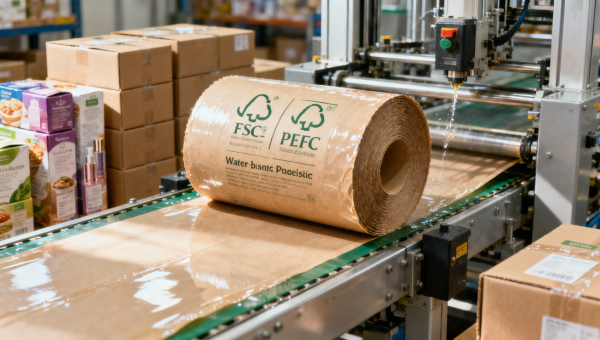
 2026 Jan–Feb Paper Industry Profits +6.1%; Green Packaging Export Premium EmergesGreen packaging export premium drives +6.1% paper industry profits in Jan–Feb 2026 — discover how FSC/PEFC certification and water-based processes boost margins for eco-friendly, food & cosmetics packaging exporters.
 Desay SV Automotive Files for H-Share Listing, Boosts Supply Chain TransparencyDesay SV Automotive's H-share listing filing boosts supply chain transparency — key for car electronics exporters, PCB suppliers & IATF 16949-certified manufacturers.
 NetEase Interactive Entertainment Market Head Moves OverseasNetEase Interactive Entertainment's marketing head moves overseas—key signal for AI, mobile accessories & wearables exporters targeting NA, EU, JP, KR markets.
 Nanchang Qingyunpu Solar+EMC Project Tender Signals Global ShiftNanchang Qingyunpu Solar+EMC tender signals global shift to performance-based energy solutions—key for solar, lighting & smart factory exporters.
 China Launches Battery Lifecycle Traceability PlatformChina’s Battery Lifecycle Traceability Platform is live: mandatory GS1 registration for NEV & C&I battery exports starts April 1, 2026—ensure compliance now!
 US Military Restricts Arabian Sea East of Strait of HormuzUS Military Restricts Arabian Sea east of Strait of Hormuz—impacting solar PV, water treatment & fire safety exports to GCC. Act now to mitigate 12–18 day delays & 25% insurance hikes.
 Horizon Robotics Launches 'Starry Sky' Cockpit-ADAS Fusion ChipHorizon Robotics 'Starry Sky' cockpit-ADAS fusion chip launches April 2026 — cut BOM costs up to $400/vehicle. Key for exporters targeting MENA & ASEAN.
 China's Construction Machinery Exports Up 33.4% YoY in Jan–Feb 2026China's construction machinery exports surged 33.4% YoY in Jan–Feb 2026—driven by localized service in MEA & LatAm. Discover what this means for your global equipment strategy.
 EU CBAM Steel Carbon Tariff Takes Full Effect on Jan 1, 2026EU CBAM steel carbon tariff takes full effect Jan 1, 2026—exporters must submit verified lifecycle emissions data now. Act before delays & rejections hit.
 Japan Boosts Rapidus with ¥631.5B; China Semiconductor Export Opportunities RiseJapan’s ¥631.5B Rapidus boost unlocks China semiconductor export opportunities—especially in high-purity chemicals, precision components & cleanroom equipment. Act now.
 EU REACH Adds 12 SVHCs: Impact on China's Chemical, Plastic & Coating ExportsEU REACH adds 12 SVHCs, impacting China's chemical, plastic & coating exports. Learn key compliance actions & market risks before the Oct 2026 deadline.
 China Launches First Global Battery Lifecycle Traceability PlatformChina launches the first global battery lifecycle traceability platform, revolutionizing EV and energy storage compliance. Learn how this impacts manufacturers, exporters, and recyclers worldwide.
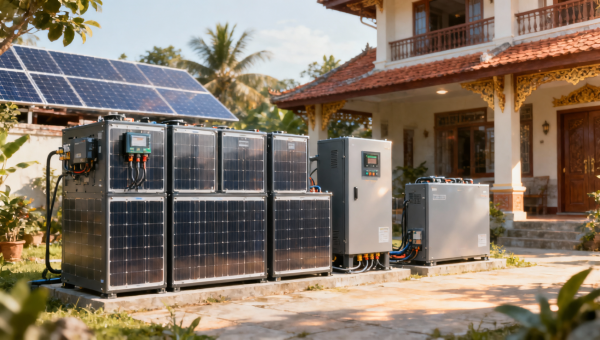
 Vietnam's Home Energy Storage Demand Doubles, Boosting Chinese ExportsVietnam's home energy storage demand doubles, boosting Chinese exports of inverters & LFP batteries. Learn how 217% export growth creates opportunities amid power instability.
 EU REACH Adds 12 SVHCs: China's Chemical, Plastic, and Coating Exports Must Comply Within 6 MonthsEU REACH adds 12 new SVHCs, impacting China's chemical, plastic, and coating exports. Companies must comply with SCIP notifications within 6 months. Learn key actions for affected industries.
 China Releases 100 5G Factory Applications Covering Key Export IndustriesChina's MIIT releases 100 5G factory applications, transforming key export industries like automotive, PCB, and textiles. Discover how these smart manufacturing solutions impact global supply chains and supplier evaluations.
 U.S.-Iran Ceasefire Takes Effect, Strait of Hormuz Shipping Returns to Normal, Middle East Logistics Costs Drop 35%U.S.-Iran ceasefire stabilizes Strait of Hormuz shipping, cutting Middle East logistics costs by 35%. Learn how exporters of industrial goods & solar equipment can benefit from improved trade routes.
 China-Thailand Agricultural & Green Manufacturing Cooperation: Key Impacts on Rubber, Farm Machinery, and Solar SectorsExplore how China-Thailand agricultural & green manufacturing cooperation impacts rubber, farm machinery, and solar sectors. Learn about reduced compliance costs and faster market access for exporters.
 Hainan Launches 'Zero Wait' Customs for Medical Devices & Smart SensorsHainan's 'zero wait' customs for medical devices & smart sensors slashes export cycles by 50% at Yangpu Port. Urgent orders to ASEAN, Middle East & Latin America now clear in 30 minutes. Learn how this boosts time-sensitive exports.
 China Launches Full Lifecycle Battery Traceability Platform, Mandates Export ComplianceChina's new battery traceability platform mandates export compliance for EU, US & South Korea markets. Learn how battery manufacturers, NEV producers, and energy storage providers can adapt to avoid clearance barriers and secure certifications.
 U.S. Imposes 100% Tariffs on Imported Patent Drugs and Pharmaceutical IngredientsU.S. imposes 100% tariffs on imported patent drugs and pharmaceutical ingredients, impacting global API supply chains. Learn how this affects manufacturers, importers, and compliance strategies.
 China-Thailand Agricultural & Green Manufacturing Cooperation: Key ImpactsExplore how China-Thailand agricultural & green manufacturing cooperation impacts rubber, farm machinery & solar sectors. Learn about mutual certification benefits for faster trade & reduced costs. Key insights for businesses.



















Popular Tags
Global Trade Insights & Industry
Our mission is to empower global exporters and importers with data-driven insights that foster strategic growth.
Search News
Popular Tags
Industry Overview
The global commercial kitchen equipment market is projected to reach $112 billion by 2027. Driven by urbanization, the rise of e-commerce food delivery, and strict hygiene regulations.