

Wuxi E-Bike Cluster Seeks Global Market at Canton Fair
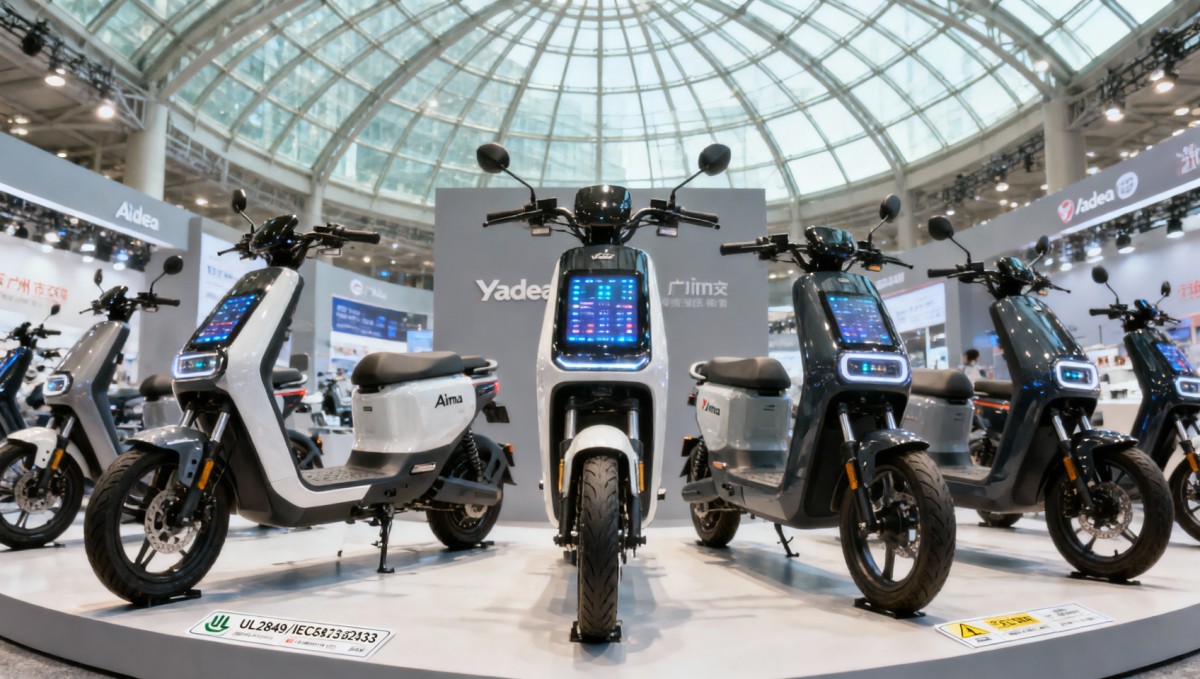
On April 16, 2026, the Wuxi Xishan District e-bike cluster — including leading brands such as Yadea, Tailg and Aima — hosted the global matchmaking event ‘Xipin Goes Global: Smart Mobility Worldwide’ at the Canton Fair. Officials from the Consulate General of Colombia in Guangzhou and the Deputy Consul General of Brazil in Guangzhou expressed procurement interest on-site, highlighting mandatory compliance with UL2849, IEC62133, UN38.3, and local energy efficiency labeling requirements. This development signals a structural shift in China’s e-bicycle export landscape: from price-based competition toward demonstrable technical standard adaptation capability — a dynamic relevant to electric mobility manufacturers, battery suppliers, certification service providers, and cross-border trade operators.
Event Overview
On April 16, 2026, the Xishan District of Wuxi City organized the ‘Xipin Goes Global: Smart Mobility Worldwide’ global对接 meeting at the Canton Fair, featuring participation from Yadea, Tailg, and Aima. Representatives from the Consulate General of Colombia in Guangzhou and the Deputy Consul General of Brazil in Guangzhou attended and conveyed official procurement intent. They specified that compliance with UL2849 (electrical system safety), IEC62133 (battery safety), UN38.3 (lithium battery transport safety), and locally mandated energy efficiency labeling is required for market entry.
Industries Affected
Direct Exporters & OEM/ODM Manufacturers
These enterprises face immediate implications in product certification planning and documentation readiness. The explicit mention of four distinct international standards — two U.S.-based (UL2849, UN38.3), one IEC standard (IEC62133), and national-level energy labeling — means that pre-shipment conformity assessment must now be treated as a non-negotiable prerequisite, not a post-sale administrative step.
Battery Component Suppliers
Since IEC62133 and UN38.3 both apply directly to lithium-ion cells and packs, battery vendors supplying to e-bike OEMs must verify whether their current certifications cover the exact cell chemistry, pack configuration, and labeling used in final products destined for Colombia or Brazil. A mismatch may delay shipment even if the e-bike brand holds its own UL2849 certificate.
Certification & Compliance Service Providers
Third-party labs and consultants specializing in UL, IEC, and UN testing are likely to see increased demand for bundled assessments — particularly for combined UL2849 + IEC62133 reports — as buyers seek streamlined verification pathways. However, no new accreditation frameworks or mutual recognition agreements were announced; current reliance remains on individual test reports issued by accredited bodies.
Import Distributors & Local Market Agents
Distributors in Colombia and Brazil must now coordinate closely with Chinese suppliers on label formatting, language requirements, and local registration procedures tied to energy efficiency declarations. The consular statements signal growing scrutiny of labeling compliance at customs clearance — not just post-import audit.
What Enterprises Should Monitor and Act On
Track formal procurement timelines and documentation requirements
The expressions of intent from Colombian and Brazilian officials remain preliminary. Companies should monitor whether these evolve into formal tender announcements, MOUs, or government-backed pilot import programs — which would trigger specific deadlines for sample submission, lab testing, and bilingual labeling approval.
Prioritize certification alignment for high-priority markets
Given that UL2849 and IEC62133 are referenced together, it is more efficient to pursue integrated testing protocols rather than sequential, siloed certifications. Exporters targeting Latin America should verify whether their existing test reports meet the latest editions (e.g., UL2849-2022, IEC62133-2:2017) and include all applicable configurations (e.g., pedal-assist vs. throttle-only).
Distinguish between diplomatic signaling and binding regulatory change
The consular remarks reflect policy direction, not newly enacted law. Neither Colombia nor Brazil has published updated mandatory standards lists referencing UL2849 or revised energy labeling rules for e-bikes as of April 16, 2026. Until official gazettes or INMETRO/ICONTEC updates appear, compliance remains voluntary — but commercially strategic.
Prepare supply chain documentation for dual-language labeling
Energy efficiency labels require accurate translation, correct unit formatting (e.g., Wh/km vs. Wh/mile), and adherence to local font size and placement rules. Manufacturers should initiate bilingual label design and verification early — especially where third-party certification bodies require label samples before issuing certificates.
Editorial Perspective / Industry Observation
From an industry perspective, this event is best understood not as a completed commercial outcome, but as a calibrated policy signal: governments in emerging e-mobility markets are shifting from passive import acceptance to active technical gatekeeping. Analysis来看, the joint emphasis on battery safety (UN38.3, IEC62133) and system-level electrical safety (UL2849) suggests regulators are moving beyond component-level checks toward holistic risk assessment — mirroring trends seen earlier in the EU’s EN15194 framework. Current more appropriate interpretation is that this reflects growing institutional capacity and regulatory ambition, rather than an immediate enforcement threshold. Sustained attention is warranted because consistency across diplomatic messaging and domestic rulemaking — once established — tends to accelerate downstream adoption by other LATAM countries.
In summary, the Canton Fair engagement marks a visible inflection point: technical compliance is no longer a background operational task for exporters, but a front-line market access condition shaped by bilateral diplomatic channels. It underscores that success in next-generation e-mobility export markets will depend less on cost optimization and more on traceable, auditable, and jurisdictionally tailored conformity evidence — beginning at the component level and extending through final labeling.
Source: Official announcements from Xishan District Government (Wuxi), Canton Fair Secretariat, Consulate General of Colombia in Guangzhou, and Consulate General of Brazil in Guangzhou — all dated April 16, 2026. Note: Formal procurement documents, updated national standards, or implementation guidelines from Colombia or Brazil have not yet been published and remain under observation.
Recommended News
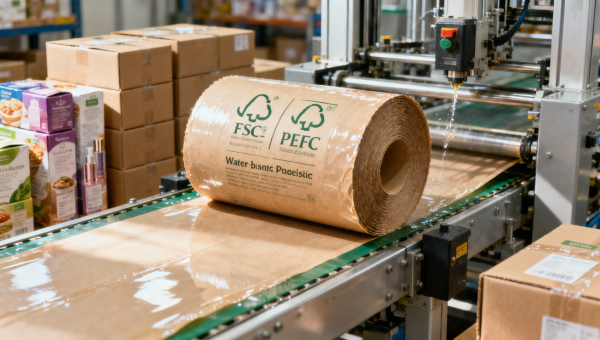
 2026 Jan–Feb Paper Industry Profits +6.1%; Green Packaging Export Premium EmergesGreen packaging export premium drives +6.1% paper industry profits in Jan–Feb 2026 — discover how FSC/PEFC certification and water-based processes boost margins for eco-friendly, food & cosmetics packaging exporters.
 Desay SV Automotive Files for H-Share Listing, Boosts Supply Chain TransparencyDesay SV Automotive's H-share listing filing boosts supply chain transparency — key for car electronics exporters, PCB suppliers & IATF 16949-certified manufacturers.
 NetEase Interactive Entertainment Market Head Moves OverseasNetEase Interactive Entertainment's marketing head moves overseas—key signal for AI, mobile accessories & wearables exporters targeting NA, EU, JP, KR markets.
 Nanchang Qingyunpu Solar+EMC Project Tender Signals Global ShiftNanchang Qingyunpu Solar+EMC tender signals global shift to performance-based energy solutions—key for solar, lighting & smart factory exporters.
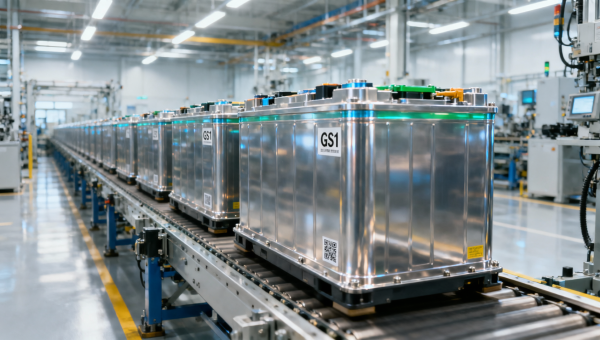
 China Launches Battery Lifecycle Traceability PlatformChina’s Battery Lifecycle Traceability Platform is live: mandatory GS1 registration for NEV & C&I battery exports starts April 1, 2026—ensure compliance now!
 US Military Restricts Arabian Sea East of Strait of HormuzUS Military Restricts Arabian Sea east of Strait of Hormuz—impacting solar PV, water treatment & fire safety exports to GCC. Act now to mitigate 12–18 day delays & 25% insurance hikes.
 Horizon Robotics Launches 'Starry Sky' Cockpit-ADAS Fusion ChipHorizon Robotics 'Starry Sky' cockpit-ADAS fusion chip launches April 2026 — cut BOM costs up to $400/vehicle. Key for exporters targeting MENA & ASEAN.
 China's Construction Machinery Exports Up 33.4% YoY in Jan–Feb 2026China's construction machinery exports surged 33.4% YoY in Jan–Feb 2026—driven by localized service in MEA & LatAm. Discover what this means for your global equipment strategy.
 EU CBAM Steel Carbon Tariff Takes Full Effect on Jan 1, 2026EU CBAM steel carbon tariff takes full effect Jan 1, 2026—exporters must submit verified lifecycle emissions data now. Act before delays & rejections hit.
 Japan Boosts Rapidus with ¥631.5B; China Semiconductor Export Opportunities RiseJapan’s ¥631.5B Rapidus boost unlocks China semiconductor export opportunities—especially in high-purity chemicals, precision components & cleanroom equipment. Act now.
 EU REACH Adds 12 SVHCs: Impact on China's Chemical, Plastic & Coating ExportsEU REACH adds 12 SVHCs, impacting China's chemical, plastic & coating exports. Learn key compliance actions & market risks before the Oct 2026 deadline.
 China Launches First Global Battery Lifecycle Traceability PlatformChina launches the first global battery lifecycle traceability platform, revolutionizing EV and energy storage compliance. Learn how this impacts manufacturers, exporters, and recyclers worldwide.
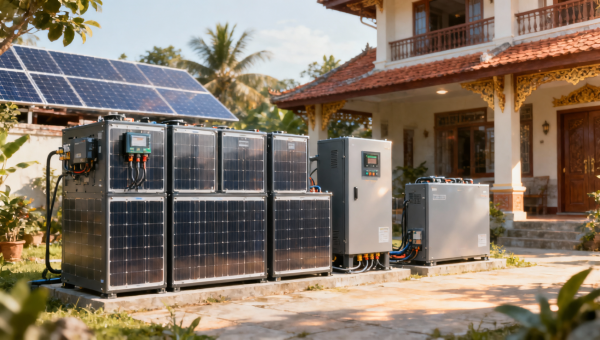
 Vietnam's Home Energy Storage Demand Doubles, Boosting Chinese ExportsVietnam's home energy storage demand doubles, boosting Chinese exports of inverters & LFP batteries. Learn how 217% export growth creates opportunities amid power instability.
 EU REACH Adds 12 SVHCs: China's Chemical, Plastic, and Coating Exports Must Comply Within 6 MonthsEU REACH adds 12 new SVHCs, impacting China's chemical, plastic, and coating exports. Companies must comply with SCIP notifications within 6 months. Learn key actions for affected industries.
 China Releases 100 5G Factory Applications Covering Key Export IndustriesChina's MIIT releases 100 5G factory applications, transforming key export industries like automotive, PCB, and textiles. Discover how these smart manufacturing solutions impact global supply chains and supplier evaluations.
 U.S.-Iran Ceasefire Takes Effect, Strait of Hormuz Shipping Returns to Normal, Middle East Logistics Costs Drop 35%U.S.-Iran ceasefire stabilizes Strait of Hormuz shipping, cutting Middle East logistics costs by 35%. Learn how exporters of industrial goods & solar equipment can benefit from improved trade routes.
 China-Thailand Agricultural & Green Manufacturing Cooperation: Key Impacts on Rubber, Farm Machinery, and Solar SectorsExplore how China-Thailand agricultural & green manufacturing cooperation impacts rubber, farm machinery, and solar sectors. Learn about reduced compliance costs and faster market access for exporters.
 Hainan Launches 'Zero Wait' Customs for Medical Devices & Smart SensorsHainan's 'zero wait' customs for medical devices & smart sensors slashes export cycles by 50% at Yangpu Port. Urgent orders to ASEAN, Middle East & Latin America now clear in 30 minutes. Learn how this boosts time-sensitive exports.
 China Launches Full Lifecycle Battery Traceability Platform, Mandates Export ComplianceChina's new battery traceability platform mandates export compliance for EU, US & South Korea markets. Learn how battery manufacturers, NEV producers, and energy storage providers can adapt to avoid clearance barriers and secure certifications.
 U.S. Imposes 100% Tariffs on Imported Patent Drugs and Pharmaceutical IngredientsU.S. imposes 100% tariffs on imported patent drugs and pharmaceutical ingredients, impacting global API supply chains. Learn how this affects manufacturers, importers, and compliance strategies.
 China-Thailand Agricultural & Green Manufacturing Cooperation: Key ImpactsExplore how China-Thailand agricultural & green manufacturing cooperation impacts rubber, farm machinery & solar sectors. Learn about mutual certification benefits for faster trade & reduced costs. Key insights for businesses.

















Popular Tags
Global Trade Insights & Industry
Our mission is to empower global exporters and importers with data-driven insights that foster strategic growth.
Search News
Popular Tags
Industry Overview
The global commercial kitchen equipment market is projected to reach $112 billion by 2027. Driven by urbanization, the rise of e-commerce food delivery, and strict hygiene regulations.