

Red Bull SA15 Uses Tiantai Energy Solutions: China OEM Compliance Gains ASEAN Attention
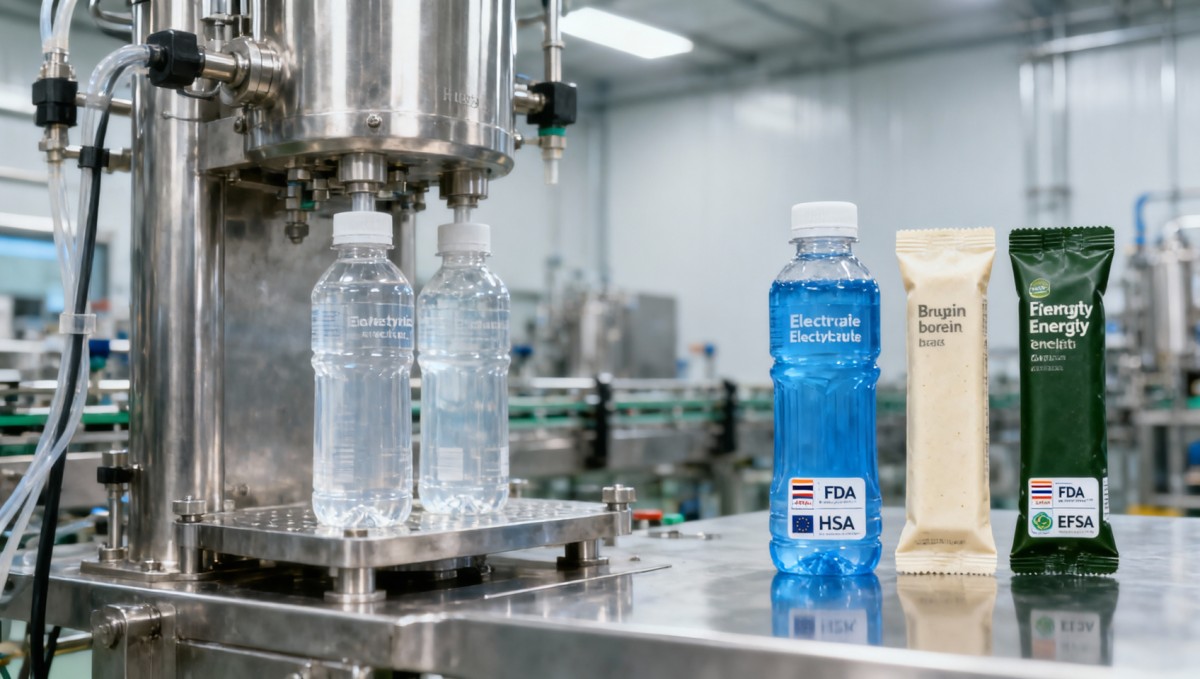
From May 1–4, 2026, the Red Bull 15th Business School Desert Challenge (SA15) deployed a full suite of energy replenishment products—electrolyte drinks, collagen protein bars, and plant-based energy gels—supplied by a designated Chinese OEM factory under Tiantai Group. All products carried triple regulatory备案 (Thailand FDA, Singapore HSA, EU EFSA), signaling a shift in cross-border nutraceutical manufacturing capability. This development is especially relevant for functional food & beverage exporters, contract manufacturers, and Southeast Asian importers navigating tightening compliance requirements.
Event Overview
The Red Bull 15th Business School Desert Challenge (SA15) took place from May 1 to 4, 2026. Tiantai Group provided its official energy replenishment portfolio—including electrolyte beverages, collagen protein bars, and plant-based energy gels—produced entirely by a certified Chinese OEM facility. Each product line completed concurrent regulatory filings with Thailand’s FDA, Singapore’s Health Sciences Authority (HSA), and the European Food Safety Authority (EFSA). No further operational or commercial details beyond this scope have been publicly confirmed.
Industries Affected
Direct Trading Enterprises (ASEAN Importers)
ASEAN-based importers of sports nutrition and functional foods are reassessing sourcing strategies due to rising production costs in Japan and South Korea. The SA15 case demonstrates that Chinese OEMs can now meet multi-jurisdictional registration and labeling standards—reducing reliance on higher-cost regional alternatives. Impact manifests in procurement timelines, compliance risk allocation, and margin pressure on legacy supply arrangements.
Contract Manufacturing Firms (China-based Nutraceutical OEMs)
Chinese manufacturers serving international brands face heightened demand for documentation readiness—not just GMP certification, but active regulatory dossier maintenance across key export markets. The SA15 collaboration highlights that clients now require proof of parallel submissions (e.g., simultaneous EFSA safety assessments and HSA label approvals), not just domestic compliance. This elevates technical resourcing needs and extends time-to-market planning cycles.
Supply Chain Service Providers (Regulatory Consultants, Labeling Agencies)
Firms offering regulatory intelligence, bilingual label verification, and stability testing support are seeing increased inquiry volume from both ASEAN buyers and Chinese OEMs. Demand is shifting from reactive compliance checks toward proactive dossier harmonization—e.g., aligning ingredient nomenclature across Thai, Singaporean, and EU frameworks before batch production begins.
What Relevant Companies or Practitioners Should Focus On
Monitor Official Regulatory Updates in Target Markets
Track upcoming revisions to Singapore HSA’s Nutrient Claims Guidelines (expected Q3 2026) and Thailand FDA’s revised notification pathway for functional foods (draft circulated April 2026). These changes may affect label wording, dosage claims, and post-market surveillance obligations—directly impacting how OEMs structure product specifications.
Prioritize Multi-Market Dossier Readiness for Core SKUs
Rather than pursuing market-by-market approvals sequentially, focus on building modular dossiers where common elements (stability data, toxicological summaries, allergen statements) are pre-validated for reuse across Thailand, Singapore, and EU submissions. SA15’s triple备案 outcome reflects such preparation—not ad hoc filing.
Distinguish Between Regulatory Signal and Commercial Adoption
While SA15 validates technical feasibility, it does not yet indicate broad-scale commercial substitution. Observably, most ASEAN importers remain in pilot-phase engagements with Chinese OEMs; full transition requires consistent batch-level traceability and audit readiness—not just initial备案. Treat early collaborations as capability validation, not market inflection.
Prepare Documentation Handover Protocols with Clients
Establish clear SOPs for transferring regulatory files (e.g., EFSA scientific opinions, HSA product notifications) to brand owners. SA15’s model required OEMs to retain ownership of technical data while granting license to use in client-facing submissions—a structure increasingly requested in new contracts.
Editorial Perspective / Industry Observation
This event is best understood not as a sudden market pivot, but as a visible milestone in an ongoing capability convergence. Analysis shows that Chinese nutraceutical OEMs have incrementally closed gaps in formulation registration rigor, cross-border labeling alignment, and stability protocol standardization—particularly for categories like electrolyte matrices and botanical energy gels. It signals growing confidence among international brand owners in China’s ability to serve as a *compliance-coordinated* manufacturing base—not merely a cost-advantaged one. However, the SA15 deployment remains a high-profile, single-event validation. Widespread adoption will depend on repeatable performance across diverse clients, geographies, and regulatory cycles—not just one successful campaign.
Current relevance lies in its function as a reference point: ASEAN importers now have a documented precedent to cite when evaluating Chinese partners; regulators may use similar cases to benchmark dossier expectations; and OEMs gain a concrete benchmark for internal capability audits. Continued observation is warranted—not for whether this model works, but how rapidly it scales beyond elite academic/brand-led events into mainstream commercial supply chains.
Conclusion
SA15’s use of Tiantai Group’s China-sourced, multi-jurisdictionally compliant energy products marks a measurable step in the maturation of China’s nutraceutical OEM sector—not as a low-cost alternative, but as a technically coordinated manufacturing partner for regulated markets. For industry stakeholders, this is better understood as an early-stage capability signal requiring deliberate verification, not a wholesale shift already underway. Prudent action involves targeted dossier preparation, selective pilot engagement, and calibrated expectation-setting—not strategic overcommitment.
Information Sources
Main source: Public announcement by Tiantai Group regarding SA15 partnership (released May 5, 2026); confirmed product scope and regulatory jurisdictions via official SA15 post-event summary (May 6, 2026).
Note: Ongoing monitoring is recommended for ASEAN importer procurement patterns and Chinese OEM public disclosures of additional multi-market备案 achievements beyond this event.
Recommended News
 China's Smart Electric Wheelchair Exports Face EU MDR Compliance Shift from Q3 2026China's smart electric wheelchair exports must meet EU MDR + CE dual certification by Q3 2026 — only 12 manufacturers comply. Act now to secure market access.
 Apple Opens AI Service Hub to Third Parties: New Export Path for Chinese AIoT HardwareApple's AI Service Hub opens new export opportunities for Chinese AIoT hardware—enabling iFLYTEK, SenseTime & others to power HomeKit, CarPlay & HealthKit with on-device AI.
 GPT-5.5 Instant Rollout Impacts AI SaaS Exporters’ SLAsGPT-5.5 Instant rollout reshapes AI SaaS exporters’ SLAs—learn how P95 latency, multimodal context, and contract compliance impact your global clients now.
 Red Bull SA15 Uses Tiantai Energy Solutions: China OEM Compliance Gains ASEAN AttentionRed Bull SA15 adopts Tiantai’s China OEM energy solutions—triple-registered (TH FDA, SG HSA, EU EFSA). A benchmark for ASEAN importers & nutraceutical manufacturers seeking compliant, scalable sourcing.
 China’s New GB 4343.1-2026 Mobile Power Bank Standard Takes Effect Nov 2026GB 4343.1-2026 mobile power bank standard takes effect Nov 2026—learn key compliance steps, dual-protocol requirements & global certification strategy.
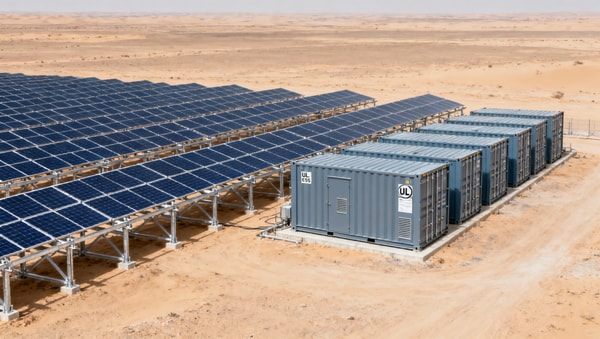
 Morocco Ranks 4th in EU Africa Energy Aid; China PV Mounting & ESS Export Path WidensMorocco ranks 4th in EU Africa energy aid—unlocking new PV mounting & ESS export opportunities for certified Chinese suppliers. Act now to leverage the white-list advantage.
 China Holds 68% of Global Autonomous Sanitation Vehicle PatentsChina holds 68% of global autonomous sanitation vehicle patents—key for smart infrastructure exporters, AI developers & edge hardware suppliers targeting GCC tenders.
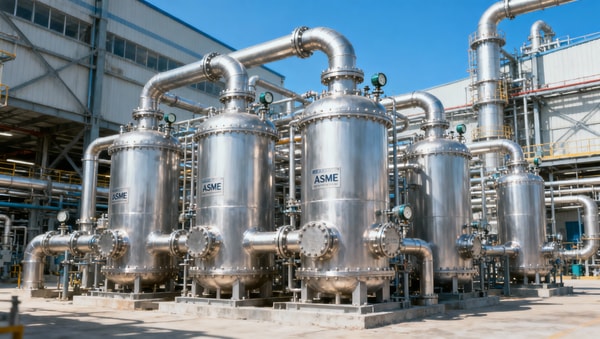
") China’s Petrochemical Plant Upgrade Policy (2026–2029)China’s Petrochemical Plant Upgrade Policy (2026–2029) mandates safety assessments & intelligent upgrades for aging equipment—key for exporters, EPC firms, and certified equipment suppliers.
China’s Petrochemical Plant Upgrade Policy (2026–2029)China’s Petrochemical Plant Upgrade Policy (2026–2029) mandates safety assessments & intelligent upgrades for aging equipment—key for exporters, EPC firms, and certified equipment suppliers. U.S. Natural Gas Inventory Rise Below Expectations: Export Cost Pressure on PVC, ABS, CoatingsU.S. natural gas inventory rise fell short—impacting PVC, ABS & coatings exporters. Discover cost risks, mitigation steps & pricing insights now.
 EN 62368-1:2026 Enforced in EU: Thermal Runaway Protection Required for Wearables & Smart Home DevicesEN 62368-1:2026 mandates thermal runaway protection for wearables & smart home devices in the EU—act now to ensure CE compliance and avoid market access delays.
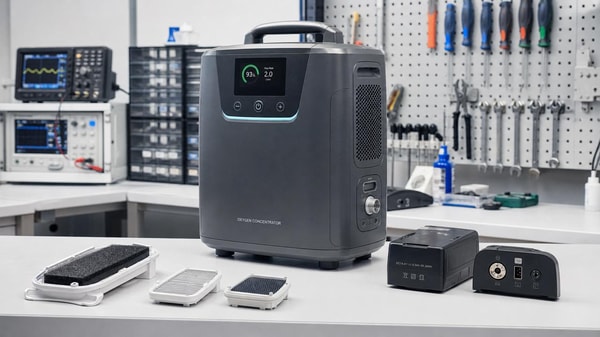
 Portable oxygen concentrators are quieter now, but are they easier to maintain?Portable oxygen concentrators are quieter, but are they easier to maintain? Explore service challenges, scenario-based insights, and smart ways to reduce downtime.
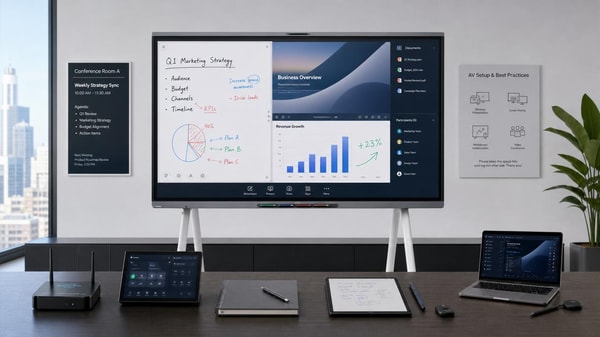
 Interactive whiteboards are underused when training stops after installationInteractive whiteboards often underperform when training ends at installation. Learn how continuous, role-based support boosts adoption, productivity, and ROI.
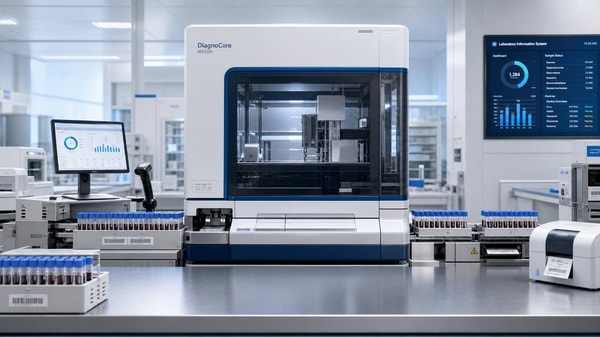
 Medical diagnostic equipment buying mistakes often start with workflow mismatchMedical diagnostic equipment buying mistakes often stem from workflow mismatch. Learn how to assess fit, avoid hidden costs, and choose scalable systems that support real clinical operations.
![]() Eco-friendly building materials can add compliance work, not just green valueEco-friendly building materials can boost sustainability but also add compliance work. Learn how they affect approvals, costs, timelines, and risk across key project scenarios.
Eco-friendly building materials can add compliance work, not just green valueEco-friendly building materials can boost sustainability but also add compliance work. Learn how they affect approvals, costs, timelines, and risk across key project scenarios. Ergonomic workspace design fails when posture is treated as the whole answerErgonomic workspace design fails when posture is the only focus. Learn how integrated planning improves productivity, retention, and workplace performance.
 Outdoor garden supplies demand changes faster than seasonal forecasts suggestOutdoor garden supplies demand is changing faster than seasonal forecasts. Discover key signals, sourcing strategies, and inventory tactics to stay competitive and capture growth.
 Sustainable home decor sells better when the material story is verifiableSustainable home decor wins more buyers when material claims are verifiable. Discover how traceable sourcing, certifications, and clear proof build trust and drive sales.
 Modern office furniture choices can raise complaints instead of comfortModern office furniture can improve productivity—or trigger costly complaints. Learn how to choose ergonomic, durable, flexible office solutions that support comfort and long-term value.
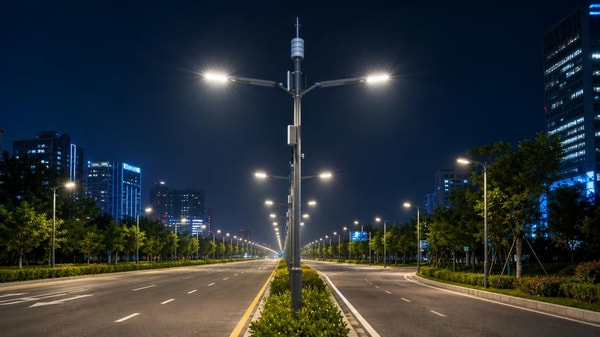
 Smart street lighting saves energy only when controls are tuned properlySmart street lighting saves energy only when controls are tuned to real traffic, safety, and maintenance needs. Learn how proper settings turn connected lighting into measurable ROI.
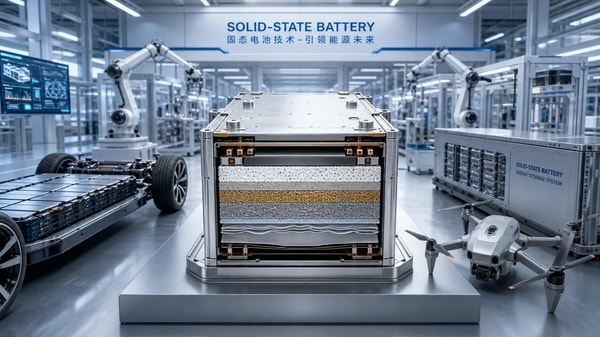
 Solid-state battery breakthroughs are real, but scaling is another storySolid-state battery breakthroughs are real, but scaling remains the real test. Explore where commercialization starts first, what limits adoption, and which markets may gain the earliest edge.
![]() Commercial LED lighting upgrades often disappoint in high-heat spacesCommercial LED lighting often underperforms in high-heat spaces. Learn the hidden causes, warning signs, and smart upgrade choices to improve reliability, safety, and long-term value.
Commercial LED lighting upgrades often disappoint in high-heat spacesCommercial LED lighting often underperforms in high-heat spaces. Learn the hidden causes, warning signs, and smart upgrade choices to improve reliability, safety, and long-term value.









Popular Tags
Global Trade Insights & Industry
Our mission is to empower global exporters and importers with data-driven insights that foster strategic growth.
Search News
Popular Tags
Industry Overview
The global commercial kitchen equipment market is projected to reach $112 billion by 2027. Driven by urbanization, the rise of e-commerce food delivery, and strict hygiene regulations.