

Portable oxygen concentrators are quieter now, but are they easier to maintain?
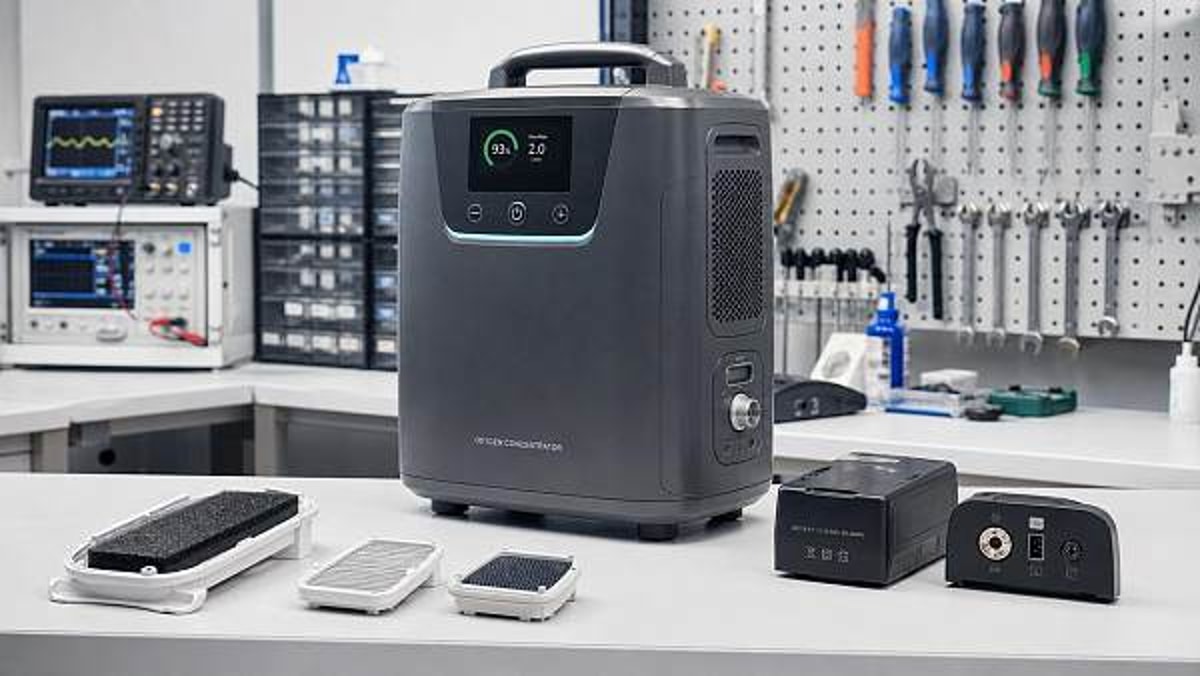
Portable oxygen concentrators are quieter now, but for after-sales maintenance teams, the real question is whether they are easier to service. As designs become more compact and user-friendly, maintenance often involves new challenges in filters, batteries, sensors, and airflow systems. Understanding how Portable oxygen concentrators balance comfort with serviceability is essential for reducing downtime and improving long-term performance.
Why serviceability varies by application scenario
For after-sales teams, Portable oxygen concentrators are not maintained in a vacuum. A unit used by a frequent traveler, a home-care patient, a rental fleet operator, or a clinic backup program will fail in different ways, on different timelines, and under different service expectations. That is why the maintenance question cannot be answered by noise reduction alone. Quieter products often rely on tighter internal packaging, improved fan control, smarter sensors, and lighter battery systems. These upgrades improve user comfort, but they can also make diagnosis, disassembly, cleaning, and part replacement more specialized.
In practical terms, a maintenance-friendly device is one that lets technicians access wear components quickly, identify faults reliably, source replacement parts without delay, and restore oxygen performance with minimal calibration risk. In some scenarios, low noise is a clear advantage because it signals better airflow management and modern engineering. In others, it may indicate a more compact layout that increases labor time during servicing. For businesses managing service quality, the right question is not simply whether newer Portable oxygen concentrators are quieter, but whether their design supports the service environment in which they operate.
Typical scenarios where maintenance demands differ
The same product category can create very different after-sales workloads depending on how and where it is used. The table below helps maintenance teams compare common scenarios before they define spare-parts plans, technician training, or service-level commitments for Portable oxygen concentrators.
Scenario 1: Home-care users need predictable maintenance, not just quiet operation
In home-care settings, quieter Portable oxygen concentrators clearly improve user acceptance, especially for night use, shared living spaces, or long daily treatment sessions. Yet from an after-sales perspective, home use creates a different service profile from travel use. Dust exposure, pet hair, room humidity, and irregular cleaning habits can gradually reduce cooling efficiency and airflow stability. Many service calls in this scenario are not catastrophic failures but performance drift: weak output, shortened battery duration, louder fan behavior over time, or recurring alarms.
For this scenario, easy maintenance means simple filter access, clear user-replaceable parts, visible status indicators, and straightforward battery health checks. If quieter designs are achieved by narrowing vent paths or packing components more tightly, contamination may become harder to detect until it affects performance. After-sales teams should therefore prioritize maintenance schedules, cleaning instructions, and remote support scripts. In the home-care scenario, serviceability depends less on advanced teardown capability and more on how well the device supports routine upkeep before performance drops become serious.
Scenario 2: Travel-heavy use favors modular repairs and battery-focused service
Travel users put Portable oxygen concentrators through a very different cycle. These units face airport handling, car transport, uneven charging access, variable climates, and frequent startup-shutdown patterns. Noise matters because users want discreet operation in public spaces, but maintainability matters even more when downtime interrupts mobility. In this scenario, the most common service issues often involve batteries, charging ports, power adapters, sieve bed stress from repeated movement, and impact-related external damage.
A quiet device is not automatically easier to maintain on the road. If the battery is deeply integrated into the housing, field replacement may take too long. If the charging interface is fragile or proprietary, support teams may struggle to resolve urgent travel failures. The best-fit products for this scenario usually have clear fault codes, replaceable battery modules, durable connectors, and accessory standardization. After-sales teams serving mobility-focused users should evaluate how quickly a technician can isolate whether the problem is power, airflow, sensor feedback, or user misuse. In short, travel scenarios reward Portable oxygen concentrators built around fast part swaps and high fault visibility.
Scenario 3: Rental fleets require standardized turnaround and contamination control
Rental businesses operate under an entirely different logic. A device may be returned by one user and reassigned quickly to another, often with incomplete usage information. For after-sales maintenance personnel, this means Portable oxygen concentrators must be evaluated not only for repairability but also for cleaning efficiency, inspection consistency, and accessory completeness. Quieter operation is valuable for end users, but fleet operators care just as much about turnaround time per unit.
Here, the service-friendly product is the one with simple intake-path cleaning, accessible external filters, low-risk disassembly points, durable casings, and serial-tracked consumables. Hidden contamination points can raise both labor time and compliance risk. Units that require advanced recalibration after basic service may reduce fleet utilization and increase technician bottlenecks. If your business supports rental channels, the maintenance question should be framed around repeatability: can any trained technician inspect, sanitize, test, and release the unit using the same checklist every time? Portable oxygen concentrators that answer “yes” are easier to maintain in this scenario, regardless of how quiet they are.
Scenario 4: Clinical backup programs need readiness more than frequent repair
Some Portable oxygen concentrators are purchased not for continuous daily use but as backup assets in clinics, care facilities, and emergency support programs. These units may remain idle for long periods and then be expected to perform immediately. This creates a maintenance challenge that is often underestimated. Quiet operation has little value if stored batteries degrade unnoticed, startup alarms fail to trigger, or internal components age during inactivity.
For this scenario, easier maintenance means reliable self-test functions, stable storage behavior, documented battery conditioning procedures, and simple verification of oxygen delivery before deployment. Devices that hide battery status or require full operational load testing for basic readiness checks can create avoidable risk. After-sales teams supporting institutional customers should build scheduled activation routines, not just repair workflows. Portable oxygen concentrators used in backup programs are easier to maintain when readiness can be confirmed quickly, consistently, and without full disassembly.
What quieter designs often change inside the service process
Modern Portable oxygen concentrators often reduce noise through improved fan control, acoustic insulation, tighter airflow routing, vibration damping, and more efficient internal packaging. These changes are good for user comfort, but each can affect maintenance workflow. Acoustic padding may make internal access less straightforward. Compact layouts can increase cable density and reduce visibility during troubleshooting. More intelligent control boards may improve alarm precision, but they may also require brand-specific diagnostic tools or firmware-aware replacement procedures.
This does not mean quieter products are inherently harder to maintain. In fact, some are easier because they include better modular design, smarter monitoring, and clearer fault reporting. The key is to judge the total service architecture. After-sales personnel should assess whether the quieter design also includes fast-open covers, independent modules, labeled connectors, software diagnostics, and stable parts availability. The maintenance outcome depends on integration quality, not on sound level alone.
How to judge scenario fit before choosing a service strategy
A practical way to evaluate Portable oxygen concentrators is to match product design against the service realities of each channel. Before setting warranty terms, spare stock levels, or technician coverage, maintenance managers should confirm the following:
- How often will the unit be moved, recharged, and exposed to vibration?
- Which components are expected to wear first in that scenario: filters, batteries, ports, sensors, or casing elements?
- Can frontline staff perform basic checks without opening the device?
- Does the manufacturer provide clear maintenance documentation and parts mapping?
- How long does routine service take from intake inspection to release?
- Are there hidden calibration steps after replacing common components?
These questions matter because the same product may work well in one scenario and create avoidable cost in another. A compact, ultra-quiet unit may be excellent for premium home users but inefficient for high-turnover fleet maintenance. A rugged, slightly louder model may prove easier to sustain in field service networks where speed and parts interchangeability matter more than acoustic refinement.
Common misjudgments after-sales teams should avoid
One common mistake is assuming that lower noise always reflects better all-around engineering. Another is evaluating Portable oxygen concentrators only by user-facing features while ignoring technician access time. Some organizations also underestimate accessory management, even though chargers, cannulas, external batteries, and carry components often drive repeat service interactions. In rental and travel scenarios especially, support calls may be caused by incomplete kits rather than core device failure.
A second misjudgment is failing to separate preventive maintenance from corrective repair. Home-use channels usually benefit most from scheduled cleaning and battery education, while emergency reserve channels depend on readiness checks and storage discipline. Applying the same maintenance workflow to every deployment model wastes labor and weakens service quality. The smarter approach is to build scenario-specific protocols around how Portable oxygen concentrators are actually used in the field.
FAQ for after-sales maintenance teams
Are newer Portable oxygen concentrators easier to maintain than older models?
Sometimes, but not always. Newer models may offer better diagnostics and modular batteries, yet compact construction can make internal service more time-consuming. Ease of maintenance depends on the design of common wear points and the availability of parts and service documentation.
Which scenario creates the highest after-sales workload?
Rental fleets and travel-heavy use usually generate the highest service intensity because they combine frequent handling, uncertain usage history, and fast turnaround expectations. Home care often creates lower urgency but more recurring preventive tasks.
What should technicians inspect first when a quiet unit becomes noisy?
Start with filters, airflow obstruction, fan behavior, external casing fit, and battery or power stability. A noise change in Portable oxygen concentrators often signals contamination, wear, or cooling strain rather than a single isolated defect.
Final takeaway: match the device to the service scenario
Portable oxygen concentrators are unquestionably quieter than many earlier models, but easier maintenance depends on where and how they are deployed. For after-sales teams, the most useful evaluation framework is scenario-based: home care requires simple routine upkeep, travel use demands battery and connector resilience, rental fleets need standardized turnaround, and backup programs depend on readiness verification. When service planners align product choice with real application conditions, they reduce downtime, lower labor cost, and improve user satisfaction over the full lifecycle.
If your organization supports multiple customer channels, review your current Portable oxygen concentrators by scenario rather than by specification sheet alone. Compare service time, failure patterns, replacement part access, and maintenance training needs. That approach leads to better procurement decisions, stronger support operations, and a more reliable experience for every end user.
Recommended News
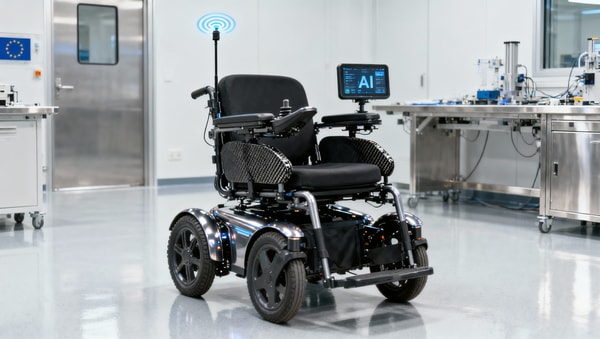
 China's Smart Electric Wheelchair Exports Face EU MDR Compliance Shift from Q3 2026China's smart electric wheelchair exports must meet EU MDR + CE dual certification by Q3 2026 — only 12 manufacturers comply. Act now to secure market access.
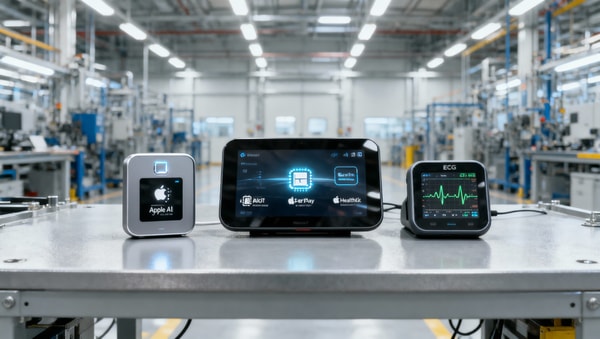
 Apple Opens AI Service Hub to Third Parties: New Export Path for Chinese AIoT HardwareApple's AI Service Hub opens new export opportunities for Chinese AIoT hardware—enabling iFLYTEK, SenseTime & others to power HomeKit, CarPlay & HealthKit with on-device AI.
 GPT-5.5 Instant Rollout Impacts AI SaaS Exporters’ SLAsGPT-5.5 Instant rollout reshapes AI SaaS exporters’ SLAs—learn how P95 latency, multimodal context, and contract compliance impact your global clients now.
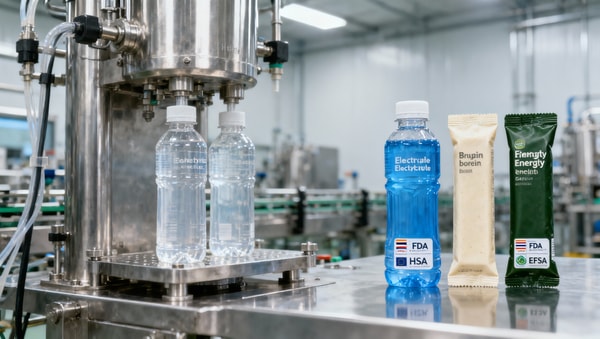
 Red Bull SA15 Uses Tiantai Energy Solutions: China OEM Compliance Gains ASEAN AttentionRed Bull SA15 adopts Tiantai’s China OEM energy solutions—triple-registered (TH FDA, SG HSA, EU EFSA). A benchmark for ASEAN importers & nutraceutical manufacturers seeking compliant, scalable sourcing.
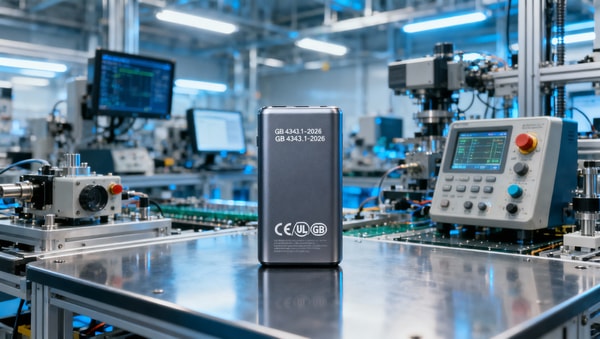
 China’s New GB 4343.1-2026 Mobile Power Bank Standard Takes Effect Nov 2026GB 4343.1-2026 mobile power bank standard takes effect Nov 2026—learn key compliance steps, dual-protocol requirements & global certification strategy.
 Morocco Ranks 4th in EU Africa Energy Aid; China PV Mounting & ESS Export Path WidensMorocco ranks 4th in EU Africa energy aid—unlocking new PV mounting & ESS export opportunities for certified Chinese suppliers. Act now to leverage the white-list advantage.
 China Holds 68% of Global Autonomous Sanitation Vehicle PatentsChina holds 68% of global autonomous sanitation vehicle patents—key for smart infrastructure exporters, AI developers & edge hardware suppliers targeting GCC tenders.
") China’s Petrochemical Plant Upgrade Policy (2026–2029)China’s Petrochemical Plant Upgrade Policy (2026–2029) mandates safety assessments & intelligent upgrades for aging equipment—key for exporters, EPC firms, and certified equipment suppliers.
China’s Petrochemical Plant Upgrade Policy (2026–2029)China’s Petrochemical Plant Upgrade Policy (2026–2029) mandates safety assessments & intelligent upgrades for aging equipment—key for exporters, EPC firms, and certified equipment suppliers. U.S. Natural Gas Inventory Rise Below Expectations: Export Cost Pressure on PVC, ABS, CoatingsU.S. natural gas inventory rise fell short—impacting PVC, ABS & coatings exporters. Discover cost risks, mitigation steps & pricing insights now.
 EN 62368-1:2026 Enforced in EU: Thermal Runaway Protection Required for Wearables & Smart Home DevicesEN 62368-1:2026 mandates thermal runaway protection for wearables & smart home devices in the EU—act now to ensure CE compliance and avoid market access delays.
 Portable oxygen concentrators are quieter now, but are they easier to maintain?Portable oxygen concentrators are quieter, but are they easier to maintain? Explore service challenges, scenario-based insights, and smart ways to reduce downtime.
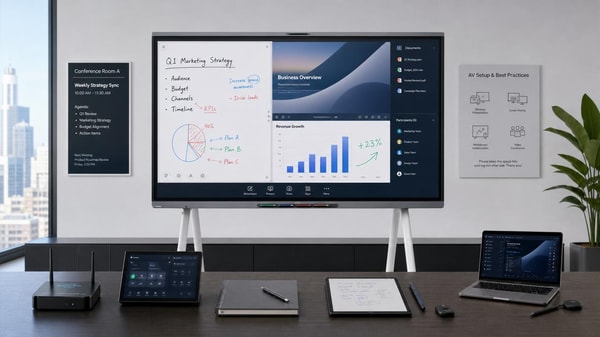
 Interactive whiteboards are underused when training stops after installationInteractive whiteboards often underperform when training ends at installation. Learn how continuous, role-based support boosts adoption, productivity, and ROI.
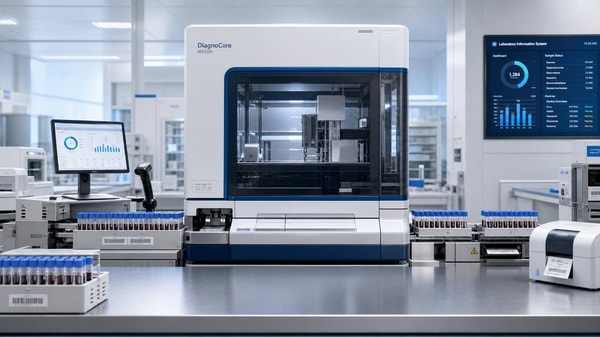
 Medical diagnostic equipment buying mistakes often start with workflow mismatchMedical diagnostic equipment buying mistakes often stem from workflow mismatch. Learn how to assess fit, avoid hidden costs, and choose scalable systems that support real clinical operations.
![]() Eco-friendly building materials can add compliance work, not just green valueEco-friendly building materials can boost sustainability but also add compliance work. Learn how they affect approvals, costs, timelines, and risk across key project scenarios.
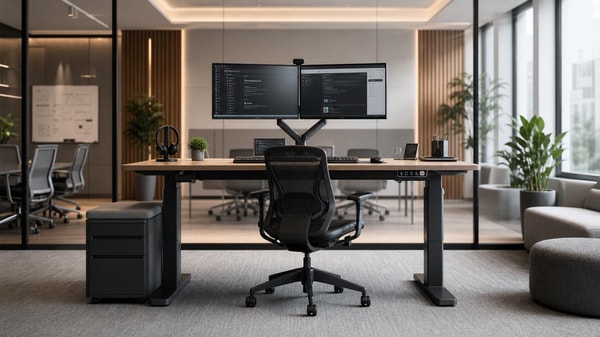
Eco-friendly building materials can add compliance work, not just green valueEco-friendly building materials can boost sustainability but also add compliance work. Learn how they affect approvals, costs, timelines, and risk across key project scenarios. Ergonomic workspace design fails when posture is treated as the whole answerErgonomic workspace design fails when posture is the only focus. Learn how integrated planning improves productivity, retention, and workplace performance.
 Outdoor garden supplies demand changes faster than seasonal forecasts suggestOutdoor garden supplies demand is changing faster than seasonal forecasts. Discover key signals, sourcing strategies, and inventory tactics to stay competitive and capture growth.
 Sustainable home decor sells better when the material story is verifiableSustainable home decor wins more buyers when material claims are verifiable. Discover how traceable sourcing, certifications, and clear proof build trust and drive sales.
 Modern office furniture choices can raise complaints instead of comfortModern office furniture can improve productivity—or trigger costly complaints. Learn how to choose ergonomic, durable, flexible office solutions that support comfort and long-term value.
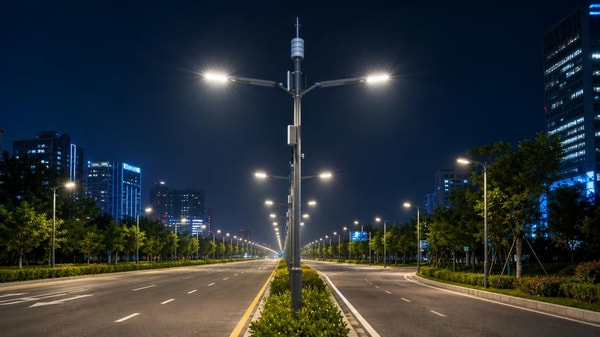
 Smart street lighting saves energy only when controls are tuned properlySmart street lighting saves energy only when controls are tuned to real traffic, safety, and maintenance needs. Learn how proper settings turn connected lighting into measurable ROI.
 Solid-state battery breakthroughs are real, but scaling is another storySolid-state battery breakthroughs are real, but scaling remains the real test. Explore where commercialization starts first, what limits adoption, and which markets may gain the earliest edge.
![]() Commercial LED lighting upgrades often disappoint in high-heat spacesCommercial LED lighting often underperforms in high-heat spaces. Learn the hidden causes, warning signs, and smart upgrade choices to improve reliability, safety, and long-term value.
Commercial LED lighting upgrades often disappoint in high-heat spacesCommercial LED lighting often underperforms in high-heat spaces. Learn the hidden causes, warning signs, and smart upgrade choices to improve reliability, safety, and long-term value.







Popular Tags
Global Trade Insights & Industry
Our mission is to empower global exporters and importers with data-driven insights that foster strategic growth.
Search News
Popular Tags
Industry Overview
The global commercial kitchen equipment market is projected to reach $112 billion by 2027. Driven by urbanization, the rise of e-commerce food delivery, and strict hygiene regulations.