

China’s Petrochemical Plant Upgrade Policy (2026–2029)
On April 3, 2026, China’s Ministry of Industry and Information Technology (MIIT) and six other departments jointly issued the Action Plan for Accelerating the Renewal and Transformation of Aging Petrochemical and Chemical Facilities (2026–2029). The policy mandates safety assessments and intelligent upgrades for reactors, storage tanks, and piping systems over 20 years old — directly affecting equipment manufacturing, export supply chains, and EPC project execution in global industrial markets.
Event Overview
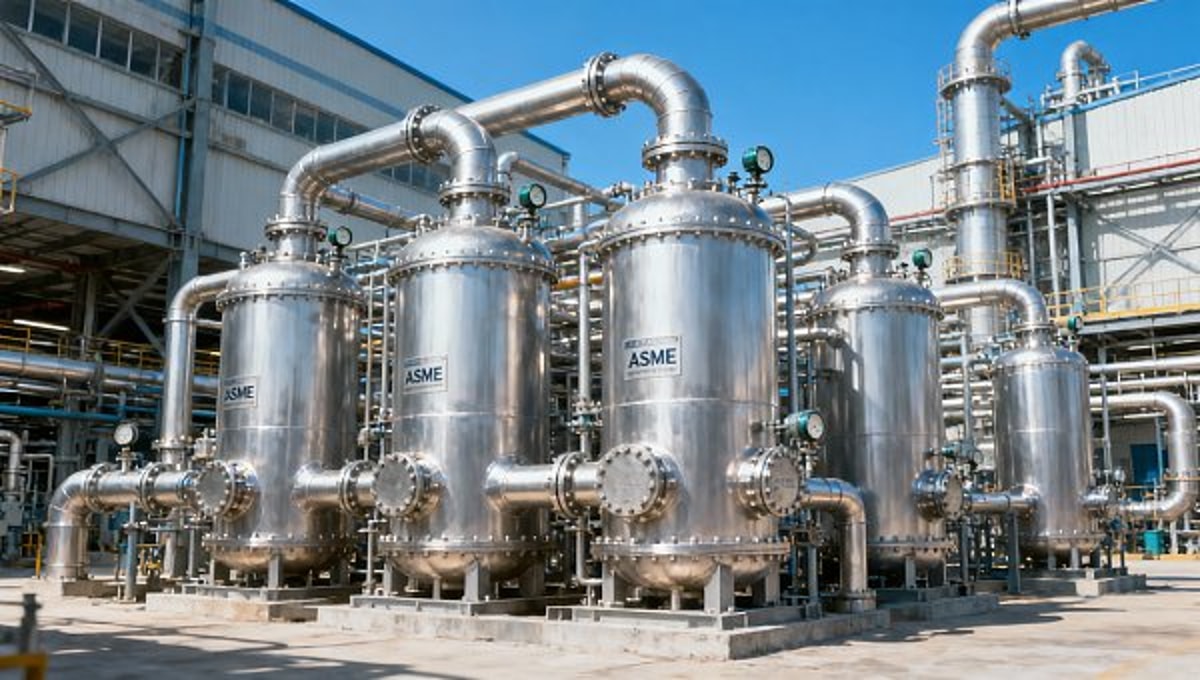
On April 3, 2026, MIIT, the National Development and Reform Commission (NDRC), the Ministry of Emergency Management, and four additional departments released the Action Plan for Accelerating the Renewal and Transformation of Aging Petrochemical and Chemical Facilities (2026–2029). The plan stipulates mandatory safety evaluations and intelligent upgrades for petrochemical equipment—including reaction vessels, storage tanks, and pipeline systems—with service lives exceeding 20 years, beginning in 2026. It also identifies high-energy-consumption, low-precision domestic reaction equipment as priorities for phase-out, while highlighting demand growth for CNC machining equipment, industrial robots, and testing instruments compliant with ASME, API, and ISO 13849 standards. Overseas engineering, procurement, and construction (EPC) contractors and their Chinese partners are advised to reassess equipment supply chain responsiveness.
Industries Affected
Export-oriented Equipment Manufacturers
Manufacturers exporting CNC machining tools, industrial robots, or precision testing instruments face increased tender opportunities — but only if their products meet ASME, API, or ISO 13849 certification requirements. Non-compliant suppliers may be excluded from bidding on upgraded facility projects.
Chinese EPC Contractors & Engineering Firms
EPC firms delivering turnkey solutions for domestic petrochemical clients must now align procurement specifications with the new safety and intelligence criteria. This affects equipment sourcing timelines, vendor qualification processes, and integration testing protocols — especially for legacy control system retrofits.
Global Engineering Procurement Agencies
International procurement agencies supporting overseas petrochemical projects in third markets (e.g., Southeast Asia, Middle East) may encounter revised technical specifications from Chinese EPC partners — reflecting tighter compliance expectations inherited from the domestic upgrade mandate.
Domestic Precision Component Suppliers
Suppliers of valves, actuators, pressure sensors, and other critical subsystems used in reactor and piping systems will experience heightened scrutiny on traceability, material certifications, and functional safety validation (e.g., PL/SIL levels per ISO 13849). Demand shifts toward certified, documented, and auditable components.
What Enterprises and Practitioners Should Monitor and Do Now
Track official implementation guidelines and provincial rollout schedules
The Action Plan is a national framework; detailed enforcement rules, eligibility criteria, and subsidy mechanisms (if any) will be issued separately by MIIT and provincial authorities. Companies should monitor announcements from provincial MIIT bureaus and the State Administration for Market Regulation (SAMR) for local interpretation and deadlines.
Verify product compliance status against ASME/API/ISO 13849 — not just nominal conformity
Many manufacturers claim ‘API-compliant’ design without full third-party certification or documentation of functional safety validation. Current tenders under the Action Plan are expected to require verified certificates, test reports, and audit trails — not self-declarations. Companies should prioritize formal certification renewal or gap analysis before Q3 2026.
Distinguish between policy signal and near-term procurement impact
While the policy takes effect in 2026, large-scale replacement cycles typically follow capital expenditure planning cycles (often aligned with fiscal year-end reviews). Significant tender activity is more likely to accelerate in H2 2026 and peak in 2027–2028. Early-stage engagement with end-user operators and design institutes remains strategic — but mass orders are not imminent.
Reassess lead times, logistics, and supplier qualification capacity for key subcomponents
As demand concentrates on certified equipment, bottlenecks may emerge in certified welding, non-destructive testing (NDT), and safety-related software verification. Exporters and EPC firms should proactively map qualified vendors for critical path items (e.g., SIL2-certified PLC modules, ASME Section VIII Div. 1 vessel fabricators) and confirm capacity availability ahead of bid submissions.
Editorial Perspective / Industry Observation
Observably, this Action Plan functions primarily as a regulatory signal — not an immediate procurement trigger. Its significance lies less in immediate spending and more in its role as a structural inflection point: it codifies safety and digital readiness as non-negotiable thresholds for continued operation in a core process industry. Analysis shows that unlike previous efficiency-focused initiatives, this policy embeds functional safety standards (e.g., ISO 13849) directly into lifecycle management — suggesting long-term convergence between domestic regulatory practice and international EHS benchmarks. From an industry perspective, it reflects a shift from ‘capacity expansion’ to ‘capability validation’ as the dominant logic governing asset investment in China’s heavy process sectors.
Current more appropriate understanding is that this is a multi-year calibration mechanism — one that redefines technical entry barriers, reshapes vendor selection criteria, and gradually raises the baseline for global competitiveness of Chinese-built plant infrastructure.
Conclusion: The Action Plan does not initiate a sudden wave of replacement orders, but it does reset technical expectations across the petrochemical equipment value chain. Its real impact emerges through cumulative specification updates, tightened qualification audits, and shifting risk allocation in EPC contracts — all reinforcing the importance of verifiable compliance, not just product performance.
Information Sources: Official joint notice issued by MIIT, NDRC, Ministry of Emergency Management, and four other departments on April 3, 2026. Implementation details, provincial guidance, and funding mechanisms remain pending official release and are subject to ongoing monitoring.
Recommended News
 China's Smart Electric Wheelchair Exports Face EU MDR Compliance Shift from Q3 2026China's smart electric wheelchair exports must meet EU MDR + CE dual certification by Q3 2026 — only 12 manufacturers comply. Act now to secure market access.
 Apple Opens AI Service Hub to Third Parties: New Export Path for Chinese AIoT HardwareApple's AI Service Hub opens new export opportunities for Chinese AIoT hardware—enabling iFLYTEK, SenseTime & others to power HomeKit, CarPlay & HealthKit with on-device AI.
 GPT-5.5 Instant Rollout Impacts AI SaaS Exporters’ SLAsGPT-5.5 Instant rollout reshapes AI SaaS exporters’ SLAs—learn how P95 latency, multimodal context, and contract compliance impact your global clients now.
 Red Bull SA15 Uses Tiantai Energy Solutions: China OEM Compliance Gains ASEAN AttentionRed Bull SA15 adopts Tiantai’s China OEM energy solutions—triple-registered (TH FDA, SG HSA, EU EFSA). A benchmark for ASEAN importers & nutraceutical manufacturers seeking compliant, scalable sourcing.
 China’s New GB 4343.1-2026 Mobile Power Bank Standard Takes Effect Nov 2026GB 4343.1-2026 mobile power bank standard takes effect Nov 2026—learn key compliance steps, dual-protocol requirements & global certification strategy.
 Morocco Ranks 4th in EU Africa Energy Aid; China PV Mounting & ESS Export Path WidensMorocco ranks 4th in EU Africa energy aid—unlocking new PV mounting & ESS export opportunities for certified Chinese suppliers. Act now to leverage the white-list advantage.
 China Holds 68% of Global Autonomous Sanitation Vehicle PatentsChina holds 68% of global autonomous sanitation vehicle patents—key for smart infrastructure exporters, AI developers & edge hardware suppliers targeting GCC tenders.
") China’s Petrochemical Plant Upgrade Policy (2026–2029)China’s Petrochemical Plant Upgrade Policy (2026–2029) mandates safety assessments & intelligent upgrades for aging equipment—key for exporters, EPC firms, and certified equipment suppliers.
China’s Petrochemical Plant Upgrade Policy (2026–2029)China’s Petrochemical Plant Upgrade Policy (2026–2029) mandates safety assessments & intelligent upgrades for aging equipment—key for exporters, EPC firms, and certified equipment suppliers. U.S. Natural Gas Inventory Rise Below Expectations: Export Cost Pressure on PVC, ABS, CoatingsU.S. natural gas inventory rise fell short—impacting PVC, ABS & coatings exporters. Discover cost risks, mitigation steps & pricing insights now.
 EN 62368-1:2026 Enforced in EU: Thermal Runaway Protection Required for Wearables & Smart Home DevicesEN 62368-1:2026 mandates thermal runaway protection for wearables & smart home devices in the EU—act now to ensure CE compliance and avoid market access delays.
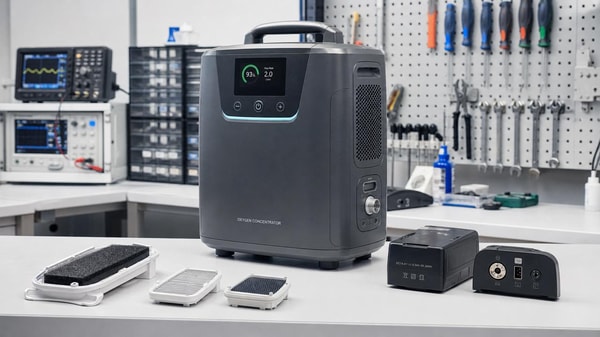
 Portable oxygen concentrators are quieter now, but are they easier to maintain?Portable oxygen concentrators are quieter, but are they easier to maintain? Explore service challenges, scenario-based insights, and smart ways to reduce downtime.
 Interactive whiteboards are underused when training stops after installationInteractive whiteboards often underperform when training ends at installation. Learn how continuous, role-based support boosts adoption, productivity, and ROI.
 Medical diagnostic equipment buying mistakes often start with workflow mismatchMedical diagnostic equipment buying mistakes often stem from workflow mismatch. Learn how to assess fit, avoid hidden costs, and choose scalable systems that support real clinical operations.
![]() Eco-friendly building materials can add compliance work, not just green valueEco-friendly building materials can boost sustainability but also add compliance work. Learn how they affect approvals, costs, timelines, and risk across key project scenarios.
Eco-friendly building materials can add compliance work, not just green valueEco-friendly building materials can boost sustainability but also add compliance work. Learn how they affect approvals, costs, timelines, and risk across key project scenarios. Ergonomic workspace design fails when posture is treated as the whole answerErgonomic workspace design fails when posture is the only focus. Learn how integrated planning improves productivity, retention, and workplace performance.
 Outdoor garden supplies demand changes faster than seasonal forecasts suggestOutdoor garden supplies demand is changing faster than seasonal forecasts. Discover key signals, sourcing strategies, and inventory tactics to stay competitive and capture growth.
 Sustainable home decor sells better when the material story is verifiableSustainable home decor wins more buyers when material claims are verifiable. Discover how traceable sourcing, certifications, and clear proof build trust and drive sales.
 Modern office furniture choices can raise complaints instead of comfortModern office furniture can improve productivity—or trigger costly complaints. Learn how to choose ergonomic, durable, flexible office solutions that support comfort and long-term value.
 Smart street lighting saves energy only when controls are tuned properlySmart street lighting saves energy only when controls are tuned to real traffic, safety, and maintenance needs. Learn how proper settings turn connected lighting into measurable ROI.
 Solid-state battery breakthroughs are real, but scaling is another storySolid-state battery breakthroughs are real, but scaling remains the real test. Explore where commercialization starts first, what limits adoption, and which markets may gain the earliest edge.
![]() Commercial LED lighting upgrades often disappoint in high-heat spacesCommercial LED lighting often underperforms in high-heat spaces. Learn the hidden causes, warning signs, and smart upgrade choices to improve reliability, safety, and long-term value.
Commercial LED lighting upgrades often disappoint in high-heat spacesCommercial LED lighting often underperforms in high-heat spaces. Learn the hidden causes, warning signs, and smart upgrade choices to improve reliability, safety, and long-term value.


















Popular Tags
Global Trade Insights & Industry
Our mission is to empower global exporters and importers with data-driven insights that foster strategic growth.
Search News
Popular Tags
Industry Overview
The global commercial kitchen equipment market is projected to reach $112 billion by 2027. Driven by urbanization, the rise of e-commerce food delivery, and strict hygiene regulations.