

GPT-5.5 Instant Rollout Impacts AI SaaS Exporters’ SLAs
On May 6, 2026, OpenAI upgraded the default model for all global ChatGPT users to GPT-5.5 Instant — a low-latency, real-time multimodal model with P95 inference latency reduced to 380ms. This change directly affects Chinese AI applications, marketing automation, and trade software SaaS exporters serving international clients, particularly those whose API service level agreements (SLAs) are contractually tied to response performance.
Event Overview
OpenAI announced on May 6, 2026, that GPT-5.5 Instant became the new default model for all global ChatGPT users. The model delivers P95 inference latency of 380ms and supports real-time multimodal interaction. As confirmed in OpenAI’s official communication, this upgrade applies universally and does not require user opt-in. No additional technical specifications or rollout timelines beyond this date were disclosed publicly at time of announcement.
Industries Affected
AI Application SaaS Exporters
These companies embed OpenAI APIs into customer-facing products (e.g., multilingual chatbots, document summarizers). Because their SLAs often specify maximum response times — now contractually enforceable with penalty clauses — the shift to GPT-5.5 Instant resets baseline expectations. A lower-latency default model means prior SLA terms may no longer reflect actual capability, triggering renegotiation pressure from overseas buyers.
Marketing Automation SaaS Providers
For platforms delivering real-time ad copy generation, personalized email sequencing, or cross-channel campaign orchestration, consistent low-latency API responses are critical for synchronous workflows. The GPT-5.5 Instant rollout increases client scrutiny on P95 latency consistency across languages and session contexts — especially where multilingual campaigns rely on shared conversation history.
Trade Software SaaS Vendors
Vendors offering procurement assistants, customs documentation generators, or cross-border compliance checkers depend on reliable API throughput under variable input loads (e.g., multi-page PDFs, scanned invoices). With GPT-5.5 Instant enabling real-time multimodal inputs, clients are now explicitly requesting contractual guarantees on context retention across file types and language switches — a capability not uniformly validated across current integrations.
What Enterprises and Practitioners Should Monitor and Do Now
Review and update API SLA language in active and pending contracts
Three Shenzhen-based AI exporters have already received formal inquiries from EU/US clients referencing ‘latency-based penalty clauses’ post-upgrade. Companies should audit existing SLAs for latency thresholds, measurement methodology (e.g., P95 vs. average), and fallback provisions — and proactively align terms with GPT-5.5 Instant’s documented behavior before renewal cycles.
Treat P95 latency and multilingual context persistence as non-negotiable due diligence items
Analysis shows overseas procurement teams are now embedding these two metrics into technical due diligence checklists. Vendors should prepare benchmark reports covering latency distribution across geographies, languages (especially low-resource ones), and modalities (text + image inputs), rather than relying solely on OpenAI’s global averages.
Validate multimodal context handling in production environments — not just sandbox tests
Observably, real-world usage patterns (e.g., interleaved image uploads and follow-up questions in Japanese → English switching) expose edge cases not reflected in standard API documentation. Teams should run extended integration tests using live traffic samples — particularly for sessions exceeding 10 turns or mixing >2 languages.
Monitor OpenAI’s upcoming guidance on regional model routing and fallback behavior
Current documentation does not clarify whether GPT-5.5 Instant is served globally from identical infrastructure, nor how degraded conditions (e.g., regional outages) trigger fallbacks. From industry perspective, this remains a key uncertainty affecting SLA reliability — especially for vendors operating under strict uptime commitments.
Editorial Observation / Industry Insight
This rollout is less a feature launch and more a de facto SLA recalibration event. It does not introduce new pricing or access tiers, but it materially shifts the performance floor against which contractual obligations are measured. Observably, the timing coincides with increased enforcement of API-centric SLAs in enterprise SaaS procurement — suggesting this upgrade functions primarily as an implicit benchmark reset, not just a technical improvement. From industry angle, the emphasis on P95 (not average) latency and multilingual context retention signals growing sophistication among global buyers — moving beyond basic functionality checks toward operational resilience validation.
Currently, this development is best understood as a signal: it reflects tightening expectations in AI-powered B2B service delivery, rather than an immediate operational crisis. However, because SLA violations can trigger financial penalties or contract termination, its implications are actionable — not merely theoretical.

Conclusion: The GPT-5.5 Instant default upgrade marks a structural inflection point for AI SaaS exporters — one where API performance metrics transition from engineering targets to contractual obligations. Its significance lies not in novelty, but in enforceability: latency and context-handling capabilities are now being written into binding commercial terms. For affected enterprises, the priority is not adoption, but alignment — between deployed systems, documented capabilities, and negotiated commitments.
Information Source: OpenAI official announcement (May 6, 2026); verified client inquiry reports from three Shenzhen-based AI SaaS exporters (as cited in event summary). Ongoing observation required for OpenAI’s forthcoming documentation on regional routing, fallback logic, and multimodal context scope limitations — none of which have been published as of May 2026.
Recommended News
 China's Smart Electric Wheelchair Exports Face EU MDR Compliance Shift from Q3 2026China's smart electric wheelchair exports must meet EU MDR + CE dual certification by Q3 2026 — only 12 manufacturers comply. Act now to secure market access.
 Apple Opens AI Service Hub to Third Parties: New Export Path for Chinese AIoT HardwareApple's AI Service Hub opens new export opportunities for Chinese AIoT hardware—enabling iFLYTEK, SenseTime & others to power HomeKit, CarPlay & HealthKit with on-device AI.
 GPT-5.5 Instant Rollout Impacts AI SaaS Exporters’ SLAsGPT-5.5 Instant rollout reshapes AI SaaS exporters’ SLAs—learn how P95 latency, multimodal context, and contract compliance impact your global clients now.
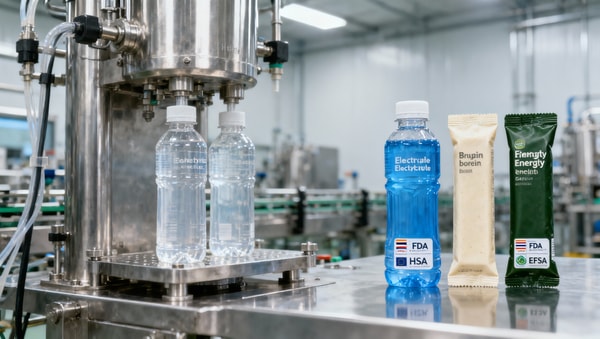
 Red Bull SA15 Uses Tiantai Energy Solutions: China OEM Compliance Gains ASEAN AttentionRed Bull SA15 adopts Tiantai’s China OEM energy solutions—triple-registered (TH FDA, SG HSA, EU EFSA). A benchmark for ASEAN importers & nutraceutical manufacturers seeking compliant, scalable sourcing.
 China’s New GB 4343.1-2026 Mobile Power Bank Standard Takes Effect Nov 2026GB 4343.1-2026 mobile power bank standard takes effect Nov 2026—learn key compliance steps, dual-protocol requirements & global certification strategy.
 Morocco Ranks 4th in EU Africa Energy Aid; China PV Mounting & ESS Export Path WidensMorocco ranks 4th in EU Africa energy aid—unlocking new PV mounting & ESS export opportunities for certified Chinese suppliers. Act now to leverage the white-list advantage.
 China Holds 68% of Global Autonomous Sanitation Vehicle PatentsChina holds 68% of global autonomous sanitation vehicle patents—key for smart infrastructure exporters, AI developers & edge hardware suppliers targeting GCC tenders.
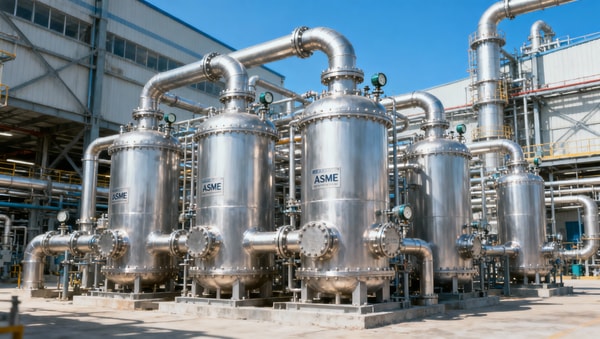
") China’s Petrochemical Plant Upgrade Policy (2026–2029)China’s Petrochemical Plant Upgrade Policy (2026–2029) mandates safety assessments & intelligent upgrades for aging equipment—key for exporters, EPC firms, and certified equipment suppliers.
China’s Petrochemical Plant Upgrade Policy (2026–2029)China’s Petrochemical Plant Upgrade Policy (2026–2029) mandates safety assessments & intelligent upgrades for aging equipment—key for exporters, EPC firms, and certified equipment suppliers. U.S. Natural Gas Inventory Rise Below Expectations: Export Cost Pressure on PVC, ABS, CoatingsU.S. natural gas inventory rise fell short—impacting PVC, ABS & coatings exporters. Discover cost risks, mitigation steps & pricing insights now.
 EN 62368-1:2026 Enforced in EU: Thermal Runaway Protection Required for Wearables & Smart Home DevicesEN 62368-1:2026 mandates thermal runaway protection for wearables & smart home devices in the EU—act now to ensure CE compliance and avoid market access delays.
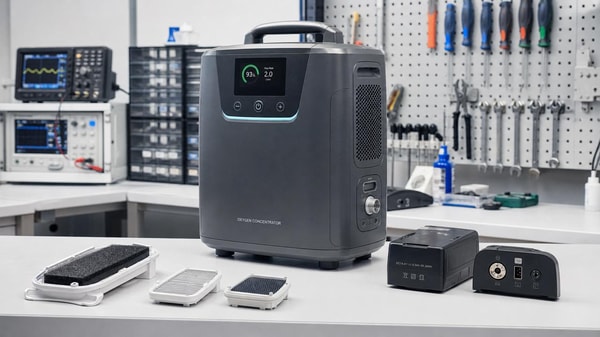
 Portable oxygen concentrators are quieter now, but are they easier to maintain?Portable oxygen concentrators are quieter, but are they easier to maintain? Explore service challenges, scenario-based insights, and smart ways to reduce downtime.
 Interactive whiteboards are underused when training stops after installationInteractive whiteboards often underperform when training ends at installation. Learn how continuous, role-based support boosts adoption, productivity, and ROI.
 Medical diagnostic equipment buying mistakes often start with workflow mismatchMedical diagnostic equipment buying mistakes often stem from workflow mismatch. Learn how to assess fit, avoid hidden costs, and choose scalable systems that support real clinical operations.
![]() Eco-friendly building materials can add compliance work, not just green valueEco-friendly building materials can boost sustainability but also add compliance work. Learn how they affect approvals, costs, timelines, and risk across key project scenarios.
Eco-friendly building materials can add compliance work, not just green valueEco-friendly building materials can boost sustainability but also add compliance work. Learn how they affect approvals, costs, timelines, and risk across key project scenarios. Ergonomic workspace design fails when posture is treated as the whole answerErgonomic workspace design fails when posture is the only focus. Learn how integrated planning improves productivity, retention, and workplace performance.
 Outdoor garden supplies demand changes faster than seasonal forecasts suggestOutdoor garden supplies demand is changing faster than seasonal forecasts. Discover key signals, sourcing strategies, and inventory tactics to stay competitive and capture growth.
 Sustainable home decor sells better when the material story is verifiableSustainable home decor wins more buyers when material claims are verifiable. Discover how traceable sourcing, certifications, and clear proof build trust and drive sales.
 Modern office furniture choices can raise complaints instead of comfortModern office furniture can improve productivity—or trigger costly complaints. Learn how to choose ergonomic, durable, flexible office solutions that support comfort and long-term value.
 Smart street lighting saves energy only when controls are tuned properlySmart street lighting saves energy only when controls are tuned to real traffic, safety, and maintenance needs. Learn how proper settings turn connected lighting into measurable ROI.
 Solid-state battery breakthroughs are real, but scaling is another storySolid-state battery breakthroughs are real, but scaling remains the real test. Explore where commercialization starts first, what limits adoption, and which markets may gain the earliest edge.
![]() Commercial LED lighting upgrades often disappoint in high-heat spacesCommercial LED lighting often underperforms in high-heat spaces. Learn the hidden causes, warning signs, and smart upgrade choices to improve reliability, safety, and long-term value.
Commercial LED lighting upgrades often disappoint in high-heat spacesCommercial LED lighting often underperforms in high-heat spaces. Learn the hidden causes, warning signs, and smart upgrade choices to improve reliability, safety, and long-term value.

















Popular Tags
Global Trade Insights & Industry
Our mission is to empower global exporters and importers with data-driven insights that foster strategic growth.
Search News
Popular Tags
Industry Overview
The global commercial kitchen equipment market is projected to reach $112 billion by 2027. Driven by urbanization, the rise of e-commerce food delivery, and strict hygiene regulations.