

Semiconductor Supply Chain Price Hikes Extend Lead Times
Starting in Q2 2026, broad-based price increases across the semiconductor supply chain—particularly for MCUs, power management ICs, and automotive-grade sensors—are driving extended lead times for automotive electronics and smart hardware. Affected sectors include automotive OEMs, industrial automation providers, and smart home device manufacturers, as delays now span 4–8 additional weeks amid constrained foundry capacity.
Event Overview
Beginning in Q2 2026, average prices for microcontroller units (MCUs), power management ICs, and automotive-grade sensors rose by 12%–18%. Concurrently, TSMC and SMIC have prioritized AI chip orders in their capacity allocation, resulting in extended lead times of 16–20 weeks for key assemblies—including automotive camera modules, industrial PLCs, and smart home main control boards. Overseas OEMs and solution providers are accelerating audits of Chinese Tier-2 suppliers’ alternative bill-of-materials (A-BOM) and domestic packaging & test capabilities.
Impact on Specific Industry Segments
Direct Trading Enterprises: These firms face margin compression due to sudden input cost hikes and limited ability to pass through price increases quickly—especially under fixed-price contracts with automotive or industrial customers. Their exposure is heightened where inventory turnover cycles are long and demand visibility remains low.
Raw Material & Component Procurement Enterprises: Rising IC costs directly affect procurement planning and cost forecasting accuracy. The 12%–18% price increase applies specifically to high-demand, function-critical components—not broad commodity semiconductors—making substitution difficult without requalification.
Electronics Manufacturing Services (EMS) & Contract Manufacturers: Extended lead times for core modules (e.g., camera modules, PLCs, main control boards) constrain production scheduling and increase work-in-progress inventory risk. Requalification of alternate parts requires validation time not reflected in current 16–20 week timelines.
Supply Chain Service Providers (e.g., logistics, customs brokers, component traceability platforms): Demand is rising for real-time component availability tracking and dual-sourcing verification services—especially for A-BOM compliance and local packaging/test capability documentation required by overseas OEMs.
What Relevant Enterprises or Practitioners Should Focus On
Monitor official capacity allocation updates from major foundries
Current lead time extensions stem partly from TSMC and SMIC’s explicit prioritization of AI chip orders. Any formal revision—or even public commentary—on capacity policy for automotive or industrial segments may signal near-term relief or further tightening.
Validate A-BOM readiness for critical IC categories
Overseas OEMs are actively auditing Chinese Tier-2 suppliers’ alternative BOMs. Firms should prioritize validation efforts on MCUs, power management ICs, and automotive sensors—not generic logic or memory chips—as these are explicitly cited in the event summary.
Assess local packaging and test capability documentation
The audit focus includes domestic封测 (packaging & test) capacity. Suppliers must ensure technical documentation—including process certifications, yield data, and qualification reports—is available in English and aligned with IATF 16949 or equivalent standards for automotive use cases.
Adjust safety stock and reorder point calculations for 16–20 week windows
Standard ERP replenishment logic often assumes 8–12 week lead times. With confirmed extension to 16–20 weeks for key assemblies, procurement teams should recalculate minimum order quantities and buffer stocks—particularly for camera modules and PLCs where no near-term substitution path is indicated.
Editorial Perspective / Industry Observation
This development is better understood as an early-stage supply chain recalibration than a full-blown shortage crisis. Analysis来看, the pricing and lead time shifts reflect strategic capacity allocation—not absolute wafer scarcity—and are concentrated in specific high-value, application-specific ICs rather than broad semiconductor categories. From industry angle, it signals growing bifurcation in foundry resource access: AI chips receive priority, while automotive and industrial segments face de facto queueing. Current more relevant interpretation is that this is a structural signal—not just a cyclical blip—highlighting increasing dependency on qualified secondary sourcing and localized backend capabilities.
It is not yet evident whether these adjustments will persist beyond 2026 Q3, nor whether other foundries (e.g., UMC, GlobalFoundries) will adjust capacity allocation in response. That remains a point requiring ongoing observation.
Conclusion
This situation underscores a widening operational gap between high-priority AI-driven demand and traditional embedded applications in automotive and smart hardware. It does not indicate systemic semiconductor scarcity, but rather a deliberate reallocation of constrained advanced-node and specialty-process capacity. For stakeholders, the most constructive framing is not ‘shortage management’ but ‘priority-aware sourcing’: aligning procurement, qualification, and localization strategies with how capacity is actually being allocated—not how it was historically distributed.
Source Attribution
Main source: Internal supply chain intelligence report (Q2 2026 update). Note: Foundry-level capacity policy statements and OEM audit timelines remain subject to ongoing verification and are flagged for continued monitoring.
Recommended News
 2026 Jan–Feb Paper Industry Profits +6.1%; Green Packaging Export Premium EmergesGreen packaging export premium drives +6.1% paper industry profits in Jan–Feb 2026 — discover how FSC/PEFC certification and water-based processes boost margins for eco-friendly, food & cosmetics packaging exporters.
 Desay SV Automotive Files for H-Share Listing, Boosts Supply Chain TransparencyDesay SV Automotive's H-share listing filing boosts supply chain transparency — key for car electronics exporters, PCB suppliers & IATF 16949-certified manufacturers.
 NetEase Interactive Entertainment Market Head Moves OverseasNetEase Interactive Entertainment's marketing head moves overseas—key signal for AI, mobile accessories & wearables exporters targeting NA, EU, JP, KR markets.
 Nanchang Qingyunpu Solar+EMC Project Tender Signals Global ShiftNanchang Qingyunpu Solar+EMC tender signals global shift to performance-based energy solutions—key for solar, lighting & smart factory exporters.
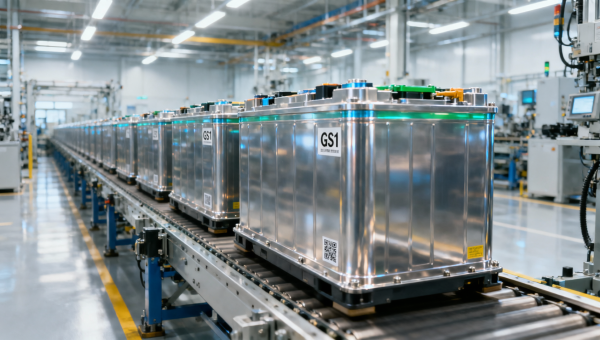
 China Launches Battery Lifecycle Traceability PlatformChina’s Battery Lifecycle Traceability Platform is live: mandatory GS1 registration for NEV & C&I battery exports starts April 1, 2026—ensure compliance now!
 US Military Restricts Arabian Sea East of Strait of HormuzUS Military Restricts Arabian Sea east of Strait of Hormuz—impacting solar PV, water treatment & fire safety exports to GCC. Act now to mitigate 12–18 day delays & 25% insurance hikes.
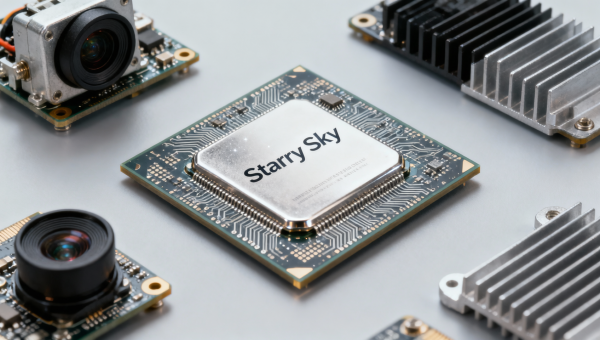
 Horizon Robotics Launches 'Starry Sky' Cockpit-ADAS Fusion ChipHorizon Robotics 'Starry Sky' cockpit-ADAS fusion chip launches April 2026 — cut BOM costs up to $400/vehicle. Key for exporters targeting MENA & ASEAN.
 China's Construction Machinery Exports Up 33.4% YoY in Jan–Feb 2026China's construction machinery exports surged 33.4% YoY in Jan–Feb 2026—driven by localized service in MEA & LatAm. Discover what this means for your global equipment strategy.
 EU CBAM Steel Carbon Tariff Takes Full Effect on Jan 1, 2026EU CBAM steel carbon tariff takes full effect Jan 1, 2026—exporters must submit verified lifecycle emissions data now. Act before delays & rejections hit.
 Japan Boosts Rapidus with ¥631.5B; China Semiconductor Export Opportunities RiseJapan’s ¥631.5B Rapidus boost unlocks China semiconductor export opportunities—especially in high-purity chemicals, precision components & cleanroom equipment. Act now.
 EU REACH Adds 12 SVHCs: Impact on China's Chemical, Plastic & Coating ExportsEU REACH adds 12 SVHCs, impacting China's chemical, plastic & coating exports. Learn key compliance actions & market risks before the Oct 2026 deadline.
 China Launches First Global Battery Lifecycle Traceability PlatformChina launches the first global battery lifecycle traceability platform, revolutionizing EV and energy storage compliance. Learn how this impacts manufacturers, exporters, and recyclers worldwide.
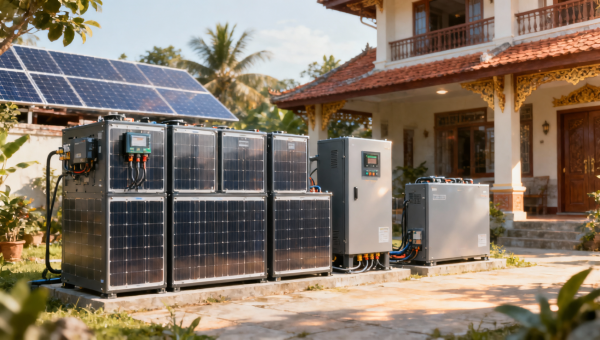
 Vietnam's Home Energy Storage Demand Doubles, Boosting Chinese ExportsVietnam's home energy storage demand doubles, boosting Chinese exports of inverters & LFP batteries. Learn how 217% export growth creates opportunities amid power instability.
 EU REACH Adds 12 SVHCs: China's Chemical, Plastic, and Coating Exports Must Comply Within 6 MonthsEU REACH adds 12 new SVHCs, impacting China's chemical, plastic, and coating exports. Companies must comply with SCIP notifications within 6 months. Learn key actions for affected industries.
 China Releases 100 5G Factory Applications Covering Key Export IndustriesChina's MIIT releases 100 5G factory applications, transforming key export industries like automotive, PCB, and textiles. Discover how these smart manufacturing solutions impact global supply chains and supplier evaluations.
 U.S.-Iran Ceasefire Takes Effect, Strait of Hormuz Shipping Returns to Normal, Middle East Logistics Costs Drop 35%U.S.-Iran ceasefire stabilizes Strait of Hormuz shipping, cutting Middle East logistics costs by 35%. Learn how exporters of industrial goods & solar equipment can benefit from improved trade routes.
 China-Thailand Agricultural & Green Manufacturing Cooperation: Key Impacts on Rubber, Farm Machinery, and Solar SectorsExplore how China-Thailand agricultural & green manufacturing cooperation impacts rubber, farm machinery, and solar sectors. Learn about reduced compliance costs and faster market access for exporters.
 Hainan Launches 'Zero Wait' Customs for Medical Devices & Smart SensorsHainan's 'zero wait' customs for medical devices & smart sensors slashes export cycles by 50% at Yangpu Port. Urgent orders to ASEAN, Middle East & Latin America now clear in 30 minutes. Learn how this boosts time-sensitive exports.
 China Launches Full Lifecycle Battery Traceability Platform, Mandates Export ComplianceChina's new battery traceability platform mandates export compliance for EU, US & South Korea markets. Learn how battery manufacturers, NEV producers, and energy storage providers can adapt to avoid clearance barriers and secure certifications.
 U.S. Imposes 100% Tariffs on Imported Patent Drugs and Pharmaceutical IngredientsU.S. imposes 100% tariffs on imported patent drugs and pharmaceutical ingredients, impacting global API supply chains. Learn how this affects manufacturers, importers, and compliance strategies.
 China-Thailand Agricultural & Green Manufacturing Cooperation: Key ImpactsExplore how China-Thailand agricultural & green manufacturing cooperation impacts rubber, farm machinery & solar sectors. Learn about mutual certification benefits for faster trade & reduced costs. Key insights for businesses.

















Popular Tags
Global Trade Insights & Industry
Our mission is to empower global exporters and importers with data-driven insights that foster strategic growth.
Search News
Popular Tags
Industry Overview
The global commercial kitchen equipment market is projected to reach $112 billion by 2027. Driven by urbanization, the rise of e-commerce food delivery, and strict hygiene regulations.