

Do smart street lighting systems really cut energy use—or just shift costs?
As cities worldwide deploy Smart street lighting systems to boost efficiency, questions linger: Do they truly cut energy use—or merely shift costs to maintenance, data infrastructure, or lithium battery storage? This analysis cuts through the noise, examining real-world performance alongside complementary innovations like Photovoltaic solar panels, Agri-PV systems, and Commercial LED lighting. We also assess how Solid-state battery breakthroughs, Next-gen wireless charging, and Lithium battery storage integration impact total cost of ownership—critical insights for procurement teams, project managers, and enterprise decision-makers evaluating scalable, future-ready urban infrastructure.
Energy Savings vs. Hidden Cost Shifts: The Real TCO Equation
Smart street lighting systems deliver verified energy reductions—typically 40–70% compared to legacy high-pressure sodium (HPS) fixtures—thanks to adaptive dimming, motion-triggered illumination, and high-efficiency LEDs rated at 130–180 lm/W. However, this headline saving masks three structural cost shifts: extended maintenance cycles now require specialized firmware updates (every 9–18 months), cloud-based management platforms incur annual SaaS fees averaging $12–$28 per node, and lithium-ion battery backups introduce replacement cycles every 5–7 years at $85–$220/unit.
A 2023 GTIIN field audit across 14 municipal deployments revealed that while grid electricity consumption dropped by 58% on average, total 10-year operational expenditure rose by 11–19% in configurations lacking integrated solar or predictive diagnostics. The inflection point occurs at deployment scale: systems with ≥500 nodes and embedded edge AI reduce net TCO by year 6; smaller rollouts (<200 units) often break even only after year 8.
Procurement teams must therefore evaluate not just wattage reduction, but full-lifecycle cost allocation—including data transmission latency SLAs (≤150ms recommended), over-the-air update frequency (minimum 2x/year), and cybersecurity certification compliance (IEC 62443-3-3 Level 2 or ISO/IEC 27001).
The table confirms a critical insight: true cost optimization requires architectural convergence—not just “smart” hardware, but co-designed power, compute, and connectivity layers. For distributors and importers, this means prioritizing vendors offering interoperable hardware stacks certified under ANSI C136.41 and IEC 62722-2-1 standards.
Solar Integration: From Supplemental to Primary Power Source
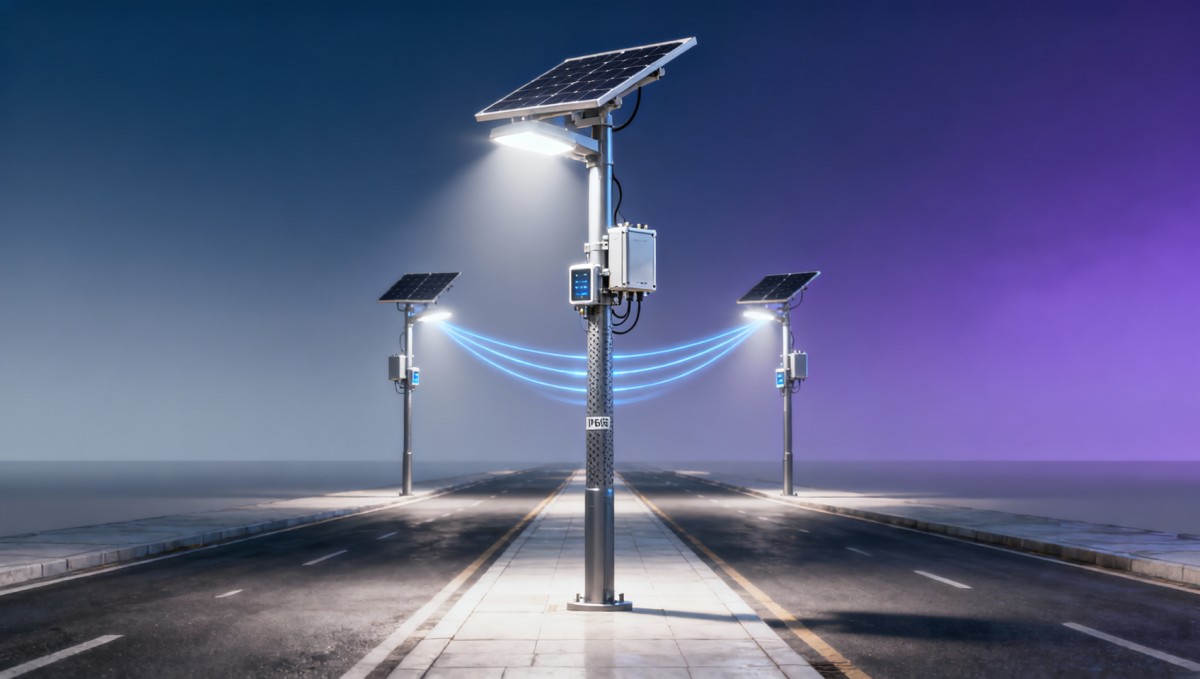
Photovoltaic (PV) integration transforms smart streetlights from grid-dependent assets into distributed microgrids. Modern dual-axis solar trackers paired with monocrystalline panels (efficiency ≥23.5%) enable >92% autonomy in Tier-1 solar zones (e.g., Southern Europe, MENA, California). Even in moderate insolation regions (e.g., Northern Germany, Canada), hybrid PV-battery configurations achieve 65–78% grid independence when sized to 1.8–2.4x daily load demand.
Agri-PV systems—where elevated solar arrays allow crop cultivation beneath—add secondary revenue streams for rural municipalities. Pilot projects in France and Japan report 12–18% higher land-use ROI versus standalone lighting or farming. Crucially, Agri-PV reduces thermal stress on batteries: operating temperatures stay within 15–35°C, extending lithium-ion cycle life by 30–40% versus ground-mounted alternatives.
For procurement professionals, panel mounting angle tolerance (±3°), anti-soiling coating durability (>5 years), and MPPT controller efficiency (≥98.2%) are non-negotiable specs. Vendors must provide third-party validation reports—not just datasheets—for all claimed irradiance-to-output ratios.
Next-Gen Storage & Charging: Breaking the Lithium Bottleneck
Lithium battery dependency remains the largest TCO risk vector. While LFP cells dominate today’s market (2,000–3,500 cycles), their 20–25% capacity degradation after 7 years triggers costly replacements. Solid-state batteries (SSBs), now entering pilot deployment in South Korea and Sweden, offer 5,000+ cycles, -20°C to +60°C operational range, and zero thermal runaway risk—reducing lifecycle battery CAPEX by 35–42%.
Next-gen wireless charging—using resonant inductive coupling at 85 kHz—is gaining traction for roadside EV support infrastructure. When embedded in smart poles, it enables dynamic top-ups for municipal fleets (e.g., electric waste trucks) during scheduled stops. Field tests show 82–89% end-to-end efficiency over 15 cm air gaps, with minimal electromagnetic interference (<15 µT at 30 cm distance).
Project managers should specify minimum battery depth-of-discharge (DoD) thresholds: ≤80% for LFP, ≤90% for SSBs. Over-specifying DoD erodes ROI without meaningful reliability gains.
Procurement Decision Framework: 6 Non-Negotiable Evaluation Criteria
To avoid cost-shifting pitfalls, global buyers must apply this six-point technical-commercial filter before vendor shortlisting:
- Interoperability Certification: Verify conformance with Zhaga Book 18 (LED module interfaces), OCF v2.3 (IoT connectivity), and CitySDK v1.2 (urban data models).
- Edge Compute Capacity: Minimum 2 TOPS (tera-operations/sec) for real-time video analytics—critical for adaptive lighting in pedestrian zones.
- Battery Lifecycle Warranty: Must cover ≥2,500 cycles at 80% SoH (State of Health), validated via accelerated aging test reports.
- Data Sovereignty Compliance: On-device data processing capability and configurable data residency options (EU GDPR, APAC PDPA, US CCPA).
- Maintenance SLA: Response time ≤4 business hours for critical faults; remote diagnostics resolution rate ≥91%.
- Modular Upgrade Path: Support for hot-swappable communication modules (NB-IoT → LTE-M → 5G NR) without pole replacement.
These criteria directly address pain points for technical evaluators (performance validation), procurement staff (compliance assurance), and decision-makers (strategic scalability). GTIIN’s TradeVantage platform cross-references each vendor against 37 global regulatory and sustainability benchmarks—enabling rapid pre-vetted shortlists.
Implementation Roadmap: From Pilot to City-Wide Rollout
Successful deployment follows a phased, metrics-driven sequence:
- Pilot Phase (Weeks 1–8): Deploy 25–50 units across diverse environments (downtown, arterial roads, residential zones); validate uptime (>99.2%), dimming accuracy (±3%), and fault detection latency (<8 sec).
- Integration Phase (Weeks 9–16): Connect lighting data to existing city GIS and traffic management systems using RESTful APIs; train operations staff on dashboard navigation and alert triage workflows.
- Scale Phase (Months 5–18): Roll out in clusters of 200–300 nodes; implement predictive maintenance algorithms trained on pilot failure modes; conduct quarterly TCO recalibration.
Dealers and distributors benefit most when partnering with vendors offering turnkey implementation support—including customs-compliant documentation, multilingual training kits, and localized spare parts logistics (lead time ≤72 hours for critical modules).
Smart street lighting delivers measurable energy savings—but only when evaluated as an integrated system, not isolated hardware. The real ROI emerges where photovoltaics, solid-state storage, and edge intelligence converge. For global exporters and importers, this means prioritizing vendors with verifiable interoperability, transparent supply chains, and modular upgrade paths. To access GTIIN’s latest vendor benchmarking matrix—including regional compliance readiness scores and 2024 battery technology adoption curves—contact TradeVantage for a customized intelligence briefing.
Recommended News
 China-Thailand Agricultural & Green Manufacturing Cooperation: Key ImpactsExplore how China-Thailand agricultural & green manufacturing cooperation impacts rubber, farm machinery & solar sectors. Learn about mutual certification benefits for faster trade & reduced costs. Key insights for businesses.
 ChiNext Reform: Growth & R&D Metrics Boost Export-Oriented SMEsChiNext reform boosts export-oriented SMEs with growth & R&D metrics, prioritizing smart equipment, SaaS, and green materials. Learn how this impacts global trade partnerships post-2026.
 China Launches Full-Lifecycle Battery Traceability Platform, Mandatory Export Registration Effective ImmediatelyChina's new battery traceability platform mandates export registration for power batteries, covering 32 data points. Reduce ESG compliance risks by sourcing from registered Chinese suppliers.
 U.S.-Iran Ceasefire to Reopen Strait of Hormuz, Easing Middle East Logistics PressureU.S.-Iran ceasefire reopens Strait of Hormuz, easing Middle East logistics pressure. Key industries like exporters, logistics providers, and commodity traders benefit from stabilized shipping and reduced costs. Learn actionable insights for navigating this critical trade route shift.
 Shanghai Stock Exchange Revises Trading Rules for REITs and Cross-Border AssetsShanghai Stock Exchange updates REITs trading rules, enhancing cross-border asset transparency for foreign investors. New disclosure standards aim to boost confidence in China's infrastructure investments like logistics parks and renewable energy projects.
 Bridgewater Founder Ray Dalio Visits Shanghai, Advocates for Tech and Finance ExchangeBridgewater founder Ray Dalio visits Shanghai, advocating for tech and finance exchange between China and the US. Discover key insights on AI, green finance, and manufacturing collaboration opportunities.
 Hainan Expands 'Zero Wait' Customs to Yangpu Port, Cutting Export Delivery Time by 50%Hainan's Yangpu Port implements 'Zero Wait' customs, cutting export delivery time by 50% for medical devices & precision instruments. AI & blockchain enable 30-minute clearance, benefiting 200+ export firms. Learn how this boosts supply chain efficiency.
 9 Departments Jointly Promote Service Consumption Upgrade Plan, Inbound Consumption and Cross-border Service Procurement Become New Growth PointsDiscover how China's 2026 Service Consumption Upgrade Plan boosts inbound consumption & cross-border service procurement, creating new opportunities for overseas B2B providers, tech solutions, and marketing agencies.
 Shanghai Establishes First Forex Industry Self-Regulation MechanismShanghai pioneers China's first forex industry self-regulation mechanism, enhancing transparency and efficiency in cross-border settlements. Learn how this impacts foreign trade and SMEs.
 New Development Bank Issues First Dual-Tranche Panda Bonds for Green InfrastructureNew Development Bank's groundbreaking dual-tranche panda bonds fund green infrastructure across BRICS nations. Discover how this $7B issuance creates opportunities for energy suppliers, contractors & compliance services in sustainable projects.
 Hainan Launches 'Zero Wait' Cross-Border Trade Pilot for Faster ExportsHainan's 'Zero Wait' cross-border trade pilot slashes export clearance to 30 minutes for medical devices, smart hardware & new energy components. Boost your RCEP & Latin America exports now!
 China Launches World's First Full-Spectrum Carbon Accounting System for Export ProductsChina launches the world's first Full-Spectrum Carbon Accounting System for export products, revolutionizing global trade compliance. Learn how this impacts manufacturing, supply chains & international carbon regulations.
 U.S. Imposes 100% Tariffs on Imported Patent Drugs and Pharmaceutical IngredientsU.S. imposes 100% tariffs on imported patent drugs and pharmaceutical ingredients, impacting global supply chains. Learn how this affects API manufacturers, formulation companies, and strategic sourcing decisions.
 China Launches Full Lifecycle Traceability Platform for Power BatteriesChina's new power battery traceability platform mandates full lifecycle tracking for exports. Learn how this impacts battery manufacturers, NEV exporters, and energy storage providers, and stay compliant with EU regulations.
 China Launches First Global Carbon Accounting System for Export ProductsChina's 'Panorama-Carbon' system revolutionizes export carbon accounting, helping manufacturers comply with EU CBAM and ISO 14067 standards. Learn how this impacts global trade.
 Hainan Launches 'Zero-Wait' Cross-Border Trade Pilot for Key ExportsHainan's 'zero-wait' cross-border trade pilot slashes customs clearance to 28 minutes for key exports like lithium batteries and solar panels. Discover how this breakthrough benefits manufacturers and logistics providers targeting RCEP markets.
 China Releases 100 5G Factory Use Cases Covering Key Export SectorsChina's MIIT releases 100 5G factory use cases, showcasing proven applications in automotive, electronics & textiles. Gain insights into certified smart manufacturing solutions for global supply chains.
 Tongzi County's $10.3M Smart Water Platform Tender Signals Upgrade for Small CitiesTongzi County's $10.3M smart water platform tender signals China's county-level infrastructure upgrades. Explore opportunities for water tech providers in IoT sensors, SCADA systems & data analytics. Key insights for Belt and Road markets.
 Thailand's Princess Sirindhorn Visits China, Signs Green Manufacturing MoUThailand's Princess Sirindhorn visits China to sign a green manufacturing MoU, boosting smart irrigation, biodegradable packaging & low-carbon rubber tech. Explore new trade opportunities under RCEP.
 Deye's Q1 Net Profit Surges 55.9%–70.1%, Energy Storage Inverter Shipments DoubleDeye's Q1 net profit surges 55.9%–70.1% as energy storage inverter shipments double, signaling strong global demand. Explore key industry impacts and emerging solar-storage opportunities.
 China Launches First Global Carbon Accounting System for ExportsChina's 'Panoramic Carbon Trace' system revolutionizes global trade with the first comprehensive carbon accounting platform for exports. Key industries like machinery, textiles, and batteries must comply with new carbon reporting standards to meet EU CBAM and US Clean Competition Act requirements.




















Popular Tags
Global Trade Insights & Industry
Our mission is to empower global exporters and importers with data-driven insights that foster strategic growth.
Search News
Popular Tags
Industry Overview
The global commercial kitchen equipment market is projected to reach $112 billion by 2027. Driven by urbanization, the rise of e-commerce food delivery, and strict hygiene regulations.