

AI Patent Tools Security Flaw Triggers Compliance Review
On April 16, security vulnerabilities in AI-assisted patent tools—including OpenClaw (‘Xiao Long Xia’)—were publicly disclosed, prompting heightened compliance scrutiny of AI-generated technical documentation by overseas procurement entities in medical devices, semiconductors, and AI applications sectors.
Event Overview
On April 16, OpenClaw (‘Xiao Long Xia’) and other AI patent assistance tools were reported to have default configurations with weak security settings, increasing risks of patent document leakage or logical errors in generated outputs. As a result, procurement departments and certification bodies in Europe and the United States—particularly those serving medical device, semiconductor, and AI application firms—have instituted new requirements: Chinese suppliers submitting AI-generated technical documents must now include both a third-party security audit report and a manually signed verification page. Submissions lacking these elements are being rejected for bidding or certification review.

Industries Affected
Direct Exporters of Technical Documentation
Companies that supply engineering specifications, regulatory dossiers, or patent-related files directly to overseas clients—especially in medical devices and semiconductors—are immediately impacted. These firms now face gatekeeping at bid submission or certification stages, where missing audit reports or unsigned verification pages trigger automatic rejection.
Contract Manufacturers Providing Documentation Services
Manufacturers offering turnkey documentation support (e.g., ISO 13485 technical files, IEC 62304 software documentation) for foreign OEMs must now verify whether their internal AI tooling complies with the new security baseline—and whether their quality processes accommodate mandatory human sign-off on AI-generated content.
AI Tool Integrators & Documentation Platform Providers
Vendors embedding AI features (e.g., automated claim drafting, prior-art summarization) into IP or regulatory documentation platforms are under indirect pressure. Their end-user customers—Chinese suppliers—may now demand evidence of secure configuration, audit readiness, and traceable human oversight as part of platform evaluation or licensing agreements.
What Enterprises and Practitioners Should Monitor and Do Now
Track official updates from key certification bodies
Monitor announcements from notified bodies (e.g., TÜV SÜD, BSI, UL Solutions) and regulatory agencies (e.g., FDA CDRH, EU MDCG) regarding formal guidance on AI-generated documentation. While current requirements stem from procurement policy—not regulation—formal alignment may follow.
Identify high-risk documentation categories and markets
Prioritize review of submissions targeting EU MDR/IVDR-certified medical devices, U.S. FDA 510(k)/De Novo submissions, and semiconductor IP licensing packages—these are the earliest-adopting segments cited in the April 16 notice.
Distinguish between procurement policy and regulatory mandate
Recognize that the current requirement is contractual, not legal: it originates from buyer-side procurement rules, not statutory regulation. Its scope and enforcement vary by client—not by jurisdiction—and may evolve independently of formal AI governance frameworks.
Prepare documentation workflows for dual verification
Introduce standardized checkpoints for AI-generated deliverables: (1) pre-submission security audit (internal or third-party), and (2) documented human review with dated signature and role-specific attestation (e.g., ‘Reviewed for technical accuracy and patent logic integrity’).
Editorial Perspective / Industry Observation
This development is better understood as an early signal—not yet a consolidated standard—of how global technology buyers are operationalizing AI risk management in high-stakes technical domains. From industry perspective, the April 16 shift reflects growing awareness that AI tooling used in regulated documentation introduces novel attack surfaces (e.g., prompt injection, model hallucination, insecure API integrations) beyond traditional data handling concerns. Analysis来看, it signals a de facto escalation in due diligence expectations for AI-augmented engineering work—not just for model training data or output bias, but for toolchain security posture and human-in-the-loop accountability. Current more appropriate interpretation is that this represents procurement-led risk mitigation, rather than a broad-based regulatory pivot; sustained attention is warranted as similar requirements emerge across adjacent sectors such as aerospace, automotive functional safety, and telecom standards development.
Overall, this incident underscores a structural shift: AI adoption in technical documentation is no longer evaluated solely on speed or cost, but increasingly on verifiable security hygiene and traceable human oversight. It marks the beginning of a phase where AI tooling must meet not only functional but also assurance-oriented criteria in cross-border technical trade.
Information Sources: Public procurement notices issued by European and U.S.-based medical device and semiconductor procurement teams (reported April 16); vendor communications from third-party audit providers confirming increased inquiry volume for AI toolchain assessments. Ongoing monitoring is recommended for formal guidance from ISO/IEC JTC 1/SC 42 (AI standards) and IEC TC 65 (industrial automation), though no related publications have been issued to date.
Recommended News
 2026 Jan–Feb Paper Industry Profits +6.1%; Green Packaging Export Premium EmergesGreen packaging export premium drives +6.1% paper industry profits in Jan–Feb 2026 — discover how FSC/PEFC certification and water-based processes boost margins for eco-friendly, food & cosmetics packaging exporters.
 Desay SV Automotive Files for H-Share Listing, Boosts Supply Chain TransparencyDesay SV Automotive's H-share listing filing boosts supply chain transparency — key for car electronics exporters, PCB suppliers & IATF 16949-certified manufacturers.
 NetEase Interactive Entertainment Market Head Moves OverseasNetEase Interactive Entertainment's marketing head moves overseas—key signal for AI, mobile accessories & wearables exporters targeting NA, EU, JP, KR markets.
 Nanchang Qingyunpu Solar+EMC Project Tender Signals Global ShiftNanchang Qingyunpu Solar+EMC tender signals global shift to performance-based energy solutions—key for solar, lighting & smart factory exporters.
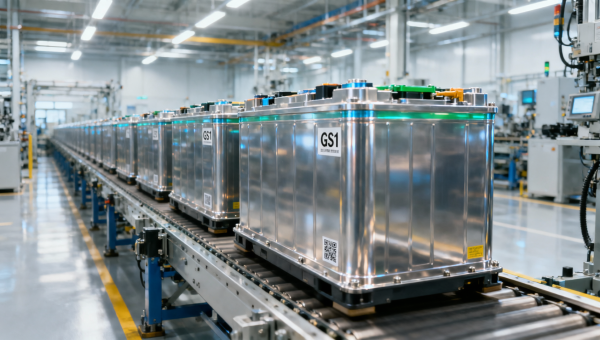
 China Launches Battery Lifecycle Traceability PlatformChina’s Battery Lifecycle Traceability Platform is live: mandatory GS1 registration for NEV & C&I battery exports starts April 1, 2026—ensure compliance now!
 US Military Restricts Arabian Sea East of Strait of HormuzUS Military Restricts Arabian Sea east of Strait of Hormuz—impacting solar PV, water treatment & fire safety exports to GCC. Act now to mitigate 12–18 day delays & 25% insurance hikes.
 Horizon Robotics Launches 'Starry Sky' Cockpit-ADAS Fusion ChipHorizon Robotics 'Starry Sky' cockpit-ADAS fusion chip launches April 2026 — cut BOM costs up to $400/vehicle. Key for exporters targeting MENA & ASEAN.
 China's Construction Machinery Exports Up 33.4% YoY in Jan–Feb 2026China's construction machinery exports surged 33.4% YoY in Jan–Feb 2026—driven by localized service in MEA & LatAm. Discover what this means for your global equipment strategy.
 EU CBAM Steel Carbon Tariff Takes Full Effect on Jan 1, 2026EU CBAM steel carbon tariff takes full effect Jan 1, 2026—exporters must submit verified lifecycle emissions data now. Act before delays & rejections hit.
 Japan Boosts Rapidus with ¥631.5B; China Semiconductor Export Opportunities RiseJapan’s ¥631.5B Rapidus boost unlocks China semiconductor export opportunities—especially in high-purity chemicals, precision components & cleanroom equipment. Act now.
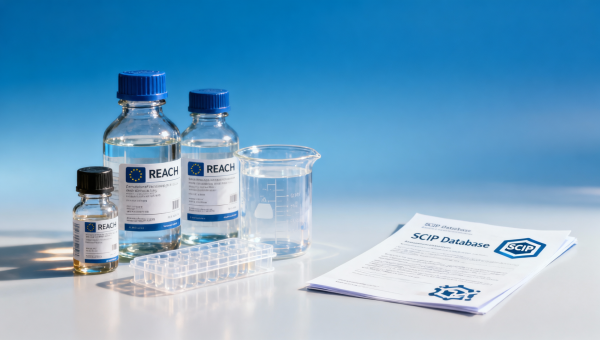
 EU REACH Adds 12 SVHCs: Impact on China's Chemical, Plastic & Coating ExportsEU REACH adds 12 SVHCs, impacting China's chemical, plastic & coating exports. Learn key compliance actions & market risks before the Oct 2026 deadline.
 China Launches First Global Battery Lifecycle Traceability PlatformChina launches the first global battery lifecycle traceability platform, revolutionizing EV and energy storage compliance. Learn how this impacts manufacturers, exporters, and recyclers worldwide.
 Vietnam's Home Energy Storage Demand Doubles, Boosting Chinese ExportsVietnam's home energy storage demand doubles, boosting Chinese exports of inverters & LFP batteries. Learn how 217% export growth creates opportunities amid power instability.
 EU REACH Adds 12 SVHCs: China's Chemical, Plastic, and Coating Exports Must Comply Within 6 MonthsEU REACH adds 12 new SVHCs, impacting China's chemical, plastic, and coating exports. Companies must comply with SCIP notifications within 6 months. Learn key actions for affected industries.
 China Releases 100 5G Factory Applications Covering Key Export IndustriesChina's MIIT releases 100 5G factory applications, transforming key export industries like automotive, PCB, and textiles. Discover how these smart manufacturing solutions impact global supply chains and supplier evaluations.
 U.S.-Iran Ceasefire Takes Effect, Strait of Hormuz Shipping Returns to Normal, Middle East Logistics Costs Drop 35%U.S.-Iran ceasefire stabilizes Strait of Hormuz shipping, cutting Middle East logistics costs by 35%. Learn how exporters of industrial goods & solar equipment can benefit from improved trade routes.
 China-Thailand Agricultural & Green Manufacturing Cooperation: Key Impacts on Rubber, Farm Machinery, and Solar SectorsExplore how China-Thailand agricultural & green manufacturing cooperation impacts rubber, farm machinery, and solar sectors. Learn about reduced compliance costs and faster market access for exporters.
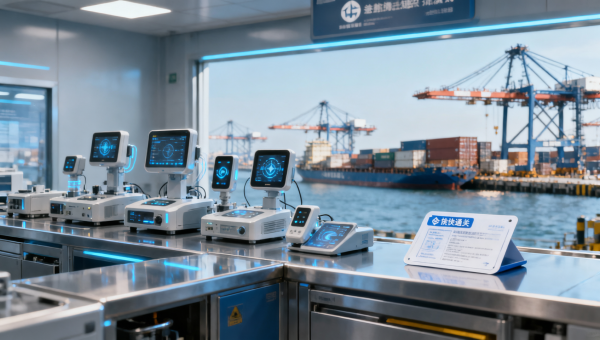
 Hainan Launches 'Zero Wait' Customs for Medical Devices & Smart SensorsHainan's 'zero wait' customs for medical devices & smart sensors slashes export cycles by 50% at Yangpu Port. Urgent orders to ASEAN, Middle East & Latin America now clear in 30 minutes. Learn how this boosts time-sensitive exports.
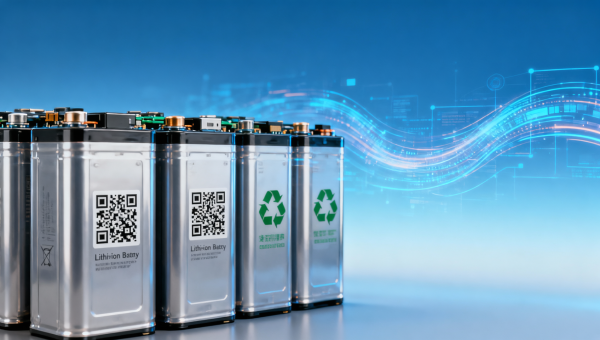
 China Launches Full Lifecycle Battery Traceability Platform, Mandates Export ComplianceChina's new battery traceability platform mandates export compliance for EU, US & South Korea markets. Learn how battery manufacturers, NEV producers, and energy storage providers can adapt to avoid clearance barriers and secure certifications.
 U.S. Imposes 100% Tariffs on Imported Patent Drugs and Pharmaceutical IngredientsU.S. imposes 100% tariffs on imported patent drugs and pharmaceutical ingredients, impacting global API supply chains. Learn how this affects manufacturers, importers, and compliance strategies.
 China-Thailand Agricultural & Green Manufacturing Cooperation: Key ImpactsExplore how China-Thailand agricultural & green manufacturing cooperation impacts rubber, farm machinery & solar sectors. Learn about mutual certification benefits for faster trade & reduced costs. Key insights for businesses.
















Popular Tags
Global Trade Insights & Industry
Our mission is to empower global exporters and importers with data-driven insights that foster strategic growth.
Search News
Popular Tags
Industry Overview
The global commercial kitchen equipment market is projected to reach $112 billion by 2027. Driven by urbanization, the rise of e-commerce food delivery, and strict hygiene regulations.