

Ruikang Medical Fined 100k CNY for Equipment Bribery
On April 15, Ruikang Medical was fined 100,000 CNY by Shandong’s market regulation authority for providing six medical devices free of charge to a public hospital in Yantai — an act classified as commercial bribery under the Anti-Unfair Competition Law (2025 Revision). This enforcement action signals tightening compliance scrutiny for China-based medical device suppliers, particularly those employing equipment-for-consumables or free-deployment-plus-service models. Companies engaged in domestic distribution, cross-border supply chain coordination, and international OEM/ODM partnerships should closely monitor its implications.
Event Overview
According to the official disclosure on Credit China dated April 15, Ruikang Medical was penalized 100,000 CNY by the Shandong Provincial Market Regulation Administration. The violation involved the无偿 provision of six medical devices to a public hospital in Yantai, Shandong. The authority determined this conduct constituted commercial bribery under the Anti-Unfair Competition Law (2025 Revision). No further procedural details — such as appeal status or internal remediation measures — have been publicly confirmed.
Industries Affected by This Enforcement Action
Domestic Distribution & Channel Operators
Why affected: These entities frequently rely on equipment placement — often bundled with long-term service agreements or consumables commitments — to secure hospital contracts. The ruling directly challenges the legality of such arrangements when no fair market value exchange is documented.
Impact: Increased legal exposure for existing deployment contracts; potential re-evaluation of revenue recognition, contract terms, and audit readiness for anti-bribery compliance.
OEM/ODM Suppliers Serving Chinese Distributors
Why affected: While not directly involved in hospital contracting, these manufacturers may be contractually linked to downstream commercial practices (e.g., co-branded equipment, shared service logistics). Their quality management systems and business ethics documentation may now face enhanced due diligence from overseas clients assessing supplier integrity.
Impact: Greater demand for third-party compliance attestations; heightened scrutiny during international customer audits, especially in regulated markets (EU, US, GCC).
Export-Oriented Medical Device Manufacturers
Why affected: International buyers increasingly reference domestic regulatory behavior as proxy for corporate governance maturity. A domestic bribery finding — even if isolated — may trigger deeper contractual reviews or revised risk scoring in procurement policies.
Impact: Potential delays in tender qualification; increased requests for anti-corruption policy disclosures, gift-and-hospitality logs, or channel partner vetting procedures.
What Relevant Enterprises or Practitioners Should Focus On Now
Monitor official guidance on ‘value exchange’ thresholds
Current enforcement focuses on absence of consideration — not necessarily price. Enterprises should track upcoming provincial-level interpretations or case summaries that clarify what constitutes ‘reasonable support’ (e.g., short-term loaner units, training-only hardware) versus prohibited inducement.
Review active equipment deployment agreements for documentation rigor
Contracts involving equipment placement must explicitly define purpose, duration, ownership, return conditions, and any associated service or consumables obligations — all supported by contemporaneous valuation records. Blanket ‘free’ labels without justification are now high-risk.
Distinguish between regulatory signal and operational impact
This penalty reflects application of newly revised legal standards — not a sudden shift in enforcement volume. Companies should avoid overcorrecting across all channels, but instead prioritize high-exposure segments: public hospitals, government tenders, and multi-year service-linked deployments.
Prepare for upstream and downstream alignment
Distributors using equipment-based models should proactively engage OEM partners and service providers to align on compliant documentation standards and joint training — especially where shared branding or integrated billing occurs.
Editorial Observation / Industry Perspective
This case is best understood not as an isolated penalty, but as a calibrated signal confirming the operationalization of the Anti-Unfair Competition Law (2025 Revision) in healthcare procurement contexts. From industry perspective, it marks the transition from principle-based warnings to precedent-backed enforcement — particularly targeting structural incentives rather than individual misconduct. It does not yet indicate systemic investigations or retroactive audits, but it does raise the baseline expectation for commercially transparent device deployment. Ongoing attention is warranted because future cases may extend liability to indirect beneficiaries (e.g., service subcontractors, software platform providers embedded in equipment ecosystems).
Conclusion
This enforcement underscores that compliance in China’s medical device sector is shifting from product-centric regulation toward end-to-end commercial practice oversight. For stakeholders, it is more accurate to interpret this as a reinforcement of existing legal boundaries — not a new regulatory frontier. Prudent response lies in targeted documentation upgrades and proactive channel partner alignment, rather than broad operational overhaul.
Information Source
Main source: Credit China (credit.china.gov.cn), April 15 disclosure. No additional official documents or judicial interpretations related to this specific case have been published. Continued observation is recommended for follow-up announcements from Shandong Provincial Market Regulation Administration or SAMR’s Anti-Unfair Competition Bureau.
Recommended News
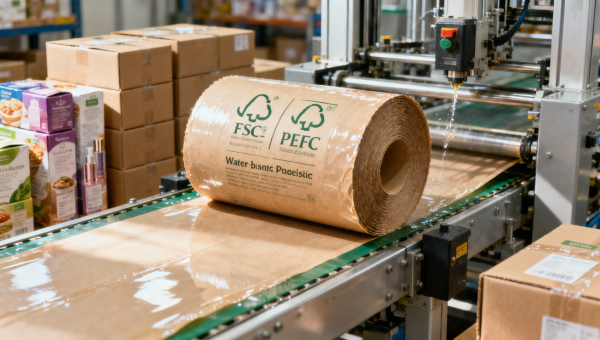
 2026 Jan–Feb Paper Industry Profits +6.1%; Green Packaging Export Premium EmergesGreen packaging export premium drives +6.1% paper industry profits in Jan–Feb 2026 — discover how FSC/PEFC certification and water-based processes boost margins for eco-friendly, food & cosmetics packaging exporters.
 Desay SV Automotive Files for H-Share Listing, Boosts Supply Chain TransparencyDesay SV Automotive's H-share listing filing boosts supply chain transparency — key for car electronics exporters, PCB suppliers & IATF 16949-certified manufacturers.
 NetEase Interactive Entertainment Market Head Moves OverseasNetEase Interactive Entertainment's marketing head moves overseas—key signal for AI, mobile accessories & wearables exporters targeting NA, EU, JP, KR markets.
 Nanchang Qingyunpu Solar+EMC Project Tender Signals Global ShiftNanchang Qingyunpu Solar+EMC tender signals global shift to performance-based energy solutions—key for solar, lighting & smart factory exporters.
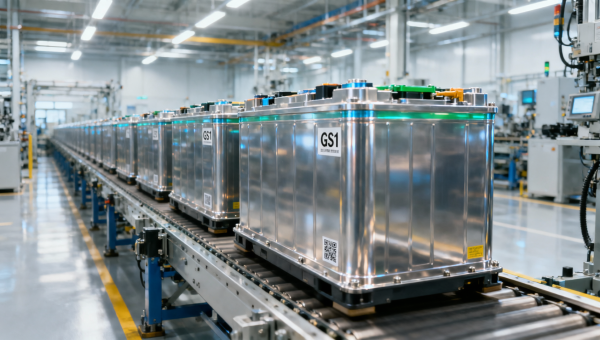
 China Launches Battery Lifecycle Traceability PlatformChina’s Battery Lifecycle Traceability Platform is live: mandatory GS1 registration for NEV & C&I battery exports starts April 1, 2026—ensure compliance now!
 US Military Restricts Arabian Sea East of Strait of HormuzUS Military Restricts Arabian Sea east of Strait of Hormuz—impacting solar PV, water treatment & fire safety exports to GCC. Act now to mitigate 12–18 day delays & 25% insurance hikes.
 Horizon Robotics Launches 'Starry Sky' Cockpit-ADAS Fusion ChipHorizon Robotics 'Starry Sky' cockpit-ADAS fusion chip launches April 2026 — cut BOM costs up to $400/vehicle. Key for exporters targeting MENA & ASEAN.
 China's Construction Machinery Exports Up 33.4% YoY in Jan–Feb 2026China's construction machinery exports surged 33.4% YoY in Jan–Feb 2026—driven by localized service in MEA & LatAm. Discover what this means for your global equipment strategy.
 EU CBAM Steel Carbon Tariff Takes Full Effect on Jan 1, 2026EU CBAM steel carbon tariff takes full effect Jan 1, 2026—exporters must submit verified lifecycle emissions data now. Act before delays & rejections hit.
 Japan Boosts Rapidus with ¥631.5B; China Semiconductor Export Opportunities RiseJapan’s ¥631.5B Rapidus boost unlocks China semiconductor export opportunities—especially in high-purity chemicals, precision components & cleanroom equipment. Act now.
 EU REACH Adds 12 SVHCs: Impact on China's Chemical, Plastic & Coating ExportsEU REACH adds 12 SVHCs, impacting China's chemical, plastic & coating exports. Learn key compliance actions & market risks before the Oct 2026 deadline.
 China Launches First Global Battery Lifecycle Traceability PlatformChina launches the first global battery lifecycle traceability platform, revolutionizing EV and energy storage compliance. Learn how this impacts manufacturers, exporters, and recyclers worldwide.
 Vietnam's Home Energy Storage Demand Doubles, Boosting Chinese ExportsVietnam's home energy storage demand doubles, boosting Chinese exports of inverters & LFP batteries. Learn how 217% export growth creates opportunities amid power instability.
 EU REACH Adds 12 SVHCs: China's Chemical, Plastic, and Coating Exports Must Comply Within 6 MonthsEU REACH adds 12 new SVHCs, impacting China's chemical, plastic, and coating exports. Companies must comply with SCIP notifications within 6 months. Learn key actions for affected industries.
 China Releases 100 5G Factory Applications Covering Key Export IndustriesChina's MIIT releases 100 5G factory applications, transforming key export industries like automotive, PCB, and textiles. Discover how these smart manufacturing solutions impact global supply chains and supplier evaluations.
 U.S.-Iran Ceasefire Takes Effect, Strait of Hormuz Shipping Returns to Normal, Middle East Logistics Costs Drop 35%U.S.-Iran ceasefire stabilizes Strait of Hormuz shipping, cutting Middle East logistics costs by 35%. Learn how exporters of industrial goods & solar equipment can benefit from improved trade routes.
 China-Thailand Agricultural & Green Manufacturing Cooperation: Key Impacts on Rubber, Farm Machinery, and Solar SectorsExplore how China-Thailand agricultural & green manufacturing cooperation impacts rubber, farm machinery, and solar sectors. Learn about reduced compliance costs and faster market access for exporters.
 Hainan Launches 'Zero Wait' Customs for Medical Devices & Smart SensorsHainan's 'zero wait' customs for medical devices & smart sensors slashes export cycles by 50% at Yangpu Port. Urgent orders to ASEAN, Middle East & Latin America now clear in 30 minutes. Learn how this boosts time-sensitive exports.
 China Launches Full Lifecycle Battery Traceability Platform, Mandates Export ComplianceChina's new battery traceability platform mandates export compliance for EU, US & South Korea markets. Learn how battery manufacturers, NEV producers, and energy storage providers can adapt to avoid clearance barriers and secure certifications.
 U.S. Imposes 100% Tariffs on Imported Patent Drugs and Pharmaceutical IngredientsU.S. imposes 100% tariffs on imported patent drugs and pharmaceutical ingredients, impacting global API supply chains. Learn how this affects manufacturers, importers, and compliance strategies.
 China-Thailand Agricultural & Green Manufacturing Cooperation: Key ImpactsExplore how China-Thailand agricultural & green manufacturing cooperation impacts rubber, farm machinery & solar sectors. Learn about mutual certification benefits for faster trade & reduced costs. Key insights for businesses.



















Popular Tags
Global Trade Insights & Industry
Our mission is to empower global exporters and importers with data-driven insights that foster strategic growth.
Search News
Popular Tags
Industry Overview
The global commercial kitchen equipment market is projected to reach $112 billion by 2027. Driven by urbanization, the rise of e-commerce food delivery, and strict hygiene regulations.