

AI+New Materials Summit at Canton Fair Closes
From April 9–12, 2026, the inaugural ‘AI+New Materials’ Summit held alongside the Canton Fair in Nansha, Guangzhou concluded with notable engagement from international certification bodies and Tier 1 automotive procurement teams—particularly from Germany’s TÜV and Japan’s JIS-accredited laboratories. The event signals growing cross-border demand for AI-integrated testing and optical instruments, especially among sectors reliant on high-precision surface inspection and real-time metrology.
Event Overview
The ‘AI+New Materials’ Summit took place from April 9 to 12, 2026, in Guangzhou’s Nansha district. It drew participation from German TÜV, Japanese JIS-certified laboratories, and multiple Tier 1 automotive suppliers. Attendees expressed bulk inquiry interest in testing and optical instruments equipped with AI-powered visual recognition and edge computing modules. Key technical requirements highlighted included metal surface defect detection accuracy ≥99.97%, real-time analysis latency <80 ms, and compatibility with ISO/IEC 17025 calibration standards.
Impact on Specific Industry Segments
Direct Export-Oriented Instrument Manufacturers
These firms face immediate demand signals for AI-enhanced inspection hardware tailored to international certification workflows. The focus on ISO/IEC 17025 compatibility and low-latency performance suggests shifting buyer expectations—not just toward functionality, but verifiable conformity under recognized lab accreditation frameworks.
Materials Testing Service Providers
Third-party labs and contract testing providers may see increased requests for validation support aligned with AI-augmented instrument deployment. Since TÜV and JIS participants emphasized calibration compatibility, service providers offering traceable, standards-aligned verification—especially for edge-computed outputs—could experience rising inbound inquiries.
Automotive Tier 1 Suppliers (Procurement & QA Functions)
For Tier 1 procurement and quality assurance teams, the summit reflects a tightening of technical thresholds for incoming inspection equipment. The emphasis on ≥99.97% defect recognition accuracy and sub-80ms latency indicates evolving internal QA benchmarks—potentially influencing near-term sourcing RFPs and supplier qualification criteria.
Industrial Automation Integrators
Integrators deploying vision-guided systems in metal fabrication or precision machining lines may need to reassess interoperability requirements. The expressed interest in edge-computing–enabled instruments implies stronger demand for plug-and-play integration with existing MES or SPC platforms—particularly where real-time feedback loops are mission-critical.
What Relevant Enterprises or Practitioners Should Monitor and Act On
Track official follow-up announcements from TÜV, JIS, and participating Tier 1s
No formal procurement timelines or tender releases were confirmed during the summit. However, the volume and specificity of inquiries suggest potential pilot programs or pre-qualification phases may be initiated in Q3–Q4 2026—especially for instruments meeting the stated accuracy and latency specs.
Verify alignment with ISO/IEC 17025 calibration documentation protocols
Since calibration compatibility was explicitly cited as a requirement—not merely a preference—manufacturers and integrators should audit whether their current test reports, uncertainty budgets, and traceability statements meet the evidentiary expectations of TÜV and JIS-accredited labs.
Distinguish between inquiry volume and actual order conversion
The reported ‘bulk inquiries’ reflect early-stage technical vetting, not committed purchase orders. Companies should avoid scaling production or supply chain commitments until formal RFIs or qualification milestones are issued—particularly given the narrow performance windows specified (e.g., ≤0.03% error rate).
Prepare for localized technical dialogue with certification stakeholders
Given the involvement of TÜV and JIS representatives, enterprises should designate personnel fluent in both technical metrology terminology and relevant certification processes—and ensure documentation is available in English with clear mapping to ISO/IEC 17025 clauses.
Editorial Perspective / Industry Observation
From an industry perspective, this summit functions less as a transactional outcome and more as a diagnostic signal: it reveals how advanced manufacturing quality assurance is converging with AI infrastructure readiness at the point of inspection. Analysis来看, the specificity of technical thresholds (e.g., 99.97% accuracy, <80ms latency) suggests these are not aspirational targets—but rather minimum viable thresholds emerging from actual production-line pain points in automotive and high-end metalworking. Observation来看, the presence of both German and Japanese certification entities—traditionally conservative in adopting AI-driven metrology—indicates a threshold shift in institutional acceptance. Current more appropriate interpretation is that this marks the beginning of a multi-year alignment phase between AI instrument capabilities and internationally accepted calibration and validation practices—not yet a market inflection point, but a clear marker of directionality.
This event underscores a structural shift: AI is no longer evaluated solely on algorithmic novelty, but on its measurable, auditable contribution to certified measurement integrity. For stakeholders across the testing instrumentation value chain, sustained attention to calibration traceability, latency-bound architecture design, and cross-border certification language will be more consequential than feature-set expansion alone.
Information Source: Official summary released by the Canton Fair Organizing Committee and co-organizers of the ‘AI+New Materials’ Summit, dated April 12, 2026. Note: Tender timelines, vendor shortlists, and formal certification pathway updates remain pending and require ongoing monitoring.
Recommended News
 2026 Jan–Feb Paper Industry Profits +6.1%; Green Packaging Export Premium EmergesGreen packaging export premium drives +6.1% paper industry profits in Jan–Feb 2026 — discover how FSC/PEFC certification and water-based processes boost margins for eco-friendly, food & cosmetics packaging exporters.
 Desay SV Automotive Files for H-Share Listing, Boosts Supply Chain TransparencyDesay SV Automotive's H-share listing filing boosts supply chain transparency — key for car electronics exporters, PCB suppliers & IATF 16949-certified manufacturers.
 NetEase Interactive Entertainment Market Head Moves OverseasNetEase Interactive Entertainment's marketing head moves overseas—key signal for AI, mobile accessories & wearables exporters targeting NA, EU, JP, KR markets.
 Nanchang Qingyunpu Solar+EMC Project Tender Signals Global ShiftNanchang Qingyunpu Solar+EMC tender signals global shift to performance-based energy solutions—key for solar, lighting & smart factory exporters.
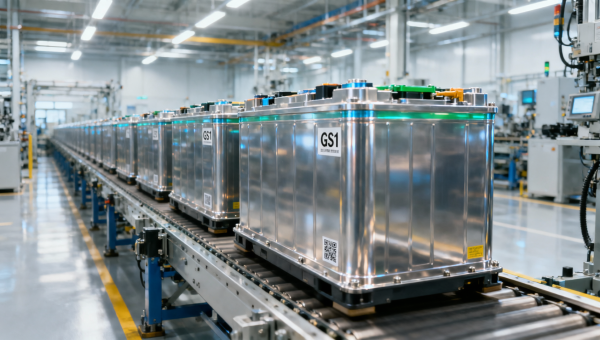
 China Launches Battery Lifecycle Traceability PlatformChina’s Battery Lifecycle Traceability Platform is live: mandatory GS1 registration for NEV & C&I battery exports starts April 1, 2026—ensure compliance now!
 US Military Restricts Arabian Sea East of Strait of HormuzUS Military Restricts Arabian Sea east of Strait of Hormuz—impacting solar PV, water treatment & fire safety exports to GCC. Act now to mitigate 12–18 day delays & 25% insurance hikes.
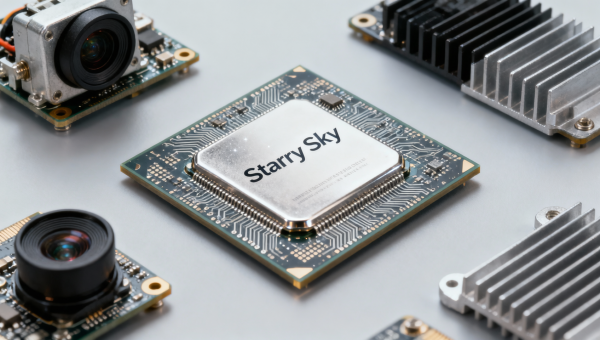
 Horizon Robotics Launches 'Starry Sky' Cockpit-ADAS Fusion ChipHorizon Robotics 'Starry Sky' cockpit-ADAS fusion chip launches April 2026 — cut BOM costs up to $400/vehicle. Key for exporters targeting MENA & ASEAN.
 China's Construction Machinery Exports Up 33.4% YoY in Jan–Feb 2026China's construction machinery exports surged 33.4% YoY in Jan–Feb 2026—driven by localized service in MEA & LatAm. Discover what this means for your global equipment strategy.
 EU CBAM Steel Carbon Tariff Takes Full Effect on Jan 1, 2026EU CBAM steel carbon tariff takes full effect Jan 1, 2026—exporters must submit verified lifecycle emissions data now. Act before delays & rejections hit.
 Japan Boosts Rapidus with ¥631.5B; China Semiconductor Export Opportunities RiseJapan’s ¥631.5B Rapidus boost unlocks China semiconductor export opportunities—especially in high-purity chemicals, precision components & cleanroom equipment. Act now.
 EU REACH Adds 12 SVHCs: Impact on China's Chemical, Plastic & Coating ExportsEU REACH adds 12 SVHCs, impacting China's chemical, plastic & coating exports. Learn key compliance actions & market risks before the Oct 2026 deadline.
 China Launches First Global Battery Lifecycle Traceability PlatformChina launches the first global battery lifecycle traceability platform, revolutionizing EV and energy storage compliance. Learn how this impacts manufacturers, exporters, and recyclers worldwide.
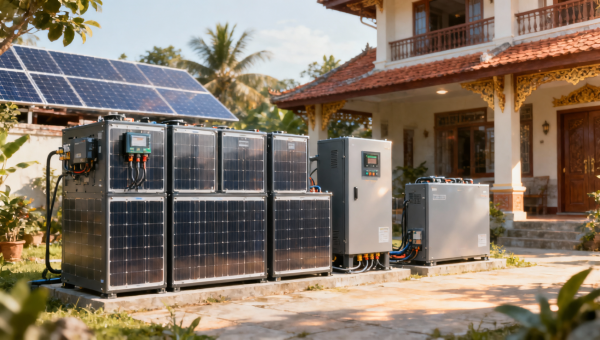
 Vietnam's Home Energy Storage Demand Doubles, Boosting Chinese ExportsVietnam's home energy storage demand doubles, boosting Chinese exports of inverters & LFP batteries. Learn how 217% export growth creates opportunities amid power instability.
 EU REACH Adds 12 SVHCs: China's Chemical, Plastic, and Coating Exports Must Comply Within 6 MonthsEU REACH adds 12 new SVHCs, impacting China's chemical, plastic, and coating exports. Companies must comply with SCIP notifications within 6 months. Learn key actions for affected industries.
 China Releases 100 5G Factory Applications Covering Key Export IndustriesChina's MIIT releases 100 5G factory applications, transforming key export industries like automotive, PCB, and textiles. Discover how these smart manufacturing solutions impact global supply chains and supplier evaluations.
 U.S.-Iran Ceasefire Takes Effect, Strait of Hormuz Shipping Returns to Normal, Middle East Logistics Costs Drop 35%U.S.-Iran ceasefire stabilizes Strait of Hormuz shipping, cutting Middle East logistics costs by 35%. Learn how exporters of industrial goods & solar equipment can benefit from improved trade routes.
 China-Thailand Agricultural & Green Manufacturing Cooperation: Key Impacts on Rubber, Farm Machinery, and Solar SectorsExplore how China-Thailand agricultural & green manufacturing cooperation impacts rubber, farm machinery, and solar sectors. Learn about reduced compliance costs and faster market access for exporters.
 Hainan Launches 'Zero Wait' Customs for Medical Devices & Smart SensorsHainan's 'zero wait' customs for medical devices & smart sensors slashes export cycles by 50% at Yangpu Port. Urgent orders to ASEAN, Middle East & Latin America now clear in 30 minutes. Learn how this boosts time-sensitive exports.
 China Launches Full Lifecycle Battery Traceability Platform, Mandates Export ComplianceChina's new battery traceability platform mandates export compliance for EU, US & South Korea markets. Learn how battery manufacturers, NEV producers, and energy storage providers can adapt to avoid clearance barriers and secure certifications.
 U.S. Imposes 100% Tariffs on Imported Patent Drugs and Pharmaceutical IngredientsU.S. imposes 100% tariffs on imported patent drugs and pharmaceutical ingredients, impacting global API supply chains. Learn how this affects manufacturers, importers, and compliance strategies.
 China-Thailand Agricultural & Green Manufacturing Cooperation: Key ImpactsExplore how China-Thailand agricultural & green manufacturing cooperation impacts rubber, farm machinery & solar sectors. Learn about mutual certification benefits for faster trade & reduced costs. Key insights for businesses.


















Popular Tags
Global Trade Insights & Industry
Our mission is to empower global exporters and importers with data-driven insights that foster strategic growth.
Search News
Popular Tags
Industry Overview
The global commercial kitchen equipment market is projected to reach $112 billion by 2027. Driven by urbanization, the rise of e-commerce food delivery, and strict hygiene regulations.