

Meituan Flash Buy Opens 'Lightning Bangbang' to Global Logistics Providers
On April 15, Meituan Flash Buy announced the industry-wide opening of its ‘Lightning Bangbang’ supply chain platform — a move that extends China’s mature instant retail infrastructure to overseas warehousing and delivery service providers. This development is especially relevant for cross-border e-commerce platforms, community group-buying operators, and regional distributors in the Middle East and Southeast Asia, as it enables low-cost access to intelligent inventory selection, cross-border bulk procurement comparison, multi-warehouse fulfillment coordination, and AI-powered repurchase forecasting. The platform currently connects over 200 third-party Chinese logistics service providers and supports English and Arabic interfaces alongside API integration.
Event Overview
On April 15, Meituan Flash Buy officially opened its ‘Lightning Bangbang’ supply chain platform to all industry merchants. The platform offers four core capabilities: intelligent product assortment for inventory planning, cross-border collective procurement price comparison, multi-warehouse fulfillment scheduling, and AI-driven repurchase prediction modeling. It has integrated more than 200 third-party warehousing and distribution service providers in China and provides English and Arabic language support, along with standardized API connectivity.
Industries Affected by This Development
Direct Cross-Border Trading Enterprises
These enterprises may be affected because they rely on localized fulfillment speed and cost efficiency when serving end consumers in target markets. The platform lowers barriers to accessing China’s optimized inventory and logistics orchestration tools — potentially improving order-to-delivery timelines and reducing reliance on fragmented local logistics partners.
Regional E-Commerce Platforms (Middle East & Southeast Asia)
Local platforms face pressure to match delivery speed expectations shaped by global benchmarks. With ‘Lightning Bangbang’, they can integrate China-sourced supply chain logic — such as dynamic stock allocation and demand-based restocking signals — without building comparable infrastructure from scratch.
Community Group-Buying Operators
Such operators often manage high-frequency, low-margin transactions across hyperlocal catchment areas. Access to AI-driven repurchase forecasting and multi-warehouse routing could help them refine batch ordering, reduce spoilage risk (especially for perishables), and improve last-mile dispatch accuracy.
Cross-Border Distribution & Wholesalers
These intermediaries typically handle volume-based sourcing and regional redistribution. The platform’s cross-border procurement comparison function may shift negotiation leverage toward data-informed purchasing decisions — particularly where multiple Chinese suppliers offer similar SKUs with varying lead times or MOQs.
What Relevant Companies or Practitioners Should Monitor and Act On
Track official documentation and API specification updates
The platform’s current multilingual interface and API availability signal early-stage internationalization. Companies should monitor official technical documentation releases — especially around authentication protocols, data schema definitions, and error-handling standards — before initiating integration efforts.
Assess compatibility with existing warehouse management systems (WMS) and order management systems (OMS)
Since ‘Lightning Bangbang’ focuses on multi-warehouse scheduling and fulfillment coordination, successful adoption depends on interoperability. Firms should audit whether their current WMS/OMS supports standardized message formats (e.g., JSON-based order sync, real-time inventory delta feeds) required for two-way integration.
Evaluate use-case fit for specific product categories and geographies
The platform’s AI repurchase model and smart assortment features are likely trained on Chinese consumer behavior and fast-moving urban logistics patterns. Users in emerging markets should test performance against local demand volatility, payment cycle differences, and infrastructural constraints — rather than assuming plug-and-play applicability.
Prepare internal alignment between procurement, logistics, and tech teams
Adoption requires coordination across functions: procurement teams must interpret cross-border price-comparison outputs; logistics managers need to map local warehouse capacities into the platform’s scheduling engine; and IT teams must manage API keys, rate limits, and fallback protocols. Early cross-functional workshops are advisable.
Editorial Perspective / Industry Observation
From an industry perspective, this initiative is better understood as an infrastructure export signal — not yet a fully scaled operational reality. While over 200 Chinese logistics providers are onboarded, the extent of live cross-border transaction volume routed through the platform remains unconfirmed. Analysis来看, the move reflects a broader trend: Chinese digital commerce infrastructure providers are shifting from domestic scale optimization to modular capability licensing. Observation来看, the emphasis on API-first design and multilingual UI suggests prioritization of developer-led adoption over branded white-label solutions. Current更值得关注的是 how quickly regional platforms in the Middle East and Southeast Asia begin publishing integration case studies — which would indicate whether this is perceived as a tactical tool or strategic dependency.

Conclusion
This announcement marks a formal step toward externalizing China’s instant retail supply chain architecture — but it does not imply immediate market transformation. Its significance lies less in current deployment depth and more in signaling a new vector for global logistics capability transfer: one based on interoperable software modules rather than physical asset expansion. For stakeholders, it is更适合理解为 an early-access infrastructure option — requiring technical due diligence and use-case validation before operational commitment.
Source Attribution
Main source: Official announcement by Meituan Flash Buy, April 15.
Points requiring ongoing observation: Actual cross-border transaction volume, regional platform integration timelines, and performance benchmarks in non-Chinese operating environments.
Recommended News
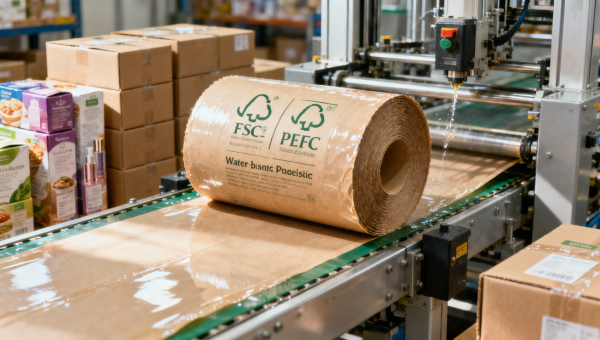
 2026 Jan–Feb Paper Industry Profits +6.1%; Green Packaging Export Premium EmergesGreen packaging export premium drives +6.1% paper industry profits in Jan–Feb 2026 — discover how FSC/PEFC certification and water-based processes boost margins for eco-friendly, food & cosmetics packaging exporters.
 Desay SV Automotive Files for H-Share Listing, Boosts Supply Chain TransparencyDesay SV Automotive's H-share listing filing boosts supply chain transparency — key for car electronics exporters, PCB suppliers & IATF 16949-certified manufacturers.
 NetEase Interactive Entertainment Market Head Moves OverseasNetEase Interactive Entertainment's marketing head moves overseas—key signal for AI, mobile accessories & wearables exporters targeting NA, EU, JP, KR markets.
 Nanchang Qingyunpu Solar+EMC Project Tender Signals Global ShiftNanchang Qingyunpu Solar+EMC tender signals global shift to performance-based energy solutions—key for solar, lighting & smart factory exporters.
 China Launches Battery Lifecycle Traceability PlatformChina’s Battery Lifecycle Traceability Platform is live: mandatory GS1 registration for NEV & C&I battery exports starts April 1, 2026—ensure compliance now!
 US Military Restricts Arabian Sea East of Strait of HormuzUS Military Restricts Arabian Sea east of Strait of Hormuz—impacting solar PV, water treatment & fire safety exports to GCC. Act now to mitigate 12–18 day delays & 25% insurance hikes.
 Horizon Robotics Launches 'Starry Sky' Cockpit-ADAS Fusion ChipHorizon Robotics 'Starry Sky' cockpit-ADAS fusion chip launches April 2026 — cut BOM costs up to $400/vehicle. Key for exporters targeting MENA & ASEAN.
 China's Construction Machinery Exports Up 33.4% YoY in Jan–Feb 2026China's construction machinery exports surged 33.4% YoY in Jan–Feb 2026—driven by localized service in MEA & LatAm. Discover what this means for your global equipment strategy.
 EU CBAM Steel Carbon Tariff Takes Full Effect on Jan 1, 2026EU CBAM steel carbon tariff takes full effect Jan 1, 2026—exporters must submit verified lifecycle emissions data now. Act before delays & rejections hit.
 Japan Boosts Rapidus with ¥631.5B; China Semiconductor Export Opportunities RiseJapan’s ¥631.5B Rapidus boost unlocks China semiconductor export opportunities—especially in high-purity chemicals, precision components & cleanroom equipment. Act now.
 EU REACH Adds 12 SVHCs: Impact on China's Chemical, Plastic & Coating ExportsEU REACH adds 12 SVHCs, impacting China's chemical, plastic & coating exports. Learn key compliance actions & market risks before the Oct 2026 deadline.
 China Launches First Global Battery Lifecycle Traceability PlatformChina launches the first global battery lifecycle traceability platform, revolutionizing EV and energy storage compliance. Learn how this impacts manufacturers, exporters, and recyclers worldwide.
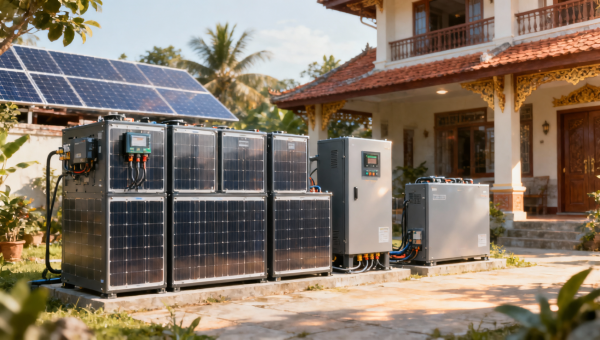
 Vietnam's Home Energy Storage Demand Doubles, Boosting Chinese ExportsVietnam's home energy storage demand doubles, boosting Chinese exports of inverters & LFP batteries. Learn how 217% export growth creates opportunities amid power instability.
 EU REACH Adds 12 SVHCs: China's Chemical, Plastic, and Coating Exports Must Comply Within 6 MonthsEU REACH adds 12 new SVHCs, impacting China's chemical, plastic, and coating exports. Companies must comply with SCIP notifications within 6 months. Learn key actions for affected industries.
 China Releases 100 5G Factory Applications Covering Key Export IndustriesChina's MIIT releases 100 5G factory applications, transforming key export industries like automotive, PCB, and textiles. Discover how these smart manufacturing solutions impact global supply chains and supplier evaluations.
 U.S.-Iran Ceasefire Takes Effect, Strait of Hormuz Shipping Returns to Normal, Middle East Logistics Costs Drop 35%U.S.-Iran ceasefire stabilizes Strait of Hormuz shipping, cutting Middle East logistics costs by 35%. Learn how exporters of industrial goods & solar equipment can benefit from improved trade routes.
 China-Thailand Agricultural & Green Manufacturing Cooperation: Key Impacts on Rubber, Farm Machinery, and Solar SectorsExplore how China-Thailand agricultural & green manufacturing cooperation impacts rubber, farm machinery, and solar sectors. Learn about reduced compliance costs and faster market access for exporters.
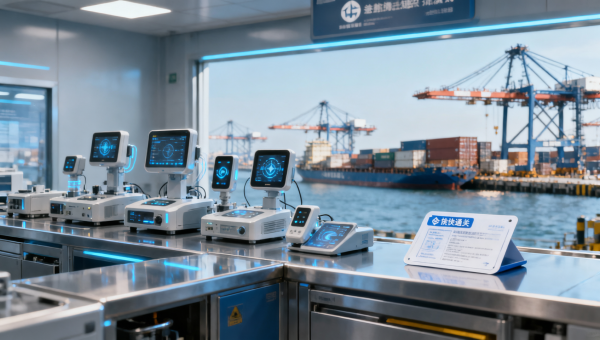
 Hainan Launches 'Zero Wait' Customs for Medical Devices & Smart SensorsHainan's 'zero wait' customs for medical devices & smart sensors slashes export cycles by 50% at Yangpu Port. Urgent orders to ASEAN, Middle East & Latin America now clear in 30 minutes. Learn how this boosts time-sensitive exports.
 China Launches Full Lifecycle Battery Traceability Platform, Mandates Export ComplianceChina's new battery traceability platform mandates export compliance for EU, US & South Korea markets. Learn how battery manufacturers, NEV producers, and energy storage providers can adapt to avoid clearance barriers and secure certifications.
 U.S. Imposes 100% Tariffs on Imported Patent Drugs and Pharmaceutical IngredientsU.S. imposes 100% tariffs on imported patent drugs and pharmaceutical ingredients, impacting global API supply chains. Learn how this affects manufacturers, importers, and compliance strategies.
 China-Thailand Agricultural & Green Manufacturing Cooperation: Key ImpactsExplore how China-Thailand agricultural & green manufacturing cooperation impacts rubber, farm machinery & solar sectors. Learn about mutual certification benefits for faster trade & reduced costs. Key insights for businesses.


















Popular Tags
Global Trade Insights & Industry
Our mission is to empower global exporters and importers with data-driven insights that foster strategic growth.
Search News
Popular Tags
Industry Overview
The global commercial kitchen equipment market is projected to reach $112 billion by 2027. Driven by urbanization, the rise of e-commerce food delivery, and strict hygiene regulations.