

What affects autonomous driving sensor accuracy in rain and fog?
Autonomous driving sensors are the backbone of safe perception, yet rain and fog can sharply reduce their accuracy by distorting signals, limiting visibility, and increasing noise. For technical evaluators, understanding how weather affects lidar, radar, cameras, and sensor fusion is essential when comparing system reliability. This article explores the key environmental factors, performance trade-offs, and evaluation priorities that determine sensor effectiveness in low-visibility driving conditions.
Why weather resilience matters in autonomous perception
In autonomous mobility, perception quality is not defined by ideal test tracks alone. Real-world deployment depends on how consistently Autonomous driving sensors detect lanes, vehicles, pedestrians, road edges, traffic signs, and free space when the environment becomes degraded. Rain and fog are among the most difficult conditions because they do not simply reduce visibility in a human sense; they change the physical behavior of light, radio waves, and image contrast across the sensor stack.
For technical assessment teams, this issue is especially important because weather sensitivity directly affects system-level safety margins, operational design domain boundaries, and fallback behavior. A platform that performs well in clear daytime conditions may show a sharp drop in object detection range, localization confidence, or classification stability during heavy rain or dense fog. These changes influence not only driving safety, but also validation cost, fleet uptime, and regulatory readiness.
Across the wider industrial ecosystem, weather-robust perception is also a strategic topic. B2B intelligence platforms such as GTIIN and TradeVantage track these developments because sensor performance has implications for automotive supply chains, semiconductor demand, edge computing requirements, testing services, and cross-border sourcing decisions. In other words, the accuracy of Autonomous driving sensors in poor weather is both a technical problem and an industry intelligence signal.
What changes in rain and fog
Rain and fog degrade perception through several mechanisms. The first is attenuation: energy emitted or received by a sensor is weakened before it reaches the target or returns to the receiver. The second is scattering: droplets or suspended particles redirect light or other signals, creating blur, false reflections, or lower signal-to-noise ratio. The third is occlusion: a target may be partially hidden or visually merged into the background. The fourth is contamination: water film, droplets, mud, or condensation on sensor covers can be as damaging as the atmosphere itself.
Fog mainly consists of tiny water droplets suspended in air. These droplets strongly scatter visible and near-infrared light, which makes camera and lidar performance vulnerable. Rain adds moving droplets, splashes, spray from nearby vehicles, reflections from wet roads, and dynamic clutter. In highway scenarios, these effects can combine with headlight glare, lane marking washout, and roadside water vapor, causing unstable detections that are difficult to model if testing is too limited.
How major sensor types respond to low-visibility conditions
No single modality solves the weather challenge completely. Each sensor family has strengths and weaknesses, which is why perception architectures increasingly depend on complementary sensing and robust fusion.
Cameras
Camera systems are highly valuable because they provide rich semantic detail, color information, lane interpretation, sign recognition, and vulnerable road user classification. However, rain and fog can severely reduce contrast, sharpness, and effective detection distance. Water on the lens may create streaking, blur, and refraction artifacts. Fog lowers scene visibility and makes object boundaries less distinct, especially for dark vehicles, road debris, or unlit pedestrians. Performance also depends heavily on image processing quality, dynamic range, and the ability of neural networks to handle weather-degraded inputs.
Lidar
Lidar offers precise 3D ranging and strong geometric awareness, but it is sensitive to atmospheric particles because emitted laser pulses can scatter off rain droplets and fog aerosols. In fog, backscatter may generate noisy points near the sensor, reducing effective range and confusing obstacle segmentation. In rain, drops and spray can create transient returns or lower point cloud density at longer distances. Sensor wavelength, beam divergence, power management, filtering logic, and protective housing all influence performance. Technical evaluators should pay attention not only to nominal range specifications but to weather-specific point cloud degradation patterns.
Radar
Radar is generally more weather-resilient than cameras and lidar, making it a core component in many adverse-weather strategies. It can maintain useful target detection through fog and rain where optical systems degrade more sharply. Yet radar is not immune to limitations. Heavy precipitation can still introduce clutter, reduce sensitivity, or complicate target separation in dense traffic. Radar also has lower native spatial resolution than camera or lidar, which can make small object classification, lane-level interpretation, or roadside structure mapping more difficult without advanced signal processing.
Ultrasonic and supporting sensors
Ultrasonic sensors are more relevant at low speeds for parking and close-range detection, but rainwater, puddles, and irregular reflective surfaces can still affect reliability. In addition, inertial measurement units, wheel odometry, GNSS, and high-definition maps may become more important in poor weather because they help stabilize localization when perception confidence drops.
Industry overview of weather impact on sensor modalities
The table below provides a practical overview for technical evaluators comparing Autonomous driving sensors under rain and fog conditions.
Key factors that influence sensor accuracy beyond the weather itself
When evaluating Autonomous driving sensors, weather intensity alone is not enough. Accuracy is shaped by a broader set of design and operational factors.
Sensor placement and housing
Mounting position changes exposure to spray, dirt, and airflow. Roof-mounted lidar may avoid some road splash but remain vulnerable to direct rainfall. Front bumper radar may maintain coverage but suffer from contamination or signal distortion through wet radomes. Cleaning systems, heating elements, hydrophobic coatings, and mechanical shielding can significantly alter bad-weather performance.
Signal processing and software robustness
The quality of adverse-weather filtering often determines whether raw sensing limitations become manageable or dangerous. Good software can suppress weather-induced noise, adapt thresholds, and assign lower confidence to uncertain measurements. Poor software may overreact to clutter or fail to recognize that visibility has fallen below safe operating limits.
Training data and scenario coverage
Perception models trained mostly on clear-weather datasets usually generalize poorly in fog or rain. Technical teams should examine how much true adverse-weather data was used, whether synthetic augmentation was employed, and whether scenario coverage includes night rain, highway spray, urban intersections, and mixed traffic with vulnerable road users.
Speed and braking context
A modest reduction in detection range may be acceptable at low speed but unacceptable at highway velocity. Accuracy must therefore be interpreted relative to stopping distance, prediction horizon, and maneuver complexity. The most useful weather tests connect sensor outputs to driving policy, not just isolated detection metrics.
Where sensor fusion creates value
Because each modality fails differently, sensor fusion is central to weather resilience. Radar may preserve longitudinal detection while cameras lose contrast. Lidar may maintain geometric structure in light rain when visual semantics are weak. Cameras may still read sign content or traffic light states when radar cannot. A well-designed fusion stack does not simply average signals; it reasons about confidence, redundancy, and disagreement between sensors.
For technical evaluators, the real question is not whether a vendor uses multiple Autonomous driving sensors, but how intelligently the system handles partial degradation. Does it reweight sensor inputs dynamically? Can it detect self-contamination? Does it trigger a minimal risk maneuver when weather exceeds the operational design domain? These are stronger indicators of maturity than headline claims about individual sensor range.
Typical evaluation scenarios for technical teams
A practical assessment framework should cover multiple scenarios rather than a single weather test. Common categories include controlled chamber validation, proving-ground rain generation, natural-weather fleet testing, and simulation-based edge-case expansion.
Practical priorities for comparing vendors or platforms
When benchmarking Autonomous driving sensors for industrial or program-level decisions, technical evaluators should prioritize evidence over specification sheets. First, ask for weather-specific performance data with clearly defined conditions, including precipitation rate, droplet density, speed, lighting, and road type. Second, review not just average accuracy but failure modes: missed detections, false positives, unstable tracking, and confidence collapse. Third, check whether test methods are repeatable and whether field results match controlled validation.
It is also useful to examine ecosystem maturity. Suppliers that provide transparent test documentation, scenario taxonomies, over-the-air update strategy, and contamination mitigation design are usually easier to integrate into long-term autonomous programs. For organizations operating across regions, market intelligence from platforms like GTIIN and TradeVantage can help identify which sensor suppliers, validation partners, and component makers are gaining traction in global supply chains.
Conclusion and next-step guidance
Rain and fog affect Autonomous driving sensors by reducing signal quality, obscuring targets, increasing noise, and exposing weaknesses in both hardware and software. Cameras often struggle with contrast and visibility, lidar can lose range through scattering and backscatter, and radar, while comparatively robust, still faces resolution and clutter trade-offs. The most reliable systems therefore depend on strong sensor fusion, contamination control, and scenario-based validation.
For technical evaluators, the best approach is to assess weather performance as a system capability rather than a single sensor claim. Focus on measurable degradation patterns, confidence management, operational design domain limits, and recovery behavior under real driving stress. In a fast-moving global market, combining technical testing with credible industry intelligence allows organizations to make better sourcing, partnership, and deployment decisions. That is where structured B2B insight becomes valuable: it helps turn isolated sensor data into practical strategy.
Recommended News
 Portable oxygen concentrators are quieter now, but are they easier to maintain?Portable oxygen concentrators are quieter, but are they easier to maintain? Explore service challenges, scenario-based insights, and smart ways to reduce downtime.
 Interactive whiteboards are underused when training stops after installationInteractive whiteboards often underperform when training ends at installation. Learn how continuous, role-based support boosts adoption, productivity, and ROI.
 Medical diagnostic equipment buying mistakes often start with workflow mismatchMedical diagnostic equipment buying mistakes often stem from workflow mismatch. Learn how to assess fit, avoid hidden costs, and choose scalable systems that support real clinical operations.
![]() Eco-friendly building materials can add compliance work, not just green valueEco-friendly building materials can boost sustainability but also add compliance work. Learn how they affect approvals, costs, timelines, and risk across key project scenarios.
Eco-friendly building materials can add compliance work, not just green valueEco-friendly building materials can boost sustainability but also add compliance work. Learn how they affect approvals, costs, timelines, and risk across key project scenarios. Ergonomic workspace design fails when posture is treated as the whole answerErgonomic workspace design fails when posture is the only focus. Learn how integrated planning improves productivity, retention, and workplace performance.
 Outdoor garden supplies demand changes faster than seasonal forecasts suggestOutdoor garden supplies demand is changing faster than seasonal forecasts. Discover key signals, sourcing strategies, and inventory tactics to stay competitive and capture growth.
 Sustainable home decor sells better when the material story is verifiableSustainable home decor wins more buyers when material claims are verifiable. Discover how traceable sourcing, certifications, and clear proof build trust and drive sales.
 Modern office furniture choices can raise complaints instead of comfortModern office furniture can improve productivity—or trigger costly complaints. Learn how to choose ergonomic, durable, flexible office solutions that support comfort and long-term value.
 Smart street lighting saves energy only when controls are tuned properlySmart street lighting saves energy only when controls are tuned to real traffic, safety, and maintenance needs. Learn how proper settings turn connected lighting into measurable ROI.
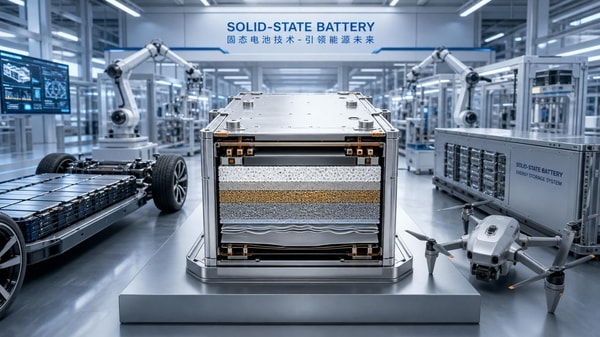
 Solid-state battery breakthroughs are real, but scaling is another storySolid-state battery breakthroughs are real, but scaling remains the real test. Explore where commercialization starts first, what limits adoption, and which markets may gain the earliest edge.
![]() Commercial LED lighting upgrades often disappoint in high-heat spacesCommercial LED lighting often underperforms in high-heat spaces. Learn the hidden causes, warning signs, and smart upgrade choices to improve reliability, safety, and long-term value.
Commercial LED lighting upgrades often disappoint in high-heat spacesCommercial LED lighting often underperforms in high-heat spaces. Learn the hidden causes, warning signs, and smart upgrade choices to improve reliability, safety, and long-term value.![]() Lithium battery storage projects look profitable until thermal risk is priced inLithium battery storage may look highly profitable, but thermal risk can change the real ROI. Discover the hidden costs, insurance impacts, and approval factors investors must assess.
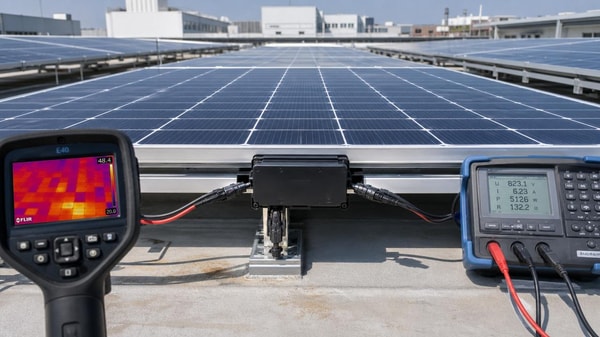
Lithium battery storage projects look profitable until thermal risk is priced inLithium battery storage may look highly profitable, but thermal risk can change the real ROI. Discover the hidden costs, insurance impacts, and approval factors investors must assess. Photovoltaic solar panels lose output for reasons many installers missPhotovoltaic solar panels lose output for more than dirt or age. Discover the hidden faults installers often miss and how smarter troubleshooting restores performance faster.
 Plant-based protein processing: why texture remains the hardest partPlant-based protein processing explained: discover why texture is the toughest challenge, how it affects scale-up and product quality, and what technical teams should evaluate for market-ready success.
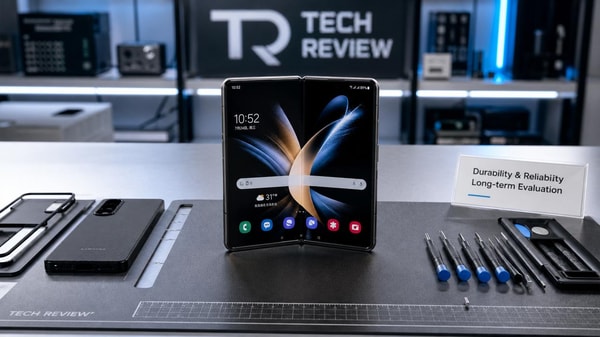
 Foldable screen technology still faces a trust gap on long-term durabilityFoldable screen technology still excites buyers, but durability concerns remain. Explore hinge reliability, screen wear, and smart buying tips before choosing a foldable phone.
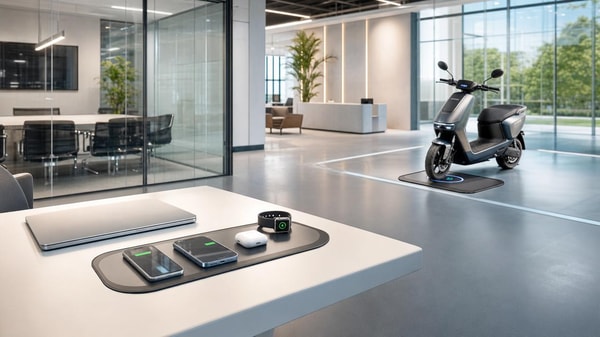
 Next-gen wireless charging sounds convenient, but what slows real rollout?Next-gen wireless charging looks effortless, but rollout is slowed by cost, efficiency, standards, and safety. Explore where real market value and adoption potential are emerging.
 Wearable technology adoption often stalls over charging habitsWearable technology adoption often slows when charging feels inconvenient. Discover practical buying checks, battery tips, and habit-based insights to choose a device you’ll actually keep using.
 Smart home devices wholesale is shifting from gadgets to ecosystemsSmart home devices wholesale is shifting from single gadgets to connected ecosystems. Learn how compatibility, repeat sales, and supplier strategy create stronger channel growth.
 Agri-PV systems can reduce land conflict, but not in every projectAgri-PV systems can ease land conflict, but only in the right scenarios. Explore where dual-use solar adds value, where risks rise, and how to screen projects before deployment.
![]() Organic fertilizers work slowly, so when do they make economic sense?Organic fertilizers can make strong economic sense when farms value premium pricing, healthier soils, and lower risk. See when slower returns lead to better long-term margins.
Organic fertilizers work slowly, so when do they make economic sense?Organic fertilizers can make strong economic sense when farms value premium pricing, healthier soils, and lower risk. See when slower returns lead to better long-term margins. Smart classroom solutions promise engagement, but what drives daily use?Smart classroom solutions succeed when they fit daily teaching workflows, integrate smoothly, and prove measurable value. Discover what drives real adoption and smarter investment.






Popular Tags
Global Trade Insights & Industry
Our mission is to empower global exporters and importers with data-driven insights that foster strategic growth.
Search News
Popular Tags
Industry Overview
The global commercial kitchen equipment market is projected to reach $112 billion by 2027. Driven by urbanization, the rise of e-commerce food delivery, and strict hygiene regulations.