

Where graphene applications in industry create value beyond the lab
Where graphene applications in industry move from research headlines to commercial impact, business evaluators need a clear view of real value creation. From lightweight composites and conductive coatings to energy storage and smart manufacturing, Graphene applications in industry are reshaping cost structures, product performance, and supply chain competitiveness. This article examines where adoption is gaining traction, what returns companies can expect, and how decision-makers can assess scalable opportunities beyond the lab.
For business evaluators, the central question is not whether graphene is scientifically impressive. It is where it already improves margins, product differentiation, or operational resilience enough to justify adoption risk. The short answer is that value is emerging most clearly in applications where graphene enhances an existing industrial system rather than requiring an entirely new one.
That is why the most commercially relevant opportunities today are often found in additives, coatings, conductive materials, thermal management layers, composite reinforcement, and energy-related components. In these cases, graphene can deliver measurable gains in durability, weight reduction, conductivity, corrosion resistance, or lifecycle performance without forcing companies to rebuild production from scratch.
At the same time, not every use case creates value at scale. Costs remain variable, quality standards are still uneven across suppliers, and many promising pilot projects struggle to move into repeatable industrial deployment. Decision-makers therefore need a practical lens: where does graphene solve a business problem better than incumbent materials, and under what supply, regulatory, and manufacturing conditions?
What business evaluators are really looking for in graphene applications in industry
When professionals search for Graphene applications in industry, they are rarely looking for a generic list of futuristic ideas. They usually want evidence of commercial relevance. Which sectors are buying? What performance gains are being monetized? How mature is the supply chain? And what adoption model reduces technical and procurement risk?
For a business assessment team, the most important issues are straightforward. First, does graphene improve a product KPI that customers will actually pay for? Second, can that improvement be delivered consistently in volume? Third, does the economics still work after factoring in qualification, sourcing, process adjustments, and warranty exposure?
This means the most useful analysis is not centered on graphene as a material science breakthrough alone. It should focus on business outcomes: reduced material usage, longer asset life, premium product positioning, lower maintenance costs, stronger compliance, faster charging, lighter structures, or better energy efficiency. The value case becomes compelling only when those benefits are measurable and transferable into contracts, pricing, or operating savings.
Where graphene is creating value first: enhancement rather than disruption
The strongest near-term industrial value of graphene often comes from incremental integration. Instead of replacing an entire material platform, graphene is added in small quantities to improve the performance of coatings, polymers, inks, rubber compounds, cementitious materials, batteries, or electronic components. This lowers the barrier to commercial adoption because companies can upgrade performance while preserving much of their current process infrastructure.
Conductive coatings and inks are one example. In sectors such as electronics, sensors, packaging, and printed devices, graphene can improve electrical conductivity, flexibility, and durability. This is especially valuable where manufacturers need lighter or more adaptable conductive layers than conventional metal-heavy formulations can provide. The return here comes from product functionality, reduced wear, and new design possibilities.
Protective and anti-corrosion coatings are another commercially relevant category. Asset-intensive industries such as marine, infrastructure, oil and gas, and heavy equipment face large costs from corrosion, recoating cycles, and downtime. Graphene-enhanced coatings can create denser barrier properties and improve chemical resistance. If these gains extend service life or reduce maintenance intervals, the business case can be stronger than the raw material premium suggests.
Composite reinforcement is also moving from interest to application. In automotive, aerospace, sporting goods, and industrial equipment, graphene can contribute to lighter and stronger composite systems. For business evaluators, the value is not simply “high-tech material appeal.” It is the combination of reduced weight, improved mechanical performance, and potential efficiency gains across transport, fuel use, or load-bearing design.
Which sectors show the clearest commercial traction today
Not all industries are moving at the same pace. Sectors with clearer traction tend to share three features: a high cost of performance failure, a willingness to pay for advanced materials, and application pathways that fit existing manufacturing systems. These characteristics help explain why graphene adoption is more visible in some industrial segments than others.
Energy storage remains one of the most watched sectors. Graphene is being evaluated in batteries and supercapacitors for conductivity, heat management, charge performance, and cycle life. The commercial appeal is obvious, but business evaluators should separate near-term enhancements from long-horizon breakthroughs. Incremental gains in electrode performance or thermal stability are more realistic near-term value drivers than claims of revolutionary battery disruption.
Automotive is another important field, particularly in lightweighting, conductive materials, coatings, tires, and thermal management. Here, graphene’s value depends on whether it helps manufacturers meet efficiency, durability, safety, or electrification targets. The adoption threshold is high because qualification cycles are long, but the reward can be significant when a material improves both performance and sustainability metrics.
Construction and infrastructure are gaining attention as well. Graphene-enhanced concrete, coatings, and construction materials may create value through strength improvement, crack resistance, reduced maintenance, and better asset longevity. For commercial adoption, however, large-scale cost sensitivity means graphene must prove it delivers lifecycle savings rather than just premium technical performance.
Electronics and industrial sensors also offer clear opportunities. Flexible circuits, EMI shielding, thermal interfaces, and smart surfaces are areas where graphene can add performance advantages. These markets often value miniaturization, flexibility, and conductivity, making them more receptive to materials that improve device function without large redesigns.
How graphene changes the economics: not just cost, but total value
A common mistake in evaluating Graphene applications in industry is to focus too heavily on input cost per kilogram. That metric matters, but it is rarely sufficient. In many industrial use cases, graphene is incorporated at low loading levels, so the direct material cost may represent only part of the value equation. The more important issue is what the addition changes in total system economics.
For example, a graphene-enhanced coating may cost more upfront but reduce corrosion-related downtime, repainting frequency, or component replacement. A graphene-reinforced composite may increase formulation expense but lower transportation energy use over the product lifecycle. A conductive ink may enable thinner, more flexible designs that open new product categories or reduce assembly complexity.
Business evaluators should therefore model value across at least four layers: product performance, process impact, lifecycle savings, and strategic upside. Product performance includes measurable metrics such as strength, conductivity, or barrier resistance. Process impact covers whether graphene improves or complicates throughput, yield, dispersion, or waste rates. Lifecycle savings capture maintenance, longevity, and energy effects. Strategic upside includes pricing power, sustainability claims, or entry into higher-value segments.
In many cases, graphene does not win because it is cheaper than incumbent materials at the invoice level. It wins because it improves the economics of the full product system. That distinction is critical when screening commercial opportunities.
What usually blocks adoption beyond pilot projects
Despite genuine progress, many graphene initiatives stall between technical validation and scaled commercialization. One reason is material inconsistency. “Graphene” in the market can refer to products with very different characteristics, including layer count, purity, defect density, lateral size, and functionalization. These differences matter because performance outcomes can vary significantly across suppliers and batches.
Another barrier is process integration. A material may perform well in the lab but become difficult to disperse, mix, coat, cure, print, or mold in a production environment. If graphene requires major changes in equipment settings, quality control, operator training, or formulation stability, the adoption cost rises quickly. For many manufacturers, operational simplicity is almost as important as performance gain.
Qualification timelines can also slow progress. In regulated or high-reliability industries, new materials may need extensive testing for safety, durability, environmental compliance, and long-term performance. This is especially true in aerospace, automotive, energy, and infrastructure. A positive pilot result is not enough; buyers need assurance that results will persist under real-world service conditions.
Finally, demand-side uncertainty remains a challenge. Some companies are interested in graphene as a technology signal rather than a clearly budgeted procurement priority. Without strong pull from downstream customers, pilot projects may fail to convert into recurring orders. Commercial traction strengthens when graphene is tied to a specific purchasing need rather than general innovation enthusiasm.
How to evaluate a graphene opportunity with less risk
For business evaluators, the best approach is to treat graphene as a targeted performance lever, not a broad innovation slogan. Start by defining the exact KPI that matters commercially: lower weight, better corrosion resistance, improved thermal conductivity, longer cycle life, or reduced failure rate. Then ask whether graphene is essential to reaching that KPI or merely one of several possible routes.
Next, assess integration difficulty. Can the material be introduced through a masterbatch, coating additive, ink formulation, or component upgrade without redesigning the entire product? Opportunities that fit existing lines, suppliers, and test protocols tend to move faster from trial to adoption. Low-friction deployment is often a stronger predictor of commercial success than theoretical maximum performance.
Supplier diligence is equally important. Evaluators should examine production capacity, quality consistency, technical support, application data, and traceability. Because graphene markets still contain quality variation, a supplier’s process control and ability to support scale-up matter as much as headline specifications. Commercial value depends on repeatability, not one exceptional sample.
A practical evaluation framework should also include staged ROI gates. Begin with lab validation linked to a business KPI. Move to pilot manufacturing with cost and yield tracking. Then test field performance against service-life assumptions. At each stage, the decision should be based on whether the value case is becoming clearer, not just whether the technology remains interesting.
What kinds of returns are realistic in the current market
Realistic returns from graphene applications in industry vary by sector, but they generally fall into three categories. The first is cost reduction through longer lifespan, lower maintenance, material reduction, or efficiency gains. The second is revenue enhancement through premium performance, differentiated products, or access to higher-specification markets. The third is strategic value through supply chain positioning, ESG alignment, or stronger innovation branding.
In the near term, the strongest returns are usually found where graphene improves established products rather than enabling entirely new markets. Incremental but repeatable gains often produce better economics than speculative moonshot applications. A coating that extends maintenance intervals by even a modest percentage can create immediate industrial savings. A composite that cuts weight without compromising strength can support clear customer value in transport-related industries.
Returns are less predictable when the business case depends on future ecosystem changes, such as unproven standards, immature downstream demand, or uncertain regulatory pathways. In these situations, graphene may still deserve strategic attention, but commercial expectations should be disciplined. Business evaluators should distinguish between investable adoption and watch-list innovation.
Why timing matters now for global trade and industrial intelligence
For companies operating in international supply chains, graphene is no longer just a laboratory topic. It is becoming part of broader industrial competition around advanced materials, product efficiency, and sustainable performance. Exporters and importers in sectors such as coatings, chemicals, electronics, mobility, and construction should monitor where graphene moves from niche differentiation to procurement requirement.
This matters because material innovation increasingly influences trade competitiveness. Suppliers that can document better durability, lighter weight, improved energy efficiency, or enhanced compliance may gain advantage in cross-border tenders and OEM qualification processes. As industrial buyers seek both performance and resilience, advanced materials can become part of a company’s market access strategy.
For intelligence-led organizations, the opportunity is to track not just scientific announcements but commercial signals: supplier scale-up, OEM trials, partnership patterns, certification progress, and application-specific purchasing behavior. That is where real market direction becomes visible. In advanced materials, commercial timing often matters more than technical novelty alone.
Conclusion: where graphene creates value beyond the lab
Graphene creates the most credible industrial value where it improves existing products, processes, or assets in ways that can be measured financially. The best current opportunities are not the most futuristic ones. They are the applications where graphene enhances coatings, composites, conductive systems, thermal management, and energy-related components without requiring a complete manufacturing reset.
For business evaluators, the right question is not whether graphene is transformative in theory. It is whether a specific application delivers enough operational, commercial, or strategic benefit to justify qualification and sourcing effort. That assessment depends on total value, integration ease, supplier reliability, and customer willingness to pay.
In other words, the real promise of Graphene applications in industry lies beyond headlines and beyond the lab. It lies in disciplined adoption where performance gains are repeatable, scalable, and tied to business outcomes. Companies that evaluate those opportunities with rigor rather than hype will be best positioned to capture value as the market matures.
Recommended News
 China's Smart Electric Wheelchair Exports Face EU MDR Compliance Shift from Q3 2026China's smart electric wheelchair exports must meet EU MDR + CE dual certification by Q3 2026 — only 12 manufacturers comply. Act now to secure market access.
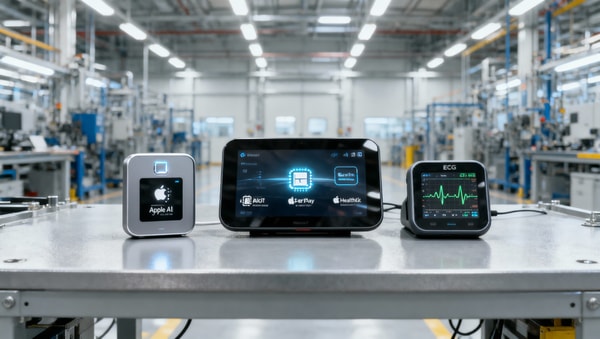
 Apple Opens AI Service Hub to Third Parties: New Export Path for Chinese AIoT HardwareApple's AI Service Hub opens new export opportunities for Chinese AIoT hardware—enabling iFLYTEK, SenseTime & others to power HomeKit, CarPlay & HealthKit with on-device AI.
 GPT-5.5 Instant Rollout Impacts AI SaaS Exporters’ SLAsGPT-5.5 Instant rollout reshapes AI SaaS exporters’ SLAs—learn how P95 latency, multimodal context, and contract compliance impact your global clients now.
 Red Bull SA15 Uses Tiantai Energy Solutions: China OEM Compliance Gains ASEAN AttentionRed Bull SA15 adopts Tiantai’s China OEM energy solutions—triple-registered (TH FDA, SG HSA, EU EFSA). A benchmark for ASEAN importers & nutraceutical manufacturers seeking compliant, scalable sourcing.
 China’s New GB 4343.1-2026 Mobile Power Bank Standard Takes Effect Nov 2026GB 4343.1-2026 mobile power bank standard takes effect Nov 2026—learn key compliance steps, dual-protocol requirements & global certification strategy.
 Morocco Ranks 4th in EU Africa Energy Aid; China PV Mounting & ESS Export Path WidensMorocco ranks 4th in EU Africa energy aid—unlocking new PV mounting & ESS export opportunities for certified Chinese suppliers. Act now to leverage the white-list advantage.
 China Holds 68% of Global Autonomous Sanitation Vehicle PatentsChina holds 68% of global autonomous sanitation vehicle patents—key for smart infrastructure exporters, AI developers & edge hardware suppliers targeting GCC tenders.
") China’s Petrochemical Plant Upgrade Policy (2026–2029)China’s Petrochemical Plant Upgrade Policy (2026–2029) mandates safety assessments & intelligent upgrades for aging equipment—key for exporters, EPC firms, and certified equipment suppliers.
China’s Petrochemical Plant Upgrade Policy (2026–2029)China’s Petrochemical Plant Upgrade Policy (2026–2029) mandates safety assessments & intelligent upgrades for aging equipment—key for exporters, EPC firms, and certified equipment suppliers. U.S. Natural Gas Inventory Rise Below Expectations: Export Cost Pressure on PVC, ABS, CoatingsU.S. natural gas inventory rise fell short—impacting PVC, ABS & coatings exporters. Discover cost risks, mitigation steps & pricing insights now.
 EN 62368-1:2026 Enforced in EU: Thermal Runaway Protection Required for Wearables & Smart Home DevicesEN 62368-1:2026 mandates thermal runaway protection for wearables & smart home devices in the EU—act now to ensure CE compliance and avoid market access delays.
 Portable oxygen concentrators are quieter now, but are they easier to maintain?Portable oxygen concentrators are quieter, but are they easier to maintain? Explore service challenges, scenario-based insights, and smart ways to reduce downtime.
 Interactive whiteboards are underused when training stops after installationInteractive whiteboards often underperform when training ends at installation. Learn how continuous, role-based support boosts adoption, productivity, and ROI.
 Medical diagnostic equipment buying mistakes often start with workflow mismatchMedical diagnostic equipment buying mistakes often stem from workflow mismatch. Learn how to assess fit, avoid hidden costs, and choose scalable systems that support real clinical operations.
![]() Eco-friendly building materials can add compliance work, not just green valueEco-friendly building materials can boost sustainability but also add compliance work. Learn how they affect approvals, costs, timelines, and risk across key project scenarios.
Eco-friendly building materials can add compliance work, not just green valueEco-friendly building materials can boost sustainability but also add compliance work. Learn how they affect approvals, costs, timelines, and risk across key project scenarios. Ergonomic workspace design fails when posture is treated as the whole answerErgonomic workspace design fails when posture is the only focus. Learn how integrated planning improves productivity, retention, and workplace performance.
 Outdoor garden supplies demand changes faster than seasonal forecasts suggestOutdoor garden supplies demand is changing faster than seasonal forecasts. Discover key signals, sourcing strategies, and inventory tactics to stay competitive and capture growth.
 Sustainable home decor sells better when the material story is verifiableSustainable home decor wins more buyers when material claims are verifiable. Discover how traceable sourcing, certifications, and clear proof build trust and drive sales.
 Modern office furniture choices can raise complaints instead of comfortModern office furniture can improve productivity—or trigger costly complaints. Learn how to choose ergonomic, durable, flexible office solutions that support comfort and long-term value.
 Smart street lighting saves energy only when controls are tuned properlySmart street lighting saves energy only when controls are tuned to real traffic, safety, and maintenance needs. Learn how proper settings turn connected lighting into measurable ROI.
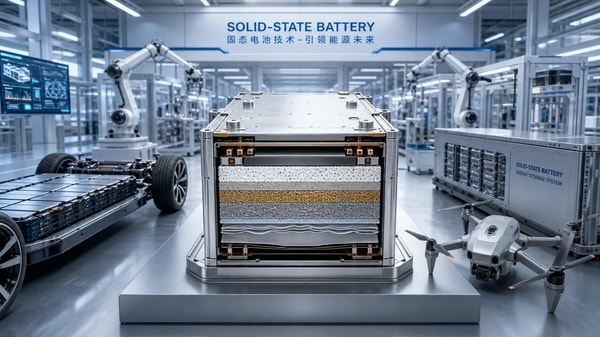
 Solid-state battery breakthroughs are real, but scaling is another storySolid-state battery breakthroughs are real, but scaling remains the real test. Explore where commercialization starts first, what limits adoption, and which markets may gain the earliest edge.
![]() Commercial LED lighting upgrades often disappoint in high-heat spacesCommercial LED lighting often underperforms in high-heat spaces. Learn the hidden causes, warning signs, and smart upgrade choices to improve reliability, safety, and long-term value.
Commercial LED lighting upgrades often disappoint in high-heat spacesCommercial LED lighting often underperforms in high-heat spaces. Learn the hidden causes, warning signs, and smart upgrade choices to improve reliability, safety, and long-term value.


















Popular Tags
Global Trade Insights & Industry
Our mission is to empower global exporters and importers with data-driven insights that foster strategic growth.
Search News
Popular Tags
Industry Overview
The global commercial kitchen equipment market is projected to reach $112 billion by 2027. Driven by urbanization, the rise of e-commerce food delivery, and strict hygiene regulations.