

Carbon capture materials are improving, but durability remains a weak point
Carbon capture materials are advancing quickly, delivering higher adsorption capacity, faster kinetics, and better process efficiency. Yet for technical evaluators, durability remains the critical bottleneck, affecting lifecycle cost, operational stability, and large-scale deployment. This article examines why material performance under repeated cycling, moisture, heat, and contaminants matters as much as capture efficiency when assessing real-world carbon capture solutions.
Why are Carbon capture materials getting so much attention now?
Interest in Carbon capture materials is rising because decarbonization targets are moving from policy ambition to plant-level execution. Industrial emitters, utilities, and process designers are under pressure to cut emissions without shutting down existing assets. In that context, materials used for post-combustion capture, direct air capture, and point-source separation have become a strategic decision point rather than a narrow laboratory topic.
For technical assessment teams, the appeal is clear: better materials can reduce regeneration energy, improve capture rate, lower equipment footprint, and increase throughput. New sorbents, membranes, metal-organic frameworks, amine-functionalized solids, and hybrid systems all promise higher selectivity and faster uptake. However, these performance claims are often based on early-cycle testing under controlled conditions. What matters in procurement, pilot design, or scale-up is whether those gains survive real operating stress.
That is why Carbon capture materials are now being discussed not only by researchers but also by sourcing specialists, plant engineers, project developers, and industrial strategy teams. In global trade and industrial intelligence environments, the key question is no longer simply which material captures the most CO2. The more valuable question is which material continues to work reliably after months or years of cycling in realistic process conditions.
What does “durability” actually mean when evaluating Carbon capture materials?
Durability is often misunderstood as a single property, but in practice it is a multi-factor measure of how well Carbon capture materials retain function over time. A material may show excellent initial adsorption capacity yet still fail commercially if it degrades under humidity, thermal swings, mechanical abrasion, oxygen exposure, acid gases, or repeated regeneration cycles.
Technical evaluators should break durability into at least five dimensions. First is cyclic stability: how much capacity remains after hundreds or thousands of adsorption-desorption cycles. Second is thermal resilience: whether the structure or active sites survive regeneration temperatures. Third is chemical resistance: how the material reacts to SOx, NOx, volatile organics, and other impurities in flue gas or process streams. Fourth is moisture tolerance: many high-performing materials behave differently in dry lab gas than in humid industrial exhaust. Fifth is physical integrity: pellets, powders, fibers, or structured monoliths must keep their shape and pressure-drop profile during operation.
This broader definition matters because durability directly affects replacement frequency, downtime risk, and process consistency. A material that loses 20% of capacity quickly may force more frequent regeneration, larger inventory, or earlier replacement. Even if the headline capture efficiency looks attractive, the operational consequences can undermine project economics.
Why is durability often the weak point even when new materials show excellent lab performance?
The short answer is that laboratory optimization and industrial reality are not the same environment. Many Carbon capture materials are engineered to maximize surface area, active-site density, or binding affinity. These features can boost early-stage performance but may also create fragility. A highly porous structure may be sensitive to collapse under heat. A chemically active amine-based sorbent may react irreversibly with impurities. A material optimized for fast kinetics may suffer from oxidation or leaching during repeated use.
Another reason is that testing windows are often too short. A dataset covering 20 or 50 cycles can be useful for screening, but it is not enough for industrial confidence. Technical evaluators need to know whether degradation is linear, front-loaded, or triggered by specific thresholds such as humidity spikes or regeneration temperature drift. Small losses per cycle may look acceptable initially but become significant at commercial timescales.
Scale-up also introduces stress that bench tests do not capture well. Gas distribution becomes less uniform, heat management becomes more difficult, and handling damage increases. In some systems, the material itself is not the only issue; binders, supports, coatings, or reactor geometry create additional failure modes. As a result, the real weak point may be the integrated material-form-factor combination rather than the chemistry alone.
Which operating conditions most strongly affect the lifespan of Carbon capture materials?
The most important stress factors depend on the capture pathway, but several appear repeatedly across industrial applications. Humidity is one of the biggest. Some Carbon capture materials benefit from water because it can promote CO2 uptake, while others lose performance due to pore blocking, hydrolysis, or changes in adsorption mechanism. A material that performs beautifully in dry gas may become unstable in stack gas with variable moisture.
Temperature swing is another major variable. Regeneration energy remains a core cost center in carbon capture, so developers often push materials to balance strong CO2 binding with low-energy release. But frequent heating and cooling can age the sorbent, alter pore structure, or accelerate side reactions. Evaluators should ask not only what regeneration temperature is required, but also what thermal history the material can tolerate repeatedly.
Contaminants are equally critical. Industrial gas streams are rarely pure. Sulfur oxides, nitrogen oxides, particulates, trace metals, and organics can poison active sites or create irreversible byproducts. Oxygen can also degrade certain amine-functionalized systems over time. Mechanical stress should not be overlooked either. Attrition, compaction, and dust generation can degrade bed performance even if the underlying chemistry remains viable.
For technical evaluation, the lesson is simple: durability data only becomes meaningful when paired with a realistic process envelope. Without that context, comparing Carbon capture materials across vendors or publications can be misleading.
How should technical evaluators compare Carbon capture materials beyond capture efficiency?
A strong evaluation framework should move from single-point performance to lifecycle behavior. Capture capacity, selectivity, and kinetics still matter, but they should be interpreted together with degradation profile, regeneration demand, safety, and supply-chain practicality. This is especially important for cross-border industrial sourcing, where replacement intervals, logistics reliability, and compatibility with local operating conditions influence total project value.
The table below summarizes a practical screening approach for Carbon capture materials.
This approach helps evaluators avoid a common mistake: selecting Carbon capture materials on peak performance metrics alone. In commercial settings, stable average performance is usually more valuable than impressive early-cycle numbers.
What are the most common mistakes buyers and project teams make?
One frequent mistake is assuming that high adsorption capacity automatically means lower cost. In reality, if the material degrades quickly or requires harsh regeneration, the total cost of ownership can rise sharply. Another mistake is comparing datasets from different test conditions as if they were directly equivalent. Carbon capture materials tested at different humidity levels, CO2 concentrations, cycle times, or contaminant loads cannot be judged fairly from headline numbers alone.
A third mistake is ignoring form factor and integration. A powder with excellent intrinsic performance may be difficult to deploy safely or efficiently in industrial hardware. Similarly, some teams focus heavily on chemistry while underestimating the importance of modules, contactors, valves, and regeneration control. Material selection should be tied to the full process design, not isolated from it.
There is also a strategic sourcing mistake: relying on optimistic pilot claims without asking about manufacturing reproducibility. For technical evaluators in international trade, consistency across batches, supplier quality systems, and lead-time resilience are essential. Even advanced Carbon capture materials can become risky choices if the supply chain cannot support stable, long-term deployment.
How can companies judge whether a material is ready for pilot or commercial use?
Readiness should be judged through evidence layers, not marketing language. First, confirm whether the Carbon capture materials have been tested under conditions that reflect your actual gas stream, temperature range, moisture profile, and regeneration method. Second, review long-cycle data and ask for degradation curves rather than single retention figures. Third, look for evidence of impurity tolerance and recovery after upset conditions.
It is also useful to separate pilot readiness from commercial readiness. A material may be good enough for demonstration but not yet mature for full-scale procurement. Pilot-ready solutions should at least have repeatable synthesis, stable shaping or structuring, defined handling procedures, and a credible replacement model. Commercial-ready solutions should go further, with documented quality control, process guarantees where possible, and a supply chain capable of supporting maintenance cycles.
For evaluators, a practical test is this: can the supplier explain not just why the material performs well, but also how it fails, how fast it degrades, how it is monitored, and how it is replaced? When these answers are clear, decision quality improves significantly.
What should technical teams ask first before choosing among Carbon capture materials?
Before shortlisting options, teams should clarify the application boundary. Is the target a concentrated industrial source, a dilute air stream, a cement plant exhaust, or a retrofit on existing thermal equipment? Each scenario changes the ideal balance between capacity, selectivity, durability, and regeneration intensity. Carbon capture materials that work well in one context may perform poorly in another.
Next, define the operational priorities. If uptime and low maintenance are more valuable than maximum capture efficiency, then durable mid-performance materials may outperform fragile high-performance ones in real economics. If the gas contains significant contaminants, impurity resistance may outrank theoretical capacity. If energy cost is critical, regeneration profile should be examined as carefully as adsorption behavior.
Finally, connect the technical review to business execution. Ask about replacement intervals, warranty assumptions, storage stability, shipping conditions, batch consistency, and regional technical support. In global B2B decision-making, these factors influence deployment success almost as much as the underlying science. That is why industrial intelligence platforms such as TradeVantage are valuable: technical evaluators need not only performance data, but also market visibility, supplier context, and evidence of commercial reliability across regions.
Final takeaway: what matters most when durability is still the weak point?
The central lesson is that Carbon capture materials should be evaluated as long-term operating assets, not short-term laboratory results. Higher capacity and faster kinetics are meaningful only if the material can maintain performance under repeated cycling, realistic humidity, thermal stress, and contaminant exposure. For technical evaluators, durability is not a secondary metric. It is often the deciding factor that determines whether a capture concept remains attractive after real deployment constraints are included.
If you need to confirm a specific solution path, it is best to start by discussing gas composition, cycle requirements, regeneration limits, expected service life, replacement strategy, and supplier scalability. Those questions will reveal far more than headline efficiency claims and help identify which Carbon capture materials are truly suitable for pilot, procurement, or long-term industrial cooperation.
Recommended News
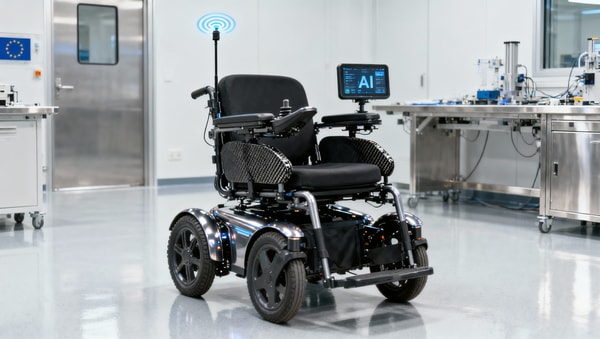
 China's Smart Electric Wheelchair Exports Face EU MDR Compliance Shift from Q3 2026China's smart electric wheelchair exports must meet EU MDR + CE dual certification by Q3 2026 — only 12 manufacturers comply. Act now to secure market access.
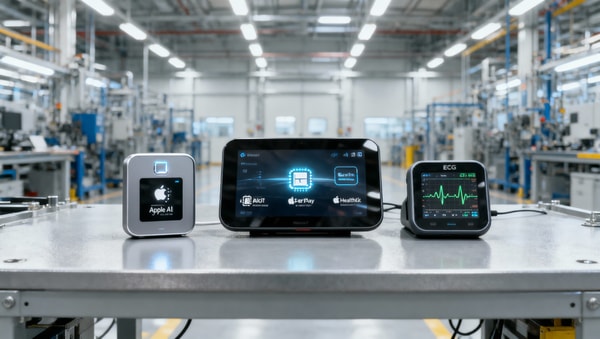
 Apple Opens AI Service Hub to Third Parties: New Export Path for Chinese AIoT HardwareApple's AI Service Hub opens new export opportunities for Chinese AIoT hardware—enabling iFLYTEK, SenseTime & others to power HomeKit, CarPlay & HealthKit with on-device AI.
 GPT-5.5 Instant Rollout Impacts AI SaaS Exporters’ SLAsGPT-5.5 Instant rollout reshapes AI SaaS exporters’ SLAs—learn how P95 latency, multimodal context, and contract compliance impact your global clients now.
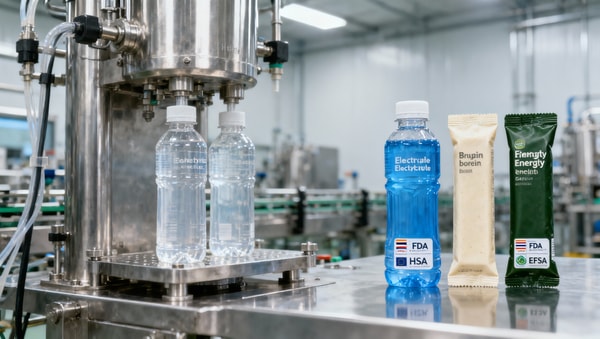
 Red Bull SA15 Uses Tiantai Energy Solutions: China OEM Compliance Gains ASEAN AttentionRed Bull SA15 adopts Tiantai’s China OEM energy solutions—triple-registered (TH FDA, SG HSA, EU EFSA). A benchmark for ASEAN importers & nutraceutical manufacturers seeking compliant, scalable sourcing.
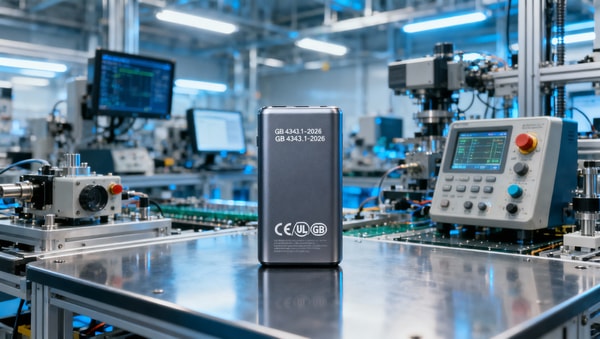
 China’s New GB 4343.1-2026 Mobile Power Bank Standard Takes Effect Nov 2026GB 4343.1-2026 mobile power bank standard takes effect Nov 2026—learn key compliance steps, dual-protocol requirements & global certification strategy.
 Morocco Ranks 4th in EU Africa Energy Aid; China PV Mounting & ESS Export Path WidensMorocco ranks 4th in EU Africa energy aid—unlocking new PV mounting & ESS export opportunities for certified Chinese suppliers. Act now to leverage the white-list advantage.
 China Holds 68% of Global Autonomous Sanitation Vehicle PatentsChina holds 68% of global autonomous sanitation vehicle patents—key for smart infrastructure exporters, AI developers & edge hardware suppliers targeting GCC tenders.
") China’s Petrochemical Plant Upgrade Policy (2026–2029)China’s Petrochemical Plant Upgrade Policy (2026–2029) mandates safety assessments & intelligent upgrades for aging equipment—key for exporters, EPC firms, and certified equipment suppliers.
China’s Petrochemical Plant Upgrade Policy (2026–2029)China’s Petrochemical Plant Upgrade Policy (2026–2029) mandates safety assessments & intelligent upgrades for aging equipment—key for exporters, EPC firms, and certified equipment suppliers. U.S. Natural Gas Inventory Rise Below Expectations: Export Cost Pressure on PVC, ABS, CoatingsU.S. natural gas inventory rise fell short—impacting PVC, ABS & coatings exporters. Discover cost risks, mitigation steps & pricing insights now.
 EN 62368-1:2026 Enforced in EU: Thermal Runaway Protection Required for Wearables & Smart Home DevicesEN 62368-1:2026 mandates thermal runaway protection for wearables & smart home devices in the EU—act now to ensure CE compliance and avoid market access delays.
 Portable oxygen concentrators are quieter now, but are they easier to maintain?Portable oxygen concentrators are quieter, but are they easier to maintain? Explore service challenges, scenario-based insights, and smart ways to reduce downtime.
 Interactive whiteboards are underused when training stops after installationInteractive whiteboards often underperform when training ends at installation. Learn how continuous, role-based support boosts adoption, productivity, and ROI.
 Medical diagnostic equipment buying mistakes often start with workflow mismatchMedical diagnostic equipment buying mistakes often stem from workflow mismatch. Learn how to assess fit, avoid hidden costs, and choose scalable systems that support real clinical operations.
![]() Eco-friendly building materials can add compliance work, not just green valueEco-friendly building materials can boost sustainability but also add compliance work. Learn how they affect approvals, costs, timelines, and risk across key project scenarios.
Eco-friendly building materials can add compliance work, not just green valueEco-friendly building materials can boost sustainability but also add compliance work. Learn how they affect approvals, costs, timelines, and risk across key project scenarios. Ergonomic workspace design fails when posture is treated as the whole answerErgonomic workspace design fails when posture is the only focus. Learn how integrated planning improves productivity, retention, and workplace performance.
 Outdoor garden supplies demand changes faster than seasonal forecasts suggestOutdoor garden supplies demand is changing faster than seasonal forecasts. Discover key signals, sourcing strategies, and inventory tactics to stay competitive and capture growth.
 Sustainable home decor sells better when the material story is verifiableSustainable home decor wins more buyers when material claims are verifiable. Discover how traceable sourcing, certifications, and clear proof build trust and drive sales.
 Modern office furniture choices can raise complaints instead of comfortModern office furniture can improve productivity—or trigger costly complaints. Learn how to choose ergonomic, durable, flexible office solutions that support comfort and long-term value.
 Smart street lighting saves energy only when controls are tuned properlySmart street lighting saves energy only when controls are tuned to real traffic, safety, and maintenance needs. Learn how proper settings turn connected lighting into measurable ROI.
 Solid-state battery breakthroughs are real, but scaling is another storySolid-state battery breakthroughs are real, but scaling remains the real test. Explore where commercialization starts first, what limits adoption, and which markets may gain the earliest edge.
![]() Commercial LED lighting upgrades often disappoint in high-heat spacesCommercial LED lighting often underperforms in high-heat spaces. Learn the hidden causes, warning signs, and smart upgrade choices to improve reliability, safety, and long-term value.
Commercial LED lighting upgrades often disappoint in high-heat spacesCommercial LED lighting often underperforms in high-heat spaces. Learn the hidden causes, warning signs, and smart upgrade choices to improve reliability, safety, and long-term value.










Popular Tags
Global Trade Insights & Industry
Our mission is to empower global exporters and importers with data-driven insights that foster strategic growth.
Search News
Popular Tags
Industry Overview
The global commercial kitchen equipment market is projected to reach $112 billion by 2027. Driven by urbanization, the rise of e-commerce food delivery, and strict hygiene regulations.