

Smart home devices wholesale is shifting from gadgets to ecosystems
Smart home devices wholesale is no longer just about moving popular gadgets at scale—it is increasingly about sourcing complete, connected ecosystems that deliver compatibility, recurring demand, and stronger customer retention. For distributors, agents, and wholesalers, understanding this shift is essential to identifying profitable product portfolios, evaluating supplier capabilities, and staying competitive in a market shaped by interoperability, platforms, and long-term value.
What Smart Home Devices Wholesale Means Today
For years, smart home devices wholesale focused on individual bestsellers: smart bulbs, cameras, plugs, locks, and speakers. The goal was simple—find fast-moving items, secure acceptable margins, and distribute them across online and offline channels. That model still exists, but the market has evolved. Buyers no longer evaluate devices only by price, appearance, or standalone functions. They increasingly ask whether products work with broader platforms, whether mobile apps are reliable, whether firmware is maintained, and whether additional devices can be added later without friction.
In other words, smart home devices wholesale is shifting from a gadget business to an ecosystem business. An ecosystem includes hardware, software, connectivity standards, user interface design, cloud support, after-sales service, and cross-device automation. For wholesalers and distributors, this creates a more strategic role. Instead of supplying isolated products, they are curating connected solutions that help retailers, installers, and end users build coherent smart living environments.
This change matters across the broader global supply chain because the smart home category sits at the intersection of consumer electronics, home improvement, security, energy management, and lifestyle technology. As international trade becomes more data-driven, decision-makers need market intelligence that goes beyond shipment volume and short-term trends. They need to understand platform dynamics, regional demand patterns, compliance expectations, and the commercial value of ecosystem depth.
Why the Industry Is Paying Attention
Several market forces explain why smart home devices wholesale is receiving renewed attention from distributors and agents. First, consumer expectations have matured. Early adopters once accepted fragmented setups and multiple apps, but the mainstream market now expects simplicity. A smart door lock should connect smoothly with cameras, sensors, voice assistants, and access alerts. A thermostat should fit into energy-saving routines rather than remain a standalone screen.
Second, interoperability has become a competitive issue. Standards such as Matter, plus the continued influence of ecosystems from Amazon Alexa, Google Home, Apple Home, Tuya-based solutions, and proprietary brand platforms, are reshaping how products are selected. In smart home devices wholesale, the ability to offer a platform-compatible assortment often determines whether channel partners view a supplier as strategic or replaceable.
Third, recurring commercial value is becoming more visible. Ecosystem-oriented products can generate repeat purchases as customers expand from one device category to another. A buyer who starts with lighting may later add sensors, cameras, air quality monitors, and energy controls. This creates cross-sell opportunities, stronger retention, and better lifetime value for the distribution chain.
Finally, global competition has intensified. As more manufacturers enter the market, product differentiation through basic hardware features becomes harder. The wholesale advantage increasingly comes from portfolio design, platform alignment, technical documentation, compliance readiness, and market visibility. This is why high-authority industry intelligence platforms and SEO-led B2B content hubs have become relevant: they help international suppliers and channel partners signal trust, discover market direction, and strengthen digital exposure in fast-moving categories like smart home technology.
From Product Lists to Ecosystem Thinking
The transition in smart home devices wholesale can be understood as a shift in decision criteria. Traditional buying focused on SKU-level metrics such as unit cost, packaging, defect rate, and shipment lead time. Those factors remain essential, but they are no longer enough on their own. Buyers are now evaluating whether a supplier can support a broader ecosystem strategy.
Ecosystem thinking usually includes five layers. The first is device coverage: how many relevant categories the supplier supports, from lighting and security to climate control and entertainment. The second is connectivity: Wi-Fi, Zigbee, Bluetooth, Thread, or hybrid support. The third is software experience: app quality, onboarding flow, automation logic, and user permissions. The fourth is platform compatibility: whether devices work with mainstream voice assistants and smart home hubs. The fifth is lifecycle management: firmware updates, cloud continuity, replacement parts, and technical service.
For distributors, this approach improves portfolio coherence. Instead of selling unrelated products that compete mainly on price, they can build category clusters that encourage account growth. For agents, ecosystem thinking makes supplier evaluation more disciplined. For wholesalers serving retailers or project buyers, it reduces the risk of customer dissatisfaction caused by incompatible devices or weak software support.
A Practical Market Overview for Channel Partners
The following overview shows how smart home devices wholesale is commonly assessed in commercial practice, especially by distributors, resellers, and import-oriented channel partners.
Business Value for Distributors, Agents, and Wholesalers
The commercial value of smart home devices wholesale becomes clearer when viewed through channel economics. The first benefit is portfolio stickiness. When resellers or installers buy into one ecosystem, they are more likely to return for compatible accessories and expansion products. This lowers account churn and creates more predictable reorder cycles.
The second benefit is better market segmentation. Different customer groups want different types of ecosystems. Entry-level retail customers may prefer easy Wi-Fi devices with app-based setup. Mid-tier users may want integrated security and energy management. Professional integrators may prioritize stability, protocol support, and scenario automation. Smart home devices wholesale works best when these segments are matched to clearly structured product lines.
The third benefit is branding leverage. In a crowded market, channel players who present themselves as solution providers rather than commodity sellers can command more trust. This is especially true in international trade, where digital credibility matters. Strong editorial visibility, high-quality backlinks, and data-backed market positioning can reinforce supplier reputation and make outreach more effective across regions.
The fourth benefit is margin protection. Pure gadget competition often leads to price compression. Ecosystem-oriented selling allows value to come from compatibility, user experience, warranty confidence, and bundled solutions. Even when headline margins on single devices are moderate, the total account value can improve through follow-on orders and reduced support friction.
Key Product Groups in Smart Home Devices Wholesale
Not all categories play the same role inside an ecosystem. Some act as entry products, while others increase integration depth or average order value. A structured view helps channel partners prioritize.
What to Evaluate When Choosing Suppliers
A strong smart home devices wholesale strategy depends on supplier quality beyond manufacturing capacity. Channel buyers should begin with compatibility mapping. Which ecosystems are supported? Is the supplier aligned with major voice assistants and connectivity standards? Are devices managed under one app or several fragmented interfaces?
The next issue is software durability. Smart home products are not static goods. They require updates, security maintenance, and cloud continuity. A device that ships well but loses app support after a short period can damage channel credibility. This makes firmware governance, app usability, and support responsiveness central to supplier evaluation.
Compliance is equally important, especially for cross-border trade. Certification requirements differ by region, and privacy or data security concerns are rising. In smart home devices wholesale, technical compliance and documentation readiness are not side issues; they are part of market access and risk management.
Finally, assess the supplier’s commercialization support. Do they provide clear product content, localized documentation, training materials, and packaging options? Can they support channel branding or private label requests without weakening software consistency? These practical details often influence sell-through more than raw specifications.
Practical Guidance for Building a Competitive Portfolio
For distributors and agents, the most effective approach is usually staged portfolio building rather than broad category expansion all at once. Start with one or two anchor categories that are easy to explain and easy to integrate, such as lighting plus security sensors, or cameras plus access control. Then add adjacent products that strengthen automation scenarios and repeat purchase logic.
It is also wise to build around use cases instead of isolated SKUs. For example, “smart apartment entry,” “energy-aware family home,” or “small office monitoring” are easier for channel customers to understand than long product lists. This method improves sales communication and helps downstream buyers see the value of ecosystem purchasing.
Market intelligence should remain part of this process. Demand signals vary by region, income profile, housing type, and digital maturity. A B2B information platform that tracks industrial trends, manufacturing developments, and global visibility patterns can help channel players identify where smart home devices wholesale is accelerating and which product clusters are gaining traction. Better information reduces speculative inventory decisions and supports stronger negotiation with suppliers.
Common Risks to Avoid
One common mistake is confusing broad catalog size with real ecosystem strength. A supplier may offer many device types, yet deliver poor integration or inconsistent app experiences. Another mistake is overemphasizing low price while underestimating support burden. In smart home devices wholesale, post-sale friction can quickly erase procurement savings.
A third risk is neglecting content and trust signals. Smart home products often require explanation, comparison, and buyer confidence. Distributors that invest in authoritative market content, search visibility, and professional product education can create an edge that pure transactional sellers lack. This is especially relevant in export markets where discoverability and credibility influence partnership decisions before direct contact even begins.
Looking Ahead
The future of smart home devices wholesale will be shaped less by isolated device popularity and more by ecosystem coherence. Interoperability, software quality, compliance readiness, and channel support are becoming core value drivers. For wholesalers, agents, and distributors, the opportunity is not only to move products, but to build expandable, trustworthy solution portfolios that create repeat demand.
Businesses that want to stay ahead should combine supplier evaluation with ongoing market intelligence, digital visibility, and structured content strategy. In a category where technology, consumer behavior, and platform standards evolve quickly, informed positioning matters. Smart home devices wholesale is no longer just a volume game; it is a long-term ecosystem play, and those who understand that shift will be better placed to capture growth across global trade channels.
Recommended News
 China's Smart Electric Wheelchair Exports Face EU MDR Compliance Shift from Q3 2026China's smart electric wheelchair exports must meet EU MDR + CE dual certification by Q3 2026 — only 12 manufacturers comply. Act now to secure market access.
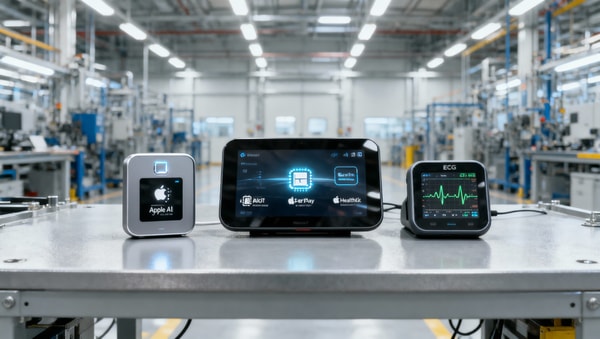
 Apple Opens AI Service Hub to Third Parties: New Export Path for Chinese AIoT HardwareApple's AI Service Hub opens new export opportunities for Chinese AIoT hardware—enabling iFLYTEK, SenseTime & others to power HomeKit, CarPlay & HealthKit with on-device AI.
 GPT-5.5 Instant Rollout Impacts AI SaaS Exporters’ SLAsGPT-5.5 Instant rollout reshapes AI SaaS exporters’ SLAs—learn how P95 latency, multimodal context, and contract compliance impact your global clients now.
 Red Bull SA15 Uses Tiantai Energy Solutions: China OEM Compliance Gains ASEAN AttentionRed Bull SA15 adopts Tiantai’s China OEM energy solutions—triple-registered (TH FDA, SG HSA, EU EFSA). A benchmark for ASEAN importers & nutraceutical manufacturers seeking compliant, scalable sourcing.
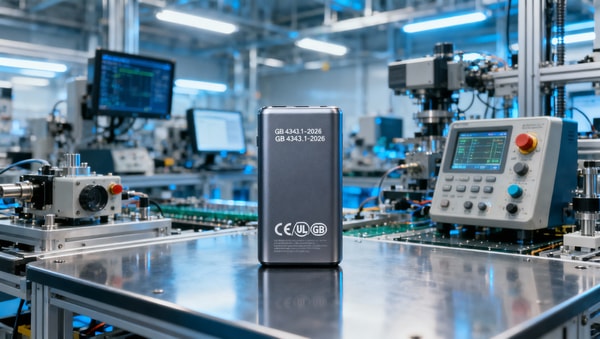
 China’s New GB 4343.1-2026 Mobile Power Bank Standard Takes Effect Nov 2026GB 4343.1-2026 mobile power bank standard takes effect Nov 2026—learn key compliance steps, dual-protocol requirements & global certification strategy.
 Morocco Ranks 4th in EU Africa Energy Aid; China PV Mounting & ESS Export Path WidensMorocco ranks 4th in EU Africa energy aid—unlocking new PV mounting & ESS export opportunities for certified Chinese suppliers. Act now to leverage the white-list advantage.
 China Holds 68% of Global Autonomous Sanitation Vehicle PatentsChina holds 68% of global autonomous sanitation vehicle patents—key for smart infrastructure exporters, AI developers & edge hardware suppliers targeting GCC tenders.
") China’s Petrochemical Plant Upgrade Policy (2026–2029)China’s Petrochemical Plant Upgrade Policy (2026–2029) mandates safety assessments & intelligent upgrades for aging equipment—key for exporters, EPC firms, and certified equipment suppliers.
China’s Petrochemical Plant Upgrade Policy (2026–2029)China’s Petrochemical Plant Upgrade Policy (2026–2029) mandates safety assessments & intelligent upgrades for aging equipment—key for exporters, EPC firms, and certified equipment suppliers. U.S. Natural Gas Inventory Rise Below Expectations: Export Cost Pressure on PVC, ABS, CoatingsU.S. natural gas inventory rise fell short—impacting PVC, ABS & coatings exporters. Discover cost risks, mitigation steps & pricing insights now.
 EN 62368-1:2026 Enforced in EU: Thermal Runaway Protection Required for Wearables & Smart Home DevicesEN 62368-1:2026 mandates thermal runaway protection for wearables & smart home devices in the EU—act now to ensure CE compliance and avoid market access delays.
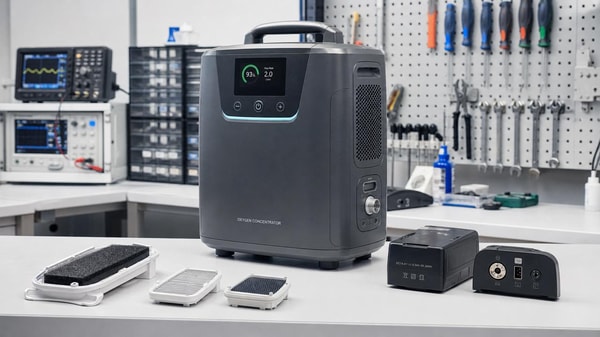
 Portable oxygen concentrators are quieter now, but are they easier to maintain?Portable oxygen concentrators are quieter, but are they easier to maintain? Explore service challenges, scenario-based insights, and smart ways to reduce downtime.
 Interactive whiteboards are underused when training stops after installationInteractive whiteboards often underperform when training ends at installation. Learn how continuous, role-based support boosts adoption, productivity, and ROI.
 Medical diagnostic equipment buying mistakes often start with workflow mismatchMedical diagnostic equipment buying mistakes often stem from workflow mismatch. Learn how to assess fit, avoid hidden costs, and choose scalable systems that support real clinical operations.
![]() Eco-friendly building materials can add compliance work, not just green valueEco-friendly building materials can boost sustainability but also add compliance work. Learn how they affect approvals, costs, timelines, and risk across key project scenarios.
Eco-friendly building materials can add compliance work, not just green valueEco-friendly building materials can boost sustainability but also add compliance work. Learn how they affect approvals, costs, timelines, and risk across key project scenarios. Ergonomic workspace design fails when posture is treated as the whole answerErgonomic workspace design fails when posture is the only focus. Learn how integrated planning improves productivity, retention, and workplace performance.
 Outdoor garden supplies demand changes faster than seasonal forecasts suggestOutdoor garden supplies demand is changing faster than seasonal forecasts. Discover key signals, sourcing strategies, and inventory tactics to stay competitive and capture growth.
 Sustainable home decor sells better when the material story is verifiableSustainable home decor wins more buyers when material claims are verifiable. Discover how traceable sourcing, certifications, and clear proof build trust and drive sales.
 Modern office furniture choices can raise complaints instead of comfortModern office furniture can improve productivity—or trigger costly complaints. Learn how to choose ergonomic, durable, flexible office solutions that support comfort and long-term value.
 Smart street lighting saves energy only when controls are tuned properlySmart street lighting saves energy only when controls are tuned to real traffic, safety, and maintenance needs. Learn how proper settings turn connected lighting into measurable ROI.
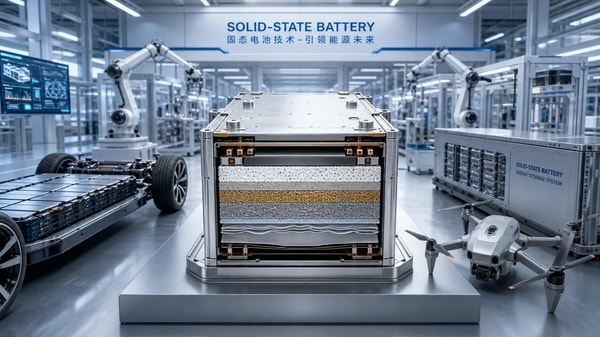
 Solid-state battery breakthroughs are real, but scaling is another storySolid-state battery breakthroughs are real, but scaling remains the real test. Explore where commercialization starts first, what limits adoption, and which markets may gain the earliest edge.
![]() Commercial LED lighting upgrades often disappoint in high-heat spacesCommercial LED lighting often underperforms in high-heat spaces. Learn the hidden causes, warning signs, and smart upgrade choices to improve reliability, safety, and long-term value.
Commercial LED lighting upgrades often disappoint in high-heat spacesCommercial LED lighting often underperforms in high-heat spaces. Learn the hidden causes, warning signs, and smart upgrade choices to improve reliability, safety, and long-term value.
















Popular Tags
Global Trade Insights & Industry
Our mission is to empower global exporters and importers with data-driven insights that foster strategic growth.
Search News
Popular Tags
Industry Overview
The global commercial kitchen equipment market is projected to reach $112 billion by 2027. Driven by urbanization, the rise of e-commerce food delivery, and strict hygiene regulations.