

Agri-PV systems can reduce land conflict, but not in every project
Agri-PV systems are often promoted as a practical way to ease land-use conflict by combining energy generation with agricultural production, yet their success depends heavily on site conditions, crop selection, stakeholder alignment, and project design. For project managers and engineering leads, understanding where these systems create value—and where they may trigger new operational or regulatory challenges—is essential before moving from concept to deployment.
Why scenario differences matter before an Agri-PV decision
For many developers, Agri-PV systems look attractive because they promise a dual-use answer to one of the most sensitive project issues: land. In practice, however, “dual use” is not a universal outcome. A vineyard, a grazing site, an irrigated vegetable farm, and a low-productivity dryland parcel do not respond to the same array height, shading profile, access road layout, or maintenance schedule. That means project feasibility is shaped less by the headline technology and more by the operating scenario.
This is especially important for project managers and engineering leads who must align civil design, yield expectations, permitting, local community interests, and long-term O&M planning. In some scenarios, Agri-PV systems reduce conflict by preserving productive use and easing approval discussions. In others, they introduce new tensions around machinery movement, crop quality, drainage, livestock safety, or unclear responsibility between the power operator and the agricultural user.
A better question, therefore, is not whether Agri-PV systems are good or bad. The better question is: in which project environments do they genuinely improve land efficiency, and in which ones do they weaken operational performance or stakeholder trust?
Where Agri-PV systems usually appear in real project pipelines
In current market practice, Agri-PV systems most often emerge in five business situations. First, they are proposed where land scarcity is already creating public resistance to standalone solar farms. Second, they are considered in regions where agricultural continuity is a permitting advantage. Third, they are used in projects seeking stronger ESG positioning or rural acceptance. Fourth, they are explored where certain crops may benefit from moderated heat or solar intensity. Fifth, they are tested in large estates or institutional landholdings that can support coordinated farm-energy management.
These situations may sound similar at the policy level, but they differ sharply at the execution level. A utility-scale developer optimizing LCOE will evaluate Agri-PV systems differently from a landowner trying to preserve farm revenue. Likewise, a project in an arid zone with high evaporation pressure raises different design priorities than one in a temperate area with mechanized grain cultivation.
Typical application scenarios: where fit is strong, moderate, or weak
The most useful way to assess Agri-PV systems is by matching the design concept to the field reality. The table below provides a scenario-based screening view for early-stage planning.
Scenario 1: Grazing-based Agri-PV systems often offer the clearest land-use case
Among common applications, grazing tends to be one of the most operationally compatible uses for Agri-PV systems. Sheep and similar small livestock can coexist with solar arrays when fencing, module height, and cable routing are planned correctly. Compared with row-crop farming, grazing requires less frequent heavy machinery traffic and less sensitivity to partial shade patterns. That makes the dual-use story more credible for both landowners and local authorities.
For project managers, the key value is predictability. Vegetation control can partially align with grazing operations, reducing some maintenance needs. For engineering teams, the design challenge is less about crop physiology and more about durable infrastructure: secure inverters, animal-safe barriers, water access, and safe maintenance corridors. This is a scenario where Agri-PV systems can genuinely reduce land conflict because agricultural function remains visible and practical.
Still, not every pasture is automatically suitable. Wet soils, difficult topography, poor access roads, or local restrictions on livestock near electrical infrastructure can quickly reduce viability. The lesson is simple: grazing is often favorable, but only when site operations are mapped in detail.
Scenario 2: Orchards and vineyards may benefit, but design precision becomes critical
Perennial crop systems are frequently discussed in relation to Agri-PV systems because they may benefit from moderated heat, hail protection strategies, or reduced direct radiation at certain times of year. In these settings, the project is not just an energy installation on farmland; it becomes a microclimate management tool. That creates opportunity, but also raises the level of technical coordination required.
Project leaders should pay attention to row spacing, crop height over time, pruning cycles, harvest methods, and disease pressure under altered airflow conditions. A design that improves one seasonal stress factor may worsen another. For example, extra shade may help during peak summer heat but reduce sugar development, color uniformity, or drying conditions after rain, depending on the crop and region.
In these scenarios, Agri-PV systems are best treated as a tailored agricultural-energy integration project, not as a standard solar template with a farming label added later. Pilot plots, agronomic modeling, and direct farmer involvement should be considered part of core project development rather than optional extras.
Scenario 3: Horticulture in heat-stressed regions can create value, but operational complexity rises fast
In hot climates, some vegetables, berries, herbs, or specialty crops may perform better under partial shading if the result is lower evapotranspiration and improved worker conditions. This is one of the more compelling innovation cases for Agri-PV systems, particularly where water scarcity and climate volatility are already affecting farm economics.
However, these gains are highly site-specific. Horticulture often depends on intensive irrigation, seasonal labor, precise quality standards, and frequent field access. Mounting structures can interfere with picking routes, irrigation maintenance, pest control, and post-rain recovery times. In a project presentation, dual-use may sound efficient; in daily operations, it can become a coordination-heavy environment with many moving parts.
For engineering leads, that means the business case for Agri-PV systems must include non-electrical realities: labor movement, hygiene protocols, equipment cleaning frequency due to dust or moisture, and the cost of adapting farm practices. If those factors are ignored, the project may underperform on both agricultural output and stakeholder acceptance.
Scenario 4: Mechanized arable farming is where many Agri-PV systems face friction
Large-scale grain, oilseed, or broadacre operations are often the most difficult environment for Agri-PV systems. These farms depend on uninterrupted machinery movement, efficient turning patterns, standardized field operations, and scale-driven productivity. Even when elevated structures are used, the practical impact on seeding, spraying, harvesting, and field logistics can be significant.
This is where land conflict may be reduced at the policy level but recreated at the operational level. A local authority may welcome a dual-use concept, yet the farm operator may face slower work rates, higher fuel use, more complicated machinery choices, and reduced flexibility during narrow weather windows. For project managers, that mismatch can become a serious execution risk if agricultural partners are not fully aligned.
In these cases, caution is justified. Unless the farm system, machinery fleet, and field layout can be adapted without major performance loss, Agri-PV systems may not be the right answer. A lower-conflict parcel, a different crop system, or a non-agricultural solar site may ultimately be more efficient.
How stakeholder needs differ by project role
Different stakeholders evaluate Agri-PV systems through different success metrics. Early alignment is often more important than the technology choice itself.
Common misjudgments that make Agri-PV systems fail in the field
One common mistake is assuming that any agricultural activity under or around panels is enough to justify the Agri-PV label. In reality, token farming rarely satisfies serious land-use scrutiny over time. Another mistake is designing from the electrical side first and trying to fit farming around it later. That approach usually weakens agricultural credibility and creates friction in daily operations.
A third misjudgment is underestimating site-specific biology. Crop response to shade is not generic, and small changes in local climate, soil moisture, or variety selection can alter outcomes materially. A fourth is assuming community acceptance will automatically improve. In some regions, stakeholders may see Agri-PV systems as a meaningful compromise; in others, they may view them as a rebranding of land conversion.
Finally, teams often overlook contract structure. If responsibilities for fencing, crop losses, water systems, access windows, and maintenance interruptions are vague, the project can enter long-term conflict even after successful commissioning.
A practical screening framework for project managers and engineering leads
Before advancing Agri-PV systems into detailed design, decision-makers should test five conditions. First, confirm that the agricultural use is commercially real, not symbolic. Second, verify that the farm operation can function safely and efficiently within the proposed layout. Third, assess whether the local regulatory framework recognizes and supports this form of land use. Fourth, model the trade-off between energy optimization and agricultural continuity. Fifth, document governance clearly between developer, operator, and land user.
If two or more of these conditions remain uncertain, the project is not yet ready for deployment, no matter how attractive the concept appears in early stakeholder presentations. The strongest Agri-PV systems are not the ones with the most ambitious claims, but the ones built on realistic scenario matching.
FAQ: scenario-based questions teams often ask
Are Agri-PV systems always better than conventional ground-mounted solar on farmland?
No. They are better only when agricultural activity remains meaningful and operationally workable. In some projects, conventional solar on a more suitable parcel creates lower long-term risk.
Which scenario tends to be the easiest starting point?
Grazing is often the most straightforward entry scenario because it usually requires less conflict with machinery movement and crop-specific light needs.
What is the biggest warning sign in early-stage assessment?
If the agricultural plan is vague, unsupported by operators, or treated as a permitting narrative rather than an operating model, the Agri-PV system is high risk.
Final takeaway: match the concept to the field, not the field to the concept
Agri-PV systems can reduce land conflict, but not in every project. Their success depends on whether the land, crop or livestock system, regulatory environment, and operating stakeholders are compatible with dual use in practical terms. For project managers and engineering leads, the right approach is scenario-first evaluation: identify where land-use pressure is real, where agricultural continuity is measurable, and where design adjustments can support both energy and production without forcing either side into a weak compromise.
If your organization is assessing Agri-PV systems across different markets or asset types, the next step should be a structured site-screening process that combines engineering constraints, farm operations, and permitting logic from the start. That is where better decisions are made—and where dual-use potential becomes a bankable project strategy rather than a marketing claim.
Recommended News
 China's Smart Electric Wheelchair Exports Face EU MDR Compliance Shift from Q3 2026China's smart electric wheelchair exports must meet EU MDR + CE dual certification by Q3 2026 — only 12 manufacturers comply. Act now to secure market access.
 Apple Opens AI Service Hub to Third Parties: New Export Path for Chinese AIoT HardwareApple's AI Service Hub opens new export opportunities for Chinese AIoT hardware—enabling iFLYTEK, SenseTime & others to power HomeKit, CarPlay & HealthKit with on-device AI.
 GPT-5.5 Instant Rollout Impacts AI SaaS Exporters’ SLAsGPT-5.5 Instant rollout reshapes AI SaaS exporters’ SLAs—learn how P95 latency, multimodal context, and contract compliance impact your global clients now.
 Red Bull SA15 Uses Tiantai Energy Solutions: China OEM Compliance Gains ASEAN AttentionRed Bull SA15 adopts Tiantai’s China OEM energy solutions—triple-registered (TH FDA, SG HSA, EU EFSA). A benchmark for ASEAN importers & nutraceutical manufacturers seeking compliant, scalable sourcing.
 China’s New GB 4343.1-2026 Mobile Power Bank Standard Takes Effect Nov 2026GB 4343.1-2026 mobile power bank standard takes effect Nov 2026—learn key compliance steps, dual-protocol requirements & global certification strategy.
 Morocco Ranks 4th in EU Africa Energy Aid; China PV Mounting & ESS Export Path WidensMorocco ranks 4th in EU Africa energy aid—unlocking new PV mounting & ESS export opportunities for certified Chinese suppliers. Act now to leverage the white-list advantage.
 China Holds 68% of Global Autonomous Sanitation Vehicle PatentsChina holds 68% of global autonomous sanitation vehicle patents—key for smart infrastructure exporters, AI developers & edge hardware suppliers targeting GCC tenders.
") China’s Petrochemical Plant Upgrade Policy (2026–2029)China’s Petrochemical Plant Upgrade Policy (2026–2029) mandates safety assessments & intelligent upgrades for aging equipment—key for exporters, EPC firms, and certified equipment suppliers.
China’s Petrochemical Plant Upgrade Policy (2026–2029)China’s Petrochemical Plant Upgrade Policy (2026–2029) mandates safety assessments & intelligent upgrades for aging equipment—key for exporters, EPC firms, and certified equipment suppliers. U.S. Natural Gas Inventory Rise Below Expectations: Export Cost Pressure on PVC, ABS, CoatingsU.S. natural gas inventory rise fell short—impacting PVC, ABS & coatings exporters. Discover cost risks, mitigation steps & pricing insights now.
 EN 62368-1:2026 Enforced in EU: Thermal Runaway Protection Required for Wearables & Smart Home DevicesEN 62368-1:2026 mandates thermal runaway protection for wearables & smart home devices in the EU—act now to ensure CE compliance and avoid market access delays.
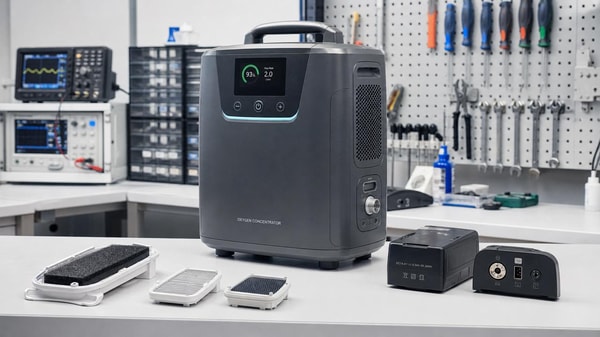
 Portable oxygen concentrators are quieter now, but are they easier to maintain?Portable oxygen concentrators are quieter, but are they easier to maintain? Explore service challenges, scenario-based insights, and smart ways to reduce downtime.
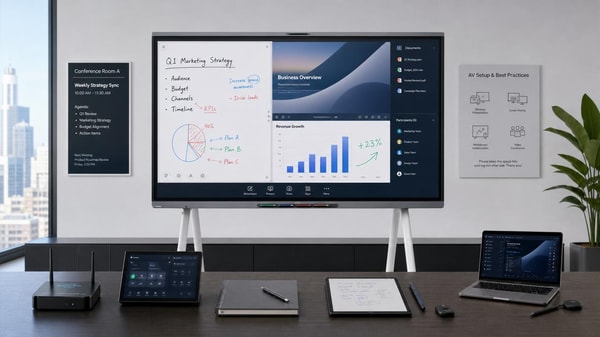
 Interactive whiteboards are underused when training stops after installationInteractive whiteboards often underperform when training ends at installation. Learn how continuous, role-based support boosts adoption, productivity, and ROI.
 Medical diagnostic equipment buying mistakes often start with workflow mismatchMedical diagnostic equipment buying mistakes often stem from workflow mismatch. Learn how to assess fit, avoid hidden costs, and choose scalable systems that support real clinical operations.
![]() Eco-friendly building materials can add compliance work, not just green valueEco-friendly building materials can boost sustainability but also add compliance work. Learn how they affect approvals, costs, timelines, and risk across key project scenarios.
Eco-friendly building materials can add compliance work, not just green valueEco-friendly building materials can boost sustainability but also add compliance work. Learn how they affect approvals, costs, timelines, and risk across key project scenarios. Ergonomic workspace design fails when posture is treated as the whole answerErgonomic workspace design fails when posture is the only focus. Learn how integrated planning improves productivity, retention, and workplace performance.
 Outdoor garden supplies demand changes faster than seasonal forecasts suggestOutdoor garden supplies demand is changing faster than seasonal forecasts. Discover key signals, sourcing strategies, and inventory tactics to stay competitive and capture growth.
 Sustainable home decor sells better when the material story is verifiableSustainable home decor wins more buyers when material claims are verifiable. Discover how traceable sourcing, certifications, and clear proof build trust and drive sales.
 Modern office furniture choices can raise complaints instead of comfortModern office furniture can improve productivity—or trigger costly complaints. Learn how to choose ergonomic, durable, flexible office solutions that support comfort and long-term value.
 Smart street lighting saves energy only when controls are tuned properlySmart street lighting saves energy only when controls are tuned to real traffic, safety, and maintenance needs. Learn how proper settings turn connected lighting into measurable ROI.
 Solid-state battery breakthroughs are real, but scaling is another storySolid-state battery breakthroughs are real, but scaling remains the real test. Explore where commercialization starts first, what limits adoption, and which markets may gain the earliest edge.
![]() Commercial LED lighting upgrades often disappoint in high-heat spacesCommercial LED lighting often underperforms in high-heat spaces. Learn the hidden causes, warning signs, and smart upgrade choices to improve reliability, safety, and long-term value.
Commercial LED lighting upgrades often disappoint in high-heat spacesCommercial LED lighting often underperforms in high-heat spaces. Learn the hidden causes, warning signs, and smart upgrade choices to improve reliability, safety, and long-term value.








Popular Tags
Global Trade Insights & Industry
Our mission is to empower global exporters and importers with data-driven insights that foster strategic growth.
Search News
Popular Tags
Industry Overview
The global commercial kitchen equipment market is projected to reach $112 billion by 2027. Driven by urbanization, the rise of e-commerce food delivery, and strict hygiene regulations.