

AI-assisted surgery is advancing fast, but where are the safety limits?
AI-assisted surgery is evolving from a promising innovation into a critical clinical tool, raising urgent questions for quality control and safety management professionals. As hospitals adopt smarter systems to improve precision and efficiency, the real challenge is defining where AI-assisted surgery delivers measurable value—and where safety limits, accountability, and risk control must take priority.
Why AI-assisted surgery is moving from pilot projects to operational reality
The pace of change around AI-assisted surgery is no longer driven by publicity alone. Hospitals, device makers, regulators, insurers, and procurement teams are increasingly treating it as an operational capability rather than an experimental concept. What changed is not just the software. The wider clinical environment now produces more imaging data, more structured records, more robotic integration, and stronger pressure to improve outcomes while managing labor shortages and rising costs.
For quality control and safety management professionals, this shift matters because AI-assisted surgery is entering spaces where failure is not abstract. It influences preoperative planning, intraoperative navigation, image recognition, tissue identification, workflow orchestration, and post-procedure documentation. As the system moves closer to the patient, the tolerance for uncertainty drops sharply. The question is no longer whether AI can support surgery. The more urgent question is where the safety boundary should be set for each use case.
A second important signal is that expectations are becoming more specific. Early discussions focused on general promises such as precision, speed, and personalization. Today, buyers and clinical leaders want proof of reduced variability, lower complication risk, stronger traceability, and better compliance. This is a positive development. It pushes AI-assisted surgery away from broad claims and toward measurable quality performance.
The strongest trend signals shaping safety expectations
Several trend signals explain why safety limits are now central to the discussion around AI-assisted surgery. First, multimodal systems are becoming more common. Instead of analyzing one image set or one data stream, advanced platforms combine imaging, sensor feedback, patient history, instrument tracking, and robotic controls. This improves decision support, but it also creates more failure points, more integration dependencies, and more complex validation requirements.
Second, surgeons are increasingly exposed to adaptive interfaces. Some AI-assisted surgery tools can change recommendations based on incoming data or updated models. That creates a major governance challenge: if output behavior changes over time, quality teams must determine whether the original validation still applies. Static approval logic does not always fit dynamic systems.
Third, regulatory and legal attention is intensifying. Even where formal frameworks are still evolving, hospitals know they must document intended use, human oversight, software updates, adverse events, and training records. This creates a market signal: the most adoptable solutions will not only be accurate, but also auditable.
Where AI-assisted surgery creates real value—and where risk rises fastest
Not every surgical task carries the same safety profile. One of the most useful trend-based judgments for safety managers is to separate low-ambiguity support functions from high-consequence intervention functions. AI-assisted surgery tends to be safer and easier to govern when it improves visualization, planning consistency, checklist completion, or instrument logistics. In these areas, AI may reduce human variability without directly controlling irreversible actions.
Risk rises when AI-assisted surgery influences boundary decisions in real time, such as identifying tissue margins, recommending dissection paths, predicting bleeding risk during a live procedure, or triggering robotic movement sequences. In these scenarios, the clinical context can change rapidly, input quality may degrade, and the consequences of error can be immediate. The safety limit is not simply about whether the algorithm is accurate under test conditions. It is about whether the full clinical system remains reliable under stress, exceptions, and workflow disruption.
This distinction matters for procurement and quality review. A system that performs well in retrospective image analysis may not be suitable for autonomous or near-autonomous intraoperative guidance. Safety claims must match task criticality. The market is gradually learning that “AI-enabled” is too broad a label to support meaningful risk decisions.
A practical way to think about safety limits
A useful framework is to ask three layered questions. First, does the AI-assisted surgery tool support observation, recommendation, or action? Second, can a trained human detect and correct a wrong output before harm occurs? Third, what happens if the data environment becomes incomplete, noisy, or atypical? The stricter the consequence and the weaker the recoverability, the tighter the safety boundary should be.
Why quality control teams are becoming central to adoption decisions
In the earlier phase of adoption, AI-assisted surgery decisions were often led by innovation champions, specialist surgeons, or equipment vendors. That is changing. Quality control teams, safety officers, biomedical engineers, and risk committees are now moving to the center of the approval process. The reason is simple: as AI systems touch procedural care, governance quality becomes inseparable from clinical value.
For these teams, the main challenge is that traditional device assessment methods may not fully cover algorithmic behavior. Hardware durability, sterilization, and mechanical safety still matter, but new concerns emerge around training data bias, output confidence, workflow dependency, cybersecurity, and silent model drift. AI-assisted surgery forces organizations to expand the definition of quality from product conformity to system behavior in live clinical conditions.
This is also where cross-functional governance becomes a competitive advantage. Hospitals and surgical centers that combine clinical leadership with data governance, supplier oversight, incident reporting, and post-market review will likely adopt AI-assisted surgery more safely and more sustainably than those treating it as a simple equipment upgrade.
Which stakeholders are most affected by the new safety boundary debate
The debate over safety limits does not affect all participants equally. Its impact is strongest where responsibility, workflow, and liability intersect.
The next phase: from innovation claims to evidence discipline
The next market phase for AI-assisted surgery will likely be defined less by novelty and more by evidence discipline. Buyers are becoming less impressed by generic accuracy claims and more interested in setting-specific performance. Does the system work across different patient anatomies, imaging devices, surgeon styles, and emergency scenarios? How often are recommendations ignored? Under what conditions does confidence fall? What is the failure mode when connectivity, calibration, or data inputs degrade?
This shift will reward suppliers that can support transparent validation, explain intended-use boundaries, and provide practical quality documentation. It will also reward hospitals that build staged adoption pathways rather than all-or-nothing deployment. In many cases, the safest route for AI-assisted surgery is gradual expansion: begin with advisory functions, monitor performance, strengthen training, and only then consider higher-impact applications.
Another likely direction is stronger demand for human factors engineering. Even a technically capable AI-assisted surgery platform can create risk if alerts are confusing, displays distract from the operative field, or the override process is unclear. Future purchasing decisions will increasingly weigh usability as part of safety evidence, not as an afterthought.
What safety managers should monitor now
For organizations evaluating or expanding AI-assisted surgery, several signals deserve close monitoring. The first is drift risk: whether real-world performance changes after software updates, workflow shifts, or changes in patient mix. The second is exception handling: how the system behaves when anatomy is unusual, imaging is poor, or instruments are not recognized correctly. The third is dependency risk: whether teams can continue safely if the AI component becomes unavailable during a procedure.
It is equally important to monitor governance maturity at the supplier level. Vendors should be able to explain model maintenance practices, change management protocols, training support, adverse event reporting methods, and cybersecurity controls. In a market where AI-assisted surgery is advancing fast, the strongest trust signal is not ambition alone. It is disciplined lifecycle control.
Recommended review points before broader deployment
- Define the exact intended use and excluded scenarios for each AI-assisted surgery function.
- Require evidence from environments that resemble your actual operating rooms.
- Test human override workflows and failure recovery procedures.
- Review update governance, version traceability, and retraining triggers.
- Integrate incident reporting with clinical, technical, and supplier response teams.
A realistic decision framework for the year ahead
The most realistic view is that AI-assisted surgery will keep expanding, but not every application should move at the same speed. The winning approach for quality and safety leaders is selective acceleration. Support low-risk, high-visibility uses that improve consistency and documentation. Apply stricter scrutiny to real-time recommendations that shape irreversible operative choices. Demand stronger proof where harm potential is high and recovery windows are short.
This is not a case for slowing innovation unnecessarily. It is a case for matching innovation speed to control maturity. In practice, that means defining safety limits not as barriers to adoption, but as conditions for trustworthy deployment. The organizations that manage this well will gain more than compliance. They will build confidence among surgeons, patients, and partners while reducing the chance of expensive setbacks.
Final judgment: where to focus if AI-assisted surgery is entering your workflow
For quality control personnel and safety management professionals, the core judgment is clear: AI-assisted surgery is becoming too important to evaluate with either blind optimism or blanket skepticism. The better approach is to identify where the technology is changing clinical workflow, who carries the operational risk, and which evidence gaps remain unresolved. If your organization wants to judge the business and safety impact more accurately, start by confirming five points: which surgical decisions the AI influences, how human oversight is preserved, what happens during edge-case failure, how updates are controlled, and whether the supplier can support long-term traceability. Those answers will reveal whether AI-assisted surgery is ready for responsible scale—or whether its safety limits have not yet been clearly defined.
Recommended News
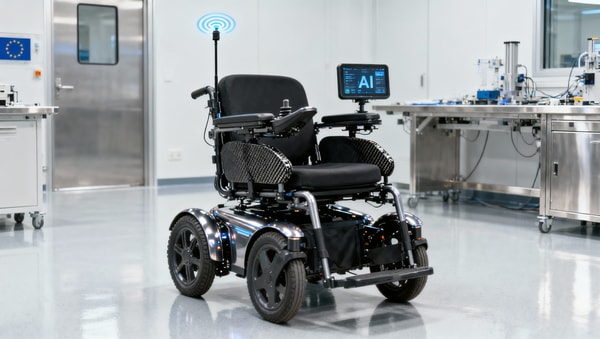
 China's Smart Electric Wheelchair Exports Face EU MDR Compliance Shift from Q3 2026China's smart electric wheelchair exports must meet EU MDR + CE dual certification by Q3 2026 — only 12 manufacturers comply. Act now to secure market access.
 Apple Opens AI Service Hub to Third Parties: New Export Path for Chinese AIoT HardwareApple's AI Service Hub opens new export opportunities for Chinese AIoT hardware—enabling iFLYTEK, SenseTime & others to power HomeKit, CarPlay & HealthKit with on-device AI.
 GPT-5.5 Instant Rollout Impacts AI SaaS Exporters’ SLAsGPT-5.5 Instant rollout reshapes AI SaaS exporters’ SLAs—learn how P95 latency, multimodal context, and contract compliance impact your global clients now.
 Red Bull SA15 Uses Tiantai Energy Solutions: China OEM Compliance Gains ASEAN AttentionRed Bull SA15 adopts Tiantai’s China OEM energy solutions—triple-registered (TH FDA, SG HSA, EU EFSA). A benchmark for ASEAN importers & nutraceutical manufacturers seeking compliant, scalable sourcing.
 China’s New GB 4343.1-2026 Mobile Power Bank Standard Takes Effect Nov 2026GB 4343.1-2026 mobile power bank standard takes effect Nov 2026—learn key compliance steps, dual-protocol requirements & global certification strategy.
 Morocco Ranks 4th in EU Africa Energy Aid; China PV Mounting & ESS Export Path WidensMorocco ranks 4th in EU Africa energy aid—unlocking new PV mounting & ESS export opportunities for certified Chinese suppliers. Act now to leverage the white-list advantage.
 China Holds 68% of Global Autonomous Sanitation Vehicle PatentsChina holds 68% of global autonomous sanitation vehicle patents—key for smart infrastructure exporters, AI developers & edge hardware suppliers targeting GCC tenders.
") China’s Petrochemical Plant Upgrade Policy (2026–2029)China’s Petrochemical Plant Upgrade Policy (2026–2029) mandates safety assessments & intelligent upgrades for aging equipment—key for exporters, EPC firms, and certified equipment suppliers.
China’s Petrochemical Plant Upgrade Policy (2026–2029)China’s Petrochemical Plant Upgrade Policy (2026–2029) mandates safety assessments & intelligent upgrades for aging equipment—key for exporters, EPC firms, and certified equipment suppliers. U.S. Natural Gas Inventory Rise Below Expectations: Export Cost Pressure on PVC, ABS, CoatingsU.S. natural gas inventory rise fell short—impacting PVC, ABS & coatings exporters. Discover cost risks, mitigation steps & pricing insights now.
 EN 62368-1:2026 Enforced in EU: Thermal Runaway Protection Required for Wearables & Smart Home DevicesEN 62368-1:2026 mandates thermal runaway protection for wearables & smart home devices in the EU—act now to ensure CE compliance and avoid market access delays.
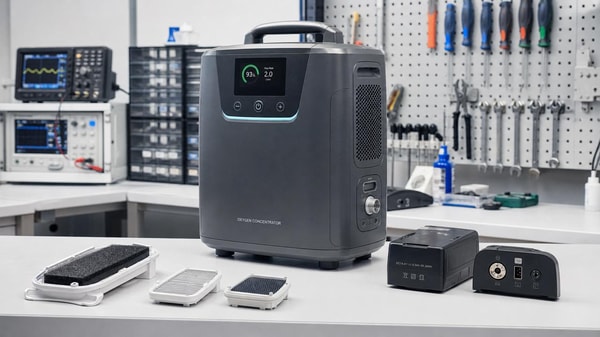
 Portable oxygen concentrators are quieter now, but are they easier to maintain?Portable oxygen concentrators are quieter, but are they easier to maintain? Explore service challenges, scenario-based insights, and smart ways to reduce downtime.
 Interactive whiteboards are underused when training stops after installationInteractive whiteboards often underperform when training ends at installation. Learn how continuous, role-based support boosts adoption, productivity, and ROI.
 Medical diagnostic equipment buying mistakes often start with workflow mismatchMedical diagnostic equipment buying mistakes often stem from workflow mismatch. Learn how to assess fit, avoid hidden costs, and choose scalable systems that support real clinical operations.
![]() Eco-friendly building materials can add compliance work, not just green valueEco-friendly building materials can boost sustainability but also add compliance work. Learn how they affect approvals, costs, timelines, and risk across key project scenarios.
Eco-friendly building materials can add compliance work, not just green valueEco-friendly building materials can boost sustainability but also add compliance work. Learn how they affect approvals, costs, timelines, and risk across key project scenarios. Ergonomic workspace design fails when posture is treated as the whole answerErgonomic workspace design fails when posture is the only focus. Learn how integrated planning improves productivity, retention, and workplace performance.
 Outdoor garden supplies demand changes faster than seasonal forecasts suggestOutdoor garden supplies demand is changing faster than seasonal forecasts. Discover key signals, sourcing strategies, and inventory tactics to stay competitive and capture growth.
 Sustainable home decor sells better when the material story is verifiableSustainable home decor wins more buyers when material claims are verifiable. Discover how traceable sourcing, certifications, and clear proof build trust and drive sales.
 Modern office furniture choices can raise complaints instead of comfortModern office furniture can improve productivity—or trigger costly complaints. Learn how to choose ergonomic, durable, flexible office solutions that support comfort and long-term value.
 Smart street lighting saves energy only when controls are tuned properlySmart street lighting saves energy only when controls are tuned to real traffic, safety, and maintenance needs. Learn how proper settings turn connected lighting into measurable ROI.
 Solid-state battery breakthroughs are real, but scaling is another storySolid-state battery breakthroughs are real, but scaling remains the real test. Explore where commercialization starts first, what limits adoption, and which markets may gain the earliest edge.
![]() Commercial LED lighting upgrades often disappoint in high-heat spacesCommercial LED lighting often underperforms in high-heat spaces. Learn the hidden causes, warning signs, and smart upgrade choices to improve reliability, safety, and long-term value.
Commercial LED lighting upgrades often disappoint in high-heat spacesCommercial LED lighting often underperforms in high-heat spaces. Learn the hidden causes, warning signs, and smart upgrade choices to improve reliability, safety, and long-term value.


















Popular Tags
Global Trade Insights & Industry
Our mission is to empower global exporters and importers with data-driven insights that foster strategic growth.
Search News
Popular Tags
Industry Overview
The global commercial kitchen equipment market is projected to reach $112 billion by 2027. Driven by urbanization, the rise of e-commerce food delivery, and strict hygiene regulations.