

Medical diagnostic equipment buying mistakes often start with workflow mismatch
Many costly Medical diagnostic equipment purchasing errors begin long before vendor comparisons—they start with a poor fit between equipment capabilities and actual clinical workflow. For procurement teams, understanding how devices integrate with staff routines, data systems, and patient volume is essential to avoiding hidden inefficiencies. This article explores how workflow mismatch affects buying decisions and what purchasers should evaluate to make smarter, more scalable investments.
Why workflow fit matters more than a feature list
For buyers, Medical diagnostic equipment is rarely evaluated in a vacuum. A device may look impressive in a product demo, carry respected certifications, and offer advanced functions, yet still create daily friction if it does not match how clinicians, technicians, and administrators actually work. In real operating environments, the best equipment is not always the one with the longest specification sheet. It is the one that supports the right testing speed, staffing structure, data handoff, patient flow, and maintenance rhythm for the organization using it.
This issue matters across hospitals, outpatient centers, diagnostic labs, mobile screening programs, and multi-site healthcare networks. Each setting handles different patient volumes, turnaround expectations, physical space limits, and compliance requirements. When purchasers ignore these differences, they often overbuy, underbuy, or select Medical diagnostic equipment that performs well technically but poorly operationally. The result can be long queues, underused assets, staff workarounds, delayed reporting, and higher total cost of ownership.
For procurement teams, workflow mismatch should be treated as a strategic risk, not a minor implementation detail. It affects utilization rates, labor cost, patient experience, data quality, and future scalability. In many organizations, this is where buying mistakes truly begin.
Common business scenarios where Medical diagnostic equipment decisions go wrong
The same category of Medical diagnostic equipment can serve very different purposes depending on the care model. A procurement plan that works for a central hospital laboratory may fail in a rural clinic or a fast-paced emergency department. That is why scenario-based evaluation is essential.
High-volume hospital laboratories
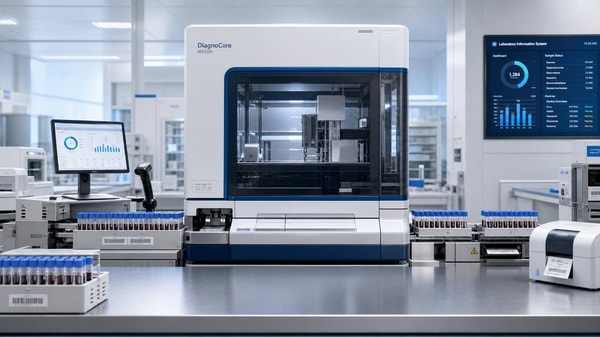
In this setting, throughput, automation, LIS integration, and sample traceability usually matter more than compact size or portability. Equipment should support continuous operation, standardized processing, barcode workflows, and predictable maintenance windows. A common mistake is choosing systems based on test menu breadth without confirming whether loading capacity, reagent replenishment, and downtime handling match actual peak-hour demand.
Outpatient clinics and specialty centers
Clinics often prioritize fast turnaround, ease of use, limited training burden, and smaller footprint. Here, Medical diagnostic equipment must fit tighter staffing models and shorter patient visit cycles. Buyers sometimes purchase laboratory-grade systems with complexity that exceeds the site’s staffing capability. When that happens, testing speed may slow rather than improve because operators need more steps, more calibration checks, or more technical support than the clinic can realistically provide.
Emergency and urgent care environments
Emergency settings value decision speed above almost everything else. Point-of-care functionality, rapid startup, intuitive interface design, and dependable uptime can be more important than broad analytical depth. Procurement errors here often come from selecting equipment optimized for batch efficiency instead of immediate-result workflows. If clinicians must wait for sample transport or queue time, the operational value of the device drops sharply.
Mobile screening and community outreach programs
These programs need portability, rugged design, simple power requirements, and easy data capture in the field. Medical diagnostic equipment that depends on stable lab conditions, frequent recalibration, or complex peripheral connections may be unsuitable even if test quality is excellent. Buyers should assess transportation conditions, environmental stability, connectivity limitations, and operator turnover before selecting devices for this scenario.
Scenario comparison: what procurement teams should prioritize
The table below shows how buying criteria for Medical diagnostic equipment shift across common use cases. This helps purchasers avoid one-size-fits-all decisions.
The hidden costs of workflow mismatch
A poor-fit Medical diagnostic equipment purchase often looks acceptable on paper because the device technically performs the required tests. The real problems appear after installation. Staff may need duplicate data entry because the system does not integrate well. Samples may require manual preparation steps that were never reflected in the business case. Reagent storage may strain existing infrastructure. Maintenance may interrupt operations during the busiest shifts. Over time, these frictions create measurable cost.
Procurement teams should pay attention to at least five hidden cost areas. First is labor inefficiency: every extra step increases staffing pressure. Second is delayed turnaround, which can reduce patient throughput or clinical responsiveness. Third is underutilization, where expensive equipment sits idle because it does not fit actual demand. Fourth is support dependency, especially when only a few trained users can operate the system properly. Fifth is future replacement risk, since poorly matched Medical diagnostic equipment often needs earlier upgrading or supplementary purchases.
These hidden costs are particularly relevant for buyers responsible for long-term vendor evaluation, not just initial acquisition. In B2B purchasing, price alone rarely predicts value. Workflow alignment does.
How different buyer types should judge equipment fit
Not every procurement stakeholder views Medical diagnostic equipment through the same lens. Better decisions happen when teams compare the needs of multiple roles rather than relying solely on technical presentations.
Procurement managers
They should focus on total cost of ownership, vendor responsiveness, service coverage, parts availability, and deployment complexity. A device that is affordable upfront but costly to maintain may be a poor choice for distributed operations.
Clinical users
They care about speed, consistency, usability, and the impact on patient care. If Medical diagnostic equipment interrupts care pathways or adds manual burdens, clinician adoption may remain low even after formal rollout.
IT and data teams
They need to verify interoperability, cybersecurity, system compatibility, and data export logic. Many workflow failures originate not in the device itself, but in weak integration planning.
Operations leaders
They look at room layout, staffing schedules, queue management, and multi-site standardization. For them, the right Medical diagnostic equipment is the one that keeps service delivery smooth under real conditions.
A practical checklist before comparing vendors
Before reviewing brands or requesting quotations, purchasers should document the operating scenario in detail. This step is often skipped, yet it is where the strongest buying discipline begins.
- Define daily and peak testing volume, not just average demand.
- Map who touches the sample or patient at each step.
- List required turnaround times by department or service line.
- Confirm available space, utilities, storage, and environmental conditions.
- Assess operator skill level and realistic training capacity.
- Review LIS, EMR, middleware, and reporting integration needs.
- Estimate maintenance tolerance: can the site absorb downtime?
- Plan for growth, satellite sites, or service expansion.
Once these points are clear, vendor discussions become more precise. Instead of asking whether the Medical diagnostic equipment is “advanced,” teams can ask whether it is appropriate for their exact workflow and operating model.
Frequent misjudgments in scenario-based purchasing
Several buying mistakes appear repeatedly across the market. One is assuming that a larger, more automated platform is always better. In lower-volume settings, this can drive unnecessary costs and underuse. Another is treating turnaround speed as a simple device metric without considering sample transport, queue design, and staffing reality. A third is ignoring post-installation behavior: even strong Medical diagnostic equipment may fail to deliver expected value if operators create workarounds due to interface friction or complicated maintenance routines.
Procurement teams also misjudge scalability in both directions. Some buy only for today’s need and quickly outgrow the solution. Others buy for a distant future state that never materializes, tying up budget in oversized capacity. The better approach is to select Medical diagnostic equipment with clear upgrade paths, modular options, or network-level compatibility that fits foreseeable business development.
How to align Medical diagnostic equipment selection with long-term growth
Good procurement is not just about avoiding present inefficiency. It is also about preparing for operational change. Healthcare providers may add service lines, open new collection points, expand telehealth-linked diagnostics, or standardize across regions. In that context, buyers should examine whether Medical diagnostic equipment supports future workflow redesign, not merely current output.
Questions worth asking include: Can the system scale across multiple locations? Does the vendor offer consistent support in target markets? Can data be consolidated for management visibility? Is the equipment suitable for both current staffing and likely future staffing constraints? This broader view is especially important for organizations that source internationally and compare suppliers across different manufacturing and service ecosystems.
FAQ for procurement teams evaluating workflow fit
How can buyers tell if Medical diagnostic equipment is too complex for a site?
Check the number of manual steps, calibration frequency, training hours, and dependency on specialized operators. If smooth performance depends on resources the site does not consistently have, complexity is likely too high.
Is faster always better when comparing diagnostic systems?
Not necessarily. A faster testing cycle only creates value if the surrounding workflow can use that speed. In some settings, integration, staffing, or sample logistics limit the practical benefit.
What is the biggest overlooked factor in Medical diagnostic equipment procurement?
Many teams overlook real-world usage patterns. They compare specifications without observing how staff, data systems, patient timing, and maintenance routines interact on a normal day and during peak periods.
Conclusion: buy for the workflow, not just the machine
The most expensive Medical diagnostic equipment mistake is often not a faulty device or a weak supplier. It is choosing a solution that does not belong in the workflow it is supposed to improve. For procurement professionals, the smartest path is scenario-first evaluation: define the setting, identify the users, measure the volume, map the data flow, and then compare equipment options against that reality.
For organizations seeking better sourcing insight, stronger supplier visibility, and more informed industrial decision-making, TradeVantage and GTIIN help transform fragmented market information into practical guidance. In a global procurement environment where brand exposure, trust signals, and data-backed selection matter more than ever, buyers who align Medical diagnostic equipment with actual operating scenarios will make more resilient, cost-effective investments.
Recommended News
 China's Smart Electric Wheelchair Exports Face EU MDR Compliance Shift from Q3 2026China's smart electric wheelchair exports must meet EU MDR + CE dual certification by Q3 2026 — only 12 manufacturers comply. Act now to secure market access.
 Apple Opens AI Service Hub to Third Parties: New Export Path for Chinese AIoT HardwareApple's AI Service Hub opens new export opportunities for Chinese AIoT hardware—enabling iFLYTEK, SenseTime & others to power HomeKit, CarPlay & HealthKit with on-device AI.
 GPT-5.5 Instant Rollout Impacts AI SaaS Exporters’ SLAsGPT-5.5 Instant rollout reshapes AI SaaS exporters’ SLAs—learn how P95 latency, multimodal context, and contract compliance impact your global clients now.
 Red Bull SA15 Uses Tiantai Energy Solutions: China OEM Compliance Gains ASEAN AttentionRed Bull SA15 adopts Tiantai’s China OEM energy solutions—triple-registered (TH FDA, SG HSA, EU EFSA). A benchmark for ASEAN importers & nutraceutical manufacturers seeking compliant, scalable sourcing.
 China’s New GB 4343.1-2026 Mobile Power Bank Standard Takes Effect Nov 2026GB 4343.1-2026 mobile power bank standard takes effect Nov 2026—learn key compliance steps, dual-protocol requirements & global certification strategy.
 Morocco Ranks 4th in EU Africa Energy Aid; China PV Mounting & ESS Export Path WidensMorocco ranks 4th in EU Africa energy aid—unlocking new PV mounting & ESS export opportunities for certified Chinese suppliers. Act now to leverage the white-list advantage.
 China Holds 68% of Global Autonomous Sanitation Vehicle PatentsChina holds 68% of global autonomous sanitation vehicle patents—key for smart infrastructure exporters, AI developers & edge hardware suppliers targeting GCC tenders.
") China’s Petrochemical Plant Upgrade Policy (2026–2029)China’s Petrochemical Plant Upgrade Policy (2026–2029) mandates safety assessments & intelligent upgrades for aging equipment—key for exporters, EPC firms, and certified equipment suppliers.
China’s Petrochemical Plant Upgrade Policy (2026–2029)China’s Petrochemical Plant Upgrade Policy (2026–2029) mandates safety assessments & intelligent upgrades for aging equipment—key for exporters, EPC firms, and certified equipment suppliers. U.S. Natural Gas Inventory Rise Below Expectations: Export Cost Pressure on PVC, ABS, CoatingsU.S. natural gas inventory rise fell short—impacting PVC, ABS & coatings exporters. Discover cost risks, mitigation steps & pricing insights now.
 EN 62368-1:2026 Enforced in EU: Thermal Runaway Protection Required for Wearables & Smart Home DevicesEN 62368-1:2026 mandates thermal runaway protection for wearables & smart home devices in the EU—act now to ensure CE compliance and avoid market access delays.
 Portable oxygen concentrators are quieter now, but are they easier to maintain?Portable oxygen concentrators are quieter, but are they easier to maintain? Explore service challenges, scenario-based insights, and smart ways to reduce downtime.
 Interactive whiteboards are underused when training stops after installationInteractive whiteboards often underperform when training ends at installation. Learn how continuous, role-based support boosts adoption, productivity, and ROI.
 Medical diagnostic equipment buying mistakes often start with workflow mismatchMedical diagnostic equipment buying mistakes often stem from workflow mismatch. Learn how to assess fit, avoid hidden costs, and choose scalable systems that support real clinical operations.
![]() Eco-friendly building materials can add compliance work, not just green valueEco-friendly building materials can boost sustainability but also add compliance work. Learn how they affect approvals, costs, timelines, and risk across key project scenarios.
Eco-friendly building materials can add compliance work, not just green valueEco-friendly building materials can boost sustainability but also add compliance work. Learn how they affect approvals, costs, timelines, and risk across key project scenarios. Ergonomic workspace design fails when posture is treated as the whole answerErgonomic workspace design fails when posture is the only focus. Learn how integrated planning improves productivity, retention, and workplace performance.
 Outdoor garden supplies demand changes faster than seasonal forecasts suggestOutdoor garden supplies demand is changing faster than seasonal forecasts. Discover key signals, sourcing strategies, and inventory tactics to stay competitive and capture growth.
 Sustainable home decor sells better when the material story is verifiableSustainable home decor wins more buyers when material claims are verifiable. Discover how traceable sourcing, certifications, and clear proof build trust and drive sales.
 Modern office furniture choices can raise complaints instead of comfortModern office furniture can improve productivity—or trigger costly complaints. Learn how to choose ergonomic, durable, flexible office solutions that support comfort and long-term value.
 Smart street lighting saves energy only when controls are tuned properlySmart street lighting saves energy only when controls are tuned to real traffic, safety, and maintenance needs. Learn how proper settings turn connected lighting into measurable ROI.
 Solid-state battery breakthroughs are real, but scaling is another storySolid-state battery breakthroughs are real, but scaling remains the real test. Explore where commercialization starts first, what limits adoption, and which markets may gain the earliest edge.
![]() Commercial LED lighting upgrades often disappoint in high-heat spacesCommercial LED lighting often underperforms in high-heat spaces. Learn the hidden causes, warning signs, and smart upgrade choices to improve reliability, safety, and long-term value.
Commercial LED lighting upgrades often disappoint in high-heat spacesCommercial LED lighting often underperforms in high-heat spaces. Learn the hidden causes, warning signs, and smart upgrade choices to improve reliability, safety, and long-term value.














Popular Tags
Global Trade Insights & Industry
Our mission is to empower global exporters and importers with data-driven insights that foster strategic growth.
Search News
Popular Tags
Industry Overview
The global commercial kitchen equipment market is projected to reach $112 billion by 2027. Driven by urbanization, the rise of e-commerce food delivery, and strict hygiene regulations.