

Outdoor garden supplies demand changes faster than seasonal forecasts suggest
Outdoor garden supplies demand is shifting faster than seasonal forecasts suggest, creating both risk and opportunity for distributors, wholesalers, and agents. From weather volatility to changing consumer buying patterns, market signals now require closer tracking and faster response. This article explores what is driving these changes and how trade-focused businesses can adjust sourcing, inventory, and channel strategies to stay competitive in a less predictable outdoor products market.
Why is demand for Outdoor garden supplies changing faster than traditional forecasts?
For years, many buyers relied on a familiar seasonal rhythm: pre-spring stocking, summer peak, autumn clearance, and winter slowdown. That pattern still matters, but it no longer explains the full behavior of Outdoor garden supplies demand. Weather disruption, short social media trend cycles, online price transparency, and changing home-living habits now compress or extend purchasing windows with very little warning.
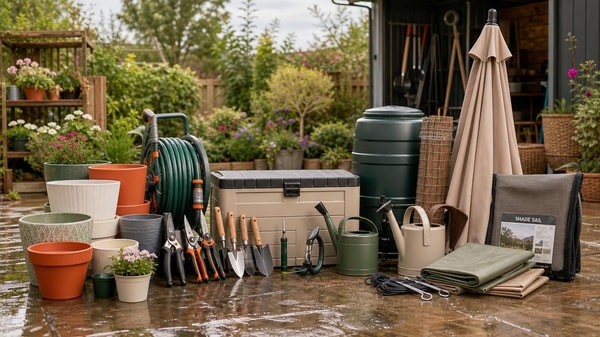
A warmer early spring can trigger sudden demand for planters, irrigation accessories, pruning tools, outdoor storage, and patio care products weeks ahead of plan. A rainy start to the season can delay foot traffic in physical retail while shifting orders toward protective covers, drainage aids, and compact indoor-outdoor transition items. In other words, weather is no longer a background factor; it is a live demand driver.
At the same time, consumers are not buying only for gardening in the narrow sense. They are buying for lifestyle upgrades, outdoor entertaining, balcony optimization, small-space planting, and low-maintenance home improvement. This broadens the Outdoor garden supplies category and makes demand less predictable if distributors focus only on old seasonal calendars.
Which signals should distributors, wholesalers, and agents watch first?
The most useful market signals are not always annual forecasts. For trade-focused businesses, short-cycle indicators often matter more. The goal is to combine macro visibility with weekly operating data.
Priority signals include local weather patterns, retail reorder frequency, search volume for Outdoor garden supplies, marketplace ranking changes, promotional sell-through rates, and inquiries from small commercial buyers such as landscapers, property managers, and hospitality venues. If these indicators begin moving before your seasonal model does, your plan is already late.
Distributors should also segment signals by region rather than relying on national averages. Demand for outdoor watering systems in southern Europe, for example, will behave differently from decorative raised beds in northern markets. Agents and wholesalers that build a region-specific dashboard can respond faster and avoid carrying the wrong mix of Outdoor garden supplies across channels.
Quick signal table for faster decisions
What types of Outdoor garden supplies are most affected by these shifts?
Not all categories move in the same way. Basic tools may remain relatively stable, while weather-sensitive or trend-led items can swing sharply. Products tied to watering, shade, pest control, portable storage, grow kits, seed-starting systems, and decorative containers are often among the quickest to react to climate and consumer mood changes.
Another high-volatility segment is multi-use outdoor living merchandise. Buyers increasingly expect Outdoor garden supplies to serve practical and aesthetic functions at the same time. A planter is no longer just a planting container; it may also be a design piece for an apartment balcony, café frontage, or seasonal retail display. This creates opportunity for distributors that understand use cases, not just product names.
Commercial customers also matter. Hotels, restaurants, event venues, and residential property operators can create short-term demand bursts for lighting, edging, maintenance accessories, and easy-install greenery systems. For agents, this means that B2B demand can appear outside consumer retail cycles and should be tracked separately.
How should buyers adjust sourcing and inventory when the market becomes less predictable?
The main shift is from static planning to layered planning. Instead of making one large seasonal commitment, buyers should divide Outdoor garden supplies into three inventory groups: core stable lines, weather-responsive lines, and trend-sensitive lines. Each group needs a different purchasing rhythm.
Core stable lines can still be sourced with longer commitments and negotiated volume terms. Weather-responsive lines require more flexible lead-time management, closer communication with suppliers, and contingency capacity. Trend-sensitive lines should be treated as faster test-and-scale products, supported by smaller opening orders and rapid reorder triggers.
Wholesalers should also reduce the risk of “forecast lock.” This happens when purchasing teams stay committed to a pre-season assumption even after demand indicators change. A better approach is to schedule decision checkpoints every two to four weeks during the high season. At each checkpoint, review sell-through, return rates, replacement cycles, and regional order patterns. That discipline improves inventory health without overreacting to single-day noise.
Supplier diversification is equally important. If your Outdoor garden supplies program depends too heavily on one origin, one freight route, or one factory calendar, your response speed will remain limited. Balanced sourcing across reliable partners helps preserve both availability and negotiation power.
Are sales channels changing the way Outdoor garden supplies should be marketed and distributed?
Yes, and this is one of the biggest reasons seasonal forecasting feels less accurate. Demand is now created and converted across multiple channels at the same time. End-users may discover Outdoor garden supplies through short-form video, compare prices on marketplaces, check reviews on specialist sites, and then buy from a local distributor or retail chain. The purchase path is no longer linear.
For distributors and agents, that means product information quality matters almost as much as stock availability. Clear specifications, use-case photos, pack details, climate suitability notes, and installation guidance all improve channel performance. Businesses that support their customers with better digital content can win orders even in crowded categories.
Channel segmentation is also becoming more important. Value-focused marketplaces may favor entry-price Outdoor garden supplies with quick shipping. Independent retailers may want differentiated assortments with stronger story value. Commercial project buyers may prioritize durability, replacement availability, and documentation. One catalog is no longer enough for every customer type.
What are the most common mistakes businesses make when reading this market?
A common mistake is assuming that unusual demand is temporary noise. Sometimes it is, but repeated short-cycle shifts often signal a structural change in how Outdoor garden supplies are researched and purchased. Ignoring these signals can lead to late replenishment, poor assortment decisions, and margin erosion.
Another mistake is treating all regions and customer groups the same. A wholesaler may see flat national demand and miss strong movement in urban gardening or hospitality-related purchasing. Similarly, agents sometimes focus too much on product cost and too little on responsiveness, merchandising support, and reorder speed.
Overstocking based on old peak-season assumptions is also risky. In a volatile environment, excess stock in slower-moving Outdoor garden supplies can damage cash flow, increase discount pressure, and weaken buyer confidence. On the other hand, being too conservative can cause stockouts on fast movers. The answer is not simply “buy less” or “buy more,” but “buy with better segmentation and better trigger points.”
Common judgment mistakes and better alternatives
How can trade businesses turn this volatility into a competitive advantage?
Volatility rewards businesses that can interpret information faster than competitors. This is where industry intelligence becomes practical, not theoretical. Trade organizations that monitor supplier movements, retail behavior, logistics conditions, and sector-specific demand patterns can make smarter decisions before the market fully reacts.
For distributors, that may mean creating a rolling demand review for Outdoor garden supplies every week during peak periods. For agents, it may mean helping overseas suppliers understand regional customer preferences rather than simply forwarding catalogs. For wholesalers, it may mean bundling high-velocity items with compatible accessories to protect margin while improving order value.
There is also a brand visibility opportunity. In global trade, buyers increasingly prefer partners that provide insight as well as product. Platforms such as GTIIN and TradeVantage support this shift by connecting exporters, importers, and channel decision-makers with real-time market intelligence, cross-sector analysis, and high-authority visibility. For businesses selling Outdoor garden supplies, stronger information presence can reinforce trust, improve discoverability, and support international lead generation.
What should a distributor or agent confirm before placing the next buying plan?
Before committing to the next cycle, it helps to ask a short set of practical questions. Are your best-selling Outdoor garden supplies driven by true end-user demand, or by temporary promotions? Which regions are accelerating earlier than expected? Which items need safety stock, and which need lighter exposure? Are your suppliers capable of mixed replenishment, faster packaging changes, or smaller-batch follow-up orders?
Also confirm whether channel content is strong enough to support conversion. In many cases, underperformance is not caused by the product itself but by weak listing data, unclear application guidance, or poor differentiation against similar items. Better information can improve sales without requiring a major pricing sacrifice.
Finally, review collaboration readiness. If you need to move faster in Outdoor garden supplies, your internal team and external partners must share the same data rhythm. Sales, procurement, logistics, and supplier contacts should work from current indicators rather than from a fixed seasonal assumption made months earlier.
Final takeaway: what should businesses discuss first if they want to act on these changes?
The Outdoor garden supplies market is not becoming random, but it is becoming more responsive to real-time conditions than many traditional planning models allow. For distributors, wholesalers, and agents, the winning approach is to combine historical demand with live market signals, segmented inventory planning, flexible sourcing, and channel-specific execution.
If you need to confirm the next step, start by discussing five points: which product groups are truly weather-sensitive, which customer segments are changing fastest, what lead-time flexibility suppliers can offer, how channel content can improve conversion, and what reorder triggers should replace old seasonal assumptions. From there, it becomes much easier to define sourcing plans, review pricing direction, assess timeline risk, and explore partnership options with better confidence.
Recommended News
 China's Smart Electric Wheelchair Exports Face EU MDR Compliance Shift from Q3 2026China's smart electric wheelchair exports must meet EU MDR + CE dual certification by Q3 2026 — only 12 manufacturers comply. Act now to secure market access.
 Apple Opens AI Service Hub to Third Parties: New Export Path for Chinese AIoT HardwareApple's AI Service Hub opens new export opportunities for Chinese AIoT hardware—enabling iFLYTEK, SenseTime & others to power HomeKit, CarPlay & HealthKit with on-device AI.
 GPT-5.5 Instant Rollout Impacts AI SaaS Exporters’ SLAsGPT-5.5 Instant rollout reshapes AI SaaS exporters’ SLAs—learn how P95 latency, multimodal context, and contract compliance impact your global clients now.
 Red Bull SA15 Uses Tiantai Energy Solutions: China OEM Compliance Gains ASEAN AttentionRed Bull SA15 adopts Tiantai’s China OEM energy solutions—triple-registered (TH FDA, SG HSA, EU EFSA). A benchmark for ASEAN importers & nutraceutical manufacturers seeking compliant, scalable sourcing.
 China’s New GB 4343.1-2026 Mobile Power Bank Standard Takes Effect Nov 2026GB 4343.1-2026 mobile power bank standard takes effect Nov 2026—learn key compliance steps, dual-protocol requirements & global certification strategy.
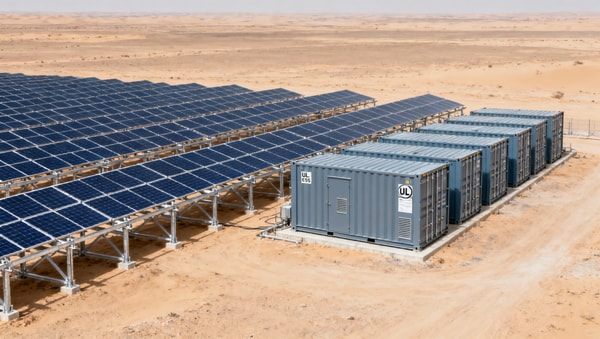
 Morocco Ranks 4th in EU Africa Energy Aid; China PV Mounting & ESS Export Path WidensMorocco ranks 4th in EU Africa energy aid—unlocking new PV mounting & ESS export opportunities for certified Chinese suppliers. Act now to leverage the white-list advantage.
 China Holds 68% of Global Autonomous Sanitation Vehicle PatentsChina holds 68% of global autonomous sanitation vehicle patents—key for smart infrastructure exporters, AI developers & edge hardware suppliers targeting GCC tenders.
") China’s Petrochemical Plant Upgrade Policy (2026–2029)China’s Petrochemical Plant Upgrade Policy (2026–2029) mandates safety assessments & intelligent upgrades for aging equipment—key for exporters, EPC firms, and certified equipment suppliers.
China’s Petrochemical Plant Upgrade Policy (2026–2029)China’s Petrochemical Plant Upgrade Policy (2026–2029) mandates safety assessments & intelligent upgrades for aging equipment—key for exporters, EPC firms, and certified equipment suppliers. U.S. Natural Gas Inventory Rise Below Expectations: Export Cost Pressure on PVC, ABS, CoatingsU.S. natural gas inventory rise fell short—impacting PVC, ABS & coatings exporters. Discover cost risks, mitigation steps & pricing insights now.
 EN 62368-1:2026 Enforced in EU: Thermal Runaway Protection Required for Wearables & Smart Home DevicesEN 62368-1:2026 mandates thermal runaway protection for wearables & smart home devices in the EU—act now to ensure CE compliance and avoid market access delays.
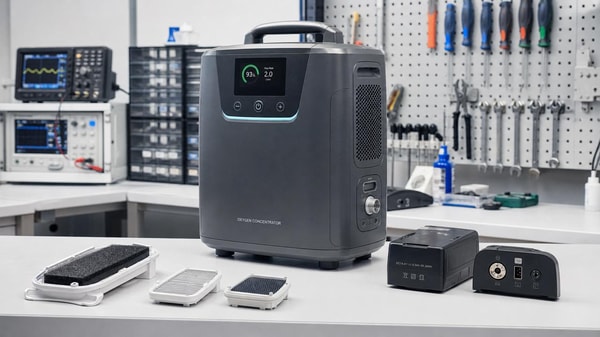
 Portable oxygen concentrators are quieter now, but are they easier to maintain?Portable oxygen concentrators are quieter, but are they easier to maintain? Explore service challenges, scenario-based insights, and smart ways to reduce downtime.
 Interactive whiteboards are underused when training stops after installationInteractive whiteboards often underperform when training ends at installation. Learn how continuous, role-based support boosts adoption, productivity, and ROI.
 Medical diagnostic equipment buying mistakes often start with workflow mismatchMedical diagnostic equipment buying mistakes often stem from workflow mismatch. Learn how to assess fit, avoid hidden costs, and choose scalable systems that support real clinical operations.
![]() Eco-friendly building materials can add compliance work, not just green valueEco-friendly building materials can boost sustainability but also add compliance work. Learn how they affect approvals, costs, timelines, and risk across key project scenarios.
Eco-friendly building materials can add compliance work, not just green valueEco-friendly building materials can boost sustainability but also add compliance work. Learn how they affect approvals, costs, timelines, and risk across key project scenarios. Ergonomic workspace design fails when posture is treated as the whole answerErgonomic workspace design fails when posture is the only focus. Learn how integrated planning improves productivity, retention, and workplace performance.
 Outdoor garden supplies demand changes faster than seasonal forecasts suggestOutdoor garden supplies demand is changing faster than seasonal forecasts. Discover key signals, sourcing strategies, and inventory tactics to stay competitive and capture growth.
 Sustainable home decor sells better when the material story is verifiableSustainable home decor wins more buyers when material claims are verifiable. Discover how traceable sourcing, certifications, and clear proof build trust and drive sales.
 Modern office furniture choices can raise complaints instead of comfortModern office furniture can improve productivity—or trigger costly complaints. Learn how to choose ergonomic, durable, flexible office solutions that support comfort and long-term value.
 Smart street lighting saves energy only when controls are tuned properlySmart street lighting saves energy only when controls are tuned to real traffic, safety, and maintenance needs. Learn how proper settings turn connected lighting into measurable ROI.
 Solid-state battery breakthroughs are real, but scaling is another storySolid-state battery breakthroughs are real, but scaling remains the real test. Explore where commercialization starts first, what limits adoption, and which markets may gain the earliest edge.
![]() Commercial LED lighting upgrades often disappoint in high-heat spacesCommercial LED lighting often underperforms in high-heat spaces. Learn the hidden causes, warning signs, and smart upgrade choices to improve reliability, safety, and long-term value.
Commercial LED lighting upgrades often disappoint in high-heat spacesCommercial LED lighting often underperforms in high-heat spaces. Learn the hidden causes, warning signs, and smart upgrade choices to improve reliability, safety, and long-term value.

















Popular Tags
Global Trade Insights & Industry
Our mission is to empower global exporters and importers with data-driven insights that foster strategic growth.
Search News
Popular Tags
Industry Overview
The global commercial kitchen equipment market is projected to reach $112 billion by 2027. Driven by urbanization, the rise of e-commerce food delivery, and strict hygiene regulations.