

Educational robots in classrooms: which features matter after the demo?
Educational robots can impress in a short demo, but procurement teams need to look beyond novelty. From curriculum alignment and durability to software support, data security, and total cost of ownership, the right features determine long-term classroom value. This article explores what buyers should evaluate after the first impression, helping schools and institutions choose Educational robots that deliver measurable learning outcomes and operational reliability.
For procurement professionals, the short answer is this: the best Educational robots are not the ones with the flashiest movements or the most entertaining demo scripts. They are the ones that fit teaching goals, survive daily classroom use, integrate with school systems, and remain supportable over several years. A robot that looks impressive for ten minutes but creates maintenance, training, or security headaches will quickly lose value.
That is why post-demo evaluation matters. Once the initial excitement fades, buyers need to assess whether a product can work at scale across different age groups, subjects, teacher skill levels, and IT environments. In most cases, the real decision comes down to six factors: learning relevance, usability, reliability, security, service support, and total cost of ownership.
Why the demo is rarely enough for procurement decisions
Classroom technology demos are designed to reduce friction and maximize engagement. Vendors usually present Educational robots in ideal conditions: small groups, trained staff, stable Wi-Fi, preconfigured software, and carefully selected lesson examples. That environment does not reflect the complexity of day-to-day school operations.
Procurement teams, especially those buying for multiple classrooms or institutions, need to test beyond the scripted presentation. The important question is not “Can this robot perform well in a demo?” but “Can this solution work consistently in real teaching conditions over the next three to five years?”
That shift in perspective changes the evaluation criteria. Novel design, emotional appeal, and entertainment value may help with initial adoption, but they are not the main drivers of long-term educational impact. Buyers should instead focus on whether the robots can support curriculum delivery, reduce teacher friction, and remain manageable within budget and IT policy constraints.
Does the robot actually align with curriculum and learning outcomes?
The first feature that matters after the demo is curriculum alignment. Educational robots should not be treated as isolated gadgets. They need to support defined learning objectives, whether in coding, computational thinking, engineering concepts, mathematics, language learning, or collaborative problem-solving.
Procurement teams should ask for concrete evidence of classroom use cases mapped to grade levels and curriculum standards. A vendor should be able to explain how the robot supports structured learning progression, not just open-ended play. If the product is mainly built around novelty tasks with weak lesson integration, teachers may use it only occasionally, which reduces return on investment.
Look for teaching resources that go beyond a product brochure. High-value indicators include lesson plans, assessment suggestions, differentiated activity levels, teacher guides, and subject-specific modules. These materials are particularly important when schools need to deploy Educational robots across varied classrooms with limited preparation time.
It is also worth checking whether learning outcomes are measurable. Can teachers observe skill progression? Are there reporting tools or activity records? Can the robot support both beginner and advanced learners? Products that scale in pedagogical depth usually create more durable value than products that only deliver a strong first impression.
How easy is it for teachers to use without specialist support?
Teacher usability is often underestimated during procurement. A robot may be technically capable, but if setup is slow, interfaces are confusing, or classroom management becomes difficult, adoption will decline quickly. Many school purchases underperform not because the hardware is poor, but because the day-to-day user experience is too demanding.
Procurement teams should evaluate onboarding from a non-expert teacher’s perspective. How long does it take to unbox, connect, update, and begin a lesson? Can a teacher with limited coding experience still run meaningful activities? Is the software interface intuitive for both instructors and students?
Another practical point is lesson flow. Educational robots should fit within real class periods, not just workshop environments. If a system requires lengthy calibration, complicated troubleshooting, or heavy device switching, it will consume valuable teaching time. Ease of storage, charging, pairing, and resetting between sessions also matters more than many buyers initially expect.
Training support is equally important. Strong vendors offer onboarding modules, classroom implementation guidance, video tutorials, and responsive educator support. For procurement professionals, this is not a soft feature; it is a core adoption factor. The easier the platform is for teachers, the more likely the institution will realize actual educational value.
Can the hardware handle daily classroom wear and operational stress?
Durability is one of the most important post-demo considerations, especially for primary and middle school environments. Educational robots are often used by many students in repeated, high-contact settings. A device that performs well in a controlled demonstration may not hold up under constant handling, transport, charging cycles, and occasional drops.
Buyers should examine build quality, material strength, wheel and sensor resilience, connector durability, and battery performance. Ask vendors about expected product lifespan, common failure points, replacement part availability, and repair turnaround times. These questions reveal whether the supplier understands institutional deployment rather than one-off retail sales.
Battery management is another practical issue. If charging times are long or battery life is inconsistent, classroom use becomes difficult. Procurement teams should compare the real operating time under active use, not just the ideal figure listed in technical documentation. Charging carts, spare battery options, and battery health monitoring can significantly improve operational reliability.
Storage and transport should also be reviewed. If schools plan to share robots across classrooms or campuses, cases, labeling systems, and charging infrastructure become part of the product’s effective usability. Durable Educational robots are not just physically strong; they are operationally designed for institutional routines.
What software ecosystem supports the robot after purchase?
For most buyers, the software ecosystem matters as much as the hardware. Educational robots are increasingly dependent on apps, cloud services, firmware updates, content libraries, and platform compatibility. A robot with weak software support may become obsolete long before its physical components fail.
Procurement teams should review operating system compatibility, browser access, device requirements, and account management structure. Can the platform run across the school’s existing tablets, laptops, or desktops? Does it require high-performance hardware? Is the experience consistent across different devices and user roles?
Update policy is another major factor. Buyers should understand how frequently updates are released, whether updates disrupt existing lesson content, and how older models are supported over time. Educational institutions often need technology stability more than constant feature changes. A vendor’s product roadmap and backward compatibility policy can affect long-term value significantly.
Content availability should also be assessed. Some Educational robots come with large libraries of guided activities, coding challenges, and teacher resources, while others rely heavily on schools creating their own content. Neither model is inherently wrong, but procurement teams should match the product to internal capacity. If teachers need a ready-to-use system, a thin content ecosystem may create adoption barriers.
Are data privacy and cybersecurity standards strong enough for schools?
Data security is no longer optional in educational technology procurement. Many Educational robots connect to student accounts, classroom devices, cloud dashboards, microphones, cameras, or usage analytics systems. That means procurement teams must evaluate privacy and cybersecurity with the same seriousness as functionality.
Start with basic questions: what data is collected, where is it stored, who can access it, and how long is it retained? Vendors should provide clear documentation on encryption, authentication, user permissions, and compliance with relevant educational privacy frameworks. If answers are vague, that is a warning sign.
Buyers should also ask whether the robot can operate offline or in limited-connectivity environments. In some institutions, local operation reduces both privacy risk and network dependency. For schools with strict IT governance, the ability to control updates, restrict data sharing, and manage permissions centrally can be a decisive procurement factor.
Cybersecurity support after purchase is equally important. Procurement is not just about buying a secure product today; it is about ensuring ongoing patching, incident response, and vulnerability management. Educational robots that are connected devices must be treated as part of the school’s broader digital infrastructure.
What does support, warranty, and vendor reliability really look like?
When institutions buy Educational robots, they are not just purchasing devices; they are entering a service relationship. This is especially true for larger deployments, where uptime, replacements, software continuity, and educator assistance determine whether the investment delivers sustained value.
Procurement teams should review warranty terms carefully. How long is the standard warranty? What failures are covered? Is shipping included? Are replacement units available during repair periods? A low purchase price can become expensive if support is slow, fragmented, or geographically limited.
Vendor responsiveness should be tested before purchase. Submit technical questions, ask for documentation, and evaluate how quickly and clearly the supplier responds. This gives a practical preview of post-sale support quality. Buyers should also consider whether the vendor has a stable presence, credible references, and a realistic long-term commitment to the education market.
For multi-site buyers, support scalability matters. Can the vendor handle rollout training, fleet management, software provisioning, and troubleshooting across many classrooms? Reliable Educational robots require reliable vendor operations behind them.
How should buyers calculate total cost of ownership?
Price alone is a weak decision metric. The more useful calculation is total cost of ownership over the expected life of the product. That includes hardware, software licenses, accessories, charging equipment, replacement parts, teacher training, IT setup, support contracts, and possible expansion costs.
Procurement teams should ask whether software access is included permanently or tied to annual renewal. Some Educational robots appear affordable at the hardware level but require recurring subscriptions for core functionality. Others may need paid curriculum packs, storage systems, or consumables that are not obvious during the demo phase.
Labor cost should also be considered. If setup, maintenance, or troubleshooting requires significant teacher or IT time, the real cost rises. In contrast, a more expensive system that is easy to deploy and widely used may produce better value over time.
A practical procurement method is to compare products across a three-year or five-year cost model. This should include expected breakage rates, support assumptions, training refresh needs, and software continuity. Educational robots that deliver stable classroom use and clear learning outcomes often justify a higher upfront price better than low-cost alternatives with poor long-term performance.
Which evaluation questions should procurement teams ask before shortlisting?
To move from demo enthusiasm to informed selection, buyers need a structured evaluation framework. Useful questions include: Which subjects and age groups does this robot genuinely support? What classroom evidence exists beyond pilot demonstrations? How difficult is teacher onboarding? What happens when devices fail? How is data protected? What recurring costs apply after year one?
It is also valuable to request a real-world pilot rather than a staged showcase. A short school-based trial can reveal issues that never appear in vendor-led demonstrations, including Wi-Fi dependencies, teacher confidence gaps, charging bottlenecks, student handling concerns, and software login friction.
Cross-functional evaluation usually leads to better decisions. Procurement, teachers, IT staff, and academic leaders may each identify different strengths and risks. Educational robots touch pedagogy, infrastructure, compliance, and budgeting, so decisions should not sit with a single stakeholder group alone.
Finally, define success in advance. If the institution cannot describe what successful adoption looks like, it will be difficult to judge between competing vendors. Clear criteria such as lesson frequency, teacher uptake, student engagement, curriculum fit, and support responsiveness make procurement more disciplined and defensible.
Final buying perspective: prioritize sustainable classroom value over novelty
After the demo, the essential question is simple: will these Educational robots still be valuable once the excitement wears off? For procurement teams, the strongest products are those that combine educational relevance with operational reliability. They help teachers teach, students learn, and institutions manage technology with fewer surprises.
The most important features are usually not the ones that create the biggest first impression. Curriculum fit, ease of use, durability, software support, data protection, and total cost of ownership matter far more than theatrical capabilities. Buyers who evaluate these areas carefully are far more likely to choose solutions that deliver long-term value.
In a crowded EdTech market, Educational robots should be judged as strategic classroom tools, not novelty devices. Procurement decisions improve when teams look past the polished demo and examine what happens in week ten, month twelve, and year three. That is where true product quality becomes visible, and where smart purchasing creates measurable educational and operational returns.
Recommended News
 China's Smart Electric Wheelchair Exports Face EU MDR Compliance Shift from Q3 2026China's smart electric wheelchair exports must meet EU MDR + CE dual certification by Q3 2026 — only 12 manufacturers comply. Act now to secure market access.
 Apple Opens AI Service Hub to Third Parties: New Export Path for Chinese AIoT HardwareApple's AI Service Hub opens new export opportunities for Chinese AIoT hardware—enabling iFLYTEK, SenseTime & others to power HomeKit, CarPlay & HealthKit with on-device AI.
 GPT-5.5 Instant Rollout Impacts AI SaaS Exporters’ SLAsGPT-5.5 Instant rollout reshapes AI SaaS exporters’ SLAs—learn how P95 latency, multimodal context, and contract compliance impact your global clients now.
 Red Bull SA15 Uses Tiantai Energy Solutions: China OEM Compliance Gains ASEAN AttentionRed Bull SA15 adopts Tiantai’s China OEM energy solutions—triple-registered (TH FDA, SG HSA, EU EFSA). A benchmark for ASEAN importers & nutraceutical manufacturers seeking compliant, scalable sourcing.
 China’s New GB 4343.1-2026 Mobile Power Bank Standard Takes Effect Nov 2026GB 4343.1-2026 mobile power bank standard takes effect Nov 2026—learn key compliance steps, dual-protocol requirements & global certification strategy.
 Morocco Ranks 4th in EU Africa Energy Aid; China PV Mounting & ESS Export Path WidensMorocco ranks 4th in EU Africa energy aid—unlocking new PV mounting & ESS export opportunities for certified Chinese suppliers. Act now to leverage the white-list advantage.
 China Holds 68% of Global Autonomous Sanitation Vehicle PatentsChina holds 68% of global autonomous sanitation vehicle patents—key for smart infrastructure exporters, AI developers & edge hardware suppliers targeting GCC tenders.
") China’s Petrochemical Plant Upgrade Policy (2026–2029)China’s Petrochemical Plant Upgrade Policy (2026–2029) mandates safety assessments & intelligent upgrades for aging equipment—key for exporters, EPC firms, and certified equipment suppliers.
China’s Petrochemical Plant Upgrade Policy (2026–2029)China’s Petrochemical Plant Upgrade Policy (2026–2029) mandates safety assessments & intelligent upgrades for aging equipment—key for exporters, EPC firms, and certified equipment suppliers. U.S. Natural Gas Inventory Rise Below Expectations: Export Cost Pressure on PVC, ABS, CoatingsU.S. natural gas inventory rise fell short—impacting PVC, ABS & coatings exporters. Discover cost risks, mitigation steps & pricing insights now.
 EN 62368-1:2026 Enforced in EU: Thermal Runaway Protection Required for Wearables & Smart Home DevicesEN 62368-1:2026 mandates thermal runaway protection for wearables & smart home devices in the EU—act now to ensure CE compliance and avoid market access delays.
 Portable oxygen concentrators are quieter now, but are they easier to maintain?Portable oxygen concentrators are quieter, but are they easier to maintain? Explore service challenges, scenario-based insights, and smart ways to reduce downtime.
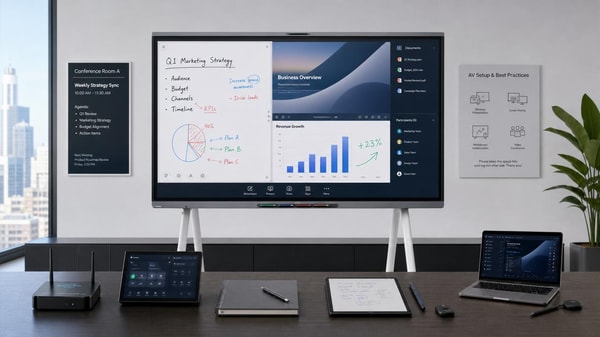
 Interactive whiteboards are underused when training stops after installationInteractive whiteboards often underperform when training ends at installation. Learn how continuous, role-based support boosts adoption, productivity, and ROI.
 Medical diagnostic equipment buying mistakes often start with workflow mismatchMedical diagnostic equipment buying mistakes often stem from workflow mismatch. Learn how to assess fit, avoid hidden costs, and choose scalable systems that support real clinical operations.
![]() Eco-friendly building materials can add compliance work, not just green valueEco-friendly building materials can boost sustainability but also add compliance work. Learn how they affect approvals, costs, timelines, and risk across key project scenarios.
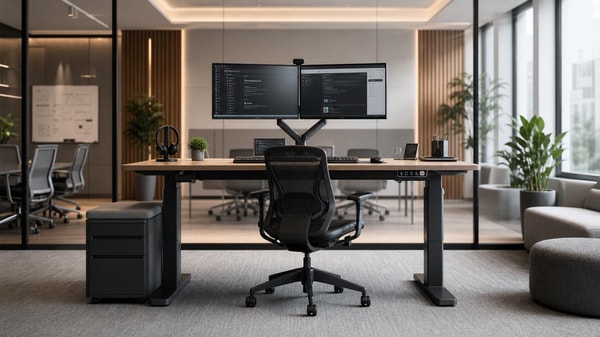
Eco-friendly building materials can add compliance work, not just green valueEco-friendly building materials can boost sustainability but also add compliance work. Learn how they affect approvals, costs, timelines, and risk across key project scenarios. Ergonomic workspace design fails when posture is treated as the whole answerErgonomic workspace design fails when posture is the only focus. Learn how integrated planning improves productivity, retention, and workplace performance.
 Outdoor garden supplies demand changes faster than seasonal forecasts suggestOutdoor garden supplies demand is changing faster than seasonal forecasts. Discover key signals, sourcing strategies, and inventory tactics to stay competitive and capture growth.
 Sustainable home decor sells better when the material story is verifiableSustainable home decor wins more buyers when material claims are verifiable. Discover how traceable sourcing, certifications, and clear proof build trust and drive sales.
 Modern office furniture choices can raise complaints instead of comfortModern office furniture can improve productivity—or trigger costly complaints. Learn how to choose ergonomic, durable, flexible office solutions that support comfort and long-term value.
 Smart street lighting saves energy only when controls are tuned properlySmart street lighting saves energy only when controls are tuned to real traffic, safety, and maintenance needs. Learn how proper settings turn connected lighting into measurable ROI.
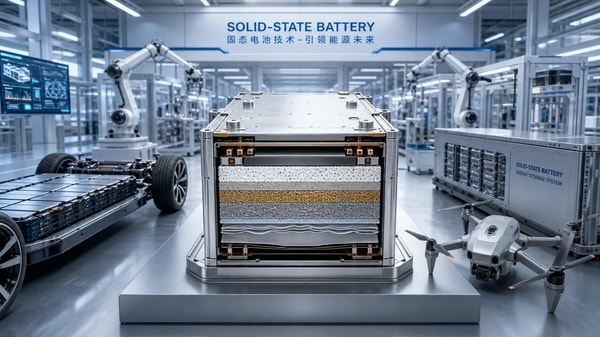
 Solid-state battery breakthroughs are real, but scaling is another storySolid-state battery breakthroughs are real, but scaling remains the real test. Explore where commercialization starts first, what limits adoption, and which markets may gain the earliest edge.
![]() Commercial LED lighting upgrades often disappoint in high-heat spacesCommercial LED lighting often underperforms in high-heat spaces. Learn the hidden causes, warning signs, and smart upgrade choices to improve reliability, safety, and long-term value.
Commercial LED lighting upgrades often disappoint in high-heat spacesCommercial LED lighting often underperforms in high-heat spaces. Learn the hidden causes, warning signs, and smart upgrade choices to improve reliability, safety, and long-term value.













Popular Tags
Global Trade Insights & Industry
Our mission is to empower global exporters and importers with data-driven insights that foster strategic growth.
Search News
Popular Tags
Industry Overview
The global commercial kitchen equipment market is projected to reach $112 billion by 2027. Driven by urbanization, the rise of e-commerce food delivery, and strict hygiene regulations.