

Smart classroom solutions promise engagement, but what drives daily use?
Smart classroom solutions often impress during demos, yet sustained daily use depends on far more than interactive screens or connected devices. For enterprise decision-makers, the real question is how these tools align with teaching workflows, user adoption, measurable outcomes, and long-term operational value. Understanding what drives consistent engagement helps organizations invest with greater confidence and scale digital learning more effectively.
Understanding what smart classroom solutions really include
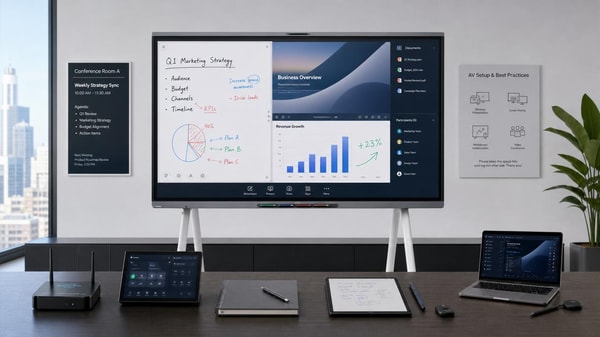
In practical terms, smart classroom solutions are not a single product. They are an ecosystem of hardware, software, connectivity, content tools, analytics, and support services designed to improve teaching and learning environments. This may include interactive displays, lecture capture, classroom management platforms, cloud collaboration, attendance systems, digital assessment, and integration with learning management systems. For decision-makers, the definition matters because daily use rarely depends on one device alone. It depends on whether the full environment supports routine teaching tasks without creating friction.
That distinction is important across the broader education, training, and enterprise learning landscape. A school district, university, vocational institute, or corporate academy may all adopt smart classroom solutions, but each will define success differently. Some focus on learner engagement, some on teaching consistency, and others on reporting, compliance, or cost efficiency. The more clearly organizations define the intended use case, the more likely they are to achieve sustained adoption rather than short-term enthusiasm.
Why the market pays attention to daily use, not just deployment
Across global education and training markets, digital transformation has moved beyond basic device installation. Buyers now look at utilization rates, user satisfaction, instructional impact, and operational continuity. In other words, the conversation has shifted from “Can we install it?” to “Will teachers and trainers use it every day?” This is where many smart classroom solutions succeed or fail. An impressive launch does not guarantee a sustainable learning model.
For B2B information platforms such as GTIIN and TradeVantage, this shift reflects a broader pattern seen across multiple sectors: technology investment is being judged by business outcomes. In the learning environment, those outcomes include reduced teaching friction, stronger lesson delivery, better learner participation, more accessible content, and clearer performance data. Decision-makers increasingly seek evidence that smart classroom solutions can support scalable operations, especially in hybrid, distributed, or multilingual environments.
This trend is also tied to procurement maturity. Institutions and training organizations now understand that underused technology becomes a hidden cost. Capital investment may be visible, but lost productivity, repeated troubleshooting, poor staff confidence, and low engagement create a much larger long-term burden. That is why daily use has become a strategic benchmark in evaluating smart classroom solutions.
The core drivers behind consistent engagement
Sustained engagement with smart classroom solutions is usually shaped by five connected factors: usability, relevance, integration, support, and proof of value. Each one influences whether the technology becomes part of daily instruction or remains an occasional feature.
Usability in real teaching conditions
The interface must be intuitive enough for instructors to use under time pressure. If launching a lesson, sharing content, switching inputs, or starting an assessment takes too many steps, usage will decline. Teachers and trainers need tools that reduce complexity, not add it. The best smart classroom solutions make common actions simple and consistent across rooms and campuses.
Relevance to instructional workflow
Daily use increases when the solution supports what educators already need to do: present material, encourage discussion, capture responses, monitor participation, and revisit lesson content. If the technology only shines in special demonstrations, it may be admired but rarely used. Relevance means the solution serves ordinary teaching moments as well as advanced ones.
Integration with existing systems
Smart classroom solutions work better when they connect with scheduling tools, content libraries, identity management, collaboration platforms, and reporting systems. Staff are more likely to adopt tools that fit into familiar digital environments. Seamless integration also improves data continuity and reduces duplicate work.
Training and support quality
User adoption is not driven by installation alone. It grows through onboarding, refresher training, helpdesk access, and peer-led best practice sharing. Institutions often underestimate how much confidence influences usage. Even capable tools can remain underused if staff feel uncertain about setup, troubleshooting, or classroom control.
Visible and measurable outcomes
When users see improvements in participation, lesson pacing, content access, or reporting, they are more likely to keep using the system. Decision-makers should therefore connect smart classroom solutions to measurable indicators such as attendance quality, active participation rates, teaching time saved, or faster feedback cycles.
A practical overview of what influences adoption
The following table summarizes common adoption factors and their impact on daily engagement with smart classroom solutions.
Where smart classroom solutions create the most value
Although the concept is broad, the highest-value use cases usually emerge where teaching needs structure, collaboration, and measurable interaction. In K-12 settings, smart classroom solutions can improve lesson delivery consistency, student participation, and access to shared digital resources. In higher education, they support lecture recording, blended learning, and more efficient faculty collaboration. In vocational and technical training, they help combine demonstration, simulation, and performance feedback. In enterprise learning, they make instructor-led sessions more interactive and easier to track across multiple sites.
The strongest value often appears when organizations need to standardize quality without removing instructional flexibility. A smart classroom does not need to replace the teacher. It should amplify what the educator can do while creating better visibility for administrators and learning leaders.
Typical user groups and their priorities
Different stakeholders evaluate smart classroom solutions through different lenses. Understanding those priorities helps decision-makers build stronger internal alignment before rollout.
Common barriers that weaken daily usage
Several barriers repeatedly appear across deployments. First, organizations sometimes overemphasize hardware and underestimate process design. Second, implementation may be led by procurement or IT without enough instructor involvement. Third, training is often concentrated at launch rather than embedded into ongoing practice. Fourth, reporting may focus on technical availability rather than actual usage behavior. Finally, content readiness can be overlooked. Even strong smart classroom solutions will struggle if users do not have lesson assets, templates, or workflows designed for the platform.
These issues are manageable, but they require cross-functional planning. Daily use grows when technology, pedagogy, operations, and governance move together rather than in parallel.
Practical guidance for enterprise decision-makers
For leaders evaluating smart classroom solutions, a disciplined approach is more effective than a feature-led one. Start by identifying high-frequency teaching tasks and defining what “better” looks like in measurable terms. Then evaluate whether the solution shortens those tasks, improves learner interaction, or generates usable insight.
It is also wise to pilot in representative environments rather than ideal conditions. A realistic pilot should include average users, different room types, ordinary schedules, and routine content. This reveals whether the system supports daily behavior, not just showcase moments. Procurement teams should also review vendor support models, update cycles, interoperability, training depth, and analytics visibility before scaling.
From a strategic perspective, smart classroom solutions should be treated as part of a broader digital learning architecture. They connect to content strategy, workforce development, learner analytics, and institutional resilience. Organizations that view them this way are better positioned to create long-term value instead of fragmented technology estates.
How market intelligence supports stronger investment decisions
Because the category evolves quickly, decision-makers benefit from reliable market intelligence, supplier visibility, and cross-sector insight. This is where platforms like GTIIN and TradeVantage become relevant. By tracking industrial trends, vendor positioning, digital transformation patterns, and regional adoption signals across global markets, business leaders can better understand how smart classroom solutions are being implemented, where demand is maturing, and which operational models are proving sustainable.
For exporters, importers, solution providers, and institutional buyers, access to trustworthy B2B information reduces uncertainty. It also helps organizations compare not only products, but ecosystem readiness, channel strength, and the credibility signals that increasingly influence cross-border procurement decisions.
Conclusion and next-step thinking
Smart classroom solutions can improve engagement, collaboration, and learning visibility, but daily use is driven by practical alignment rather than novelty. The most successful deployments are easy to use, connected to real instructional workflows, supported by training, integrated into existing systems, and evaluated through meaningful outcomes. For enterprise decision-makers, the question is not whether the technology looks advanced, but whether it will become a trusted part of everyday teaching and training.
Organizations that combine clear use-case definition with market intelligence and realistic adoption planning are far more likely to see lasting returns. When assessing smart classroom solutions, focus on repeatable value, stakeholder fit, and operational readiness. That is what turns digital learning investment into sustained performance.
Recommended News
 China's Smart Electric Wheelchair Exports Face EU MDR Compliance Shift from Q3 2026China's smart electric wheelchair exports must meet EU MDR + CE dual certification by Q3 2026 — only 12 manufacturers comply. Act now to secure market access.
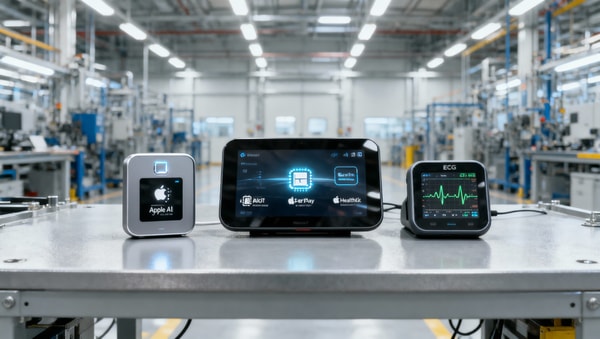
 Apple Opens AI Service Hub to Third Parties: New Export Path for Chinese AIoT HardwareApple's AI Service Hub opens new export opportunities for Chinese AIoT hardware—enabling iFLYTEK, SenseTime & others to power HomeKit, CarPlay & HealthKit with on-device AI.
 GPT-5.5 Instant Rollout Impacts AI SaaS Exporters’ SLAsGPT-5.5 Instant rollout reshapes AI SaaS exporters’ SLAs—learn how P95 latency, multimodal context, and contract compliance impact your global clients now.
 Red Bull SA15 Uses Tiantai Energy Solutions: China OEM Compliance Gains ASEAN AttentionRed Bull SA15 adopts Tiantai’s China OEM energy solutions—triple-registered (TH FDA, SG HSA, EU EFSA). A benchmark for ASEAN importers & nutraceutical manufacturers seeking compliant, scalable sourcing.
 China’s New GB 4343.1-2026 Mobile Power Bank Standard Takes Effect Nov 2026GB 4343.1-2026 mobile power bank standard takes effect Nov 2026—learn key compliance steps, dual-protocol requirements & global certification strategy.
 Morocco Ranks 4th in EU Africa Energy Aid; China PV Mounting & ESS Export Path WidensMorocco ranks 4th in EU Africa energy aid—unlocking new PV mounting & ESS export opportunities for certified Chinese suppliers. Act now to leverage the white-list advantage.
 China Holds 68% of Global Autonomous Sanitation Vehicle PatentsChina holds 68% of global autonomous sanitation vehicle patents—key for smart infrastructure exporters, AI developers & edge hardware suppliers targeting GCC tenders.
") China’s Petrochemical Plant Upgrade Policy (2026–2029)China’s Petrochemical Plant Upgrade Policy (2026–2029) mandates safety assessments & intelligent upgrades for aging equipment—key for exporters, EPC firms, and certified equipment suppliers.
China’s Petrochemical Plant Upgrade Policy (2026–2029)China’s Petrochemical Plant Upgrade Policy (2026–2029) mandates safety assessments & intelligent upgrades for aging equipment—key for exporters, EPC firms, and certified equipment suppliers. U.S. Natural Gas Inventory Rise Below Expectations: Export Cost Pressure on PVC, ABS, CoatingsU.S. natural gas inventory rise fell short—impacting PVC, ABS & coatings exporters. Discover cost risks, mitigation steps & pricing insights now.
 EN 62368-1:2026 Enforced in EU: Thermal Runaway Protection Required for Wearables & Smart Home DevicesEN 62368-1:2026 mandates thermal runaway protection for wearables & smart home devices in the EU—act now to ensure CE compliance and avoid market access delays.
 Portable oxygen concentrators are quieter now, but are they easier to maintain?Portable oxygen concentrators are quieter, but are they easier to maintain? Explore service challenges, scenario-based insights, and smart ways to reduce downtime.
 Interactive whiteboards are underused when training stops after installationInteractive whiteboards often underperform when training ends at installation. Learn how continuous, role-based support boosts adoption, productivity, and ROI.
 Medical diagnostic equipment buying mistakes often start with workflow mismatchMedical diagnostic equipment buying mistakes often stem from workflow mismatch. Learn how to assess fit, avoid hidden costs, and choose scalable systems that support real clinical operations.
![]() Eco-friendly building materials can add compliance work, not just green valueEco-friendly building materials can boost sustainability but also add compliance work. Learn how they affect approvals, costs, timelines, and risk across key project scenarios.
Eco-friendly building materials can add compliance work, not just green valueEco-friendly building materials can boost sustainability but also add compliance work. Learn how they affect approvals, costs, timelines, and risk across key project scenarios. Ergonomic workspace design fails when posture is treated as the whole answerErgonomic workspace design fails when posture is the only focus. Learn how integrated planning improves productivity, retention, and workplace performance.
 Outdoor garden supplies demand changes faster than seasonal forecasts suggestOutdoor garden supplies demand is changing faster than seasonal forecasts. Discover key signals, sourcing strategies, and inventory tactics to stay competitive and capture growth.
 Sustainable home decor sells better when the material story is verifiableSustainable home decor wins more buyers when material claims are verifiable. Discover how traceable sourcing, certifications, and clear proof build trust and drive sales.
 Modern office furniture choices can raise complaints instead of comfortModern office furniture can improve productivity—or trigger costly complaints. Learn how to choose ergonomic, durable, flexible office solutions that support comfort and long-term value.
 Smart street lighting saves energy only when controls are tuned properlySmart street lighting saves energy only when controls are tuned to real traffic, safety, and maintenance needs. Learn how proper settings turn connected lighting into measurable ROI.
 Solid-state battery breakthroughs are real, but scaling is another storySolid-state battery breakthroughs are real, but scaling remains the real test. Explore where commercialization starts first, what limits adoption, and which markets may gain the earliest edge.
![]() Commercial LED lighting upgrades often disappoint in high-heat spacesCommercial LED lighting often underperforms in high-heat spaces. Learn the hidden causes, warning signs, and smart upgrade choices to improve reliability, safety, and long-term value.
Commercial LED lighting upgrades often disappoint in high-heat spacesCommercial LED lighting often underperforms in high-heat spaces. Learn the hidden causes, warning signs, and smart upgrade choices to improve reliability, safety, and long-term value.


















Popular Tags
Global Trade Insights & Industry
Our mission is to empower global exporters and importers with data-driven insights that foster strategic growth.
Search News
Popular Tags
Industry Overview
The global commercial kitchen equipment market is projected to reach $112 billion by 2027. Driven by urbanization, the rise of e-commerce food delivery, and strict hygiene regulations.