

Why fashion tech startups are rethinking returns before scaling
As growth accelerates, fashion tech startups are discovering that returns can erode margins, weaken customer loyalty, and strain operations long before scale delivers profit. For business decision-makers, rethinking return strategies is no longer a back-office fix but a core growth decision. Understanding how leading brands balance convenience, cost control, and data-driven optimization reveals why smarter returns management is becoming a competitive advantage.
For companies building digital retail models, fit-tech tools, resale platforms, AI styling engines, and cross-border apparel marketplaces, returns are not a side issue. They sit at the intersection of customer acquisition cost, warehouse efficiency, reverse logistics, inventory recovery, and lifetime value. A startup can improve conversion by 10% to 20% with a flexible return promise, yet still lose margin if return handling, fraud control, and resale recovery are not designed early.
That is why many fashion tech startups are revisiting return policies before they expand into new regions, add SKUs, or raise fulfillment volumes from hundreds of orders per week to several thousand. For decision-makers evaluating systems, partners, and operating models, the most important question is no longer whether returns should be easy. It is how easy they can be without turning scale into a cost trap.
Why returns become a scaling risk earlier than founders expect
In fashion commerce, returns are structurally different from many other categories. Size uncertainty, color variation, fabric expectations, and occasion-based buying create a naturally higher return exposure than standard consumer goods. For fashion tech startups, the problem is amplified by rapid assortment changes, limited historical data, and lean teams that often manage logistics across 2 to 5 tools instead of one integrated workflow.
Margin pressure starts with small operational leaks
A single return can trigger 6 to 9 cost events: outbound shipping sunk cost, reverse shipping, inspection labor, repackaging, restocking delay, markdown exposure, and customer service time. If a startup offers free returns across domestic and cross-border markets without threshold rules, the true cost can exceed the original contribution margin on lower-ticket products. This is especially visible when average order value sits in the $40 to $90 range.
The challenge is not only cost per parcel. Returned items also lock inventory for 3 to 10 days while they move through reverse logistics and quality checks. In trend-sensitive categories, that delay can reduce full-price resale potential. A dress returned after a campaign peak may need a 15% to 30% markdown simply because it missed the optimal selling window.
Customer expectations are rising, but tolerance for friction is low
Modern shoppers expect label generation in minutes, refund visibility within 24 to 72 hours, and clear policy language before checkout. Fashion tech startups that rely on opaque rules, delayed approvals, or fragmented communication often face a second-order problem: lower repeat purchase rates. A customer may accept a poor return once, but not twice. In subscription styling, premium streetwear, and occasionwear, trust erosion can be more damaging than the direct return cost.
Common scaling triggers that expose weak return systems
- Expanding from 1 market to 3 or more countries with different carrier economics and consumer protection rules
- Increasing SKU depth without improving size guidance, fabric detail, or fit prediction
- Launching influencer-driven campaigns that spike order volume for 48 to 72 hours
- Using multiple fulfillment partners with inconsistent inspection and restocking standards
The table below outlines how return complexity changes as fashion tech startups move from early traction to scaled operations.
The pattern is clear: return issues rarely appear dramatic at first, but they compound as order volume rises. For fashion tech startups, scaling without return redesign often means adding revenue and complexity at the same time, while profitability moves in the opposite direction.
What leading fashion tech startups are changing in return strategy
The most effective operators are not simply tightening policies. They are redesigning the return journey from product discovery to inventory recovery. That means reducing preventable returns before checkout, segmenting policy rules after purchase, and accelerating value recovery once an item comes back. In practice, this usually involves 3 layers: prevention, controlled flexibility, and faster downstream processing.
1. Prevention through better product intelligence
A large share of avoidable returns starts with missing or weak product information. Fashion tech startups now invest more heavily in size recommendation engines, garment measurement charts, user-generated fit notes, fabric behavior details, and image consistency across devices. Even a 5% to 8% reduction in fit-related returns can materially improve contribution margin at scale.
This is where technology matters most. Data from return reasons should feed back into product pages, merchandising, and sourcing decisions. If one silhouette shows a 2x return rate compared with adjacent categories, the issue may not be the customer. It may be sizing tolerance, supplier variance, or misleading visual presentation.
2. Policy segmentation instead of one-size-fits-all returns
Not every order needs the same return promise. Many fashion tech startups are moving to segmented rules based on order value, customer history, geography, product type, and resale potential. For example, full-price basics may allow a 30-day free return window, while discounted limited-run items may receive store credit or a shorter 14-day return period. The goal is not to create friction. It is to align policy cost with business risk.
Examples of practical segmentation
- High-frequency customers: faster refund release and simplified label generation
- First-time high-risk orders: stronger verification and return tracking controls
- Final sale or low-recovery items: exchange or credit-based resolution instead of cash refund
- Cross-border orders: localized return hubs to reduce 7 to 15 day transit delays
The next table compares return design choices often reviewed by business leaders before expansion.
The strongest option depends on category mix and customer economics. For many fashion tech startups, segmented returns offer the best balance because they preserve convenience where it matters while protecting margin on higher-risk transactions.
3. Faster recovery after the item comes back
Returns become much more expensive when inventory sits idle. Leading teams set clear reverse logistics service levels: carrier receipt confirmation in 24 hours, warehouse inspection in 48 hours, and disposition decision in 72 hours where possible. Items should then move into one of 4 paths: restock as new, refurbish, liquidate, or recycle. Delays between these steps reduce resale value and create forecasting noise.
This is also where integration with resale and recommerce channels becomes valuable. If returned stock cannot re-enter full-price inventory within a defined threshold, often 3 to 5 days after inspection, an alternative monetization path should already exist. That prevents operational limbo and improves recovery rates.
How decision-makers should evaluate return infrastructure before expansion
Before opening a new market, signing a 3PL, or adding another fashion category, leadership teams should audit return readiness with the same discipline used for payments or fulfillment. In many cases, a startup does not need a larger return budget. It needs better visibility, cleaner workflows, and more deliberate partner selection.
Key evaluation criteria for systems and partners
A practical review framework includes at least 5 dimensions: policy configurability, carrier integration, inspection standardization, fraud controls, and reporting depth. If a platform cannot separate return reasons, refund timing, exchange outcomes, and recovery channel performance, executives will struggle to identify where margin is leaking. Monthly summary reports are not enough; weekly and even daily visibility is often necessary during growth periods.
Questions worth asking before committing budget
- Can the workflow support different policies by country, product category, and customer segment?
- What is the typical reverse transit time: 2 to 4 days domestically or 7 to 15 days cross-border?
- How quickly can refund status sync with customer service and finance systems?
- Are damaged, worn, and fraudulent returns classified with repeatable inspection logic?
- Can recovered inventory be routed back to primary stock, outlet, or resale channels automatically?
The table below can help procurement and operations teams compare return-readiness requirements during vendor review.
For decision-makers in global trade and cross-border apparel flows, this matters beyond direct retail performance. Returns shape inventory planning, supplier negotiations, duty exposure, local warehousing choices, and customer retention. A return model that works in one region may become cost-heavy in another if parcel rates, transit times, or regulatory expectations shift.
Frequent mistakes that slow profitable growth
Many fashion tech startups make the same 4 mistakes. First, they copy return policies from larger brands without matching operational depth. Second, they track return volume but not recovery speed. Third, they treat return reasons as customer-service data rather than product intelligence. Fourth, they wait until monthly return rates become painful before rebuilding the process. By then, customer habits and internal workarounds are already difficult to change.
A better path is to define return economics before aggressive scaling. Set acceptable thresholds, such as target inspection turnaround, maximum refund delay, expected exchange conversion rate, and recovery route by category. Even simple governance rules reviewed every 2 weeks can improve decision quality.
Why return strategy now influences brand value and investor confidence
Investors and strategic partners increasingly look beyond topline growth. They want evidence that revenue can scale with operational discipline. For fashion tech startups, returns are a visible signal of that discipline because they reveal the connection between product-market fit, customer trust, and unit economics. A startup that understands its return drivers by category, channel, and geography appears far more resilient than one relying on broad assumptions.
This is especially relevant in an international trade context, where brands, platforms, and supply chain partners need dependable information to plan expansion. Decision-makers using industry intelligence platforms such as GTIIN and TradeVantage benefit from tracking not only consumer demand shifts, but also operational trends such as localized returns, recommerce growth, and data-led fulfillment models. These signals help exporters, importers, and service providers align with the realities of modern fashion commerce.
A strategic lens for the next 12 months
Over the next 12 months, the most resilient fashion tech startups will likely focus on 3 priorities: reducing preventable returns through better fit and product data, shortening reverse logistics cycles, and increasing recovery through resale or alternative channels. None of these depends on extreme policy tightening. They depend on operational clarity and better use of information across merchandising, logistics, and customer experience.
Returns should therefore be treated as a growth design issue, not just a service policy. When managed well, they protect margins, improve repurchase behavior, and strengthen supply chain responsiveness. When ignored, they quietly absorb the gains created by marketing, product innovation, and geographic expansion.
For business leaders evaluating the next stage of scale, smarter returns management is becoming a practical source of competitive advantage. If your organization is assessing market expansion, cross-border fashion operations, or digital brand growth, GTIIN and TradeVantage can help you monitor the operational signals behind sustainable performance. Contact us to explore tailored industry insights, gain visibility into emerging supply chain trends, and learn more solutions that support better strategic decisions.
Recommended News
 China's Smart Electric Wheelchair Exports Face EU MDR Compliance Shift from Q3 2026China's smart electric wheelchair exports must meet EU MDR + CE dual certification by Q3 2026 — only 12 manufacturers comply. Act now to secure market access.
 Apple Opens AI Service Hub to Third Parties: New Export Path for Chinese AIoT HardwareApple's AI Service Hub opens new export opportunities for Chinese AIoT hardware—enabling iFLYTEK, SenseTime & others to power HomeKit, CarPlay & HealthKit with on-device AI.
 GPT-5.5 Instant Rollout Impacts AI SaaS Exporters’ SLAsGPT-5.5 Instant rollout reshapes AI SaaS exporters’ SLAs—learn how P95 latency, multimodal context, and contract compliance impact your global clients now.
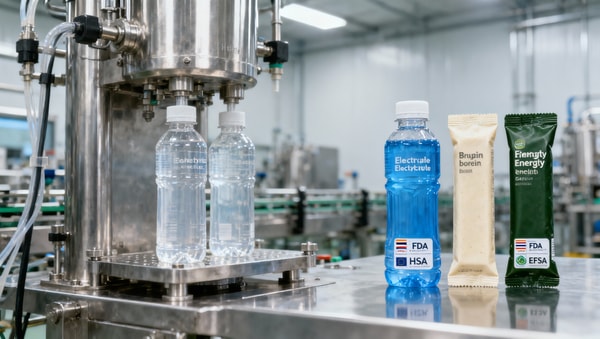
 Red Bull SA15 Uses Tiantai Energy Solutions: China OEM Compliance Gains ASEAN AttentionRed Bull SA15 adopts Tiantai’s China OEM energy solutions—triple-registered (TH FDA, SG HSA, EU EFSA). A benchmark for ASEAN importers & nutraceutical manufacturers seeking compliant, scalable sourcing.
 China’s New GB 4343.1-2026 Mobile Power Bank Standard Takes Effect Nov 2026GB 4343.1-2026 mobile power bank standard takes effect Nov 2026—learn key compliance steps, dual-protocol requirements & global certification strategy.
 Morocco Ranks 4th in EU Africa Energy Aid; China PV Mounting & ESS Export Path WidensMorocco ranks 4th in EU Africa energy aid—unlocking new PV mounting & ESS export opportunities for certified Chinese suppliers. Act now to leverage the white-list advantage.
 China Holds 68% of Global Autonomous Sanitation Vehicle PatentsChina holds 68% of global autonomous sanitation vehicle patents—key for smart infrastructure exporters, AI developers & edge hardware suppliers targeting GCC tenders.
") China’s Petrochemical Plant Upgrade Policy (2026–2029)China’s Petrochemical Plant Upgrade Policy (2026–2029) mandates safety assessments & intelligent upgrades for aging equipment—key for exporters, EPC firms, and certified equipment suppliers.
China’s Petrochemical Plant Upgrade Policy (2026–2029)China’s Petrochemical Plant Upgrade Policy (2026–2029) mandates safety assessments & intelligent upgrades for aging equipment—key for exporters, EPC firms, and certified equipment suppliers. U.S. Natural Gas Inventory Rise Below Expectations: Export Cost Pressure on PVC, ABS, CoatingsU.S. natural gas inventory rise fell short—impacting PVC, ABS & coatings exporters. Discover cost risks, mitigation steps & pricing insights now.
 EN 62368-1:2026 Enforced in EU: Thermal Runaway Protection Required for Wearables & Smart Home DevicesEN 62368-1:2026 mandates thermal runaway protection for wearables & smart home devices in the EU—act now to ensure CE compliance and avoid market access delays.
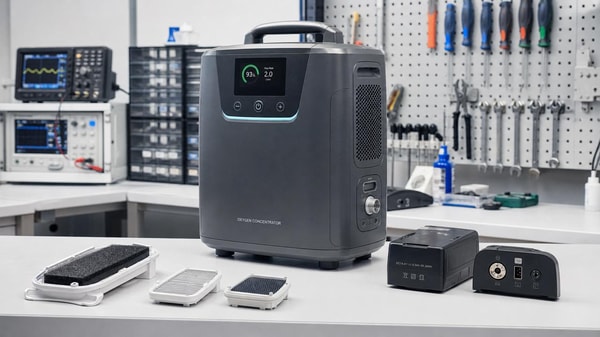
 Portable oxygen concentrators are quieter now, but are they easier to maintain?Portable oxygen concentrators are quieter, but are they easier to maintain? Explore service challenges, scenario-based insights, and smart ways to reduce downtime.
 Interactive whiteboards are underused when training stops after installationInteractive whiteboards often underperform when training ends at installation. Learn how continuous, role-based support boosts adoption, productivity, and ROI.
 Medical diagnostic equipment buying mistakes often start with workflow mismatchMedical diagnostic equipment buying mistakes often stem from workflow mismatch. Learn how to assess fit, avoid hidden costs, and choose scalable systems that support real clinical operations.
![]() Eco-friendly building materials can add compliance work, not just green valueEco-friendly building materials can boost sustainability but also add compliance work. Learn how they affect approvals, costs, timelines, and risk across key project scenarios.
Eco-friendly building materials can add compliance work, not just green valueEco-friendly building materials can boost sustainability but also add compliance work. Learn how they affect approvals, costs, timelines, and risk across key project scenarios. Ergonomic workspace design fails when posture is treated as the whole answerErgonomic workspace design fails when posture is the only focus. Learn how integrated planning improves productivity, retention, and workplace performance.
 Outdoor garden supplies demand changes faster than seasonal forecasts suggestOutdoor garden supplies demand is changing faster than seasonal forecasts. Discover key signals, sourcing strategies, and inventory tactics to stay competitive and capture growth.
 Sustainable home decor sells better when the material story is verifiableSustainable home decor wins more buyers when material claims are verifiable. Discover how traceable sourcing, certifications, and clear proof build trust and drive sales.
 Modern office furniture choices can raise complaints instead of comfortModern office furniture can improve productivity—or trigger costly complaints. Learn how to choose ergonomic, durable, flexible office solutions that support comfort and long-term value.
 Smart street lighting saves energy only when controls are tuned properlySmart street lighting saves energy only when controls are tuned to real traffic, safety, and maintenance needs. Learn how proper settings turn connected lighting into measurable ROI.
 Solid-state battery breakthroughs are real, but scaling is another storySolid-state battery breakthroughs are real, but scaling remains the real test. Explore where commercialization starts first, what limits adoption, and which markets may gain the earliest edge.
![]() Commercial LED lighting upgrades often disappoint in high-heat spacesCommercial LED lighting often underperforms in high-heat spaces. Learn the hidden causes, warning signs, and smart upgrade choices to improve reliability, safety, and long-term value.
Commercial LED lighting upgrades often disappoint in high-heat spacesCommercial LED lighting often underperforms in high-heat spaces. Learn the hidden causes, warning signs, and smart upgrade choices to improve reliability, safety, and long-term value.


















Popular Tags
Global Trade Insights & Industry
Our mission is to empower global exporters and importers with data-driven insights that foster strategic growth.
Search News
Popular Tags
Industry Overview
The global commercial kitchen equipment market is projected to reach $112 billion by 2027. Driven by urbanization, the rise of e-commerce food delivery, and strict hygiene regulations.